
News
NGF Set To Decide On PIB, State Judiciary, Legislative Autonomy, Today

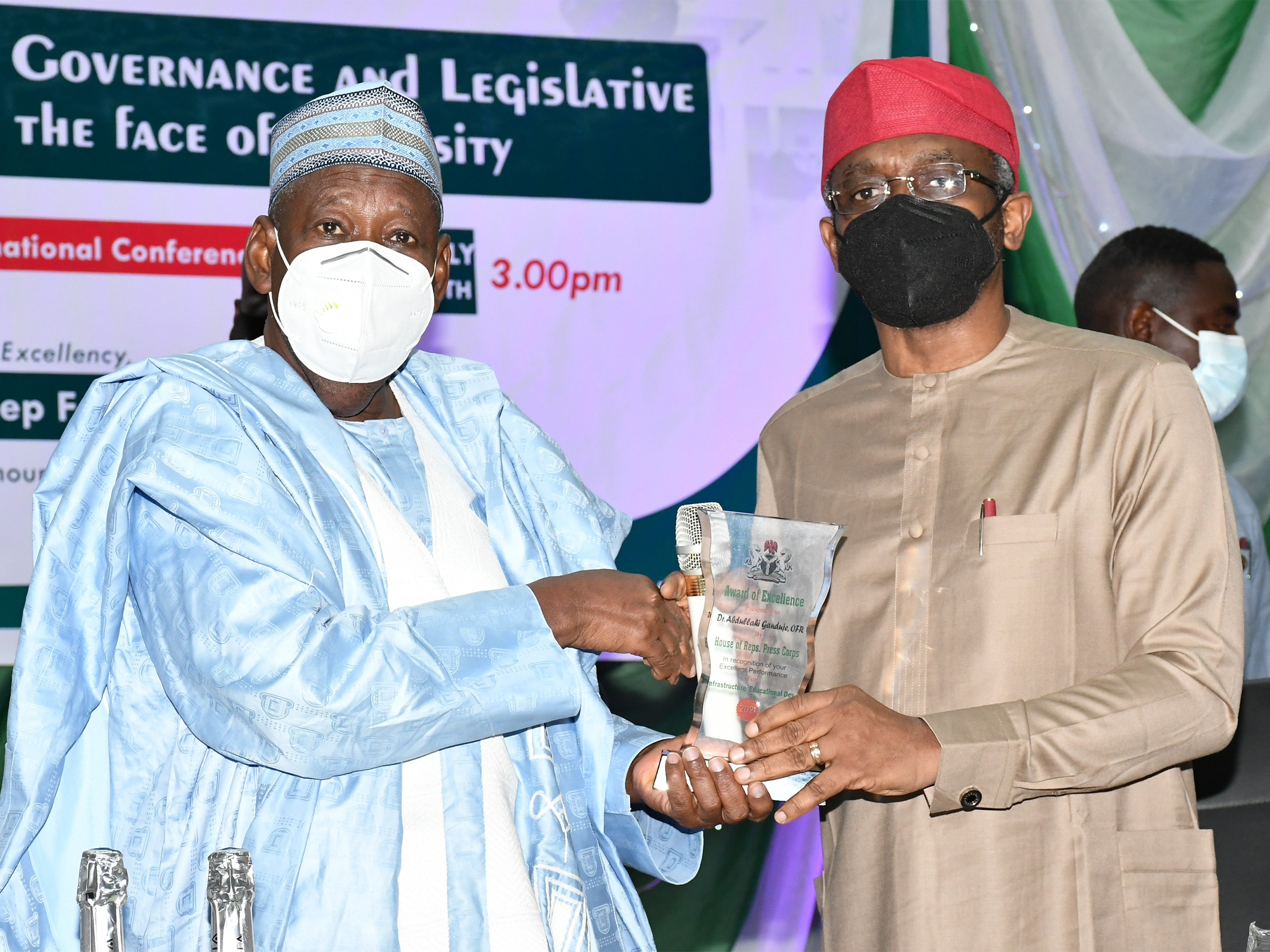
Barring any unforeseen circumstances, Nigerian governors from the 36 states of the federation will meet, today, to debate the Petroleum Industry Bill (PIB), financial autonomy for state Judiciary and Legislature, among other issues.
In a statement, yesterday, in Abuja, the spokesman of the Nigeria Governors Forum (NGF), said the issues will form part of the forum’s 32nd teleconference meeting scheduled for July 14.
The statement reads, “Governors under the aegis of the Nigeria Governors’ Forum (NGF), will be giving their final blessings to the legislative and judicial autonomy at the sub-national level when they meet tomorrow, Wednesday, 14th July, in their 32nd NGF Teleconference meeting.
“Prominent on the meeting’s agenda, as reflected in the invitation to the meeting, issued by NGF’s Director-General, Asishana Bayo Okauru, is the mention of Executive Order 10 and a review of the Memorandum of Action, which was signed months ago after a series of meetings between the governors, members of the Judiciary Staff Union of Nigeria (JUSUN), Parliamentary Staff Association of Nigeria (PASAN) and the Minister of Labour.
“Since the last meeting, more states, including Sokoto State, have granted autonomy to their legislatures and judiciaries in compliance with the demands of the two arms of government.
“The governors are also expected to discuss the maiden meeting of the National Poverty Reduction and Growth Strategy (NPRGS), where committees will be considered and request for nominees into the Technical Working Group (TWG) will also feature.
“This is in line with the new thinking among governors that pro-poor policies deserve prominence in the current governance structure.
“Other issues of national importance to feature in the meeting include the contentious Petroleum Industry Bill (PIB) where governors will seek solutions to the next steps on the unresolved issues.
“The Chairman of the Forum and Governor of Ekiti State, Dr John Kayode Fayemi is also expected to brief the meeting on the activities of the weeks after the last meeting which includes the shuttle diplomacy he embarked upon to the ambassadors of Canada, China and South Africa.
“The Transportation Commissioners of Nigeria and officials from the Nigerian Printing and Minting Company, on the other hand, also paid courtesy calls on the NGF chairman, last week. Fayemi will brief his colleagues on those visits.
“The Governor Ifeanyi Okowa Committee on Covid-19, a regular feature of the meeting, just like the SFTAS update will be presented to the governors, just as the NEC agenda for the following day will be discussed.
“There will be three presentations before the governors, among which are the Advocacy on Discrimination Against Persons with Disabilities Act: Sensitization, Domestication and Financing by the Chairman, House Committee on Disability, the Diversification and Non-oil Export Opportunities for States Post-Covid-19 – Policy Development Facility (PDF) Bridge Programme and the Deployment of Digital Infrastructure for Human Capital Development by the CEO, Suburban Fibre Company, among others.
“The meeting, which is virtual, will commence at 2pm but governors are advised to log on at 1pm, according to the NGF DG.”


The Rivers State Universal Basic Education Board (RSUBE) has trained 1,000 newly recruited teachers with a view to raising standards in public primary and junior secondary schools in the state.
The two-day orientation and capacity building programme held in Port Harcourt introduced the teachers to civil service rules, classroom management practices, and professional conduct expected of educators in the state.
The State Commissioner for Education, Dr. Peters Nwagor, told the newly recruited teachers that teaching demands more than academic qualifications, and called for discipline, diligence, and a strong commitment to service.
He described teaching as a noble profession that is central to the development of the state.
The recruitment, he said, reflects the government’s investment in children and long-term development.
“Education is the foundation of societal progress, and basic education is where that foundation is laid,” Nwagor stated.
He urged the teachers to shape the values and character of pupils during their most formative years.
He pledged continued support from the Ministry of Education through training, resources, and an environment that allows teachers to perform effectively.
Nwagor directed RSUBEB to reject transfer requests from rural to urban schools, saying the newly employed teachers have an obligation to serve where they are posted and help strengthen education in those communities.
In his opening remarks, the RSUBEB Chairman, Hon. Sam Oge, explained that the recruitment process began in 2023 under the previous board, adding that after assuming office, he consulted widely and secured Governor Siminalayi Fubara’s approval to complete the exercise.
Oge said the selection was competitive, with 1,000 candidates chosen from more than 5,000 applicants, and urged the teachers to treat the opportunity seriously and avoid lobbying for reposting.
He directed the teachers to resume at their assigned schools immediately, saying request for reposting will not be entertained.
The former RSUBEB Chairman, Ven. Dr. Fyneface Akah, who delivered the keynote address, described the orientation as the teachers’ formal entry into the civil service.
He urged them to be creative, purposeful, and open to learning on the job.
Akah stressed that teachers have a role in restoring values lost to moral decline, and urged them to model national values and see their work as a calling with lasting impact on the society.
He thanked the State Government for approving the recruitment, noting that the exercise will improve access to quality basic education across the State.
Akujobi Amadi

The Independent National Electoral Commission (INEC) has disclosed that no fewer than 1.4 million members of the National Youth Service Corps will be deployed for the 2027 general elections.
The Chairman of the commission, Prof Joash Amupitan (SAN), made this known on Monday during a courtesy visit to the Director-General of the NYSC, Brig Gen Olakunle Nafiu, at the Yakubu Gowon House, headquarters of the scheme, in Abuja.
Amupitan, in a statement signed by his Chief Press Secretary and Media Adviser, Adedayo Oketola, described the meeting with the NYSC senior management team as more than a formal courtesy visit, saying it was also a mission of gratitude.
According to him, the NYSC remains a critical pillar in Nigeria’s democratic process.
He noted that corps members had participated in virtually every election cycle since 1999, stressing that, “INEC cannot conduct elections in Nigeria without the NYSC.
“As the Chairman of the Independent National Electoral Commission, I am honoured to discuss our collaborative efforts toward ensuring seamless and credible elections in Nigeria.
“You provide the heartbeat of our field operations. When we speak of election manpower, we are essentially speaking of corps members.
“They are the most dedicated, educated and patriotic election duty staff we have, and their presence at polling units brings a level of neutrality and public confidence that is irreplaceable.
“They form the backbone of our election processes, especially as ad hoc staff, whose dedication, discipline and patriotism are critical to the success of our elections,” he added.
Amupitan said institutional data from the 2023 general election showed the importance of the partnership between INEC and the NYSC.
He explained that INEC deployed about 1.2 million ad hoc staff for the 2023 elections, with over 70 per cent, nearly 850,000 personnel drawn from corps members and student volunteers.
Speaking on preparations for the 2027 elections, the INEC chairman said more than 1.4 million ad hoc staff would be engaged, with corps members making up the majority.
“For the 2027 general election, we will require 707,384 ad hoc staff for the Presidential and National Assembly elections scheduled for January 16, 2027.
“The same number will be needed for the governorship and Houses of Assembly elections on February 6, 2027, making a total of 1,414,768,” he said.
He added that INEC would also require 52,446 corps members for the Ekiti and Osun governorship elections, as well as by-elections in Nasarawa, Enugu, Rivers, Ondo, Kebbi and Kano states.
Amupitan said corps members accounted for nearly 90 per cent of Registration Area Officers and Presiding Officers in many states during previous elections.
“These young Nigerians did not just facilitate voting; they protected the sanctity of the ballot in 176,846 polling units across some of the most difficult terrains in the country,” he said.
He further praised the corps members for their role in off-cycle elections, particularly the Anambra governorship election and the FCT Area Council polls.
According to him, their digital proficiency contributed significantly to the seamless operation of the Bimodal Voter Accreditation System.
“In those exercises, it was the digital proficiency of corps members that ensured the seamless performance of our BVAS, proving they are the tech-savvy backbone of our modern democracy,” he added.
Amupitan acknowledged the sacrifices made by corps members during elections and assured that INEC would continue to work with the NYSC and security agencies to strengthen safety measures and welfare packages for them.
As the 2027 general election approaches, we are committed to ensuring adequate mobilisation and preparedness of NYSC members for this important national assignment,” he said.
He also noted that the Ekiti and Osun governorship elections, scheduled for June 20 and August 15, respectively, alongside several by-elections, would serve as tests for innovations ahead of the 2027 elections.
Responding, Brig. Gen. Nafiu thanked INEC for its continued collaboration with the scheme.
He recalled that the Memorandum of Understanding between both organisations was signed in 2011 and had been periodically renewed.
Nafiu described corps members as credible, reliable and easily trainable manpower.
“The last batch of millennials will soon exit the scheme, leaving behind Gen Z corps members known for their digital savviness, which will benefit INEC,” he said.
He assured the commission of the NYSC’s continued support in both the 2027 general elections and upcoming off-cycle elections.
-

 Featured5 days ago
WASSCE: RSG Distributes Science Materials To Secondary Schools
-
News5 days ago
Xenophobic Attacks: Nigerian Lives More Important Than Foreign Investment – Oshiomhole
-
Rivers5 days ago
MBA Forex Trial Adjourn To June 3, Amid Bereavement … As Court Declines Cost Application
-
News5 days ago
ActionAid Demands Probe Of Govs Using Public Funds For Campaign
-
Aviation5 days ago
Passengers Stranded As Delta Airline From Atlanta Route Back Eight Hours After
-
Business5 days ago
Customs Impound N2.35bn Cocaine, 15 Trailers of Rice
-
Politics5 days ago
2027: Bayelsa Senator Gets Critical Endorsement For Second Term
-
 Politics5 days ago
INEC Sets Rivers South-East Senatorial By-Election For June 20