
Editorial
Fix Eleme–Onne Road, Now

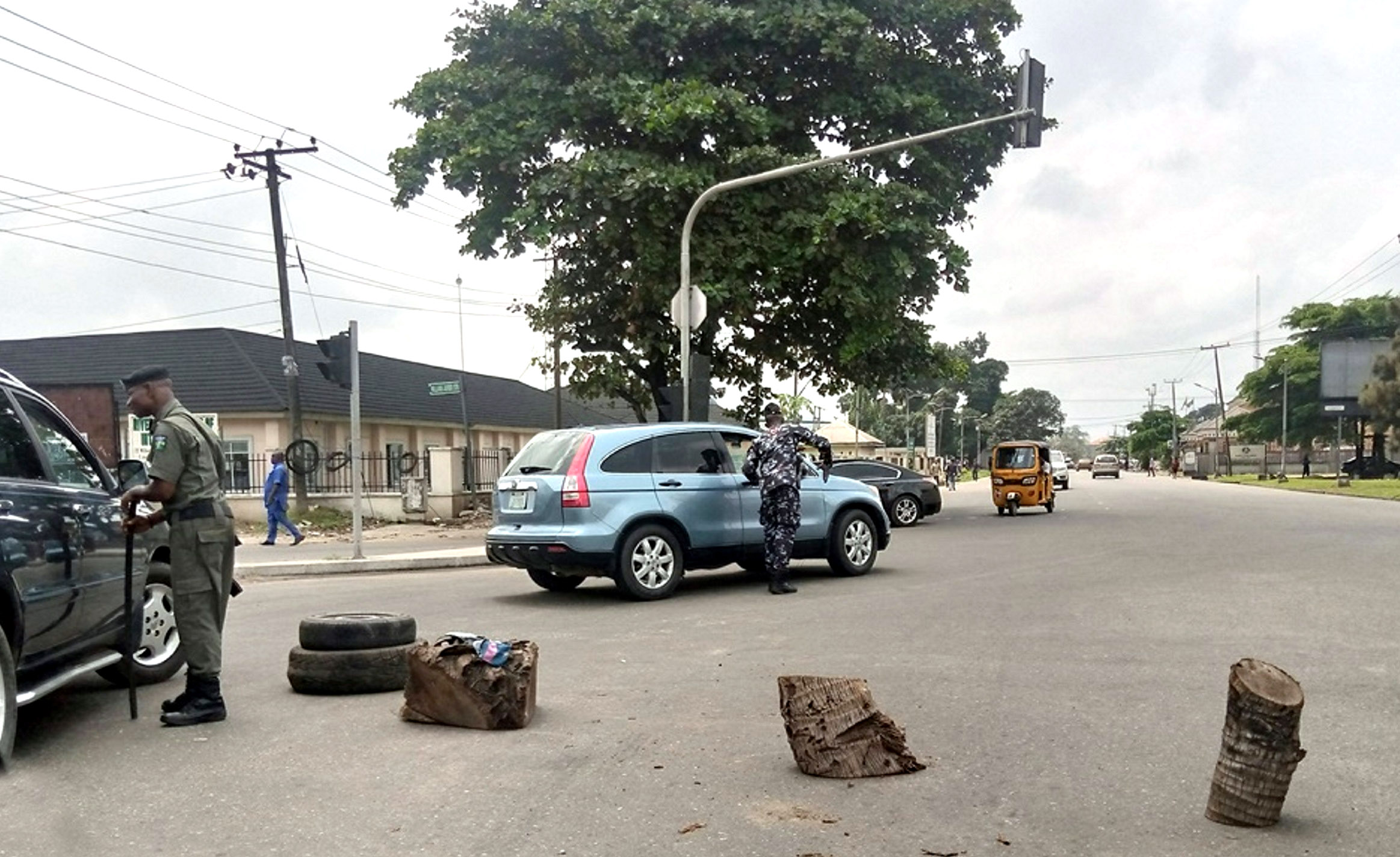
Youths from the four Ogoni-speaking local government areas of Rivers State have since last Monday
morning blocked the Eleme–Onne axis of the East–West Road to protest the poor condition of the federal highway. The youths have mobilised heavy trucks to block both ends leading to the high-priority infrastructure of the country, in particular the only bridge connecting the region to Port Harcourt.
The section, measuring 15 kilometres with a linking bridge, is one of the busiest segments of the highway following the regular hauling of goods from the Onne seaport, the Port Harcourt Refining Company, and the Oil and Gas Free Trade Zone. The road equally serves over 200 multinational companies in the Eleme Industrial Zone including the two refineries, the Indorama Petrochemical and Fertiliser Company, Intels Nigeria Limited, and Nigerian Ports Authority (NPA).
The protesting youths, who have literally turned the event into a carnival of a sort, are demanding that the dilapidated Ogoni section of the East–West Road be reconstructed, with at least three flyovers at strategic locations in Akpajo, Alesa and Onne, all in Eleme Local Government Area. They also want to see the reconstruction of the existing bridge at the Aleto junction.
Apart from the conveying of goods from Eleme, the East–West Road with only an access bridge which is near collapsing connects nine local government areas to Port Harcourt, the Rivers State capital. The Federal Government had consistently promised to fix the section of the road, but contractors are yet to be mobilised to the site, even though skeletal works are ongoing on some sections.
As expected, the protest is affecting businesses and other activities in the area badly. For example, the physical verification of the Continuous Voter Registration exercise by the Independent National Electoral Commission (INEC) scheduled to commence in parts of Rivers State since Monday is negatively impacted by the protest.
In a statement, the Head, Voter Education and Publicity of INEC in Rivers State, Mark Usolor, said, “due to the blockade on the stretch of the East–West Road, their personnel and materials were unable to arrive some of the local government offices of INEC to commence the exercise.” The commission listed the affected local government areas to include Andoni, Bonny, Eleme, Gokana, Khana, Ogu/Bolo, Okrika, Opobo/Nkoro and Tai.
During the inauguration of Community Secondary School, Eteo, Eleme, and Community Secondary School, Obeakpu-Ndoki, Oyigbo, respectively in June this year, Governor Nyesom Wike charged the Minister of Niger Delta Affairs, Senator Godswill Akpabio, to visit the Eleme section of the East–West Road to appreciate the agony of the people of the area. The governor denounced the dilapidated condition of the road, particularly the Eleme axis and urged rapid completion on account of its economic importance.
He said; “I urge the Federal Government under the APC to please fulfill promises they made to Nigerians, fulfill promises they made to Rivers State. It is unfortunate, look at the East–West Road, this part of it has almost collapsed. The money comes from where? The money comes from us. Can you see this part of the road anywhere in this country? They are taking us for granted because we have nobody. God in his infinite mercy will give us somebody. The kind of treatment we are receiving from this Federal Government is unacceptable.”
In what initially appeared to be a reassuring move, the Federal Government had disclosed that it released N7 billion to contractors to facilitate the East–West Road project, and instructed them to comply with the directives to complete and hand over the project to people of the region before the end of First Quarter 2022. Unfortunately, there is nothing on the ground for the tremendous amount and no one has been questioned for it.
Indeed, this protest has come at an auspicious moment. We support the action and urge the youths to remain on the remonstrance howbeit peacefully until work begins or they can obtain a commitment from the Federal Government. We will resist a situation where commuters and other road users are exposed to countless difficulties on a daily basis. It is hard to understand why, despite the enormous economic value of the road, it has stayed abandoned to this day.
Developments in the Niger Delta have reached a point where strategic and decisive measures must be taken to guarantee the future of the region. The Federal Government must pay greater attention to the plight of those living in the Niger Delta. It is a shame that the East–West Road has been in limbo for years and that there is no serious work going on there. If politics plays into the construction of the road, nothing prevents the people from expressing themselves in assertion of their rights and defence of the residents.
Interestingly, the East–West Road was flagged off in 2006 by the Olusegun Obasanjo administration. To facilitate its completion, President Muhammadu Buhari’s administration moved the project to the Presidential Infrastructure Development Fund (PIDF), with approved funds surprisingly warehoused by the Uche Orji-led Nigeria Sovereign Investment Authority (NSIA). However, it was later transferred to the impoverished Ministry of Niger Delta Affairs for doubtful reasons. Stakeholders in the region strongly believe that this is the reason why the work is slow at the moment.
While we suffer the anguish of the ugly progression of this all-important road, so far, we think that there is an urgent need for the protest to be guided by its organisers to forestall being hijacked by hoodlums for criminal or political purposes. There are already sad reports of people being assaulted and property being vandalised. That is by no means the way to go. The leaders of the region should call the youths to order and urge them to conduct themselves appropriately.
If the government is spending about N900 billion on the 127.621km Lagos–Ibadan Expressway, and the Abuja–Kaduna–Kano highway reviewed from N155 billion to N797.236 billion, why is the East–West Road continuously denied similar attention when it is located in the region that produces over 80 per cent of the nation’s revenue? The federal authorities must heed the demands of the protest marchers and fix this road immediately.




Nigeria stands at a critical juncture as the world marked World Press Freedom Day (WPFD) on May 3. This annual observance is a reminder that a free press is central to democratic life, good governance, and public accountability. For Nigeria, it is also a moment for sober reflection on how far the country has come and how far it still has to go in safeguarding the independence of its media.
World Press Freedom Day exists to highlight the fundamental importance of freedom of expression and to honour journalists who risk their lives in pursuit of truth. It underscores the idea that without a free press, societies cannot function transparently, nor can citizens make informed decisions. In countries like Nigeria, where democracy continues to evolve, the observance carries particular urgency.
This year’s theme, “Shaping a Future at Peace: Promoting Press Freedom for Human Rights, Development and Security”, places journalism at the heart of global stability. It emphasises that a peaceful society cannot be built on silence, fear, or manipulated information. Rather, it depends on the free flow of accurate, timely, and independent reporting.
At its core, the theme highlights the role of journalism in fostering accountability, dialogue, and trust. These are not abstract ideals. In Nigeria, where public confidence in institutions is often fragile, the media remains one of the few platforms through which citizens can question authority and demand transparency. When press freedom declines, so too does public trust.
Journalism serves as a foundation for peace, security, and economic recovery. Countries with robust media systems tend to attract greater investment, maintain stronger institutions, and resolve conflicts more effectively. Nigeria’s economic challenges, ranging from inflation to unemployment, require open scrutiny and informed debate, both of which depend on a free press.
However, the issue of information integrity has become increasingly complex in the digital age. Artificial Intelligence (AI) and online platforms have amplified the spread of misinformation and disinformation. In Nigeria, where internet penetration has grown rapidly, false narratives can travel faster than verified facts. This makes the role of credible journalism more vital than ever.
The challenge is not only technological but also ethical. AI-driven manipulation of information threatens to distort public discourse, influence elections, and deepen social divisions. In such an environment, professional journalism must act as a stabilising force, ensuring that truth prevails over sensationalism and propaganda.
Equally troubling is the safety of journalists. Across Nigeria, reporters face growing levels of online harassment, judicial intimidation, and physical threats. Self-censorship is becoming more common, as media practitioners weigh the risks of reporting sensitive issues. This trend undermines the very essence of journalism.
A particularly alarming incident involved a serving minister in the present administration, who openly threatened to shoot a journalist during a televised exchange. Such conduct, broadcast to the public, sends a dangerous signal that hostility towards the press is acceptable. It erodes the norms of democratic engagement and places journalists in harm’s way.
This year’s theme aligns closely with the United Nations Sustainable Development Goal (SDG)16, which promotes peace, justice, and strong institutions. Freedom of expression is a cornerstone of this goal. Without it, institutions weaken, corruption thrives, and justice becomes elusive. Nigeria’s commitment to SDG 16 must therefore include genuine protection for the media.
Historically, the Nigerian press has been a formidable force. From resisting colonial rule to challenging military dictatorships, our journalists have played a central role in shaping the nation’s political landscape. Today, however, that legacy appears to be under strain, as the media operates under what can best be described as a veneer of freedom.
Beneath this facade lies a troubling reality. Journalists are routinely harassed, detained, and prosecuted for performing their constitutional duties. Reports from media watchdogs indicate that dozens of Nigerian journalists face legal threats or arrest each year, often for exposing corruption or criticising those in power.
The Cybercrimes (Prohibition, Prevention, etc.) Act of 2015 has become a focal point of concern. Originally intended to combat cyber threats, it has increasingly been used to silence dissent. Sections 24 and 27(1)(b), in particular, have been invoked to target journalists, bloggers, and social commentators.
Although amendments introduced in February 2024 were meant to safeguard journalists, concerns persist. The law continues to be wielded in ways that stifle investigative reporting and restrict freedom of expression. Legal reforms must go beyond cosmetic changes to address the root causes of misuse.
To safeguard the future of journalism in Nigeria, decisive action is required. The Cybercrimes Act must be revisited to ensure it cannot be weaponised against the press. Law enforcement agencies must operate free from political influence, upholding the rule of law and protecting journalists’ rights. Civil society and international partners must also strengthen independent media through funding, training, and platforms for wider reach.
In this rapidly evolving world shaped by artificial intelligence and digital innovation, Nigeria faces a clear choice. It can either allow press freedom to erode under pressure, or it can champion a truly independent media landscape. The path it chooses will determine not only the future of journalism, but also the strength of its democracy and the peace it seeks to build.
-

 News1 day ago
Court Sentences Seven To Death Over Murder Of Cleric In Rivers
-

 Politics1 day ago
APC PRIMARIES: FUBARA’S WITHDRAWAL, HISTORIC SACRIFICE FOR NATIONAL STABILITY ……. GROUP
-

 Sports1 day ago
PH Arsenal Community Set For Streets Procession, Saturday
-

 Politics1 day ago
IPAC Flays INEC Over Election Guidelines Judgement
-

 News2 days ago
Group Hails Tinubu, Chinda Emergence
-

 Sports1 day ago
NPFL: Rivers United Finishes Second, Secures Continental Ticket
-

 Politics1 day ago
NDC To Adopt Electronic Voting For Future Primaries
-

 Sports1 day ago
Stakeholders Laud GTI On NPFL Partnership