Connect with us

Editorial

Nigeria’s Electoral Best Buy

Published

on

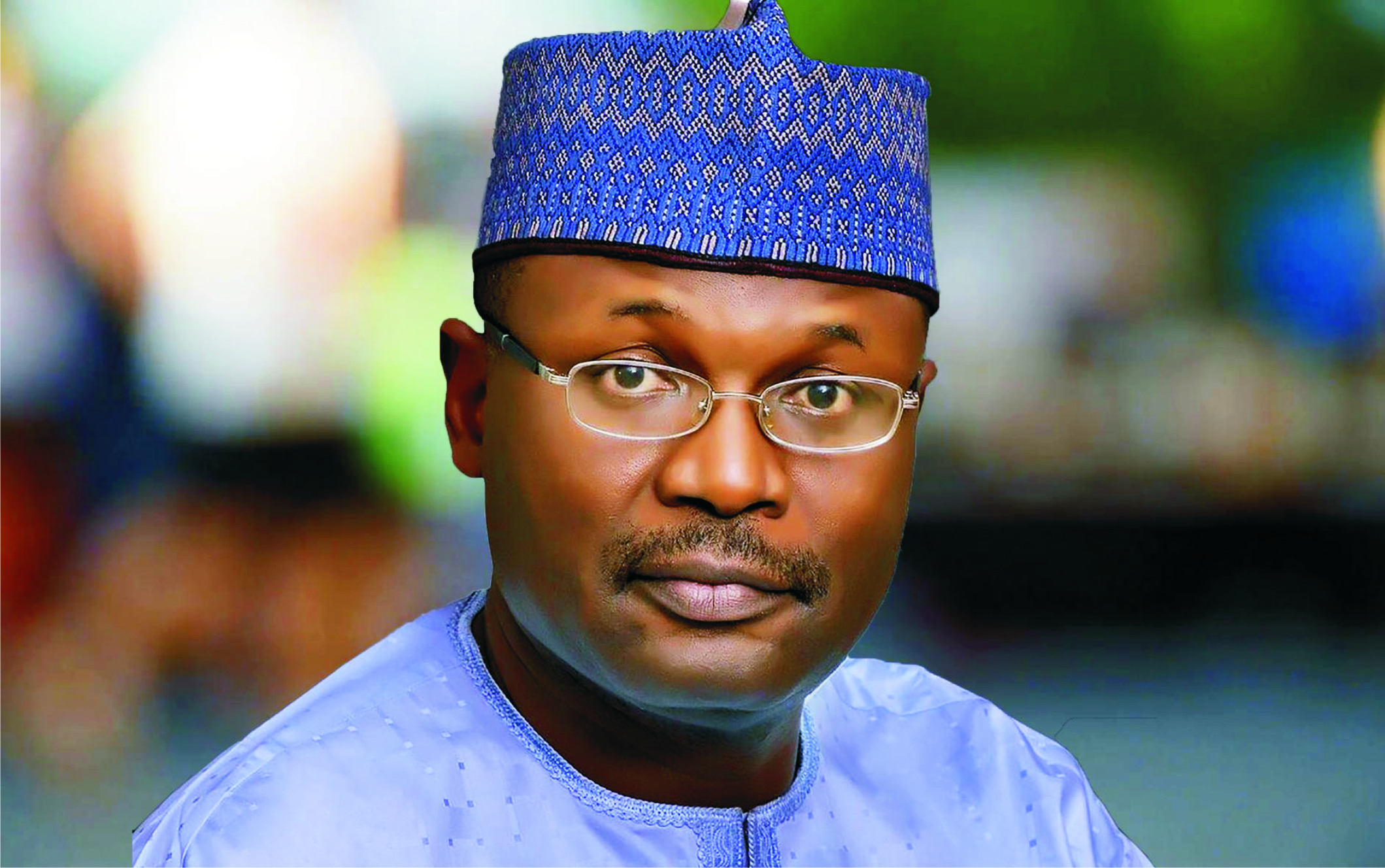
The Independent National Electoral Commission (INEC) has said that it would use the 2023 General Elections to set the standard for future polls in Nigeria. Its Chairman, Prof. Mahmoud Yakubu, was reported to have given the assurance during a meeting with Resident Electoral Commissioners (RECs) at the INEC Headquarters in Abuja, last Monday.
It would be recalled that the INEC boss had, in an earlier interview with journalists on the sideline of the 2021 budget defence at the House of Representatives, late last year, announced that his Commission intends to introduce an electronic voting method in the country; possibly beginning with the Anambra governorship election this year.
From the foregoing, it is clear that INEC is positioning to deepen the present secret ballot arrangement in Nigeria even as there are almost daily indications that this voting system is beginning to suffer hiccups in the very industrial democracies from which we copied it.
For instance, the 2016 presidential election in the United States was widely suspected to have been electronically altered by offshore manipulators (principally from Russia) to favour the erstwhile Republican president, Donald Trump. Again, in 2020, it was the latter who reportedly trumped up charges of voting irregularities by members of the Democratic Party to oust him from the White House.
After many elections since its introduction in Nigeria, INEC is yet to come to terms with the smartcard readers’ hit-and-miss functionality for which reason the so-called voter’s Incidence Form has become a permanent appendage to our balloting process. And now, they want to push it a notch higher by introducing the electronic voting machine.
Some reliable sources have it that the 2015 and 2019 General Elections may have cost the government an average of N250 billion. If we add what the political parties spent in preparing for those elections, the figure may well rise to over double this amount. This is even exclusive of the cost of re-runs and post-election litigations (to defend the victorious president and state governors).
But why are Nigerians so bent on the continuous exploration of this costly and stressful electoral path? Shoes, they say, have their sizes; it is left for the buyer to identify and purchase his size. As far as republican systems go, Nigeria can be likened to a 10-year old who opts to choose size-42 shoes because that’s exactly what most of his adult friends wear. In other words, the world’s poverty capital is not yet ripe for the kind of electoral system she is spending so much money attempting to practise.
Available literature show that Australia practised the open ballot electoral system until 1856, Britain 1872, Switzerland 1872, Canada 1874 and Belgium 1877. If we juxtapose this with when these nations were formed, then we can begin to understand how long it took them to build and develop the technology and political culture that enabled a transition to the electronic secret ballot system they enjoy today.
In Nigeria, it is said that the open ballot system was in practise until 1923 when the British colonialists first introduced the secret voting method. The former system was mainly adopted by town unions to elect their officers.
But even as the system was not new to Nigeria, it took the radical introduction of Option A4 in the 1993 General Elections by the Chairman of the then National Electoral Commission of Nigeria (NECON), Prof. Humphrey Nwosu, for many voters in the country to appreciate the nature of the open voting process.
The presidential election of that year which was widely presumed to have been won by Chief MoshoodAbiola of the Social Democratic Party (SDP) against Alhaji Bashir Tofa of the National Republican Convention (NRC) is still regarded as the freest, fairest, safest and most transparent in the country, so far. But even so, it was later annulled by the then military junta led by General Ibrahim Babangida.
In a nutshell, Option A4 simply required registered voters to present themselves at their polling units within the specified time on Election Day for accreditation, after which the voter could choose to go back home or hang around until the appointed voting time. Once it was time, an announcement was made by an authorised election official for accredited voters to form a queue in front of the posters bearing symbols of their choice political parties. This would go on for a while until it was time for voters’ counting when security agents took up positions behind the last voter on each line.
Counting of voters was usually shouted aloud and keenly watched by other election officials, security men, party agents and even the queuing voters themselves. If well conducted, the entire exercise could be over in less than four hours (usually between 8:00 am and 12:00 noon).
Other advantages of this voting option are that it eliminates the use of ballot papers; eliminates double voting; eliminates voided votes due to irregular thumb printing; produces instant and credible results; eliminates ballot snatching; discourages double standards; reduces incidence of waiting for late arrival of officials and voting materials as the RAC centres will have little to distribute. Its transparency and credibility also attract less litigation and the attendant costs, thereby releasing judicial officers to attend to other equally important court cases.
On the other hand, its critics are always quick to fault it as outdated and capable of resulting to intimidation by unforgiving politicians whose agents may be wont to point out any unfaithful party member and other sell-outs. It may also lead to bandwagon voting as some undecided voters are unlikely to openly identify with any scanty queues. Again, the system may not readily lend itself to diaspora voting as is currently being encouraged.
Indeed, if this homegrown voting arrangement had emanated from Ghana, Kenya or Rwanda, Nigerians would have embraced it wholeheartedly.
On the whole, defenders of Option A4 (including self) are of the opinion that the standard established by Prof. Nwosu in 1993 should be revisited and improved upon if Nigeria must achieve free, fair, credible and cost-effective polls, going forward.

Continue Reading

Editorial

Resolve Rumuwoji Market Issues, Others

Published

on

The long-awaited inauguration of the Peter Odili Cardiovascular and Cancer Treatment Centre at Rumuokwuta in Obio/Akpor Local Government Area has been met with widespread relief and excitement by indigenes and residents of Rivers State, many of whom have spent years anticipating access to a facility built to preserve lives and curb the need for medical travel abroad.
Recall that the project was commissioned on November 14, 2022, only to be abandoned shortly afterwards. For a centre equipped to handle cardiovascular and cancer cases, this delay was not merely administrative; it carried real human costs in a country where non-communicable diseases account for about 29 per cent of all deaths, according to public health estimates.
The determination of Governor Siminalayi Fubara to get the centre started has now paid off. Without fanfares, the state-of-the-art hospital is quietly serving patients, proving that effective governance does not always need loud trumpets to announce its presence.
The governor deserves commendation for relentlessly reviving this critical health facility despite orchestrated attempts to clog the wheel of good governance in the state. In the same breath, kudos are due to the former Health Commissioner, Dr. Adaeze Oreh, whose professional input and persistence helped turn policy into practice.
However, this positive development also highlights the ongoing disappointment over the failure to put the Mother and Child Hospital into use nearly five years after it was commissioned. The frustration voiced by the Nigeria Medical Association (NMA) is justified, especially in Nigeria, where maternal mortality remains alarmingly high at about 512 deaths per 100,000 live births.
Although the Mother and Child Hospital was formally inaugurated in 2021, it has continued to remain completely non-functional in the years that followed. Reports indicate that the facility has stayed entirely sealed off and inaccessible to the public, with no signs of operational activity. This is despite renewed assurances given in early 2025 that the hospital would soon open its doors and begin serving the state — promises that have yet to materialise.
Beyond the health sector lies another deeply troubling example of public neglect: the second phase of the Rumuwoji Market, more popularly known as Mile One Market. This facility was completed nearly a decade ago, yet it remains entirely unused and dormant to this day — a situation that continues to baffle and worry a great many Rivers’ residents who had hoped it would serve the growing needs of their communities.
This phase of the market was built and completed by the immediate past administration of Chief Nyesom Wike. It followed the devastating fire that gutted the entire market during the tenure of Chibuike Rotimi Amaechi, whose government earlier completed and opened the first phase.
Sadly, the unused section of the market has begun to deteriorate, a clear waste of public funds. Traders who should be operating within the market now spill onto Afikpo Street, creating traffic bottlenecks, sanitation concerns, and general nuisances for residents.
We are compelled to ask why a market that has already been commissioned has remained unoccupied for so many years. If there are genuine issues preventing its use, then the government must put its foot down and address them squarely, with courage and determination rather than hesitation.
It is unacceptable that this phase of Mile One Market is allowed to decay after so much money has been sunk into it. Across Nigeria, abandoned public projects are estimated to have tied down trillions of naira, resources that could have transformed lives if properly utilised.
Additionally, the economic implications of leaving public infrastructure idle cannot be overstated. Markets are engines of micro and small-scale commerce, which account for over 80 per cent of employment in Nigeria’s informal sector. When facilities like the unused section of Mile One Market are left to rot, government inadvertently chokes livelihoods, reduces internally generated revenue, and deepens urban disorder. A functioning market would not only decongest surrounding streets but also restore dignity and safety to traders who currently operate under harsh and unsanitary conditions.
The government has expended substantial taxpayers’ money in the construction of these facilities, yet they sit idle and unused at a time when the people of the state should be directly benefiting from the services they were designed to provide. It raises a fundamental question that demands honest answers: what is the purpose of investing billions of naira in these projects if they are ultimately left dormant, abandoned, and to fall into a state of neglect? The people deserve better than empty infrastructure that serves no one.
While the political climate within the state has undoubtedly presented its share of challenges over time, that particular chapter now appears to be largely behind us. The focus must shift accordingly. The ball is firmly in the court of the administration to compose itself, buckle down, and get to work — ensuring that completed projects are delivered to the people they were intended to serve, without any further unnecessary delay.
Ultimately, governance is judged not by the number of projects commissioned but by how many are put to meaningful use. As the philosopher Edmund Burke once observed, “Bad laws are the worst sort of tyranny,” and by extension, abandoned projects are the worst form of waste. Rivers State has the opportunity to reverse this narrative. The administration must strike while the iron is hot, ensure that all completed facilities are activated, and prove that public resources are not poured into a bottomless pit but invested for the common good.
We therefore call on the government to redress these challenges with urgency. As the saying goes, “The best time to fix the roof is when the sun is shining,” and the time to act is now. Rivers people are watching, worried, and rightly expect their leaders to turn promises and investments into tangible public good.
Continue Reading

Editorial

As NDG Ends Season 2

Published

on

On 20 February, the second edition of the Niger Delta Games (NDG) kicked off in Benin City, Edo State, with over 3,000 athletes from the nine oil-producing states of the Niger Delta region competing for honours across 16 sporting disciplines. Tagged ‘NDG Edo 2026’, the Games were scheduled to continue until the 27th (today), when the curtain would finally be drawn on proceedings. The event is sponsored by the Niger Delta Development Commission (NDDC) and organised by consultants Dunamis Icon.
Edo State is taking its turn as host following the maiden edition held in Uyo, Akwa Ibom State, the previous year. The inaugural edition was widely hailed as a resounding success, owing to the remarkable competitiveness and excitement it generated amongst the states of the region and, in particular, the young athletes who showcased impressive talent, prowess, and potential across a range of sporting events.
The maiden edition represented, in many respects, a new horizon and a breath of fresh air in efforts to engage and harness the talents and energies of the region’s youth towards positive endeavours that offer genuine prospects for career development. For a full week, young athletes from across the Niger Delta had the opportunity to compete in an environment where they freely expressed and explored their abilities, mingled with one another, and had the chance to connect socially and culturally.
It is for this reason that the NDDC and their consultants, Dunamis Icon, can be said to have hit the bull’s eye with the concept behind the Games. Beyond serving to engage the youth and identify promising athletes for the region, the competition has the capacity to produce athletes well capable of representing the national flag on international and continental stages.
The NDG presents opportunities that the states of the region must embrace wholeheartedly. Beyond venturing into the hinterlands to scout for promising young athletes, sporting facilities across the various states now have the opportunity to be tested and utilised on an annual basis, whilst host states enjoy the privilege of developing, upgrading, and maintaining existing facilities with the support of the sponsors.
As the Games draw to a close at the end of their second season, it is hoped that this regional sporting festival will continue to be guided by the vision and mission upon which it was founded, particularly its commitment to creating opportunities for untapped talents within the region. It is encouraging to note the organisers’ insistence that only athletes within the stipulated age bracket of 20 years and under are permitted to participate. No effort should be spared in ensuring that age falsification and the desperation to win at any cost are firmly discouraged.
Whilst commending the NDDC and Dunamis Icon for the considerable efforts already invested in ensuring that the NDG is not only successful but sustainable, it is expected that this second edition would mark an improvement upon the last, with the shortcomings witnessed in Uyo not being permitted to recur.
The NDG represents both an opportunity and a challenge to a region that prides itself as one of the country’s foremost nurseries of sporting talents. It is a chance to begin producing world-class athletes once again and to introduce names that will not only remind us of, but ultimately succeed the celebrated stars of previous generations across various disciplines — among them Adokiye Amiesimaka, Daniel Igali, Ojadi Oduche, Obisia Nwamkpa, Chioma Ajunwa, and Jeremiah Okorududu, to name but a few.
Just as the leadership of the NDDC has challenged the NDG to begin producing Olympic athletes for the country, we can only wholeheartedly concur that the Games possesses everything necessary to serve as a platform for unearthing future stars, and nothing less should be expected of it.
It is worth noting that the continued growth and credibility of the NDG will depend, in no small measure, on the rigour and transparency with which it is administered. Governance, accountability, and adherence to the founding principles of the competition must remain non-negotiable priorities for all stakeholders involved, from the sponsors and organisers through to the participating state delegations.
The role of the participating state governments in this regard cannot be overstated. Whilst the NDDC and Dunamis Icon provide the structural framework and financial backing that make the Games possible, it is the states themselves that bear the primary responsibility of identifying, nurturing, and presenting their finest young athletes for competition.
Governors and sports commissioners across the nine participating states must therefore treat the NDG not as a mere ceremonial obligation, but as a serious and strategic investment in the human capital of their respective populations. Only through sustained grassroots scouting programmes, well-funded state sports academies, and consistent domestic competitions can the region hope to maximise the full potential of what the NDG offers.
The private sector, too, has a meaningful role to play in the long-term sustainability of the Niger Delta Games. Whilst the NDDC’s sponsorship provides an essential foundation, the involvement of corporate organisations — particularly those with significant commercial interests in the region — would serve to deepen the financial base of the competition and reduce its vulnerability to the funding uncertainties that have historically plagued sporting initiatives in Nigeria.
Partnerships with brands, media organisations, and international sports bodies could further raise the profile of the Games, attract wider coverage, and open doors for the region’s most gifted athletes to access exposure, training opportunities, and platforms that extend well beyond the Niger Delta itself.
Ultimately, the Niger Delta Games carries with it the hopes and aspirations of an entire region and its young people. If nurtured with care, integrity, and sustained investment, it has every potential to become one of the most significant youth sporting platforms on the continent, and a genuine conveyor belt for the next generation of Nigerian sporting greatness.
Continue Reading

Editorial

Beginning A New Dawn At RSNC 

Published

on

The premises of the Rivers State Newspaper Corporation (RSNC), publishers of The Tide Newspaper, are wearing a refreshing new look as work begins on the re-erection of a perimeter fence. This development is more than a physical upgrade. It is a strong statement that the safety and dignity of a historic public institution are once again being taken seriously.
For many years, the corporation operated without a proper perimeter fence. The old fence was demolished about a decade ago during an urban renewal drive under the administration of Chibuike Rotimi Amaechi. The intention at the time was to relocate and properly situate the fence away from pedestrian walk, but the long-term consequences were not fully anticipated.
The absence of a fence exposed the premises to serious risks. Workers reported frequent cases of trespass, theft of office items, and unrestricted movement by unauthorised persons. In an environment where sensitive editorial and production work is carried out, such openness became a major concern rather than an advantage.
Statistics from internal records suggest that incidents of petty theft and vandalism rose sharply during this period, accounting for an estimated 30 per cent increase in maintenance costs over the years. Staff morale also suffered, as many employees felt unsafe working late hours, especially during night production schedules.
The return of the perimeter fence will bring immediate relief. It will provide controlled access to the premises, protect valuable equipment, and ensure that staff can work with peace of mind. Businesses and members of the public who visit the corporation for adverts, publications, and official transactions will also enjoy a more orderly and secure environment.
A secured workplace is known to improve productivity. Studies in public institutions show that improved security can raise staff efficiency by up to 20 per cent. For a newspaper organisation that works against tight deadlines, this improvement is both necessary and timely.
The Rivers State Government deserves commendation for funding this fencing project. The Tide is one of the oldest state-owned newspapers in Nigeria and has, over the decades, projected and promoted government policies, programmes, and public enlightenment campaigns. Such an institution deserves to be properly funded and equipped to perform at its best.
As the fencing work progresses, the government should look beyond this single intervention. There is a strong case for the total renovation of the corporation’s ageing buildings. This effort can build on the visible successes recorded in the ongoing renovation of the state Secretariat Complex, which will improve the working conditions of many civil servants.
Equally urgent is the replacement of obsolete equipment at the newspaper publishing firm. Most of the machines in use today were provided at the inception of the corporation several decades ago. Technology has moved on, but the tools of the trade have largely remained the same.
All the major printing machines and computers are old and can no longer function efficiently. Frequent breakdowns slow production and increase costs. A total replacement is required to return the organisation to the path of progress and competitiveness in a fast-changing media industry.
Attention should also be given to the rotary printing machine purchased during the Amaechi administration. Sadly, the machine never worked for a single day due to the absence of a vital component. Replacing this missing part would put the machine on stream, making it useful not only to the newspaper but also to the wider information needs of the government.
There is also a clear need for operational vehicles, power generating plant, and additional staff. Over the years, the corporation has lost more than 60 per cent of its workforce to retirement, death, and the prolonged freeze on civil service recruitment during the last administration of Chief Nyesom Wike. Without urgent replacement, service delivery will continue to suffer.
The Publication Department, which formerly produced calendars, diaries, and exercise books for schoolchildren, should be revived. In the past, the department generated substantial funds that helped sustain the establishment before it became defunct.
Much credit must go to the Acting General Manager, Stella Gbaraba, for demonstrating capacity and discipline in managing the outfit. A staff member of the state Ministry of Information, she has shown herself to be a quintessential administrator whose leadership has stabilised the corporation. She deserves to be celebrated.
Her performance once again confirms the long-held view that leaders appointed from within the civil service often understand public institutions better and perform more effectively than those brought in from outside. With sustained government support, competent leadership, and the right investments, The Tide can reclaim its pride of place as a strong voice in Rivers State and beyond.
Continue Reading

Trending