
News
US President-Elect, Joseph R. Biden Jr, Shaped By Tragedy, Tradition

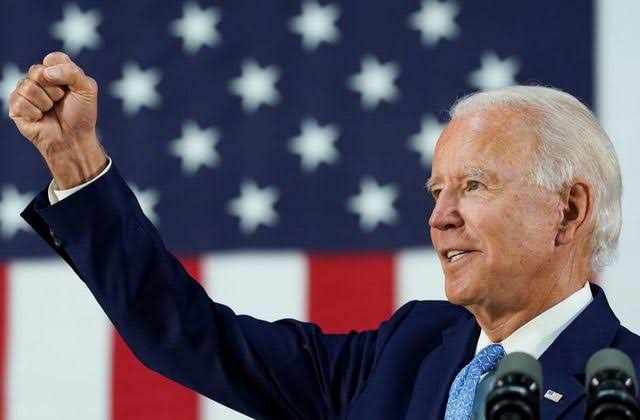
Thirty-three years ago, he was the fast-talking junior senator from Delaware with a chip on his shoulder, desperate to prove his gravitas during a brief, ill-fated presidential run.
The next time around, in 2008, he was the seasoned foreign policy hand and veteran lawmaker who strained to capture the imagination of Democratic presidential primary voters.
As he weighed a third attempt at the presidency last year, many Democrats feared he was too late. Too old, too moderate, too meandering to excite ascendant voices in his party, too rooted in the more civil politics of the past to nimbly handle Donald Trump.
Joseph Robinette Biden Jr. ran anyway. He ran as a grieving father who connected with a country in pain. As a relative centrist who emphasized character, stability and belief in bipartisanship over the particulars of a policy agenda. As a flawed, uneven campaigner whose vulnerabilities were ultimately drowned out by his opponent’s outsize weaknesses, and eclipsed by the seismic issues at stake, as the nation confronted the ravages of a deadly pandemic.
In many ways, he ran as the politician he has always been. And for one extraordinary election, that was enough.
“They’re not so much saying, ‘I’m investing in Joe Biden because of his philosophy,’” said former Senator William S. Cohen, Republican of Maine, who served with Mr. Biden and supported him this year. “They’re invested in Joe Biden because of him, of who they see as being a human being.”
Mr. Biden’s victory on Saturday is the culmination of a career that began in the Nixon era and spanned a half-century of political and social upheaval. But if the country, the political parties and Washington have changed since Mr. Biden, now 77, arrived in the Senate as a 30-year-old widower in 1973, some of his attitudes — about governing and about his fellow Americans — have hardly changed at all.
He still reveres institutions, defiantly champions compromise and sees politics more in terms of relationships than ideology. He has insisted that with Mr. Trump out of office, Republicans will have an “epiphany” about working with Democrats — a view that elides the fact that Republicans were rarely interested in working with the Obama administration when Mr. Biden was vice president.
Those beliefs, coupled with his reputation as an empathetic and experienced leader, made Mr. Biden acceptable to a broad coalition of Americans this year, including independents and some moderate Republicans.
Now, Mr. Biden’s convictions about how to unite the country and move forward will be tested as never before.
He will take the helm of a nation devastated by a health crisis, reeling from an economic downturn and divided over virtually every major political matter of the day, from how and even whether to confront climate change and racial injustice, to baseless questions from some of Mr. Trump’s supporters about the very legitimacy of free and fair election results.
His first priority, Mr. Biden has said, will be to bring the coronavirus under control, as he also works to invest in infrastructure and to promote economic growth. Mr. Biden has released a series of policy plans around all of those issues, and has made clear that a national emergency calls for urgent and ambitious action.
But the president-elect, a 36-year veteran of the Senate who has never embraced the most far-reaching progressive proposals, is also well aware that the partisan makeup of Washington may limit the scope of his agenda. He is unlikely to press for rapid, transformational change of institutions like the Supreme Court or to embrace the boldest proposals in the Green New Deal.
Yet for all of his instincts for consensus-building, he will face enormous and conflicting pressures when he returns to Washington.
Progressives who papered over their differences with Mr. Biden in the name of defeating Mr. Trump will quickly turn to fighting for their priorities, which may not always align with Mr. Biden’s goals or timeline.
“Where the progressive energy will really turn angry is if we see Biden really compromising on core principles,” warned Representative Pramila Jayapal of Washington, a co-chair of the Congressional Progressive Caucus.
Even his closest allies believe there are elements of his long record that should be reconsidered from the White House, including the legacy of the crime bills passed during his tenure in the Senate. Mr. Biden for years served as a tough-on-crime Democrat, and he has sometimes struggled to account for his leading role in the 1994 crime bill, which many experts now associate with mass incarceration.
“He needs to put together a commission or a committee to study the 1986 and 1994 crime bills,” said Representative James E. Clyburn of South Carolina, the highest-ranking Black official in Congress, describing mass incarceration as an unintended consequence. “We’ve got to rectify.”
And Senator Mitch McConnell of Kentucky, the powerful Republican leader, has a relationship with Mr. Biden — but he is unlikely to be moved by encomiums to bipartisanship and civility.
“Joe is a peacemaker — he’s always tried to get along with Republicans,” said Harry Reid, a Nevada Democrat and the former Senate majority leader.
But he was skeptical that Republican leaders in Congress would feel similarly about curbing divisiveness in Washington.
“I just hope Joe’s right and I’m wrong,” he said, “but I don’t see that coming to an end.”
Mr. Biden was a mediocre student with big ambitions, a gregarious young football player from an Irish Catholic family who overcame a stutter and dreamed of running for president.
In the meantime, he settled for school politics, serving as class president at his Catholic high school and adopting an approachable manner that he would deploy decades later on the campaign trail.
“The joke was, if Joe stood next to a light pole, he’d strike up a conversation,” said Bob Markel, a childhood friend of Mr. Biden’s. “You were talking to him for 20 seconds, he’d put out his hand and say, ‘Joe Biden.’”
He came from a line of politically engaged Pennsylvanians on his mother’s side, with a great-grandfather who served as a state senator. His father was a dignified man who had struggled financially, “a student of history with an unyielding sense of justice,” Mr. Biden said in his eulogy. Joseph R. Biden Sr., who moved the family from Scranton, Pa., to Delaware when Mr. Biden was 10, shaped his son’s moral compass and instilled in him a strong sense of identity; his story looms large in Mr. Biden’s efforts today to connect with working-class Americans.
Mr. Biden enrolled at the University of Delaware, where he threw himself into politics as freshman class president. He participated in the occasional high jinks, though even then he was fairly conservative in his personal manner.
“It’s the same style that I think we’ve seen since he was a teenager,” Mr. Markel said. “That moderation can be seen when he was in his teens. He was a fun-loving guy, certainly outgoing, but he didn’t do crazy things.”
For all of his political ambitions, he was at a remove from the antiwar activism taking hold among his peers in the caldron of the 1960s, and he was not one for protesting. After graduating from law school, he followed a path into institutional Democratic politics: young lawyer, part-time public defender and rising star within the Delaware party establishment.
At the end of that decade, party elders suggested he try his hand at a seat on the New Castle County Council.
“I spent most of my time in heavily Democratic precincts,” Mr. Biden recalled, describing the race in a memoir. “But I also spent a great deal of time going door to door in the middle-class neighborhoods like the one I grew up in. They were overwhelmingly Republican in 1970, but I knew how to talk to them.”
At the age of 30, Mr. Biden was moving swiftly in his political career. But personally, he was a broken man.
In a day, he had gone from a married father of three who won a startling victory in the 1972 Senate race to a widower with two toddlers in the hospital after a car crash killed his wife, Neilia, and their baby daughter, Naomi.
For months, he struggled to adjust to the Senate job he had wanted so badly.
Decades later, one of his surviving sons, Beau, would die of brain cancer. Mr. Biden, by then vice president, would be shattered anew.
Yet those staggering personal losses, friends say, shaped Mr. Biden’s uncommon ability to empathize — perhaps his greatest strength.
On the campaign trail, he never spoke with deeper authority than when he promised a grieving voter that one day, the memory of a loved one would bring a smile before a tear. His skill at connecting with voters in pain, allies say, uniquely prepared him to run for president amid a pandemic that has killed more than 237,000 people in the United States and upended the lives of many others on Mr. Trump’s watch.
“He understood the emotional trauma that Trump has inflicted on the country in a way that most of the other candidates didn’t,” said Shailagh Murray, who was a top aide to Mr. Biden as vice president.
After the 1972 accident, Mr. Biden slowly began rebuilding his life, later marrying Jill Jacobs and having a daughter, Ashley.
And eventually, he settled into Washington, too, where his early instincts for bipartisanship and working within the system were reinforced by mentors like Mike Mansfield, the longtime Senate majority leader.
Mr. Biden rose to lead the Senate Foreign Relations Committee and the Senate Judiciary Committee. He advanced signature policy achievements like the Violence Against Women Act and an assault weapons ban, and he developed relationships with leaders around the world. He torpedoed the nomination of Robert H. Bork to the Supreme Court, a setback that some Republicans remain bitter about to this day, and championed the confirmation of Justice Ruth Bader Ginsburg.
His tenure in the Senate is also associated with what many Americans see as the mistreatment of Anita Hill before his committee during the Supreme Court confirmation hearings for Clarence Thomas; with his vote for the Iraq war and his opposition to busing; and with his leading efforts on the 1994 crime bill that troubled some voters throughout the campaign.
As he navigated Congress, Mr. Biden built relationships with similarly consensus-minded Republicans like Senators Bob Dole, Arlen Specter and John McCain.
But Mr. Biden, who has said he was motivated to run for office in part by a belief in civil rights, was also willing to work with even the most virulent segregationist senators. And perhaps, the most controversial speech he has given was his eulogy for Senator Strom Thurmond of South Carolina.
“At least there was some civility,” Mr. Biden said at a fund-raiser in June 2019, citing James O. Eastland of Mississippi and Herman E. Talmadge of Georgia. “We didn’t agree on much of anything. We got things done.”
Under fire, Mr. Biden ultimately expressed regret for the way he invoked segregationist former colleagues.
He did not apologize for the instinct.
The stature Mr. Biden gained in the Senate did not always translate on the presidential campaign trail.
His 1988 race ended in humiliation amid a plagiarism controversy.
In 2008, Mr. Biden struggled to stand out in a talented and crowded field that included Barack Obama and Hillary Clinton. He dropped out after Iowa, after cementing his reputation for verbal gaffes by referring to Mr. Obama as “articulate and bright and clean.”
But as Mr. Obama’s vice president, Mr. Biden was in many ways back in his element.
“Every time we had a trouble in the administration, who got sent to the Hill to settle it? Me,” Mr. Biden said at that 2019 fund-raiser. “Because I demonstrate respect for them.”
Sometimes that approach got him results — he helped secure three Republican votes for the economic stimulus bill in 2009, for example.
On other occasions — including a major gun control effort after the school shooting in Newtown, Connecticut — it ultimately did not.
Mr. Biden, like many of his fellow Democrats, was enraged by the Trump presidency and fearful about the corrosive effects of four more years of extraordinary divisiveness.
But he was also closely attuned to moderate, older Black primary voters and had carefully followed which Democrats won in the toughest districts in the 2018 midterm elections. As Mr. Biden mulled a third presidential bid, he was skeptical of tacking far to the left in response to Mr. Trump and his Republican allies. And he was convinced, based on his own experiences, that he could help find common ground.
“Through very difficult periods in the country’s history, he believes he has been able to bring people together,” said Mike Donilon, Mr. Biden’s chief strategist, citing the 2009 stimulus bill and his efforts on a sweeping health measure at the end of 2016. “Beyond the politics, there are also just fundamental judgments about how to treat people, how to talk to them.”
Throughout his campaign, Mr. Biden has championed that approach, sometimes with a touch of performative defensiveness.
“We need to revive the spirit of bipartisanship in this country,” he said in a speech in Gettysburg, Pennsylvania, last month. “I’m accused of being naïve. I’m told, ‘Maybe, that’s the way things used to work, Joe, but they can’t work that way anymore.’”
“They can and they must if we’re going to get anything done,” he said.
Mr. Biden, of course, has a policy agenda too, one that he has addressed often in recent months.
He ran on a platform of expanding health care access through a public option, and promoting the middle class. He promised to tackle climate change and to combat racial injustice, acknowledging that America has “never lived up” to the promise that all Americans are created equal. After the pandemic hit, he grew increasingly open to more ambitious social and economic proposals.
But more than anything, he ran as himself, with all of the convictions and the flaws he has displayed over a half-century in public life.
There were the exaggerations and verbal blunders and the flashes of temper. He lost the first three contests, and his campaign was practically moribund when Black voters in South Carolina, who saw him as a familiar and reassuring figure in troubled times, rescued his bid.
“We know Joe,” Mr. Clyburn said as he endorsed Mr. Biden. “But most importantly, Joe knows us.”
And through those peaks and valleys, Mr. Biden hewed to one consistent message: that the turmoil of the Trump era was an existential threat to the character of the country — and that he was uniquely equipped to lower the nation’s temperature and try to bring the country together.
“Has the heart of this nation turned to stone?” Mr. Biden said recently, speaking in Warm Springs, Georgia. “I refuse to believe it. I know this country. I know our people. And I know we can unite and heal this nation.”
In some ways, it is a promise he has been preparing to make for his whole career.
This time around, a majority of American voters decided to believe him.



The Peoples Democratic Party (PDP) has inaugurated a special legal team to handle election petitions arising from last Saturday’s Area Council elections in the Federal Capital Territory.
This comes as the All Progressives Congress (APC) won in Abaji, Kwali, AMAC, and Bwari Area Councils, while the PDP secured victory only in Gwagwalada.
The Tide reports that the council elections were held on Saturday, February 21, 2026, across all six FCT area councils, including Abaji, AMAC, Bwari, Gwagwalada, Kuje, and Kwali.
Results announced so far by the Independent National Electoral Commission (INEC) show that the All Progressives Congress (APC) won in Abaji, Kwali, AMAC, and Bwari Area Councils, while the PDP secured victory only in Gwagwalada.
In a statement issued yesterday by PDP’s National Publicity Secretary, Ini Ememobong, the party congratulated its candidates, who emerged winners in the chairmanship and councilor elections.
The opposition party acknowledged the victories, noting that the number of wins was lower than expected but significant given the alleged irregularities during the polls.
“We specifically congratulate the Chairman-elect of Gwagwalada Area Council, Mohammed Kasim, and the councillors who have been declared successful by the Independent National Electoral Commission (INEC).
“This victory, though less in number than we anticipated, is particularly gladdening because it is against the background of unprecedented intimidation, high-powered money politics, and brazen executive brigandage,” the statement read.
Ememobong claimed that there are reports and video evidence indicating voter intimidation and unlawful conduct that influenced the outcome of the elections.
“Reports and video evidence abound where armed security personnel were used to cart away result sheets in polling units, intimidate voters, and unduly influence the outcome of the elections.”
To address complaints and litigations arising from the polls, he said the party has set up a legal team headed by its National Legal Adviser, Shafi Bara’u, Esq.
The statement urged candidates with legitimate grievances to contact the Legal Adviser promptly, as delays could jeopardise their chances in election petition cases.
“The incredible voter apathy in these polls is a direct response to the anti-people Electoral Act 2026, where the people have completely lost faith in the electoral outcomes from elections conducted under this Act.
“These Local Council polls may just be a foreshadowing of the forthcoming general elections in 2027 if changes are not urgently made,” the statement added.
The PDP called on the National Assembly and the President to take corrective action to safeguard the integrity of Nigeria’s democracy.

The Chief Justice of Nigeria, Kudirat Kekere-Ekun, will on Wednesday swear in Justice Joseph Oyewole as a Justice of the Supreme Court of Nigeria.
The ceremony is scheduled to be held at 2pm at Courtroom Two of the Supreme Court complex in Abuja.
The court urged guests to adhere strictly to the court’s protocols and security measures.
This was contained in a statement issued yesterday by the Supreme Court’s Director of Information and Public Relations, Dr Festus Akande.
The court described Oyewole’s appointment as a step towards reinforcing the capacity of the apex court to deliver fair and timely judgments.
Recall that Oyewole was, until his elevation, a Justice of the Court of Appeal and Presiding Justice of the Enugu Division, and joins the apex court bench as part of ongoing efforts to strengthen the judiciary.
The National Judicial Council recommended Oyewole for the position alongside 35 others for various judicial offices, following its 110th meeting held on January 13, 2026, and presided over by Justice Kekere-Ekun.
The statement partly read, “The Chief Justice of Nigeria, Hon. Justice Kudirat Kekere-Ekun, GCON, will on Wednesday, 25th February, 2026, preside over the swearing-in ceremony of the newly appointed Justice of the Supreme Court, Hon. Justice Joseph Olubunmi Kayode Oyewole, JCA.”
According to the statement, Oyewole served with distinction at the Court of Appeal and as Presiding Justice of the Enugu Division prior to his elevation.
“His appointment underscores the commitment of the Nigerian judiciary to upholding the rule of law, ensuring justice, and strengthening the bench with experienced and dedicated jurists. He brings a wealth of legal expertise and integrity to the apex court to further enhance its capacity to deliver fair and timely judgments,” the statement added.
The apex court further described the swearing-in as “another significant step in rejuvenating the judiciary and ensuring the continued delivery of justice in line with the highest standards of integrity, competence, and impartiality.”
The Supreme Court reiterated its commitment to justice, fairness and judicial independence for the benefit of Nigerians.

Rivers State Governor, Sir Siminalayi Fubara, has expressed deep shock and sadness over the sudden passage of Senator Barinada Mpigi, the Senator representing South East Senatorial District of Rivers State.
In a tribute to mourn the deceased, Governor Fubara described Mpigi as a brother, a consummate politician and one of the leading lights in Rivers State.
He said that Mpigi died at a critical time when his services were still needed by the people of Rivers State and prayed God Almighty to grant him eternal rest.
The governor commiserated with his immediate family, the Rivers South East Senatorial District and the Senate at large, asking them to take solace in the fact that the deceased lived a good life and impacted positively on the people.
Senator Mpigi died at the age of 64. Until his death, he was the Chairman of the Senate Committee on Works.
-
Maritime20 hours ago
Customs Declares War Against Narcotics Baron At Idiroko Border
-
Maritime20 hours ago
Nigeria To Pilot Regional Fishing Vessels Register In Gulf Of Guinea —Oyetola
-
Maritime20 hours ago
NIMASA,NAF Boost Unmanned Aerial Surveillance For Maritime Security
-
Maritime20 hours ago
NIWA Collaborates ICPC TO Strengthen Integrity, Revenue
-

 Sports19 hours ago
Gombe-Gara Rejects Chelle $130,000 monthly salary
-
City Crime16 hours ago
NCSU Hails Fubara Over 2025 New Telegraph Man Of The Year Award
-
Maritime20 hours ago
NIMASA GETS NEW MARITIME GUARD COMMANDER,ADOKI
-

 Business20 hours ago
BOI Introduces Business Clinic