
News
Biden Wins Presidency, Ending Four Tumultuous Years Under Trump

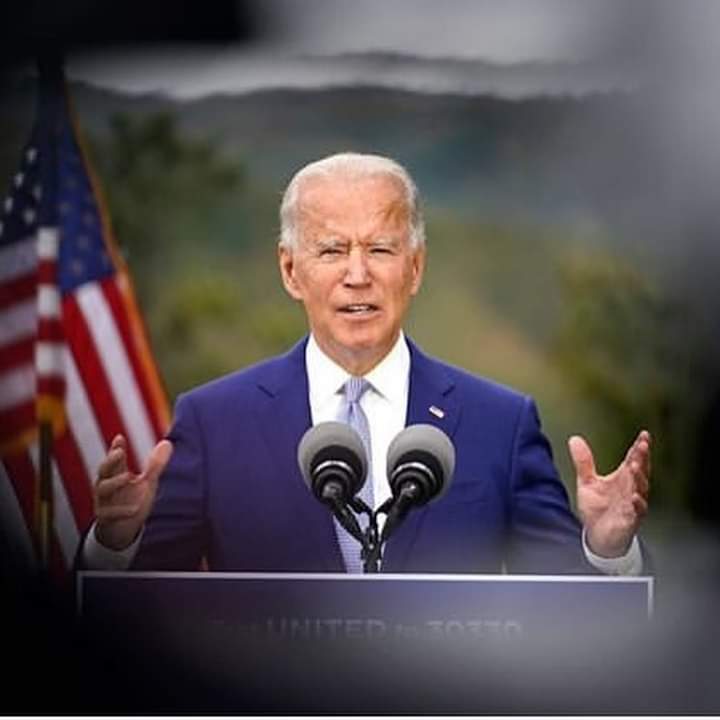
Joseph Robinette Biden Jr. was elected the 46th president of the United States on Saturday, promising to restore political normalcy and a spirit of national unity to confront raging health and economic crises, and making Donald J. Trump a one-term president after four years of tumult in the White House.
Mr. Biden’s victory amounted to a repudiation of Mr. Trump by millions of voters exhausted with his divisive conduct and chaotic administration, and was delivered by an unlikely alliance of women, people of colour, old and young voters and a sliver of disaffected Republicans. Mr. Trump is only the third elected president since World War II to lose re-election, and the first in more than a quarter-century.
The result also provided a history-making moment for Mr. Biden’s running mate, Senator Kamala Harris of California, who will become the first woman to serve as vice president.
With his triumph, Mr. Biden, who turns 78 later this month, fulfilled his decades-long ambition in his third bid for the White House, becoming the oldest person elected president. A pillar of Washington who was first elected amid the Watergate scandal, and who prefers political consensus over combat, Mr. Biden will lead a nation and a Democratic Party that have become far more ideological since his arrival in the capital in 1973.
He offered a mainstream Democratic agenda, yet it was less his policy platform than his biography to which many voters gravitated. Seeking the nation’s highest office a half-century after his first campaign, Mr. Biden — a candidate in the late autumn of his career — presented his life of setback and recovery to voters as a parable for a wounded country.
In a brief statement issued after Pennsylvania delivered the crucial electoral votes for victory, Mr. Biden called for healing and unity. “With the campaign over, it’s time to put the anger and the harsh rhetoric behind us and come together as a nation,” he said. “It’s time for America to unite. And to heal. We are the United States of America. And there’s nothing we can’t do, if we do it together.” Mr. Biden planned to address the nation Saturday night.
In his own statement, Mr. Trump insisted “this election is far from over” and vowed that his campaign would “start prosecuting our case in court” but offered no details.
Mr. Biden’s victory, which came 48 years to the day after he was first elected to the United States Senate, set off jubilant celebrations in Democratic-leaning cities. In Washington, where Mr. Trump was despised by the city’s liberal residents, people streamed into the streets near the White House and cheered as cars bearing American flags drove by honking.
The race, which concluded after four tense days of vote-counting in a handful of battlegrounds, was a singular referendum on Mr. Trump in a way no president’s re-election has been in modern times. He coveted the attention, and voters who either adored him or loathed him were eager to render judgment on his tenure. From the beginning to the end of the race, Mr. Biden made the president’s character central to his campaign.
This unrelenting focus propelled Mr. Biden to victory in historically Democratic strongholds in the industrial Midwest with Mr. Biden forging a coalition of suburbanites and big-city residents to claim at least three states his party lost in 2016. With ballots still being counted in several states, Mr. Biden was leading Mr. Trump in the popular vote by more than four million votes.
Yet even as they turned Mr. Trump out of office, voters sent a more uncertain message about the left-of-centre platform Mr. Biden ran on as Democrats lost seats in the House and made only modest gains in the Senate. The divided judgment — a rare example of ticket splitting in partisan times — demonstrated that, for many voters, their disdain for the president was as personal as it was political.
Even in defeat, though, Mr. Trump demonstrated his enduring appeal to many white voters and his intense popularity in rural areas, underscoring the deep national divisions that Mr. Biden has vowed to heal.
The outcome of the race came into focus slowly as states and municipalities grappled with the legal and logistical challenges of voting in the midst of the Coronavirus pandemic. With an enormous backlog of early and mail-in votes, some states reported their totals in a halting fashion that in the early hours of Wednesday painted a misleadingly rosy picture for Mr. Trump.
But as the big cities of the Midwest and West began to report their totals, the advantage in the race shifted the electoral map in Mr. Biden’s favour. By Wednesday afternoon, the former vice president had rebuilt much of the so-called blue wall in the Midwest, reclaiming the historically Democratic battlegrounds of Wisconsin and Michigan that Mr. Trump carried four years ago. And on Saturday, with troves of ballots coming in from Philadelphia and Pittsburgh, he took back Pennsylvania as well. As if that was not enough, Biden also won Nevada, with its 6 Electoral College votes, on Saturday.
While Mr. Biden stopped short of claiming victory as the week unfolded, he appeared several times in his home state, Delaware, to express confidence that he could win, while urging patience as the nation awaited the results. Even as he sought to claim something of an electoral mandate, noting that he had earned more in the popular vote than any other candidate in history, Mr. Biden struck a tone of reconciliation.
It would soon be time, he said, “to unite, to heal, to come together as a nation.”
In the days after the election, Mr. Biden and his party faced a barrage of attacks from Mr. Trump. The president falsely claimed in a middle-of-the-night appearance at the White House on Wednesday that he had won the race and that Democrats were conjuring fraudulent votes to undermine him, a theme he renewed on Thursday evening in grievance-filled remarks conjuring up, with no evidence, a conspiracy to steal votes from him.
The president’s campaign aides adopted a tone of brash defiance as swing states fell to Mr. Biden, promising a flurry of legal action. But while Mr. Trump’s ire had the potential to foment political divisions, there was no indication that he could succeed with his seemingly improvisational legal strategy.
Through it all, the Coronavirus and its ravages on the country hung over the election and shaped the choice for voters. Facing an electorate already fatigued by his aberrant conduct, the president effectively sealed his defeat by minimizing a pandemic that has created simultaneous health and economic crises.
Beginning with the outbreak of the virus in the country at the start of the year, through his own diagnosis last month and up to the last hours of the election, he disregarded his medical advisers and public opinion even as over 230,000 people in the United States perished.
Mr. Biden, by contrast, sought to channel the dismay of those appalled by Mr. Trump’s mismanagement of the pandemic. He offered himself as a safe harbour for a broad array of Americans, promising to guide the nation out of what he called the “dark winter” of the outbreak, rather than delivering a visionary message with bright ideological themes.
While the president ridiculed mask-wearing and insisted on continuing his large rallies, endangering his own staff members and supporters, Mr. Biden and Ms. Harris campaigned with caution, avoiding indoor events, insisting on social distancing and always wearing masks.
Convinced that he could win back the industrial Northern states that swung to Mr. Trump four years ago, Mr. Biden focused his energy on Michigan, Wisconsin and Pennsylvania. Mr. Biden triumphed in those states on the strength of overwhelming support from women, who voted in large numbers to repudiate Mr. Trump despite his last-minute pleas to “suburban housewives,” as he called them.
Many of the women who decided the president’s fate were politically moderate college-educated suburbanites, who made their presence felt as an electoral force first in the 2018 midterm elections, when a historic wave of female candidates and voters served as the driving force behind the Democratic sweep to power in the House.
Even aside from the pandemic, the 2020 campaign unfolded against a backdrop of national tumult unequalled in recent history, including the House’s vote to impeach the president less than a year ago, a national wave of protests over racial injustice last spring, spasms of civil unrest throughout the summer, the death of a Supreme Court justice in September and the hospitalization of Mr. Trump in October.
Along the way, Mr. Trump played to his conservative base, seeking to divide the nation over race and cultural flash points. He encouraged those fears, and the underlying social divisions that fostered them. And for months he sought to sow doubt over the legitimacy of the political process.
Mr. Biden, in response, offered a message of healing that appealed to Americans from far left to centre right. He made common cause by promising relief from the unceasing invective and dishonesty of Mr. Trump’s presidency.
The former vice president also sought to demonstrate his differences with the president with his selection of Ms. Harris, 56, whose presence on the ticket as the daughter of Indian and Jamaican immigrants stood in stark contrast to Mr. Trump’s relentless scapegoating of migrants and members of racial-minority groups.
Mr. Biden will be only the second Catholic to attain the presidency, along with John F. Kennedy.
In an era when political differences have metastasized into tribal warfare, at least, 74 million voters turned to a figure who has become known as the eulogist in chief for his empathy and friendships with Republicans and Democrats alike.
In a sign of how much Mr. Trump alienated traditional Republicans, a number of prominent members of the party endorsed Mr. Biden’s candidacy, including Cindy McCain, the widow of former Senator John McCain; the party’s other two presidential nominees this century, George W. Bush and Mitt Romney, declined to endorse Mr. Trump.
Yet for all his lofty language about uniting the country, Mr. Biden was a halting candidate who ran a cautious campaign, determined to ensure that the election became a referendum on Mr. Trump. The former vice president fully returned to the campaign trail only around Labour Day, and for weeks he limited his appearances to one state every other day or so. He went west of the Central time zone just once during the general election.
As he prepares to take the oath of office on Inauguration Day on January 20, he will return to Washington confronting a daunting set of crises. Mr. Biden will be pressed to swiftly secure and distribute a safe vaccine for the Coronavirus, revive an economy that may be in even more dire shape in January than it is now, and address racial justice and policing issues that this year prompted some of the largest protests in American history.
And he will do so with a Congress that is far more polarized than the Senate he left over a decade ago, with many Republicans having embraced Mr. Trump’s nativist brand of populism and Democrats increasingly responsive to an energized left. If Mr. Biden cannot bridge that divide as president and elicit some cooperation from the G.O.P., he will face immense pressure from his party’s progressive wing to abandon conciliation for a posture of combat.
Mr. Biden has held out hope about working with Republican lawmakers while declining to support his party’s most ambitious goals, like single-payer health care and the Green New Deal; he has resisted structural changes such as adding justices to the Supreme Court.
This irked his party’s base but made it difficult for Republicans, from Mr. Trump down the ballot, to portray him as an extremist. Mr. Biden was largely absent from the appeals of G.O.P. candidates, who instead used their advertising to insist that the Democratic Party would be in the hands of more polarizing figures on the left such as Senator Bernie Sanders.
Unlike the last two Democrats who defeated incumbents after voters tired of Republican leadership, Jimmy Carter and Bill Clinton, Mr. Biden will not arrive in the capital as a youthful outsider. Instead, he will fill out a Democratic leadership triumvirate, which includes Speaker Nancy Pelosi and Senator Chuck Schumer, of lawmakers who are 70 or older.
Mr. Biden alluded to himself during the campaign as a transitional figure who would bring the country out of a crisis and then make way for a new generation. But he has privately rejected suggestions that he commit to serving just a single term, viewing that as an instant guarantee of lame-duck status.
One of the most significant tests of Mr. Biden’s presidency will be in how he navigates the widening divisions in his party.
He may enjoy a honeymoon, though, because of both the scale of the problems he is grappling with and the president he defeated.
This election represented the culmination of nearly four years of activism organized around opposing Mr. Trump, a movement that began with the Women’s March the day after his inauguration. Indeed, Mr. Biden’s election appeared less the unique achievement of a political standard-bearer than the apex of a political wave touched off by the 2016 election — one that Mr. Biden rode more than he directed it.
But Mr. Trump’s job approval rating never hit 50 percent and, when the Coronavirus spread nationwide and Mr. Biden effectively claimed the Democratic nomination in March, the president’s hopes of running with a booming economy and against a far-left opponent evaporated at once.
Still, many Democrats were nervous and some Republicans were defiantly optimistic going into the election, both still gripped by Mr. Trump’s shocker four years ago. And well into the night Tuesday, it seemed as if the president might be able to do it again. But four days later, after a year of trial in America and four turbulent years of the Trump administration, victory was in hand for Mr. Biden.


News
Rivers DPOs Receive Awards For Outstanding Performance In Crime Prevention …As Students, Media Group Honour CSP Worgu, CSP Yusuf


Two Divisional Police Officers (DPOs) in Rivers State have been honoured by separate groups for their contributions to security, crime prevention and improved community-police relations in their respective areas of responsibility.
The beneficiaries are the DPO of Afam Police Division, CSP Endurance Worgu and his counterpart at Oyigbo Police Division, CSP Bello Yusuf.
CSP Worgu was honoured by a group of students under the aegis of Rivers State Graduate Students Associations for what they described as his commitment and outstanding performance in the discharge of his duties.
The students, led by Chidi John Enyie, Esq. said CSP Worgu was selected based on his track record and status as one of the longest-serving young DPOs of Rivers State origin.
According to the group, CSP Worgu has made significant contributions to the protection of lives and property in the area since assuming office following the #EndSARS period.
The students said they were particularly impressed by the improvement in community-police relations under his leadership, noting that professionalism had remained a key feature of his service.
Enyie represented by Comrade Briggs Soku, said the students community was pleased to identify with a Rivers indigene who had distinguished himself in the police force.
He said the students considered it necessary to encourage and celebrate CSP Worgu because of his achievements as a young Rivers man excelling in a profession that many people from the state were often reluctant to join.
Receiving the award at his office in Afam, CSP Worgu expressed gratitude to God and the students for finding him worthy of the honour.
The DPO said the recognition had boosted his morale and encouraged him to sustain his efforts towards maintaining peace and security in the area.
He said he least expected the honour, particularly because it came from the students, adding that the recognition would further motivate him to serve the people better.
CSP Worgu assured residents of Afam that the police would sustain the existing peace in the area.
He appealed to members of the public to support the police by providing credible and timely information, stressing that useful information from residents would make the job of security personnel easier.
Meanwhile, the Ikwerre/Etche Media Association has also honoured the DPO of Oyigbo Police Division, CSP Bello Yusuf, for his efforts in tackling criminal activities in the area.
The media group presented the award following the swift tracking and arrest of five suspected kidnappers who had allegedly terrorised residents of the Kom-Kom axis and other parts of Oyigbo.
The group commended CSP Bello for what it described as his determined efforts to restore confidence and security in the affected communities, particularly Kom-Kom and Obeama.
According to the group, the arrest of the suspects demonstrated the DPO’s commitment to tackling criminality and safeguarding residents.
The media association said residents had received the development with relief, noting that the police action had sent a strong message to criminal elements operating in the area.
Responding, CSP Yusuf appreciated the group for the recognition and reaffirmed that there would be no room for criminality in Oyigbo.
He also commended the media for its role in disseminating credible information to the public, saying the media had remained supportive of the police in the fight against crime.
CSP Yusuf warned criminal elements operating in Oyigbo to leave the area or be prepared to face the full weight of the law.
He assured residents that the police would continue to pursue criminals and work to dismantle their hideouts, regardless of where they might be operating.
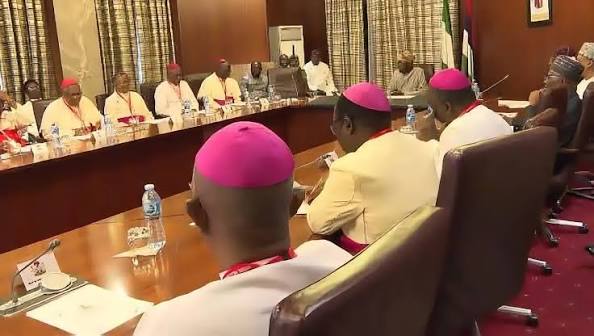
The 5000 Achievers Christian Forum and Colleges of Bishops, Archbishops and Apostles, a Christian interdenominational organisation, has endorsed President Bola Ahmed Tinubu and all candidates of the All Progressives Congress (APC) in Rivers State for the 2027 general elections.
International President of the forum, Archbishop Lucky Aroh, disclosed this during the ordination and consecration of three new Bishops, as well as an award ceremony held in Port Harcourt.
Aroh said the performance of the APC-led Federal Government had endeared the party to the organisation, prompting the forum to declare its support for President Tinubu and other APC candidates in Rivers State.
He said the forum would support all APC candidates in the state during the 2027 elections and urged Nigerians to vote for the party.
Aroh, who is also the General Overseer of Caring Peoples Church, Port Harcourt, charged the newly consecrated Bishops to see their new positions as a great responsibility and dedicate themselves to the advancement of the kingdom of God.
He cautioned them against conduct capable of bringing their offices into disrepute, stressing that their activities would be closely watched by members of the public.
“As Bishops, the eyes of the public are on your activities. You must therefore conduct yourselves in a manner worthy of your calling,” he said.
Also speaking, the International Coordinator of the forum, Bishop Saint Robinson, urged the newly consecrated Bishops to work diligently towards winning souls for the kingdom of God.
Robinson, who was the guest speaker at the event, stressed that the activities of Bishops must at all times be guided by godly principles.
He also called on members of the church to support and cooperate with the newly consecrated Bishops in the discharge of their responsibilities.
The Secretary of the College, Apostle Elizabeth Ayadi Abaye, said the organisation was established to advance the kingdom of God and promote spiritual development.
According to her, the forum has organised several crusades, conferences, prayer meetings, ordinations, consecrations, enthronements, empowerment programmes and other spiritual development activities across the country as part of efforts to win souls for Christ.
Abaye said the organisation has members across the world and disclosed that more programmes had been scheduled to promote the spiritual development and wellbeing of humanity.
The three Bishops consecrated at the ceremony were Prince Alban Chike, Testimony Omenihu Shedrach and Prince Ifemena.
Among those honoured at the event were the Chairman of the Community Development Committee (CDC), Abali Community, Port Harcourt City Local Government Area, Manuchimso Prince Lemmy Wopara, and Clifford Oko Jaja, Coordinator of the 5,000 House-to-House for President Tinubu.
By: John Bibor
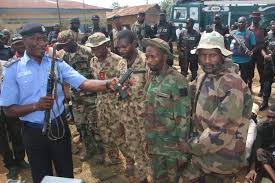
The Rivers State Police Command has arrested a 49-year-old suspected fake soldier, Andrew Atausi, and several other suspects in connection with various criminal activities, including kidnapping, armed robbery, cultism, one-chance robbery and the alleged murder of police officers.
The State Commissioner of Police, CP Olugbenga Adepoju, disclosed this in Port Harcourt, recently during a press briefing at the Command Headquarters, where he said the arrests formed part of the operational achievements recorded by the Command between June and August 2026.
Adepoju said Atausi was arrested on August 10 by police operatives along Ada George, Port Harcourt, while dressed in military uniform and driving a Toyota Hilux painted in Army colours.
The Commissioner said investigation revealed that Atausi was not a member of the Armed Forces, adding that he was suspected to be a serial car snatcher, with three suspected stolen vehicles recovered from him.
He said the recovered vehicles included three Toyota Hilux vehicles without registration numbers and a Toyota Corona Premio with registration number BNY 380 ES, noting that the chassis and engine numbers of the vehicles had allegedly been tampered with.
Adepoju added that an axe and military accoutrements were also recovered from Atausi, as investigation continued into the circumstances surrounding the vehicles and other items recovered from him.
On the June 29 attack on police officers at Aluu Division, the Commissioner said three members of the gang allegedly responsible for the incident had been arrested by operatives of the Violent Crime Response Unit, VCRU-AKU.
The suspects, identified as Maduabuchi Emeka, 34, alleged gang leader; Doctor Chinedu Owhor, 42, and Kamachi Joe, 28, alleged armourer, reportedly led operatives to their hideout at Omagwa where two AK-47 rifles stolen during the attack were recovered.
Adepoju recalled that two police officers were killed during the Aluu attack, while others were wounded and one officer had his leg amputated, stressing that efforts were ongoing to apprehend the fourth suspect.
On kidnapping, the Commissioner said five members of a suspected kidnapping syndicate were arrested in Oyigbo Local Government Area, adding that they allegedly confessed to operations in Kom-Kom, Railway, Obeama and Afam communities.
He said two other suspects from the same network, Anele Ogbogu, 35, alleged to be the gang’s armourer, and Kenneth Eke, 38, were arrested on July 27, with one AK-47 rifle and one SMG rifle recovered.
The Commissioner further disclosed the arrest of suspects in connection with alleged firearm offences, armed robbery, cultism and one-chance robbery, with firearms, ammunition and other exhibits recovered during the operations.
Adepoju assured residents that the Command would sustain intelligence-led, proactive and community-oriented policing in collaboration with other security agencies, while urging members of the public to continue providing credible information that would assist the police in combating crime across Rivers State.
By; King Onunwor
-

 News4 days ago
RSG Targets Nine Million Residents in Mosquito Net Distribution Campaign
-

 Oil & Energy4 days ago
Aiyedatiwa Signs New Electricity Bill
-

 Maritime4 days ago
Marine Minister Commends President Tinubu On NPERA Bill Assent
-

 Oil & Energy4 days ago
NLNG Commissions Research And Innovation Centre In RSU
-

 News4 days ago
KenPoly Holds Eight Convocations, August 29
-

 News4 days ago
RSG Begins Another Phase of Projects Commissioning Today
-

 News4 days ago
RMAFC Completes Revenue Sharing Review, Proposes New Pay
-

 Maritime4 days ago
NAGAFF Petitions IGP Over Alleged Maritime Police Harassment