
Opinion
A Rehumanising Process

To talk about a Rehumanising process, there must have been a Dehumanising process in the past, which demands repairing some harms done in the past, maybe unwittingly. For those who may wonder what dehumanization process means or ask how it came about, there is one convenient example. Long ago, there was a popular film or movie titled Roots, having to do with slave trade. A key actor, Kunta Kinte, was being forced against his will, to take and accept a new name: Toby. It took severe agonies and tortures for Kunta Kinte to take on the name Toby; but something gave in – personal dignity, identity, volition.
Slave culture, from its local and primitive variation, to the Trans-Atlantic one, entailed unspeakable dehumanization. Its abolition, which was necessitated largely by agonies of the conscience and other pressures, was a process of rehumanisation. Even with the combination of commercialism and proselytism, colonialism added to the process of denying communities their rights and dignity. It is noteworthy that activities of the colonizing powers resulted in global wars (1918 – 1945) and responsible for colossal dehumanization of humanity.
Struggles for political independence by African nations that were colonized brought some peculiar brand of dehumanization, whereby brute force, cunning, subterfuge and shenanigans employed for political freedom, remained as heritage. These added little or no values to individual dignity and identity, but even made situations worse. The processes of partitioning, colonizing, amalgamation and depriving various communities of their rights and dignity also brought about the culture of arbitrariness and impunity. “Warrant chiefs” and tax collectors were foisted on people.
Walter Rodney’s analysis of how Europe under-developed Africa merely scratched at the surface of the issues of dehumanization and distorted development. Historically, here were three traditional scourges of the black man, namely “racism, Arab-Muslim expansionism and white imperialist economic exploitation”. The black race became the recipients of all forms of indignities, abuses and prejudices, under the guise of religious proselytism. Evangelising groups sought to take control of the mind and thinking of “Primitive” people without any consideration of their existing culture and belief system of those they sought to convert.
The so-called political independence attained by colonized communities between 1950-1960 came about largely because of awesome pressures on the parts of the colonial powers. Just as slave trade was abolished because of pressures rather than conviction, so also was hollow independence granted to colonies because of experiences of the World Wars. Like the American war of Independence, black soldiers proved that they were just as humans as the white man. Remove the intimidations of guns and political power, braggadocio can turn to meekness.
Wole Soyinka’s view that the “route to the mind is not the path of bullet, nor the path of the blade, but the invisible, yet palpable paths of discourse” portrays what a Rehumanising process should entail. But what do we find? – the use of bullet, blade and bullying, as the route to the mind. Not discourse!
With a hollow and cleverly packaged political independence, came another localised round of dehumanization, with the arrogance of power and politics of greed and exclusion as instruments for the purpose. Someone described the independence that Nigeria had as medicine whose effect became more dangerous than the ailment. There was no proper diagnosis to ascertain the real needs and ills that needed to be addressed. So, it became a question of not how Europe under-developed Africa, but how Nigeria devalued, shortchanged and dehumanized its citizens. There was a local version of colonialism, employing the instrumentality of religion, ethnicity, treachery and greed to stay in power.
Thus another form of dehumanization entailed the administration of same drug for every symptom or complaint, ignoring the imperative of personal volition and local situation. The need for manpower balancing by means of quota politics brought about enthronement of mediocrity and the ejection of merit in public life. The result of this form of dehumanization and devaluation include frustration on the part of those short-changed and also the fact that nothing works effectively in the country. Thus we have taps that would not hold water, security system that cannot guarantee security and lorry-loads of academic certificates with many of them fake and forged.
Human dignity is closely related to human or personal volition, such that its deprivation is a robbery of the sum-total of what an individual means or stands for. Whenever that centrality of human person is undermined or destroyed, then there is a crime against humanity. This is exactly what many people who hold political and other shades of power seek to do through various ways of denial of people’s volition as an inalienable right. On the part of some individuals there is the tendency towards indolence, moral, mental and physical, resulting in seeking to escape from the rigours of duties and personal responsibilities.
Child up-bringing demands that parents should not make themselves tyrants or become so loose that a child becomes a door-mat or zombie. Similarly those who lead others, or claim to be born to lead, should set such personal examples and become such role models that would inspire others. Law-enforcement agents and coercive institutions should not become sadists and terrorists that set little value on human dignity and freedom. Even those who breach the law should be treated with some level of civility and dignity, and corrected rather than dehumanized. People bring out the best in them if treated as humans. They become wolves if dehumanized!
Rehumanising process demands that people use their hands in ennobling and productive labour and their heads in independent thinking, true to their volition. It is sad if religion joins in the dehumanizing process by turning adherents into lethal automatons and hypocritical dolls. Law and justice must be fair and firm!
Dr. Amirize is a retired lecturer from the Rivers State University, Port Harcourt.



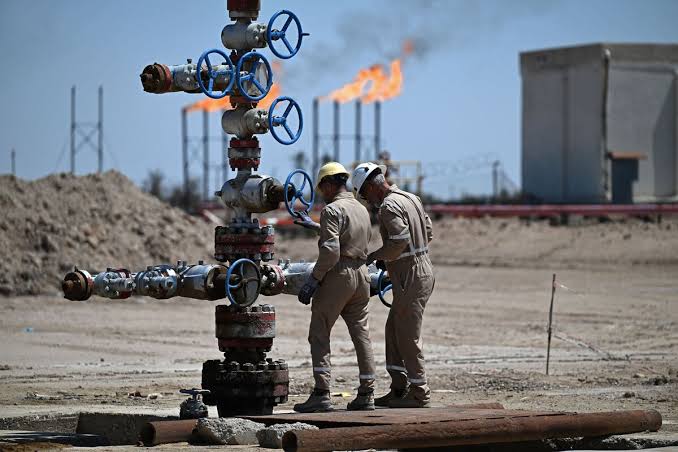
Quote: “No oil vessel, commercial contract or operational deadline is worth the loss of innocent lives; where environmental grievances are ignored and dialogue gives way to confrontation, the entire society pays a price that no compensation can adequately erase.”

Quote:”The value of wealth is
Will and gifts are subjects
A Will is an important legal
Where documentation is
This does not mean every
Properly completed lifetime
Property owners must also
My appeal is simple: let us
-

 Education18 hours ago
FCE Yola Graduates 3,555 Teachers , Seeks Upgrade to University
-

 Niger Delta21 hours ago
Diri Restates Stance On Lagos-Calabar Coastal Highway
-

 Sports18 hours ago
Nigerian Trio Target Titles At PFL Africa Finals
-

 Niger Delta21 hours ago
C’River, NUJ Pay Tribute To Late Guardian Editor
-

 News22 hours ago
NDLEA Recovers Tons Of Illicit Drug Consignments In Nine States
-

 Opinion20 hours ago
Checking Voter Apathy In Nigeria’s Electoral Process
-

 Politics18 hours ago
2027: DICKSON’S EX-ALLY VOWS TO WORK AGAINST NDC INTEREST IN BAYELSA
-

 Politics18 hours ago
2027: GROUP PLEDGES 40,000 SUPPORTERS FOR COALITION CANDIDATES IN RIVERS