
Politics
Kano Assembly Suspends Five Members Over Rowdy Session

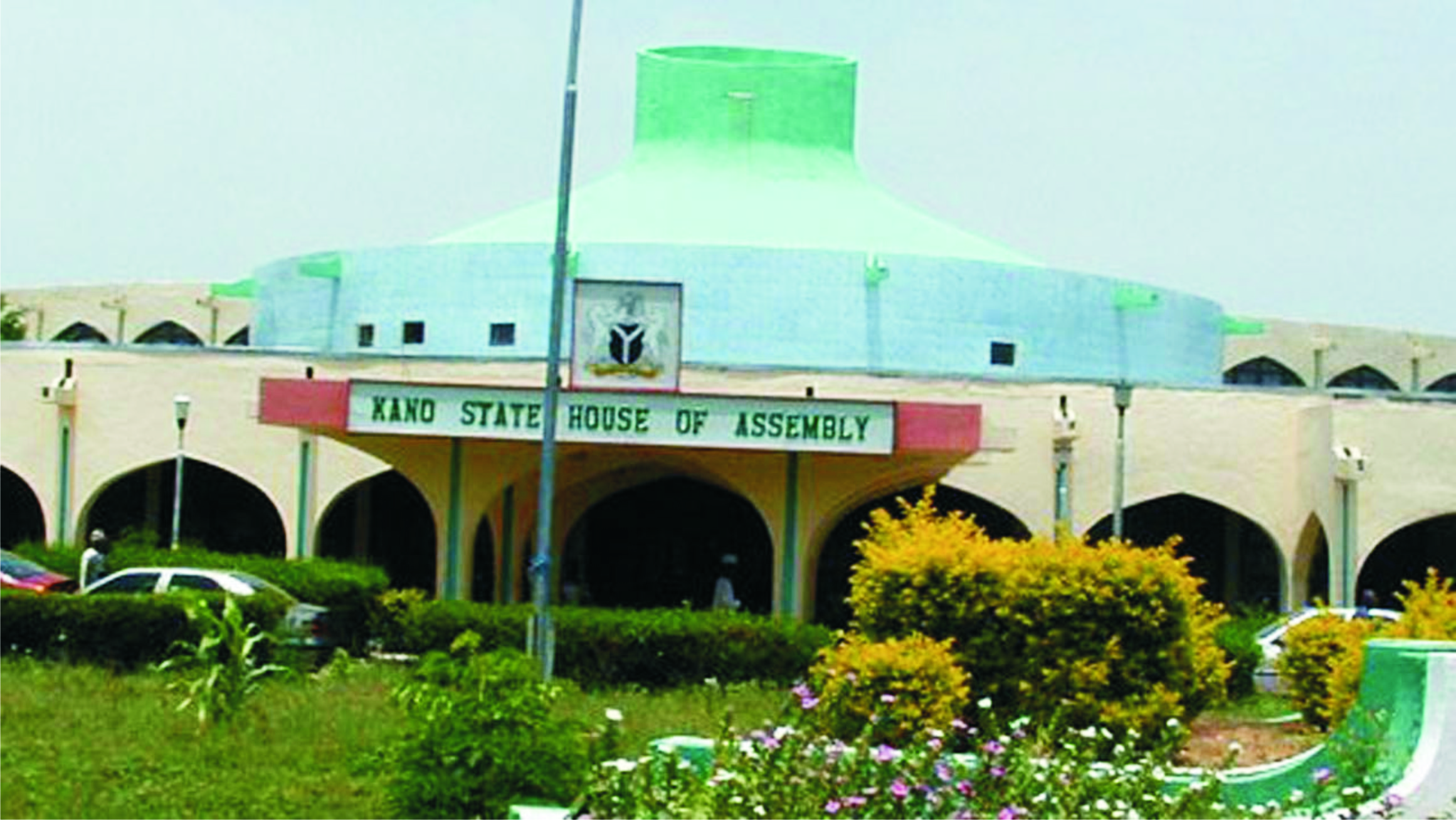
Kano State House of Assembly has slammed six months suspension on five of its members over the March 9 rowdy session.
Speaker Abdulazeez Gafasa announced the suspension, yesterday in Kano at the resumption of the House, saying the members were suspended for misconduct and violation of the Rules of the House.
The suspended members include, Garba Gwarmai, APC Kunchi-Tsanyawa Constituency, Labaran Madari, APC Warawa Constituency, Isyaku Danja, PDP Gezawa Constituency.
Others were Mohammed Bello, APC Rimin Gado-Tofa Constituency and Salisu Gwamgwazo, APC Kano Municipal Constituency, respectively.
Gafasa said: “The five members are suspended for violating the Rules of the House, especially Order IV Sub 4 a, b, d and e. disrupting the sittings of the house and preventing proceedings from going on.
“They behaved violently and even attempted to snatch away the mace in a clear attempt to sabotage the sitting of the House’’.
Our source reports that some members had on March 9, attempted to disrupt the sitting of the House.
The disruption followed attempt to present a report by the House adhoc committee constituted to investigate the deposed Emir of Kano, Muhammad Sanusi ll, who was given one week deadline.
The House was thrown into commotion when members sensed a move by the committee’s Chairman, who is also the deputy speaker, Hamisu Chidari to read an observation two days before the deadline.
A member representing Dala Constituency, Hussaini Lawal rejected the attempt for the presentation of the report.
The action prompted some PDP and APC legislators to protest and rejected the attempt, thus culminating in heated argument and physical combat among some members at the floor of House.


The Commission disclosed the figure in its weekly update for week 14 of the second phase of the exercise, which ended on Friday, April 17, 2026.
According to the breakdown, 2,259,288 Nigerians completed their registration through the online pre-registration portal, while 1,489,416 finalized their registration physically at designated centres nationwide.
INEC noted that the figures remain preliminary and are subject to further verification and data cleaning processes to ensure accuracy ahead of the consolidation of the national voter register.
With the conclusion of the registration phase, the Commission has now shifted focus to the display of the Register of Voters for Claims and Objections, a statutory stage aimed at strengthening the credibility and integrity of the voters register.
The display exercise is scheduled to hold from April 29 to May 5, 2026, across designated centres nationwide, providing citizens the opportunity to verify their details and raise objections where necessary.
The Commission urged all registered voters from the concluded phase to take advantage of the exercise to confirm the accuracy of their information and assist in identifying ineligible entries, including duplicate registrations, deceased persons, and non-citizens.
INEC explained that the Continuous Voter Registration exercise is being conducted in phases, with the first phase running from August 18 to December 10, 2025, while the second phase commenced on January 5, 2026 and ended on April 17, 2026.
The Commission further stated that the date for the commencement of the third phase will be announced in due course.
Reaffirming its commitment to credible elections, INEC stressed that maintaining a clean and accurate voter register remains central to ensuring free, fair, and transparent electoral processes in Nigeria.
The Executive Director of IPC, Mr Lanre Arogundade, informed the journalists that the dialogue was sponsored by the European Union, under the auspices of the EU-Support to Democratic Governance in Nigeria (EU-SDGN II), Component 4: Support to Media.
According to the veteran media practitioner, the programme is aimed at strengthening the capacity of the media to promote credible elections through factual, accurate and fair reporting.
He explained that the programme is part of a broader five-year intervention designed to support democratic governance and improve the role of the media in Nigeria’s electoral process, stressing that fact-checking and inclusive reporting are critical responsibilities for journalists, especially during electioneering.
He described the media as a central role agent with regard to upholding transparency and accountability in the democratic process.
A resource person and Director of Journalism Clinic, Lagos, Mr Taiwo Obe, enjoined journalists to embrace the evolving technology so that they would not be in the backwaters in the practice of the profession.
He advised journalists not to downplay Artificial Intelligence (AI) in their bid to remain relevant in the media environment by being abreast of the changing patterns of news consumption.
The journalism teacher explained that with digital transformation of the media industry, it had become imperative for journalists to constantly upgrade and update their skills, stressing the fundamental place of attitude and self-development and underscored the dynamic nature of media consumption in the digital age, thereby compelling journalists to embrace tools and platforms, but without much reliance on AI.
In his lecture, a Professor of Mass Communication at the Federal University Oye-Ekiti (FUOYE), Adebola Aderibigbe, advised journalists in Ekiti State to ensure that coverage of the upcoming governorship poll is issue-based rather than dwelling on personalities.
He added that sensationalism should not occupy the front-burner of any discussions concerning the 2026 election, admonishing that sustenance of democracy is anchored on responsible journalism.
”Journalists must prioritise accuracy, fairness and balance in their reports by verifying facts and giving all parties involved in political matters the opportunity to present their views”, he said.
According to the university don, the election will not be defined by personalities, but by issues. ”Let issues be the pivotal ring upon which every discussion should be made. Sensationalisation of issues should not be the bedrock of discussions in the 2026 election”, he added.
“Do not hear from Party A without hearing from Party B, otherwise the report will be skewed to one side and once issues of elections are skewed, problems will naturally arise”, he stressed.