
Featured
Tribute To Bishop Matthew Kuka’s Homily

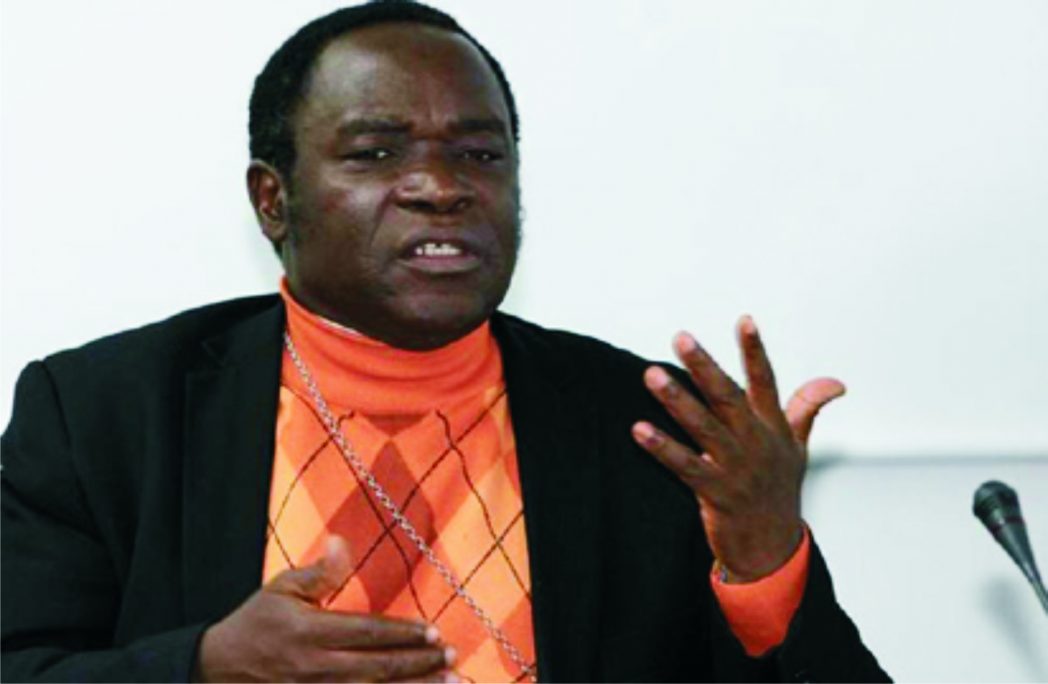
Like a vote of thanks, a tribute is meant to give praise and honour to whom such is due; especially in an environment where people live in fear to say the truth, or tell an emperior that he is dressed like a clown, or behaves like one. Anybody who is acquainted with Bishop Matthew Hassan Kuka would testify that he is an ideal human being and also a shining light of what a Christian should be.
Anybody reading the homily of Bishop Kuka titled “For a Tormented Nation and a Besieged Faith”, carried by The Tide newspaper (Friday February 14, 2020), would be deeply touched by the message contained therein. In the language of the Catholic Church, a homily is a speech or advice given at a special religious ceremony, in this case, burial of a Seminarian, Michael Nnamdi, in Kaduna, murdered by kidnappers recently.
Maybe Michael was not the first or only Seminarian kidnapped in Nigeria for a ransome, but from the Good Shepherd Seminary, Kaduna, that incident was a shock. His death was a greater shock, both to Catholics in Nigeria and across the globe, with a total of 3,305 persons lighting candles shortly before his burial on the February 5.
An ancient sage once said that it is to those who understand the world, not those who disfigure it; those who strive to liberate humans from plight and enslavement, not those who aggravate them, that we owe our loyalty.
We live and intermingle in a world where there are noble and ignoble people and where those who strive to ennoble the status of mankind stand in danger. Yet, the likes of Bishop Matthew Kuka should not be lacking in every society, for they provide courage to the stooping spirit of man. Not only are humans standing in a moment of decision, moment of separation of the darkness from light and moment of rudderless navigation. In the words of Bishop Kuka: “Today, our years of hypocrisy, duplicity, fabricated integrity, false piety, empty morality, fraud and pharisaism have caught up with us”.
Truly, Nigeria is at a point where we must call for a verdict; a time to confront and dispel the clouds of evil that hover over us; for we have practiced madness for too long. Kuka, in his homily recalled how, in Chatham House in London, Buhari said: “If I am elected President, the world will have no reason to worry about Nigeria. Nigeria will return to its stabilising role in West Africa … And I, Muhammadu Buhari, will always lead from the front”.
Bishop Kuka spoke the whole truth and on behalf of Nigerians that “this President has displayed the greatest degree of insensitivity in managing our country’s rich diversity. He has subordinated the larger interest of the country to the hegemonic interests of his co-religionists and clansmen and women … Today, in Nigeria, the noble religion of Islam has convulsed …”
Unfortunately, Islam is beginning to earn an unpleasant reputation through the instrumentality of bad politics. It is true that Muslim scholars, traditional rulers and intellectuals have continued to cry out helplessly, asking for their religion and region to be freed from chokehold. Bishop Kuka tells us that “neither Islam nor the North can identify any real benefits from these years that have been consumed by the locusts that this government has unleashed on our country. The Fulani, his innocent Kinsmen, have become the subject of opprobrium, ridicule, defamation, calumny and obloquy”.
Is it a hate speech to say that this administration is “running the most nepotic and narcissistic government in known history”? Or that “the North still has the worst indices of poverty, insecurity, stunting, squalor and destitution”? does the fact that The Sultan recently lamented the tragic consequences of power being in the wrong hands, not indicate that all is not well with Nigeria currently?
Similarly, we are told that “the Northern Elders who is 2015 believed that General Buhari had come to redeem the North, have now turned against the President.” Is it not true that things fall apart when politicians use religion to extend the frontiers of their ambition and power? Why do kidnappers separate their victims and force Christians to become Muslims?
Apart from the killing of Late Seminarian Michael Nnamdi by his kidnnappers, had there not been similar killing of Christian clerics by kidnappers and terrorists in recent times? Should we accept the logic of a presidential spokesperson that since more Muslims are being killed than Christians, then there is sense in senseless killings? From the homily of Bishop Kuka that “killing Christian and destroying Christianity is seen as one of their key missions,” it become obvious that kidnappers and terrorists are out on a definite purpose.
The fact that His Eminence, the Sultan of Sokoto and the Emir of Kano, two most powerful leaders, have expressed their unhappiness over the situations in the country. But in spite of the obvious provocations and trends, Bishop M. Kuka can still tell the world that “we have no vengeance or bitterness in our hearts…Trials of every sort come our way, but we are not discouraged…”
Bishop Matthew Hassan Kuka has aptly shown through his homily that he has a clear understanding of the problems of this country, one of which is the use of religion as an instrument of political power. While not suggesting the use of violence or vengeance on the part of Christians, he has asked the current administration to run an inclusive system where everyone would have a sense of belonging and contribute to build up Nigeria.
Bright Amirize

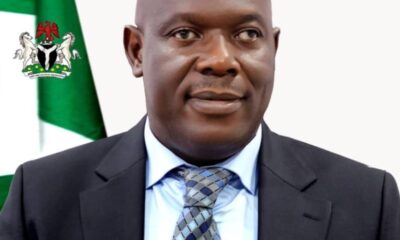


Rivers State Governor, Sir Siminalayi Fubara, has charged the newly appointed Secretary to the State Government (SSG) and Chief of Staff (CoS) to carry out their duties with discipline, loyalty and a firm commitment to the success of the administration and the wellbeing of the people of Rivers State.
The governor warned that any involvement in unauthorised nocturnal meetings or any conduct capable of embarrassing the government will attract immediate dismissal.
Fubara gave the warning yesterday shortly after the newly appointed Secretary to the State Government (SSG), Dr Dagogo S.A. Wokoma and the new Chief of Staff (CoS), Barrister Sunny Ewule, were sworn in at the Executive Council Chambers of Government House, Port Harcourt.
As part of the ceremony, the Chief Registrar of the State High Court, David Ihua-Maduenyi administered the Oath of Allegiance and Oath of Office on the duo before the governor gave his charge.
Addressing the appointees, Fubara reminded them that their elevation to the new positions was a call to service and not a platform for political grandstanding or the pursuit of personal ambition.
He stressed that their foremost responsibility should be to themselves and to the people of Rivers State, stressing that their conduct must always reflect integrity, restraint and dedication to public good.
Speaking directly to Dr. Wokoma, whom he described as an accomplished academic and mathematician, the governor expressed confidence in his intellectual depth and capacity to deliver on the new assignment.
The office of the Secretary to the State Government, Fubara stressed, demands thoroughness, discipline and a deep sense of responsibility. He charged the SSG to represent the State with honour at all times.
“Your duty includes representing the state government. You need to represent us in a way and manner that will bring honour to us.
“What is important to this administration is to see that the good works that we started and the ones that we met, are concluded in a way that will bring progress and development to our dear state,” he stated.
Turning to the new Chief of Staff, the governor explained that he is expected to ensure smooth administrative coordination, managing official engagements effectively and safeguarding the image of the Government House.
He underscored the sensitive and personal nature of the role and emphasised that the position operates strictly under the authority of the governor.
Fubara stressed that the role does not permit independent political engagements or private strategy meetings without his knowledge and consent.
“Let me sound it here very clearly. Your duty is to make sure that you handle the administrative duties and image making roles perfectly well, liaising with whoever is coming for any official assignment here.
“If you involve yourself in nocturnal meetings and all those things, I will sack you. I’m very serious. What is important to me today is peace, progress and prosperity of this state. I’m not going to compromise anything for it,” he said.
The governor cautioned that involvement of the new appointees in any action capable of bringing the government or his office to disrepute would attract appropriate sanctions.
While congratulating the new appointees, Fubara expressed optimism that they would justify the confidence reposed in them.
He called on all public officials to work together in unity, observing that collective success is stronger and more enduring than individual achievement.
The governor who also addressed the Permanent Secretaries present at the ceremony, directed those of them who have reached retirement age to start preparing their handover notes without delay.
The notice, he said, was not intended to scare anybody but to prepare their minds towards the inevitability of exiting the service one day and to pave way for an orderly transition.
He warned against any attempt to engage in financial misconduct or last-minute irregularities, stressing that he was closely monitoring the system to ensure strict enforcement of accountability rules.

Rivers State Governor, Sir Siminialayi Fubara, has dissolved the State Executive Council.
The governor announced the cabinet dissolution yesterday in a statement titled ‘Government Special Announcement’, signed by his new Chief Press Secretary, Onwuka Nzeshi.
Governor Fubara directed all Commissioners and Special Advisers to hand over to the Permanent Secretaries or the most Senior officers in their Ministries with immediate effect.
He thanked the outgoing members of the State Executive Council for their service and wished them the best in their future endeavours.
The three-paragraph special announcement read, “His Excellency, Sir Siminalayi Fubara, GSSRS, Governor of Rivers State, has dissolved the State Executive Council.
“His Excellency, the Governor, has therefore directed all Commissioners and Special Advisers to hand over to the Permanent Secretaries or the most Senior officers in their Ministries with immediate effect.
“His Excellency further expresses his deepest appreciation to the outgoing members of the Executive Council wishing them the best in their future endeavours.”
The Independent National Electoral Commission (INEC) yesterday told the National Assembly that it requires N873.78bn to conduct the 2027 general elections, even as it seeks N171bn to fund its operations in the 2026 fiscal year.
INEC Chairman, Prof Joash Amupitan, made the disclosure while presenting the commission’s 2026 budget proposal and the projected cost for the 2027 general elections before the National Assembly Joint Committee on Electoral Matters in Abuja.
According to Amupitan, the N873.78bn election budget covers the full conduct of national polls in 2027.
An additional N171bn is needed to support INEC’s routine activities in 2026, including bye-elections and off-season elections, the commission stated.
The INEC boss said the proposed election budget does not include a fresh request from the National Youth Service Corps seeking increased allowances for corps members engaged as ad-hoc staff during elections.
He explained that, although the details of specific line items were not exhaustively presented, the almost N1tn election budget is structured across five major components.
“N379.75bn is for operational costs, N92.32bn for administrative costs, N209.21bn for technological costs, N154.91bn for election capital costs and N42.61bn for miscellaneous expenses,” Amupitan said.
The INEC chief noted that the budget was prepared “in line with Section 3(3) of the Electoral Act 2022, which mandates the Commission to prepare its election budget at least one year before the general election.”
On the 2026 fiscal year, Amupitan disclosed that the Ministry of Finance provided an envelope of N140bn, stressing, however, that “INEC is proposing a total expenditure of N171bn.”
The breakdown includes N109bn for personnel costs, N18.7bn for overheads, N42.63bn for election-related activities and N1.4bn for capital expenditure.
He argued that the envelope budgeting system is not suitable for the Commission’s operations, noting that INEC’s activities often require urgent and flexible funding.
Amupitan also identified the lack of a dedicated communications network as a major operational challenge, adding that if the commission develops its own network infrastructure, Nigerians would be in a better position to hold it accountable for any technical glitches.
Speaking at the session, Senator Adams Oshiomhole (APC, Edo North) said external agencies should not dictate the budgeting framework for INEC, given the unique and sensitive nature of its mandate.
He advocated that the envelope budgeting model should be set aside.
He urged the National Assembly to work with INEC’s financial proposal to avoid future instances of possible underfunding.
In the same vein, a member of the House of Representatives from Edo State, Billy Osawaru, called for INEC’s budget to be placed on first-line charge as provided in the Constitution, with funds released in full and on time to enable the Commission to plan early enough for the 2027 general election.
The Joint Committee approved a motion recommending the one-time release of the Commission’s annual budget.
The committee also said it would consider the NYSC’s request for about N32bn to increase allowances for corps members to N125,000 each when engaged for election duties.
The Chairman of the Senate Committee on INEC, Senator Simon Along, assured that the National Assembly would work closely with the Commission to ensure it receives the necessary support for the successful conduct of the 2027 general elections.
Similarly, the Chairman of the House Committee on Electoral Matters, Bayo Balogun, also pledged legislative support, warning INEC to be careful about promises it might be unable to keep.
He recalled that during the 2023 general election, INEC made strong assurances about uploading results to the INEC Result Viewing portal, creating the impression that results could be monitored in real time.
“iREV was not even in the Electoral Act; it was only in INEC regulations. So, be careful how you make promises,” Balogun warned.
The N873.78bn proposed by INEC for next year’s general election is a significant increase from the N313.4bn released to the Commission by the Federal Government for the conduct of the 2023 general election.
-

 News2 days ago
Nigeria Recorded Two World’s Deadliest Terror Attacks In 2025 –Report
-

 Politics2 days ago
Eid-el-fitr: INEC Urges Staff Discipline Ahead Ekiti, Osun Guber Polls
-

 Editorial2 days ago
Thumbs Up For Sit-At-Home Reversal
-

 News2 days ago
Perm. Sec Pats Rivers NUJ On The Back
-

 News2 days ago
Explosions Rock Lagos, C’River, Kill One, Injure 40
-

 News2 days ago
Fubara Hails Umah Ukpai’s Contributions To Global Christian Evangelism
-

 Education2 days ago
Opobo Kingdom moves to incorporate Ibani Language Into School Curriculum, Takes Off April
-
News2 days ago
Etche Monarch Alleges Death Threats, Assault