
Featured
Insecurity:Danjuma, Lekwot, Others Drag Buhari To UK Parliament …Make Shocking Claims Over Islamisation Agenda …As Ohaneze Condemns FG’s Failure To Secure Nation

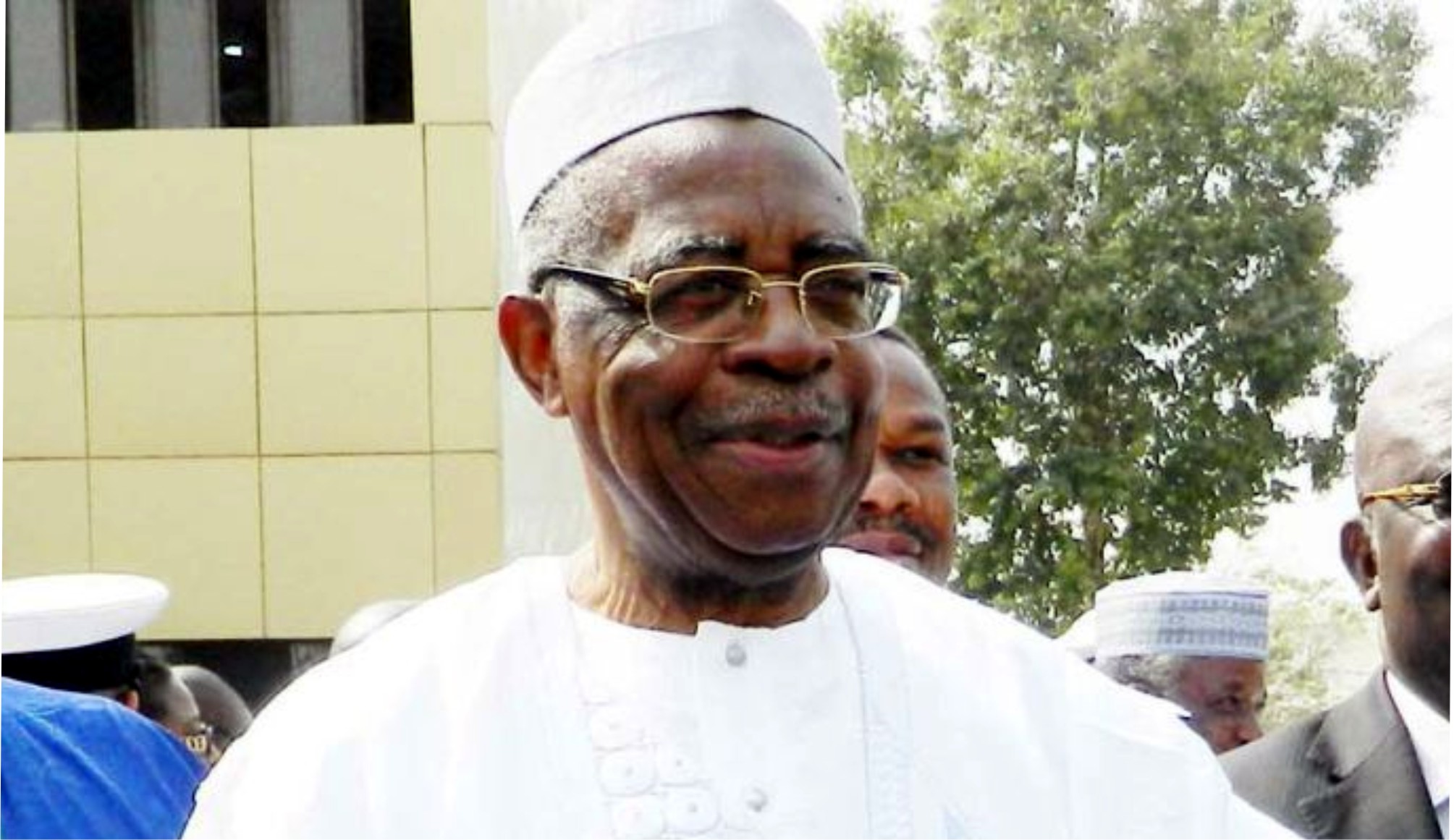
A former Defence Minister, Lt. Gen. T.Y Danjuma (retd); former Military Governor of Rivers State, General Zamani Lekwot (retd); and Chief Solomon Asemota, SAN, have dragged President Muhammadu Buhari to the United Kingdom, UK, Parliament, alleging that the President was pursuing a jihad or Islamisation agenda.
They told the UK parliament that Buhari was not serious about tackling insecurity arising from Boko Haram insurgency and herdsmen-farmers crises in the country, a news agency reports.
The trio acted under the aegis of Nigerian Christian Elders Forum, NCEF.
Other members of the group are: General Joshua Dogonyaro, retd; Justice Kalajine Anigbogu, Elder Matthew Owojaiye, Dr. Kate Okpaleke and Elder Moses Ihonde.
They blamed Lord Lugard for sowing the seed of ethno-religious crises and dichotomy between Northern and Southern Nigeria.
Their paper was entitled: “Competing Ideologies of Democracy and Sharia in Nigeria; The Nuance Understating of the Drivers of the Conflict in Nigeria by Farmers and Herders.”
It reads: Amalgamation and/or Annexation historic background information:
“British man on the spot, Lord Lugard promoted Islam by preventing proselytising in Muslim areas of Nigeria especially the emirates. Lugard was in love with Muslim North especially the Sultanate of Sokoto, for their contribution towards the war effort. He further created Northern Nigeria Corporation which Turkey did not offer as reasons why the Muslim North was entitled to special treatment and, above all, he (Lugard) was a disgruntled “suitor” who seemed to have lost his faith in Christianity before he got married to Miss Flora Shaw.
“He hated educated black people and the South had many of them by 1914 dispensed with during a period of racism. Lugard created Muslim Northern Nigeria and annexed (not amalgamated) Southern Nigeria to provide access to the sea and sustenance for Muslim North. He would rather have traditional leaders to rule, than educated Africans. He ensured this, even after retirement from the colonial services.
“At independence, the British saw Islamism creeping into Nigeria and tried to make up with Human Rights in the Constitution.
“At the same time the British government ensured dominance of the North in terms of size as against the South that was divided into East, West and, later Midwest.
“Democracy was agreed upon by all the parties, North, East and West during the Independence Conferences but the Intelligence Department was structured to promote Sharia as an alternative source of legislation.
“At independence in 1960, the first law enacted by the Parliament was the Emergency Act of 1961. This was a strange way of celebrating freedom. This law was followed by a contrived Emergency in Western Region in 1963 resulting in the Western crisis of 1965 and the coup of January and July 1966. The July coup was a jihad that resulted in the killing of innocent Nigerians especially the Ndigbo who were mainly Christians.
“This jihad resulted in the pogrom that led to the Civil War of 1967 – 1970. The jihad continued with the Maitatsine riots which was supposed to be between Muslim sects but in reality provided an excuse to attack and kill Ndigbo especially the shop owners and their shops were looted.
“There was no correlation between Maitatsine and Christian shop owners. “Maitatsine” became an excuse for jihad against other Muslims to ensure that they fall in line especially in Bulunkutu, Jimeta, etc. Having subdued the North and moderate Muslims including the overthrow of Christian General, Yakubu Gowon and a moderate Muslim President, Shehu Shagari, today, 2019, Nigeria has a group of Christian Clergy (Mukharabat), men and women paid handsomely and granted national Honors, whose duties include speaking in defense of Islam and Sharia.”
Principle of violence:
(1) Quran: Abrogation Q2:106; (2) Apostasy Q16:106; (4) Gender inequality Q2:282; Islamic supremacy Q3:85; (5) Jihad Q9:29; (6) Lying/Taqiyya Q3:28; (10) Slander/Blasphemy ‘Umdat al-Salik, Q3.1.’’
“There was a commission of inquiry in 1982 in Nigeria which discovered that the three persons named above introduced the doctrine and operational manual of Muslim Brotherhood into Nigeria. The Maitatsine inquiry showed clearly the use of state violence to quell religious fanaticism thus began the process of state force to bring other Muslim sects into line; the same was applied to El Zakzaky in 2016, a Shiite who was an ally of the Sunni in the 1970s to 1980s. It also provided political reasons for the dominance of Muslim North over Christian South. Shekau’s video “the religion of Allah not the religion of Democracy” in December 17, 2014 shows the role of religion in the crisis in Nigeria.”
“The Intelligence Service is the only organization in Nigeria since independence that has not been subjected to a commission of inquiry. It was strengthened when Murtala Mohammed was assassinated and became an instrument for the “protection of Muslims and the promotion of Sharia.” The Intelligence Service constituted the “invisible government”. Evidence of this fact can be found in the leadership and personnel of the organization. The videos made by Boko Haram also showed organized co-ordination.”
“A former Governor of Borno State started the Boko Haram and co-opted the head of Boko Haram sect, Yesufu into his cabinet. A member of NCEF and former Chief of Army Staff had to call on Nigerians to resort to self-defense when the telephone of a terrorist was discovered to contain numbers of government and top officials in the Armed Forces. No commission of inquiry was set up, but a committee of the military was alleged to have found the military blameless. Today, all Ethnic Nationalities have been advised to resort to self-help. This is not evidence of an organised society.””
“It is also clear that it is stealth jihad to have a Constitution that prohibits State Police even as money in billions of dollars is voted for vigilantes and religious police, thus rendering the Police weakened by stealth jihad while Boko Haram and Fulani herdsmen execute the conventional jihad. This is the conclusion that one can draw from these statements of President Buhari over the years below:
“I will continue to show openly the total commitment to the Sharia movement;”
“Why should Christians be concerned when Muslims cut off their limbs after all the limbs cut off are Muslim ones?”
iii. “I can die for the course of Islam, if necessary. We are prepared to fight another civil war.
“We cannot be blackmailed into killing the Sharia idea. Sharia must be spread all over Nigeria.
“Boko Haram members should be pampered and given VIP treatment but not killed. It is injustice to kill them;”
“That Muslims should only vote those who will promote Islam. “We are more than Christians if you add our Muslim brothers in the South-West.” Buhari was caught on video tapes before he became president in 2015.
“The action taken so far by the government suggests collusion or cover up by refusing to call jihad by its proper name. When a crime is committed and acts of subjugation and/or humiliation is added such as rape or religious signs or cries, this is jihad. Because the violence is motivated by ideological reasons, action taken by all interested parties must be directed towards the prevention of violence. Bullets do not kill ideology; it is a better ideology over time that can eliminate Boko Haram and Fulani herdsmen and this is Democracy.’’
“Knowledge, information and understanding. It took over 20 years of study to appreciate that the violence is motivated by ideology. All forms of distraction and propaganda are utilized to change the narrative: poverty, illiteracy, change of climate, etc. The truth is Sharia ideology is incompatible with Democracy. A multi-cultural, multi-religion and multi-ethnic country like Nigeria requires Democracy not Sharia”.
“The Peace Accord between the Federal Government and Boko Haram brokered by Canon Stephen Davis was never signed by the Federal Government after Boko Haram leaders signed in July 2013. Two of the seven Boko Haram leaders who signed the agreement lost their lives in questionable circumstances.”
“Democracy and Sharia are no fake news. Those who cry fake news are those promoting jihad and Taqiyya, so as to provide an excuse for stealth jihad and the protection of jihadists. An Imam in Plateau State was rewarded for saving hundreds of Christians from the jihadists which showed that not all Imams in Nigeria are Jihadists.”
“The conflicting ideologies of Democracy and Sharia are responsible for the refusal of the Muslim North to say thank you to the Christian South for the growth and development of the Muslim North. To do so would contravene the tenets of Islam and Islamic supremacy over other religions and peoples. In the paper of the National Christian Elders Forum titled Testimony of Hope in Democracy of May 17, 2019, we suggested that Boko Haram and Fulani herdsmen are perceived solutions to what Northern Muslim elite and student groups saw as an instrument for solidifying an Islamic identity in the face of continuing Christian advances in Nigeria. It is time that the peoples of Nigeria and the UK appreciate that Democracy and Sharia is incompatible. What Nigeria needs is Democracy. It will be very clear that Sharia is no match for Democracy with respect to life being more abundant. Unfortunately, Britain seems to have been taken over by Muslims and very soon would need help, if they do not appreciate that it is an ideology (Sharia) that is staring them in the face.”
Meanwhile, the Igbo socio-cultural organization, Ohanaeze Ndigbo, has lambasted the Federal Government for its alleged inability to deal with the lingering security challenges facing the country.
Arising from its monthly meeting, which held in Enugu, yesterday, the National Executive Committee of the organization also condemned the reported ongoing negotiation between the Federal Government and Miyetti Allah to give them a grant of N100billion as a reaction to the grave security threats.
In a statement signed by its President General, Nnia Nwodo, yesterday, the organization stated that there was increase in security threats in the country such as killings, kidnappings and various forms of banditry in the last few months.
The organization regretted that in parts of the Middle Belt, militant herdsmen have continued to kill, maim and destabilise Christian areas with very little containment by the national security forces.
“What is most disturbing is that very few arrests, seizures of arms or prosecution have been made in all these instances by our national security forces and the impression is created that their activities have the encouragement, sanction and acquiescence of our national security”.
It further regretted that several local and international mining companies have, without license, occupied parts of Northern Nigeria and engaged in continuous illegal mining of Nigeria’s mineral resources.
It stated that In the South-East and South-West, colossal ransoms are daily extorted from helpless citizens by kidnappers while many captives are being killed by bandits, making it impossible for locals to freely move about.
“Why on earth these gun trotting militants are protected financially an insulated from criminal prosecution whilst IPOB, an armless group, is proscribed and categorised as dangerous to National security bugs our imagination,” it said.
The organization reiterated that as long as the persisting situation subsists, that the only national solution to it is for the country to be restructure.



Rivers State Governor, Sir Siminalayi Fubara, yesterday extended interim relief measures to the people of Bille Kingdom as the government intensifies efforts to address the ongoing environmental degradation affecting the area.
This was contained in a statement by the Head of Information and Public Relations Unit, Office of the Secretary to the State Government, Juliana Masi, yesterday.
The governor, during a working visit to Bille Kingdom in Degema Local Government Area, reassured residents of his deep concern for their health and well-being.
He reiterated his administration’s commitment to finding a lasting solution to the persistent gas emissions observed in the community’s land and water sources since November 2025.
Represented by the Secretary to the State Government, Dagogo Wokoma, the governor announced immediate interventions to address urgent needs.
Some of the relief measures include the provision of potable water and essential medical services through the release of ?100 million as palliative support for the affected community.
According to the SSG, “Governor Fubara remains deeply committed to the welfare of the people of Bille Kingdom. Although unable to attend in person due to pressing state engagements, he is fully aware of the situation and determined to tackle the root cause of the environmental challenge”.
The governor assured residents that the state government would not relent in its efforts to provide a permanent solution to the gas emissions, emphasizing that the current intervention is only a temporary measure to ease the suffering of the people.
He further urged members of the community to remain law-abiding and continue supporting his administration, noting that he has consistently demonstrated a track record of fulfilling his promises.
Earlier, the Chairman, Council of Chief for Bille Kingdom, Chief Bennet Dokubo, expressed joy over the State visit, describing Fubara as a leader who listens to the plight of the people.
He urged the governor to critically look into the gas emission which he described as dangerous to human health.
“If we take you into the river, we notice that the entire environment is bubbling and smelling.
“We most humbly urge you to critically look into this situation. This is something strange we have never experienced before. It is not good for human health,” the monarch stressed.

The Federal Government has declared tomorrow (Friday) and Monday, April 6, 2026, as public holidays to mark this year’s Easter celebration.
Minister of Interior, Olubunmi Tunji-Ojo, made the declaration on behalf of the Federal Government through a statement signed by the Permanent Secretary in the ministry, Dr Magdalene Ajani.
The ministe congratulated all Christians in Nigeria and in the diaspora on the joyous occasion of Easter, and urged Nigerians to imbibe the virtues of selflessness, forgiveness, forbearance and love as exemplified by the life and teachings of Jesus Christ.
He reiterated that the goal of the government remains to make decisions that would bring about national rebirth, economic growth, and shared prosperity.
The Tide reports that good Friday will be marked tomorrow, while the Easter Sunday will be celebrated on Sunday across the world.

Rivers State Governor, Sir Siminalayi Fubara, has charged the newly appointed Secretary to the State Government (SSG) and Chief of Staff (CoS) to carry out their duties with discipline, loyalty and a firm commitment to the success of the administration and the wellbeing of the people of Rivers State.
The governor warned that any involvement in unauthorised nocturnal meetings or any conduct capable of embarrassing the government will attract immediate dismissal.
Fubara gave the warning yesterday shortly after the newly appointed Secretary to the State Government (SSG), Dr Dagogo S.A. Wokoma and the new Chief of Staff (CoS), Barrister Sunny Ewule, were sworn in at the Executive Council Chambers of Government House, Port Harcourt.
As part of the ceremony, the Chief Registrar of the State High Court, David Ihua-Maduenyi administered the Oath of Allegiance and Oath of Office on the duo before the governor gave his charge.
Addressing the appointees, Fubara reminded them that their elevation to the new positions was a call to service and not a platform for political grandstanding or the pursuit of personal ambition.
He stressed that their foremost responsibility should be to themselves and to the people of Rivers State, stressing that their conduct must always reflect integrity, restraint and dedication to public good.
Speaking directly to Dr. Wokoma, whom he described as an accomplished academic and mathematician, the governor expressed confidence in his intellectual depth and capacity to deliver on the new assignment.
The office of the Secretary to the State Government, Fubara stressed, demands thoroughness, discipline and a deep sense of responsibility. He charged the SSG to represent the State with honour at all times.
“Your duty includes representing the state government. You need to represent us in a way and manner that will bring honour to us.
“What is important to this administration is to see that the good works that we started and the ones that we met, are concluded in a way that will bring progress and development to our dear state,” he stated.
Turning to the new Chief of Staff, the governor explained that he is expected to ensure smooth administrative coordination, managing official engagements effectively and safeguarding the image of the Government House.
He underscored the sensitive and personal nature of the role and emphasised that the position operates strictly under the authority of the governor.
Fubara stressed that the role does not permit independent political engagements or private strategy meetings without his knowledge and consent.
“Let me sound it here very clearly. Your duty is to make sure that you handle the administrative duties and image making roles perfectly well, liaising with whoever is coming for any official assignment here.
“If you involve yourself in nocturnal meetings and all those things, I will sack you. I’m very serious. What is important to me today is peace, progress and prosperity of this state. I’m not going to compromise anything for it,” he said.
The governor cautioned that involvement of the new appointees in any action capable of bringing the government or his office to disrepute would attract appropriate sanctions.
While congratulating the new appointees, Fubara expressed optimism that they would justify the confidence reposed in them.
He called on all public officials to work together in unity, observing that collective success is stronger and more enduring than individual achievement.
The governor who also addressed the Permanent Secretaries present at the ceremony, directed those of them who have reached retirement age to start preparing their handover notes without delay.
The notice, he said, was not intended to scare anybody but to prepare their minds towards the inevitability of exiting the service one day and to pave way for an orderly transition.
He warned against any attempt to engage in financial misconduct or last-minute irregularities, stressing that he was closely monitoring the system to ensure strict enforcement of accountability rules.