
Featured
Insecurity:Danjuma, Lekwot, Others Drag Buhari To UK Parliament …Make Shocking Claims Over Islamisation Agenda …As Ohaneze Condemns FG’s Failure To Secure Nation

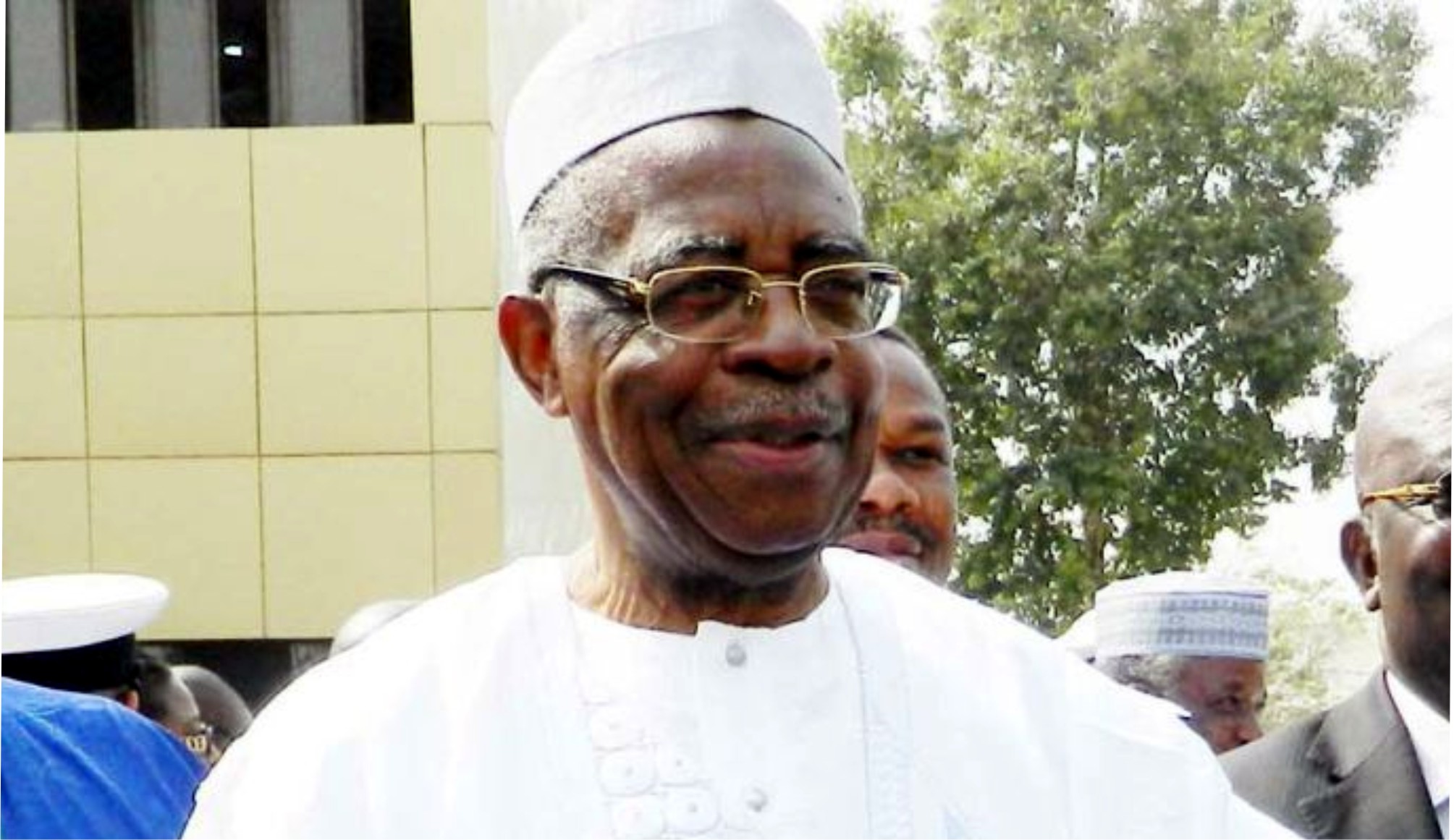
A former Defence Minister, Lt. Gen. T.Y Danjuma (retd); former Military Governor of Rivers State, General Zamani Lekwot (retd); and Chief Solomon Asemota, SAN, have dragged President Muhammadu Buhari to the United Kingdom, UK, Parliament, alleging that the President was pursuing a jihad or Islamisation agenda.
They told the UK parliament that Buhari was not serious about tackling insecurity arising from Boko Haram insurgency and herdsmen-farmers crises in the country, a news agency reports.
The trio acted under the aegis of Nigerian Christian Elders Forum, NCEF.
Other members of the group are: General Joshua Dogonyaro, retd; Justice Kalajine Anigbogu, Elder Matthew Owojaiye, Dr. Kate Okpaleke and Elder Moses Ihonde.
They blamed Lord Lugard for sowing the seed of ethno-religious crises and dichotomy between Northern and Southern Nigeria.
Their paper was entitled: “Competing Ideologies of Democracy and Sharia in Nigeria; The Nuance Understating of the Drivers of the Conflict in Nigeria by Farmers and Herders.”
It reads: Amalgamation and/or Annexation historic background information:
“British man on the spot, Lord Lugard promoted Islam by preventing proselytising in Muslim areas of Nigeria especially the emirates. Lugard was in love with Muslim North especially the Sultanate of Sokoto, for their contribution towards the war effort. He further created Northern Nigeria Corporation which Turkey did not offer as reasons why the Muslim North was entitled to special treatment and, above all, he (Lugard) was a disgruntled “suitor” who seemed to have lost his faith in Christianity before he got married to Miss Flora Shaw.
“He hated educated black people and the South had many of them by 1914 dispensed with during a period of racism. Lugard created Muslim Northern Nigeria and annexed (not amalgamated) Southern Nigeria to provide access to the sea and sustenance for Muslim North. He would rather have traditional leaders to rule, than educated Africans. He ensured this, even after retirement from the colonial services.
“At independence, the British saw Islamism creeping into Nigeria and tried to make up with Human Rights in the Constitution.
“At the same time the British government ensured dominance of the North in terms of size as against the South that was divided into East, West and, later Midwest.
“Democracy was agreed upon by all the parties, North, East and West during the Independence Conferences but the Intelligence Department was structured to promote Sharia as an alternative source of legislation.
“At independence in 1960, the first law enacted by the Parliament was the Emergency Act of 1961. This was a strange way of celebrating freedom. This law was followed by a contrived Emergency in Western Region in 1963 resulting in the Western crisis of 1965 and the coup of January and July 1966. The July coup was a jihad that resulted in the killing of innocent Nigerians especially the Ndigbo who were mainly Christians.
“This jihad resulted in the pogrom that led to the Civil War of 1967 – 1970. The jihad continued with the Maitatsine riots which was supposed to be between Muslim sects but in reality provided an excuse to attack and kill Ndigbo especially the shop owners and their shops were looted.
“There was no correlation between Maitatsine and Christian shop owners. “Maitatsine” became an excuse for jihad against other Muslims to ensure that they fall in line especially in Bulunkutu, Jimeta, etc. Having subdued the North and moderate Muslims including the overthrow of Christian General, Yakubu Gowon and a moderate Muslim President, Shehu Shagari, today, 2019, Nigeria has a group of Christian Clergy (Mukharabat), men and women paid handsomely and granted national Honors, whose duties include speaking in defense of Islam and Sharia.”
Principle of violence:
(1) Quran: Abrogation Q2:106; (2) Apostasy Q16:106; (4) Gender inequality Q2:282; Islamic supremacy Q3:85; (5) Jihad Q9:29; (6) Lying/Taqiyya Q3:28; (10) Slander/Blasphemy ‘Umdat al-Salik, Q3.1.’’
“There was a commission of inquiry in 1982 in Nigeria which discovered that the three persons named above introduced the doctrine and operational manual of Muslim Brotherhood into Nigeria. The Maitatsine inquiry showed clearly the use of state violence to quell religious fanaticism thus began the process of state force to bring other Muslim sects into line; the same was applied to El Zakzaky in 2016, a Shiite who was an ally of the Sunni in the 1970s to 1980s. It also provided political reasons for the dominance of Muslim North over Christian South. Shekau’s video “the religion of Allah not the religion of Democracy” in December 17, 2014 shows the role of religion in the crisis in Nigeria.”
“The Intelligence Service is the only organization in Nigeria since independence that has not been subjected to a commission of inquiry. It was strengthened when Murtala Mohammed was assassinated and became an instrument for the “protection of Muslims and the promotion of Sharia.” The Intelligence Service constituted the “invisible government”. Evidence of this fact can be found in the leadership and personnel of the organization. The videos made by Boko Haram also showed organized co-ordination.”
“A former Governor of Borno State started the Boko Haram and co-opted the head of Boko Haram sect, Yesufu into his cabinet. A member of NCEF and former Chief of Army Staff had to call on Nigerians to resort to self-defense when the telephone of a terrorist was discovered to contain numbers of government and top officials in the Armed Forces. No commission of inquiry was set up, but a committee of the military was alleged to have found the military blameless. Today, all Ethnic Nationalities have been advised to resort to self-help. This is not evidence of an organised society.””
“It is also clear that it is stealth jihad to have a Constitution that prohibits State Police even as money in billions of dollars is voted for vigilantes and religious police, thus rendering the Police weakened by stealth jihad while Boko Haram and Fulani herdsmen execute the conventional jihad. This is the conclusion that one can draw from these statements of President Buhari over the years below:
“I will continue to show openly the total commitment to the Sharia movement;”
“Why should Christians be concerned when Muslims cut off their limbs after all the limbs cut off are Muslim ones?”
iii. “I can die for the course of Islam, if necessary. We are prepared to fight another civil war.
“We cannot be blackmailed into killing the Sharia idea. Sharia must be spread all over Nigeria.
“Boko Haram members should be pampered and given VIP treatment but not killed. It is injustice to kill them;”
“That Muslims should only vote those who will promote Islam. “We are more than Christians if you add our Muslim brothers in the South-West.” Buhari was caught on video tapes before he became president in 2015.
“The action taken so far by the government suggests collusion or cover up by refusing to call jihad by its proper name. When a crime is committed and acts of subjugation and/or humiliation is added such as rape or religious signs or cries, this is jihad. Because the violence is motivated by ideological reasons, action taken by all interested parties must be directed towards the prevention of violence. Bullets do not kill ideology; it is a better ideology over time that can eliminate Boko Haram and Fulani herdsmen and this is Democracy.’’
“Knowledge, information and understanding. It took over 20 years of study to appreciate that the violence is motivated by ideology. All forms of distraction and propaganda are utilized to change the narrative: poverty, illiteracy, change of climate, etc. The truth is Sharia ideology is incompatible with Democracy. A multi-cultural, multi-religion and multi-ethnic country like Nigeria requires Democracy not Sharia”.
“The Peace Accord between the Federal Government and Boko Haram brokered by Canon Stephen Davis was never signed by the Federal Government after Boko Haram leaders signed in July 2013. Two of the seven Boko Haram leaders who signed the agreement lost their lives in questionable circumstances.”
“Democracy and Sharia are no fake news. Those who cry fake news are those promoting jihad and Taqiyya, so as to provide an excuse for stealth jihad and the protection of jihadists. An Imam in Plateau State was rewarded for saving hundreds of Christians from the jihadists which showed that not all Imams in Nigeria are Jihadists.”
“The conflicting ideologies of Democracy and Sharia are responsible for the refusal of the Muslim North to say thank you to the Christian South for the growth and development of the Muslim North. To do so would contravene the tenets of Islam and Islamic supremacy over other religions and peoples. In the paper of the National Christian Elders Forum titled Testimony of Hope in Democracy of May 17, 2019, we suggested that Boko Haram and Fulani herdsmen are perceived solutions to what Northern Muslim elite and student groups saw as an instrument for solidifying an Islamic identity in the face of continuing Christian advances in Nigeria. It is time that the peoples of Nigeria and the UK appreciate that Democracy and Sharia is incompatible. What Nigeria needs is Democracy. It will be very clear that Sharia is no match for Democracy with respect to life being more abundant. Unfortunately, Britain seems to have been taken over by Muslims and very soon would need help, if they do not appreciate that it is an ideology (Sharia) that is staring them in the face.”
Meanwhile, the Igbo socio-cultural organization, Ohanaeze Ndigbo, has lambasted the Federal Government for its alleged inability to deal with the lingering security challenges facing the country.
Arising from its monthly meeting, which held in Enugu, yesterday, the National Executive Committee of the organization also condemned the reported ongoing negotiation between the Federal Government and Miyetti Allah to give them a grant of N100billion as a reaction to the grave security threats.
In a statement signed by its President General, Nnia Nwodo, yesterday, the organization stated that there was increase in security threats in the country such as killings, kidnappings and various forms of banditry in the last few months.
The organization regretted that in parts of the Middle Belt, militant herdsmen have continued to kill, maim and destabilise Christian areas with very little containment by the national security forces.
“What is most disturbing is that very few arrests, seizures of arms or prosecution have been made in all these instances by our national security forces and the impression is created that their activities have the encouragement, sanction and acquiescence of our national security”.
It further regretted that several local and international mining companies have, without license, occupied parts of Northern Nigeria and engaged in continuous illegal mining of Nigeria’s mineral resources.
It stated that In the South-East and South-West, colossal ransoms are daily extorted from helpless citizens by kidnappers while many captives are being killed by bandits, making it impossible for locals to freely move about.
“Why on earth these gun trotting militants are protected financially an insulated from criminal prosecution whilst IPOB, an armless group, is proscribed and categorised as dangerous to National security bugs our imagination,” it said.
The organization reiterated that as long as the persisting situation subsists, that the only national solution to it is for the country to be restructure.



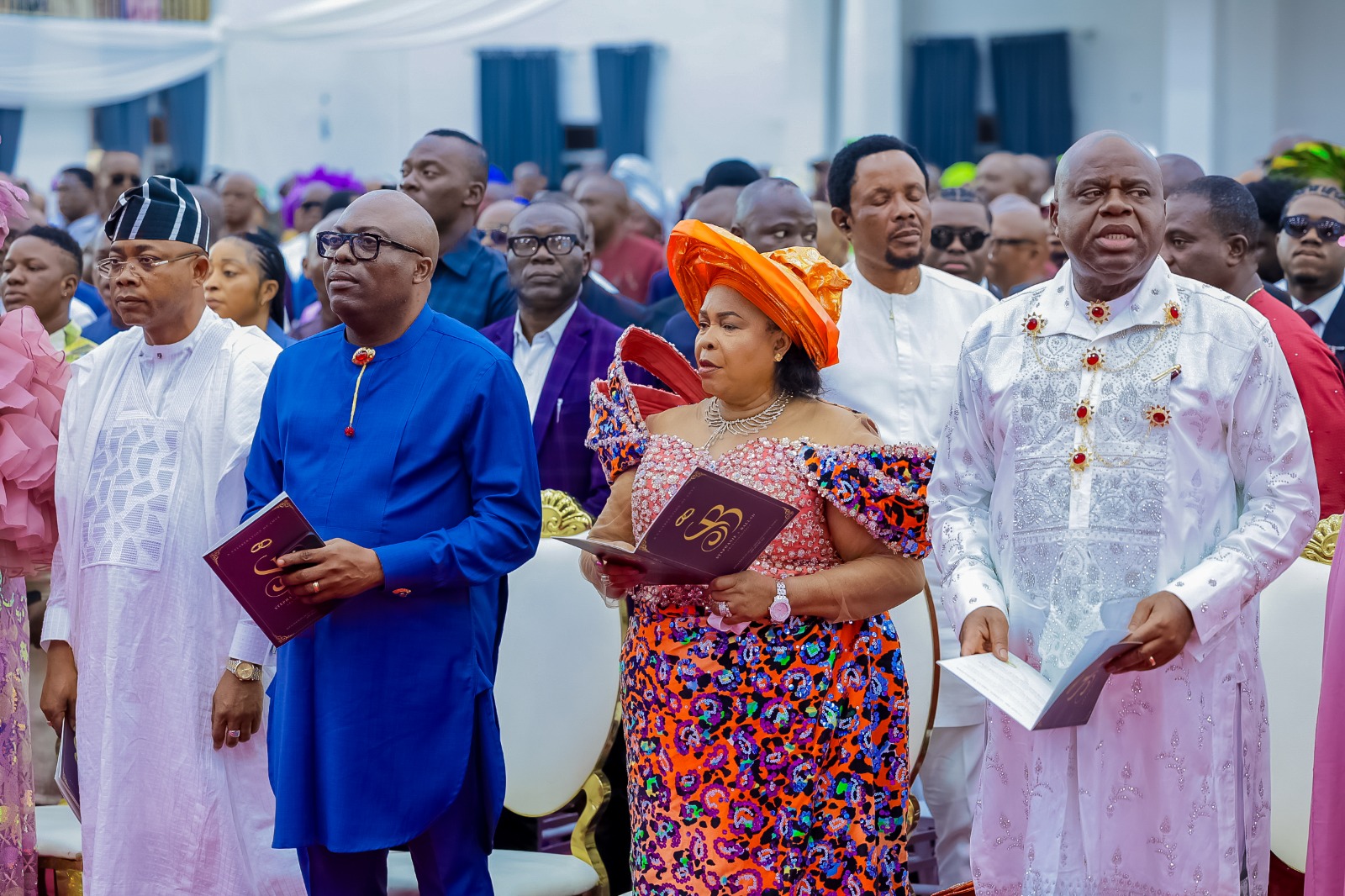
Rivers State, Sir Siminalayi Fubara, has assured members of the National Youth Service Corps (NYSC) of his administration’s commitment to supporting and strengthening the scheme in the State.
Fubara gave the assurance last Friday at the NYSC permanent orientation camp, Nonwa-Gbam, Tai Local Government Area in the State, during the swearing-in ceremony of 2026 Batch B Stream II orientation course.
Represented by the Permanent Secretary, Cabinet Bureau, Office of the Secretary to the State Government, Dr. Promise Oguzie, the governor said the State Government would remain intentional in providing the necessary support to improve the NYSC scheme and enhance the experiences of corps members deployed to the state.
He charged the corps members to be role models and quality nation-builders in their service to the good people of Rivers State in particular, and Nigeria at large.
“I charge you to be exemplary, dedicated and committed in all you do. Take full advantage of all the camp programmes and activities to enrich yourselves”, he said.
In his welcome address, the State Coordinator of NYSC in Rivers State, Mr. Moses Oleghe, urged corps members to see their deployment to Rivers State as a “veritable opportunity to make meaningful contribution to the growth of the State in particular and Nigeria at large.”
He further charged them to serve with all sense of “integrity, discipline, and the fear of God, especially when they will be engaged as INEC ad-hoc staff that will conduct the 2027 general elections.”
A total of 3,584 corps members composed of 1,421 males and 2,163 females were sworn in by the Chief Judge of Rivers State, who was represented by Justice Godspower Aguma.

Governor of Rivers State, Sir Siminalayi Fubara, says Nigeria needs God-fearing leaders for the nation to move in the right direction and make meaningful progress.
The Governor stated this yesterday when he received in audience, the World President of the Seventh Day Adventist Church, Pastor Erton Kohler; his wife, Andriene Marques Kohler; daughter Mariana Marques Kohler and a retinue of ministers of the church at Government House, Port Harcourt.
Fubara who hailed the Seventh Day Adventist Church for its contributions to education and the grooming of future leaders in Nigeria, expressed delight that the Church had over the years, been investing in education at various levels and currently runs two universities in the country.
He commended the church for not only using its institutions to spread the gospel of Christianity but to groom future leaders for the country.
According to him, religion should not be just about defending one’s faith, but also making meaningful impact on the lives of the people.
He said that by floating these educational institutions, the church has demonstrated capacity to support Nigeria in the task of producing not only educated people but a breed of God-fearing leaders.
“Our country is where it is today because we lack the fear of God. If you have the fear of God, there should be a limit to what you can do because you understand the supremacy of God. But when God is not in your equation, you’ll go beyond the line and that is what has brought us to where we are today.
“So, I feel very happy that you are contributing to the development of our future leaders in this country. We need the right people being in the right place; prepared properly with good minds; that is what we need, not just in Nigeria but round the whole world.,” he said.
Governor Fubara further observed that the absence of God-fearing people in high places to take the right decisions that could impact positively on the society, has also given rise to other problems such as social inequality, poverty, corruption and criminality. According to him, Nigeria needs a system where the average parent could afford quality education for their children and a guarantee that upon graduation, the average child will have the capacity to compete favourably with anybody, anywhere in the world.
“If we have a situation where the little money that you’re being paid as wage can also afford you quality healthcare and after working at least for 15-20 years, you have a roof over your head, tell me why you should be involved in any kind of crime? At that point, you’ll feel secured and this attitude of insecurity about the future that leads to all the social vices we have today won’t be there,” he said.
Governor Fubara expressed appreciation to the delegation for the visit and for their prayers for Rivers State, assuring them of his continued support for their programmes in the state.
Leader of the delegation and World President of the Seventh Day Adventist Church, Pastor Erton Kohler said he was in Nigeria for a special conference of the church during which thousands of the church’s ministers will be undergoing an empowerment programme to further equip them for the task of herding their flocks and serving the society.
He expressed gratitude to the Governor for the warm reception accorded his entourage, saying the memory of the visit will linger in his mind for a lifetime.
Kohler disclosed that the Church has over twenty -four million (24,000,000) members and more than 182,000 places of worship, spread across 212 countries of the world.

The Rivers State House of Assembly has approved the 2026–2028 Medium Term Expenditure Framework (MTEF) submitted by Governor Siminalayi Fubara.
This reaffirms the lawmakers’ commitment to enacting laws and taking legislative actions geared towards the overall development of the State.
The Assembly gave the approval during its Second Legislative Sitting of the Fourth Session held last Friday.
Speaking on the MTEF document during plenary, the House Speaker, Rt. Hon. Martin Amaewhule, noted that by the provision of Section 10(1)(b) of the Rivers State Fiscal Responsibility Law No. 8 of 2010, the MTEF ought to have been laid before the House in September 2025.
Amaewhule explained that traditionally, the document is expected to be presented four months before the commencement of the next financial year and immediately after the expiration of every three-year fiscal cycle.
He, however, stated that in the interest of the State and its people, the House considered it necessary to deliberate on the document, describing it as a precursor to the 2026 Budget Estimates.
The Speaker expressed concern that the year had already progressed significantly before the presentation of the framework.
During deliberations on the document, members examined the assumptions and projections contained in the MTEF and observed that strict adherence to the outlined fiscal parameters would ultimately serve the interest of Rivers people.
The lawmakers maintained that effective implementation of the framework would promote prudent financial management and enhance developmental planning across the State.
Following the debate and positive consideration by members, the Speaker put the question to the House and members voted overwhelmingly in support of the approval of the MTEF.
Meanwhile, during the same sitting last Friday, the House also received a petition from the Chairman of Obio/Akpor Local Government Council, Dr. Gift Worlu.
The petition was presented by the member representing Obio/Akpor Constituency II, Hon. Emilia Amadi.
According to the petition, concerns were raised over an imminent security breach, threats to lives, destruction of property and alleged forceful takeover of property by some lawless persons within parts of the Local Government Area.
Presenting the petition before the House, Hon. Amadi appealed to the lawmakers to revisit the matter and take necessary steps aimed at safeguarding lives and property in the affected communities.
The House is expected to further deliberate on the petition and consider measures to address the concerns raised in order to sustain peace and security in the area.
King Onunwor
-

 News2 days ago
RSG Targets Nine Million Residents in Mosquito Net Distribution Campaign
-

 Oil & Energy2 days ago
Aiyedatiwa Signs New Electricity Bill
-

 Maritime2 days ago
Marine Minister Commends President Tinubu On NPERA Bill Assent
-

 Oil & Energy2 days ago
NLNG Commissions Research And Innovation Centre In RSU
-

 News2 days ago
KenPoly Holds Eight Convocations, August 29
-

 News2 days ago
RSG Begins Another Phase of Projects Commissioning Today
-

 News2 days ago
RMAFC Completes Revenue Sharing Review, Proposes New Pay
-

 Maritime2 days ago
NAGAFF Petitions IGP Over Alleged Maritime Police Harassment