
Features
A New Dawn At Rivers Information Ministry


Staff of the Rivers State Ministry of Information and Communications and other parastatals under the ministry’s jurisdiction were recently roused to a new prospect of development and glimmer of hope in the discharge of their statutory duties.
This followed assurances by the Hon Commissioner for Information and Communications, Barr Emma Okah to put in place the right incentives and structures to boost performance and productivity on the part of staff.
Addressing staff of the ministry at a formal meeting in his office on his assumption of office, the Commissioner recognised the bulk of responsibilities on the part of the ministry in articulating the development objectives and programmes of the Rivers State Government.
He said the enormous mandate requires that the ministry be put on a good prospect of development to achieve set objectives. To meet up its statutory function, the commissioner identified the need for a total overhaul of the operational apparatus of the ministry in capacity development.
Explaining the new policy trust of the ministry, the commissioner pointed out that staff of the ministry would be fully mobilized through regular training and performance appraisal to enhance their professional service delivery and general productivity. “The era of laxity to duty is over, the Ministry of Information and Communications is in for serious business and it requires the commitment of everybody to achieve the chore objectives of the Ministry”, he stated.
The commissioner assured that staff welfare would be given priority attention, as no staff would be denied his or her entitlements, adding that “hardworking staff would be rewarded while disciplinary measures would be applied against recalcitrant staff”.
Cognizance of the important role of the ministry, particularly at a time when the Rivers State Government has to contend with a belligerent opposition, the commissioner said the Ministry under his watch would manage an information and communication system that will defend the State against the political propaganda of the opposition party, the All Progressive Congress (APC) in the State.
He said the opposition, rather than engage in the competitive spirit and value of constructive criticisms, always ring the bell of anarchy in the state. According to the commissioner, such political phenomenon was “endemic to democracy and capable of degrading public order”.
He stated that the government was, however, resolute and poised to handle evolving situations in the State with resilience and a sense of maturity to “tame the subversive role of the opposition by constantly showcasing the elements of stability in the control of the state machinery”.
He disclosed that the Rivers State Governor, Chief Nyesom Wike, has paid a huge price in the protection of democracy in Nigeria by defending the ideas of liberty and showing commitment to good governance in the State.
Okah averred that “Governor Wike’s development strides in Rivers State and his prudent management of the meagre resources in the state were eloquent testimonies of his pragmatic approach to governance which had earned him prestigious laurels locally and internationally and made Rivers State outstanding in the comity of Nigeria states”.
He faulted claims by the opposition that the governor bought his numerous awards and described such claims as part of the campaign of calumny and deliberate plot of the enemies of the state to throw away the baby and the bathwater.
“The Wike administration has made tremendous impact in providing quality leadership in Rivers State through his outstanding development projects. The government is not deterred by the onslaught of the opposition, but poised to stamp the feet of the state on the global scene and place the State on its right pedestal as the economic hub of the nation”.
To consolidate the gains of the Wike administration in Rivers State, Okah called for inter-agency synergy and the leverage of other critical stakeholders to protect the State from the “claws of authoritarianism”.
Also of deep concern to the commissioner is the security situation in the state. He called for a participatory role on the part of every indigene and others domiciled in the State, towards the enthronement of sustainable peace and security in the State.
He accused the opposition of plot to destablise the peace in the State through the machineries of state terrorism advanced by the APC, using the Federal Anti Robbery Squad (F-SARS), as willing ally to implement their perfidious intents against the government and people of Rivers State. The commissioner pointed out that the complicity of F-SARS in the anti -peace force against the State, was not in doubt as several complaints by the governor over the excesses of F-SARs in the State had not received deserving attention from the Federal Government.
He said the Ministry of Information and Communications would embark on mass based sensitization to inform Rivers people on the need to remain vigilant against the infiltrations of the opposition.
On the transformation of the state media houses, the commissioner assured the preparedness of the state government towards the digitalization of the broadcast industry in the State in line with Federal Government’s switch-over policy.
He urged the State owned media houses to always serve the interest of Rivers State through their programmes and editorial contents.
He particularly charged the electronic media to carry out social functions such as traffic update and other neighbourhood awareness campaigns to keep good check on security situations.
The meeting of the commissioner with the ministry staff was equally a home coming for him as he was greeted with warmth and courtesy by the staff.
Having served as a commissioner in the Ministry in the shortlived administration of Governor Celestine Omehia, Emma Okah exuded an amiable sense of familiarity with the staff and received strong commendation from them.
Some staff of the ministry who spoke at the meeting raised issues bordering on promotion, training and provision of other basic incentives to enhance productivity. They appealed to the commissioner to keep to his promises, while assuring to live up to the institutional and statutory obligations.
The newly appointed Permanent Secretary of the ministry, Pastor Paulinus Nsirim accompanied the commissioner to the meeting. Addressing the staff, Nsirim said vistas of opportunities in professional development and effective service delivery awaited staff of the ministry in this dispensation.
The Permanent Secretary described the Ministry of Information and Communications as an “omnibus ministry” saddled with great responsibilities, and urged the staff to change their attitude to duty and key into the new prospect of development to make desired impact in serving the information need of the State.
Nsirim whose appointment as a Permanent Secretary and subsequent redeployment to the Ministry of Information was greatly applauded by stakeholders, envisioned a bright and promising era of journalistic practice for the staff.
The veteran journalist and former Director of Public Enlightenment in the Ministry also promised to bring to bear his wealth of experience to the service of the ministry and the State.
He described the commissioner as “a man of charisma with the requisite professional experience and passion to add value and drive excellence in the ministry”.
The Permanent Secretary charged the staff to imbibe the tenet of creativity in the discharge of their duties, noting that such internal mechanisms would “boost team spirit and enhance productivity on the part of workers”.
He also reaffirmed the need for the ministry to carry out trainings and capacity building of staff for efficient service delivery and warned against poor ethical conducts.
Okah is not a green horn in information management of the State, having served at the centre stage of managing official information in the state, from his days as Chief Press Secretary to Governor Peter Odili, and later Commissioner for Information under Governor Celestine Omehia.
Many pundits believe that his recent redeployment to the Information and Communications Ministry after serving in the same capacity in the Ministry of Housing was as a result of his past records.
Given the prime objective of the Ministry of Information and Communications in the service of the State, the commissioner is, therefore, expected to navigate the ministry with an exquisite sense of direction, drawing from his decades of professional experience and the support of the staff and key stakeholders in the information and communication sector.
With the assurances of institutional breakthrough in the ministry by the commissioner, staff of the ministry are also expected to count on the new platform to improve their professional service delivery.
Taneh Beemene


It has been 25 years of impactful development of the Niger Delta region, facilitated by theNiger Delta Development Commission. NDDC. Without doubt, it has been a remarkable journey, marked by significant milestones and daunting challenges.
For the past week, the NDDC has been celebrating its achievements, beginning with a thanksgiving service in Akure, Ondo State, on July 6, drawing stakeholders and Niger Deltans to express gratitude to God for the Commission’s journey so far.
Taking off on the wings of the Oil Minerals Development Commission, OMPADEC, in 2000, the NDDC has grown into a symbol of federal presence in the oil-rich Niger Delta region.
The celebration moved from spiritual reflection and thanksgiving to strategic communication, with a World Press Conference held in Asaba, Delta State, on Monday, the 7th of July. There, members of the Fourth Estate across all media gathered in what was perhaps the most extensive media engagement of its kind. The NDDC Managing Director and Chief Executive Officer, Dr. Samuel Ogbuku, reaffirmed the Commission’s commitment to its motto of “making a difference.”
Dr. Ogbuku stated, “The President gave us a matching order during our inauguration to positively turn things around in the Niger Delta region.” That presidential directive, he noted, continues to guide the Board and Management as they pursue legacy projects across the region.
From electricity restoration in Ondo to road linkages in Bayelsa and Akwa Ibom, the NDDC’s impact was showcased in clear, tangible terms. “We commissioned the 45-km double-circuit 33KV feeder line from Omotosho Power Station to Okitipupa in Ondo State,” Dr. Ogbuku recalled, “bringing electricity back to 25 local governments after 15 years in darkness.” This was just one of several landmark interventions highlighted during the press briefing, underscoring the Commission’s renewed vigour under the current leadership.
The Managing Director spoke candidly about the setbacks caused by years of instability in leadership. “Frequent changes in management and boards have slowed our progress,” he admitted. “But today, we are targeting legacy projects. Our mandate is to complete those critical projects.” He emphasised that the Commission had transitioned from a transactional mindset to one of transformation, including the digitisation of procurement processes to ensure transparency and accountability.
Other top executives echoed similar sentiments. The Chairman of the Governing Board, Mr. Chiedu Ebie, stressed the importance of collaboration, particularly with the media, whom he described as “critical stakeholders” in advancing development. Alabo Boma Iyaye, the Executive Director of Finance and Administration, noted that the celebrations would run until Saturday, July 12, culminating in a gala night and plenary session in Port Harcourt.
Perhaps, the most significant message from the silver jubilee celebration is the renewed hope that the Niger Delta can finally experience holistic and sustainable development.
According to Ogbuku, “Through the initiative of the Board and Management, we have restructured the administrative architecture of the Commission to its 13 statutory Directorates, introduced robust Corporate Governance protocols… This formalised a value- driven institutional culture anchored on ethics and performance.”
As the weeklong celebrations continue across different states in the region, the NDDC appears determined not just to celebrate its past but to chart a bold course for the future.
The people of the Niger Delta are watching, hopeful that the next 25 years will be defined not by promises, but by lasting progress that transforms lives and communities, truly making a difference.
The celebration also featured a movie premiere titled “Making a Difference”, which traced the Commission’s journey and told stories of transformation in communities once plagued by underdevelopment. For many observers, the film served as both an emotional tribute and a powerful reminder of the NDDC’s role in shaping the destiny of the region.
The Governing Board and management of the NDDC have again proven to Nigerians, particularly the people of the oil-bearing Niger Delta region, that history does matter. They have also shown clearly that extraordinary personalities can upturn calculations and permutations. The above assertion was evidenced by the torrents of praises, accolades, and commendations poured on the Commission and its management and board by critical stakeholders during its week-long 25th anniversary celebration.
Beginning with Ondo State, one of the NDDC mandate states, Ondo Governor, Lucky Aiyedatiwa, hailed the management of the NDDC for the peace and development currently prevailing in the Niger Delta region. He said the Commission, under the current management and board, has succeeded in bridging developmental gaps in the region, noting that NDDC’s emphasis on partnerships and collaboration aimed at driving sustainable development across the Niger Delta has ushered in unprecedented progress.
Aiyedatiwa, who spoke at the Thanksgiving Service of the NDDC held at St Thomas’s Anglican Church, Akure, the Ondo State capital, stressed that the commission has undoubtedly lived up to its established mandate, commending the Board and Management for their exemplary leadership and commitment.
The Governor hailed the commission’s commitment and dedication to project conception, implementation, and completion, noting that the NDDC has established a culture of delivery and the region would no longer witness abandonment of projects as was the case in the past.
He said, “As we celebrate the Silver Jubilee of the NDDC, we must acknowledge the progress we have made and also recognise that there is still much work to be done as the Niger Delta region continues to face significant development challenges and we must work together to address these issues. “I urge the NDDC to continue to improve on its activities, ensuring that projects are tailored to the needs of the communities we serve. Let us work together to unlock the potential of our region, promote economic growth and enhance the lives of our people. We are partners in progress, unity and development.”
From Ondo State to Asaba, the Delta State capital, it was the same rain of praises. The Asaba monarch, the Asagba of Asaba, Obi Epiphany Azinge, on his part, was full of praises for the NDDC for its achievements in the past 25 years.
Obi Azinge spoke when Ebie led a delegation of the Commission’s Board and Management to pay a courtesy visit to him in his palace in Asaba, the Delta State capital. The Royal Father commended the NDDC for its intervention in several sectors across the Niger Delta region.
He expressed delight with the foreign postgraduate scholarship programme, which had helped many youths from the Niger Delta upgrade their knowledge.
He also acknowledged the contributions of the NDDC Chairman, whom he said had served the Delta State Government in different capacities. He noted that Ebie served meritoriously as Delta State Commissioner for Basic and Secondary Education and later, Secretary to the State Government. The monarch thanked the NDDC for selecting Asaba as the venue for some of the activities marking its 25th anniversary, such as a press conference and the movie premiere.
Earlier, the NDDC Board Chairman congratulated Asagba on his ascension to the throne of his forefathers, saying he was eminently qualified for the position. Ebie expressed optimism that the Asagba’s reign would bring good tidings to Asaba, which serves as both a Kingdom and the capital of Delta State.
He stated that the NDDC had come of age and was now a big brother to the new development agencies in Nigeria’s geo-political zones. Ebie disclosed that as part of the silver jubilee celebration, the Commission was going around the nine States of the Niger Delta.
The NDDC Chief Executive Officer pledged that the NDDC’s commitment to adhering strictly to the President’s directive to the Commission to complete all ongoing projects in the region, including roads, bridges, schools, and healthcare facilities. He disclosed that the Commission was engaging all stakeholders to ensure harmony and cooperation in the task of developing the hitherto neglected Niger Delta region.
He noted that, ”It is not only by our efforts; it is the collaborative efforts from all the stakeholders who believe the time has come when there should be stability in the NDDC and that stability is a challenge to us to ensure that we deliver development to the people of the Niger Delta region.”
Ifeatu Agbu
Agbu wrote in from Port Harcourt.
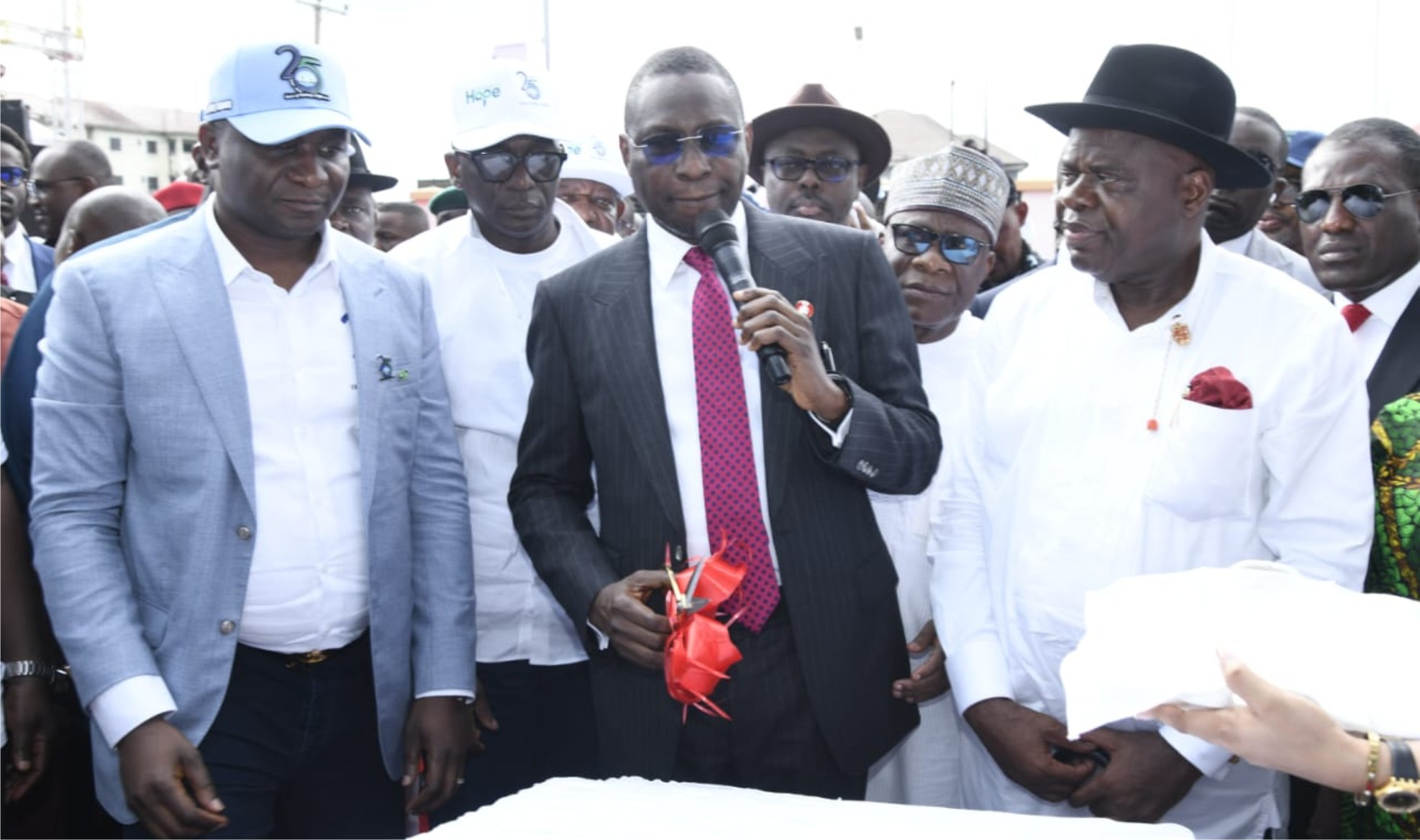
The mandate of the Niger Delta Development Commission, NDDC, is to facilitate the rapid and sustainable development of the Niger Delta region, while that of the Economic and Financial Crimes Commission, EFCC, is to investigates financial crimes and put corrupt practices in check.
Given their different roles, the idea of an alliance between the two organisations may seem far-fetched. However, with the NDDC Managing Director, Dr Samuel Ogbuku, and the EFCC Executive Chairman, Mr. Olanikpekun Olukoyede, it is not just an idea; it is a reality.
The unique collaboration between the NDDC and the EFCC has given rise to the Renewed Hope Multi-Purpose Training Centre, unveiled on Tuesday at Otuokpoti Community in Ogbia Local Government Area, Bayelsa State.
According to the NDDC Managing Director, the vast training complex was executed with funds recovered on behalf of the Commission by the EFCC.
Ogbuku explained that the Bayelsa training centre was funded through the money recovered by the EFCC and executed under a signed performance bond, ensuring transparency and impact. He noted that the facility represented one of several such centres being constructed in Delta and Rivers States. He said: “We have similar facilities currently under construction in Odi, Bayelsa State, while the ones in Delta State are being built in Patani and Ozorro and another two in Rivers State.”
He observed that the Multi-Purpose Training Centre, which was completed in record time, was a partnership between the EFCC and the NDDC, as the anti-crime agency had recovered the funds that facilitated the project’s execution.
Ogbuku observed that the facility, which could accommodate 1,000 persons, represented a significant step toward empowering local communities through skills development and inclusive growth.
The training centre’s components, which include a school, hospital, cafeteria, police post, and recreational centre, are all designed to support training, healthcare, and emergency accommodation within a single integrated complex.
Speaking at the inauguration ceremony, the EFCC Chairman assured the NDDC of the release of more recovered funds in the coming weeks.
Olukoyede described the NDDC as a “renewed and transformed government agency.” He assured that the EFCC would do everything to recover all outstanding statutory contributions due to the NDDC from oil companies.
He noted: “We have made several recoveries on behalf of the NDDC, and we will not relent in this direction. We are encouraged by the fact that the NDDC is making the Renewed Hope Agenda of the Federal Government a reality in the Niger Delta region.”
Olukoyede commended the NDDC for its institutional and policy reforms, declaring that the people of the Niger Delta will have every reason to celebrate the current leadership of the Commission. He described the NDDC as a beacon of good governance under President Bola Ahmed Tinubu.
He noted: “The Niger Delta is the goose that lays the golden egg and should not be denied the benefits of that golden egg. On our part at the EFCC, we must do everything within our power to ensure that the three per cent statutory contribution due to the NDDC is recovered and handed over to the Commission. We are going to continue supporting you.”
He said further: “Under this President, NDDC is working; good governance is being delivered. It is my delight to be part of this transformational agenda. The Renewed Hope Agenda is no longer a slogan—it is a reality. For the first time, people are identifying with what NDDC is doing.”
Olukoyede commended the NDDC, saying the Commission has refined its processes to uphold the principles of probity. This aligns with the agency’s head’s emphasis on upholding transparency and accountability in the country’s affairs.
The Chairman of the anti-crime agency confessed that his perspective on the NDDC was turned around in 2024, when the NDDC management, led by Ogbuku, paid him a courtesy visit at the EFCC’s headquarters in Abuja.
Olukoyede stated that he was impressed by the Commission’s “Rewind to Rebirth” initiative.
He declared: “The five minutes of interaction with the MD left me with a different perception of NDDC. Maybe, we will begin to see an NDDC that is a symbol of pride, accountability, transparency and able to deliver on its mandate.
“From his presentation, you can see that he is ready to bring a change, and that is the exact thing that we stand for in EFCC.”
Assuring that the EFCC would continue to assist the NDDC to achieve its mandate, he said: “We have been working with you to make recoveries; we will continue to do more.
“The collaboration is something we need to take to the next level, and with what you have put on the table I think we are ready to work with you to strengthen your systems and processes and to take the NDDC to the next level.”
In his remarks, the Minister of Niger Delta Development, Engr. Abubakar Momoh, praised the NDDC Board and Management for their unity of purpose and commitment to service delivery, stating that the level of harmony and stability within the Commission is unprecedented.
He declared: “What we are witnessing here today has never happened in the history of the NDDC. Since I assumed office as Minister, I have not been called upon to settle any crisis within the Commission. This is a testament to the teamwork between the Board and Management.”
Also speaking, the Chairman of the NDDC Governing Board, Mr. Chiedu Ebie, emphasised the human capital development focus of the two projects commissioned, noting that reforming the NDDC is an ongoing but rewarding process.
He stated: “We are moving from transaction to transformation. We are doing our best to improve not just the reputation of the NDDC, but everything that concerns the Commission. Today is about promoting and celebrating human capacity.”
Without a doubt, the Niger Delta region is confronted with ecological and environmental challenges that should, perforce, attract significant funds from the Federal Government and the oil companies operating in the region.
Sadly, this has not been so, thus limiting the capacity of the NDDC to fulfill its mandate of driving the development process and transforming the Niger Delta region into one that is “economically prosperous, socially stable, ecologically regenerative and politically peaceful.”
It is rather unfortunate that, despite the spirited efforts by successive boards and managements of the NDDC to meet the expectations of the people, their efforts have not been matched with commensurate funding.
The issue of inadequate funding is resurfacing again. Indeed, it is an inconvenient truth that will remain on the front burner until it is fully addressed.
That explains why the NDDC Managing Director highlighted the issue during interactive sessions that the Commission’s Board and Management held with the relevant Committees of the National Assembly in Abuja last year.
Ogbuku told the House of Representatives Committee on NDDC, chaired by Hon. Ibori-Suenu Erhiatake, that the Commission is owed over N2 trillion, arising from withheld funds and underpayments by both the government and the oil companies. He blamed this on non-compliance with the Act establishing the Commission.
Given the enormous impact of their activities on the environment, the oil companies are expected to be at the forefront in the critical task of urgently developing the oil basin that has suffered so much neglect in the past. It is, in fact, in their interest to develop the communities where they operate to guarantee peace, which is very necessary for them to continue with their work.
Thankfully, both the Senate and the House of Representatives promised to assist the NDDC in recovering its outstanding funds. In their various interactions with the NDDC leadership, the lawmakers expressed concern about the disregard for existing laws governing the Commission’s funding.
The Chairman of the Senate Committee on NDDC, Senator Asuquo Ekpenyong, expressed displeasure over the disregard for the law by the International Oil Companies (IOCs) and promised to call them to order.
The Senate Committee Chairman stated that proper funding would help NDDC to adequately address the sustainable development of the Niger Delta region, noting that the challenge of developing the region was enormous and that all relevant contributors to the NDDC must play their roles diligently.
Senator Ekpenyong said that in discharging its oversight functions, his committee will ensure that every contributor to NDDC pays what they owe the Commission, “because we cannot afford to toy with the development of that very important region. We owe it to the country to make sure that we improve the living conditions of the people of the region.”
It is reassuring to note that both chambers of the National Assembly are concerned about the pressing funding challenges facing the NDDC and are taking steps to address the situation.
The lawmakers understand that we have a responsibility to adequately fuel the vehicle chosen to drive the development process in the Niger Delta region.
In 2023, the House of Representatives unveiled plans to investigate the activities of International Oil Companies (IOCs) operating in the Niger Delta region, as well as the recovery of over $4 billion allegedly owed to the NDDC.
The resolution was passed sequel to the adoption of a motion sponsored by Hon. Donald Kimikanboh Ojogo, who frowned at the flagrant breach of the NDDC Act, 2000, which was established in response to heightened agitations and violent yearnings for special intervention in the oil-producing states.
He said: “The House is aware that the indebtedness of the IOCs to the NDDC had culminated in the drive by the Economic and Financial Crimes Commission (EFCC) to commence the debt recovery process.
By Ifeatu Agbu
As the Niger Delta Development Commission, NDDC, celebrates 25 years of its establishment, one innovative project stands out like a neon sign in the night. The groundbreaking Light Up the Niger Delta project, undertaken by the Commission, has opened several new frontiers for growth and development.
The solar-powered streetlights have transformed the way people live and work in communities across the Niger Delta region. The impact of this initiative can be felt in economic and social activities in the region.
This transformation signposts significant progress in people’s lives in the hitherto neglected region, radiating far beyond the streets.
The light up Niger Delta project is part of the NDDC’s measures to combat criminality, stimulate socio-economic activities, and promote peace in the region.
The campaign is particularly important, given the security concerns in Nigeria’s oil-rich region.?The positive impact of the “Light Up the Niger Delta” campaign is evident, as it has reduced criminal activity in various communities and enhanced commercial activities in the affected areas.?According to the NDDC Managing Director, Dr Samuel Ogbuku, “We decided to adopt the clean energy approach, which not only provides light but helps in the fight to mitigate the effects of climate change on our environment. I can assure you that the incidence of crime has reduced in most of these communities.”?As climate change continues to impact communities worldwide, the need for innovative solutions to address the global challenge has become increasingly imperative. In the search for solutions, solar power is gaining traction as a potential silver bullet to mitigate greenhouse gas emissions and save the environment.
Today, many organisations are investing in solar projects and reducing reliance on traditional energy sources. Solar power has inherent advantages, making it an attractive option for government and private sector organisations eager to reduce their carbon footprints.
In the past, issues around climate change used to sound distant and academic. Not anymore. It has become increasingly apparent to the human race that climate change is one of the most pressing challenges of our lifetime. The task, therefore, is to take measures to help curb the rising global temperature.
Experts say mitigating climate change entails “reducing the flow of heat-trapping greenhouse gases into the atmosphere. This involves cutting greenhouse gases from the main sources such as power plants, factories, cars, and farms. Forests, oceans, and soil also absorb and store these gases and are an important part of the solution.”
Nigeria is not immune to this global phenomenon, which is evident in rising temperatures, intense rainfall producing large runoffs and flooding, rising sea levels, drought and desertification, land degradation, and more frequent extreme weather events.
Many organisations, including the NDDC, are already contributing in different ways to tackle the global problem. According to the NDDC Managing Director, Dr Samuel Ogbuku: “Our target is to ensure that every community in the Niger Delta region is powered by solar, which is a renewable and cheap form of energy. Additionally, we will establish industrial clusters powered by solar energy, which will enhance the agricultural value chain.
Ogbuku noted that Solar power had the dual benefit of providing needed projects for the people and building NDDC’s carbon credits, stating that the Commission expects to recover the carbon credits trapped in some of these projects.
Investing in solar energy is on point because it aligns with the United Nations Sustainable Development Goals (SDGs) objectives. Aligning these initiatives with the SDGs is crucial as they provide a comprehensive framework for sustainable development, including climate action.
Several Sustainable Development Goals (SDGs), such as SDG 7 (Affordable and Clean Energy) and SDG 13 (Climate Action), directly relate to climate change and renewable energy. By investing in solar energy and carbon credits, the NDDC will contribute to achieving these goals.
There is ample evidence that solar energy, as a renewable and sustainable power source, can significantly reduce greenhouse gas emissions and dependence on fossil fuels. Hence, NDDC’s investments in solar energy projects will contribute to mitigating climate change and promote clean and affordable energy.
The Commission’s contributions can take various forms. They could be small-scale installations in local communities or large-scale solar farms. These projects will provide electricity to communities, reduce carbon emissions, and create job opportunities for our teaming youths.
Several communities are already reaping the benefits of NDDC’s bold initiative.
In Bayelsa, solar-powered streetlights have become a source of relief and safety for residents of Yenagoa, the state capital. This new development has also provided respite to communities in the eight local government areas.
Unlike in the past, solar street lights were abandoned and became a relic of past administrations. That is not the case for the NDDC solar streetlights.
In recent years, the popular Etegwe/Tombia roundabout, Mbiama/Yenagoa road, Sanni Abacha express road, Azikoro/Ekeki area, and others have been illuminated for visitors to the state capital.
A resident, Emeka Ojuogu, commended the NDDC for the solar-powered light, stating, “Before now, some politicians described the state as a ‘forest’ capital because it is always dark due to poor epileptic power supply. But now, there seems to be no street without powered street lights.”
The people of Ayama in the Gbarain Kingdom of Bayelsa State have expressed gratitude to the NDDC management for considering their community in the award and completion of solar-powered streetlight projects.
They expressed delight that their community had been lit-up with solar-powered streetlights by the NDDC, thereby making it to be among several other communities in the region that had benefited from the commission’s ‘Operation Light Up Niger Delta Project.’
Speaking separately when the people rolled out the drums to celebrate the successful completion of the solar street light project, the paramount ruler of Ayama-Gbarain, Kawari Apina-Owei, his deputy, Jeremiah Selesai, and the Community Development Committee chairman, Geseye Apina-Owei, praised the Managing Director of NDDC, Samuel Ogbuku, and the management of the interventionist agency for the amenity.
Apina-Owei said, “Some relief came our way when the NDDC awarded the solar-powered street light to this community. This is the first time we have felt the impact of the leadership and management of the NDDC since its inception.
“We thank the NDDC Managing Director, Dr Samuel Ogbuku, and the Commission’s management for remembering our community, Ayama, in this solar-powered light project. Before now, we have been in total darkness, and so snakes and other dangerous reptiles were roaming at night.”
“Before the execution of this solar light project, we could not move freely at night because everywhere used to be dark once it was night. But now, we can move at any time of the night to our neighbouring Ogboloma and Okotiama communities.”
The community described Ogbuku as God-sent, who had brought happiness to their hearts as they could see clearly and move freely at night.
The residents testified: “Driving through Kaima, Odi and Opokuma was very refreshing. The lighting across the communities was spectacular and distinctive.
The street lights provided sufficient illumination to bolster our confidence as we drove at night. Students now use the street lights to read at night.”
Providing street lighting may not be all that is needed to develop the Niger Delta; however, it is an essential step in the right direction which must be applauded.
In Rivers State, many communities have witnessed a remarkable transformation. Neighbourhoods that used to be deserted after sundown now come alive at night, thanks to the NDDC solar-powered lights.
Francis Okoroafor, a shop owner in the Trans Amadi Industrial Area, recounts the new development: “Now I can walk home after work rather than hop into a cab. I am no longer scared of the dark route that Ordinance Road used to be. I have extended shop hours, exceeding my profit margin by more than 40 per cent.”
Michael Igoniwari, who owns a supermarket on Iwowari Street, echoes this sentiment, noting that the extended hours of illumination have redefined business dynamics. “Thanks to the solar street lights, people are out at night these days, and the streets are busier,” he affirms. The solar-powered radiance has not only dispelled the shadows but has also catalyzed economic growth, empowering local businesses and enhancing the overall quality of life.
The NDDC’s solar street lighting program responds to communities’ prevailing challenges with limited access to the main electrical grid. Existing government-installed streetlights are often dysfunctional due to system failures, power shortages, and the exorbitant cost of diesel for generators. Launched recently, the program aims to deploy tens of thousands of solar-powered street lights, transcending the boundaries of Port Harcourt to illuminate cities, towns, and villages across the Niger Delta.
The impact of the initiative extends beyond mere illumination; it addresses a fundamental issue plaguing more than 70 million people in the Niger Delta; the lack of dependable power supply. Solar-powered streetlights, with their low operational costs and straightforward installation, have emerged as a beacon of hope for communities grappling with power outages and unreliable electricity from the national grid.
The president of the Ijaw Youth Council, Jonathan Lokpobiri, emphasises the popularity of solar streetlights in areas that previously lacked any form of street lighting. He notes, “People are now going out after dark because they feel safer.” The lights enhance security and contribute to community and social cohesion.
Tammy Dagogo, who runs a barbing salon off Peter Odili Road, attests, “Now, even during outages, the solar lights keep the area lit.” This reliability fosters a newfound sense of security, enabling mothers like Belema Dappa to permit their children to play outside, even after dusk.
The Omerelu community in Ikwerre Local Government Area was jubilant following the inauguration of Solar-powered streetlights installed across the community’s villages by the NDDC.
In line with its project titled “Operation Light Up Niger Delta”, NDDC provided solar power to mitigate the once darkness-ridden Omopi-Omerelu community.
In appreciation, the Chairman of the Omerelu Council of Chiefs, Chief L. O. Didia, thanked the NDDC for bringing the project to the community.
The Rumuigbo community in the Obio/Akpor local government area of Rivers State was not left out in the jubilation.
The Rumuigbo Council of Chiefs and Elders chairman, Chief Kinikanwo Owhonda, expressed gratitude to the commission for always being there for the region’s people.
In Akwa Ibom State, the Niger Delta Youths Movement, NDYM, hailed the NDDC for initiating life-changing projects, such as the Light up Niger Delta initiative, which would provide jobs and boost the economic development of the region.
NDYM National President Prince Boboye Peretu hailed the Dr Samuel Ogbuku-led management of NDDC for the initiative.
Reports from different states have it that this ‘Light up the Niger Delta’ programme has stimulated economic growth, empowered local businesses, and serves as a beacon of hope in the nation’s quest for sustainable development.
Ifeatu Agbu
Agbu wrote in from Port Harcourt.
-

 Business4 days ago
NCDMB Signs Mgt Deal With Radisson, Edison…As Board’s 204 Rooms Hotel Open December 2026
-

 Business4 days ago
NERC Amends Order on Meter Tampering, Power Bypass For Discos
-

 Rivers4 days ago
KENPOLY Rector Promises To Prioritise Students’ Welfare
-

 Business4 days ago
Nigeria, AFC sign $1.3 billion deal to build alumina refinery
-

 Business4 days ago
FG engages foreign investors at PEBEC Roundtable on business environment reforms
-

 Sports4 days ago
Yenagoa City Set For Maiden 10km Marathon
-

 Sports4 days ago
Inter House Sports Is Where Talents Are Discovered -Rear Admiral Okehie
-

 Sports5 days ago
Beyond Limits Intensify NPFL Return