
Business
Buhari Cautions On ECOWAS Single Currency Implementation

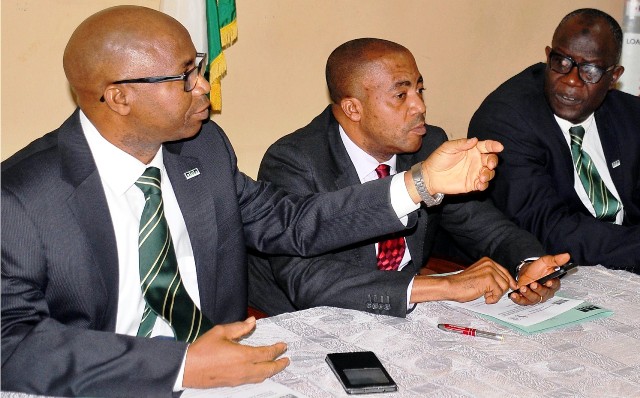
President Muhammadu Buhari has urged ECOWAS member countries to tread carefully in pushing for a single currency in the sub-region by 2020.
Mr Femi Adesina, the President’s Special Adviser on Media and Publicity, said Buhari stated this at the 4th meeting of the Presidential Task Force on the ECOWAS Currency Programme in Niamey, Republic of Niger.
The President drew attention of ECOWAS member countries to the challenges faced by the European Union in realising the same goal.
According to him, the necessary economic fundamentals among countries continue to differ over the years, making it more difficult to pull through with the project by 2020.
“Nigeria advises that we proceed cautiously with the integration agenda, taking into consideration the above concerns and the lessons currently unfolding in the European Union.
“To that end, Nigeria will caution against any position that pushes for a fast-track approach to monetary union, while neglecting fundamentals and other pertinent issues,’’ he said.
The Nigerian leader noted that some of the obstacles to realising the roadmap for the implementation of a single currency include diverse and uncertain macro – economic fundamentals of many countries and unrealistic inflation targeting based on flexible exchange rate regime.
According to him, inconsistency with the African Monetary Co-operation Programme is another obstacle to the realisation of the roadmap.
The President said domestic issues in ECOWAS member countries relating to their constitutions and dependence on aids continue to affect the framework for implementing the single currency in the sub-region.
He observed that the ECOWAS Commission had anchored its pursuit of the new impetus to monetary integration on the information presented to the Heads of State, which were the basis for their recommendations.
He said: “We are concerned that we have not properly articulated and analyzed a comprehensive picture of the state of preparedness of individual countries for monetary integration in ECOWAS by 2020.
“In previous meetings, we had specifically raised observations on the state of preparedness of the member states, the credibility of the union if anchored on watered down criteria, and the continuing disparities between macroeconomic conditions in ECOWAS countries, amongst others. And I would like to reiterate this concerns.’’
The President Buhari told the Heads of State that the conditions that pushed Nigeria into withdrawing from the process in the past had not changed.
“Nigeria had earlier withdrawn from the process because its key questions and concerns were ignored and till date, none of the issues has come up as an agenda issue to be considered by the Taskforce.



Business
Jonathan, Diri, Others Laud Firm’s Milestone in Bayelsa …Says Project Will Drive Industrialisation, Create Jobs



-

 News3 days ago
RSG Targets Nine Million Residents in Mosquito Net Distribution Campaign
-

 Oil & Energy3 days ago
Aiyedatiwa Signs New Electricity Bill
-

 Maritime3 days ago
Marine Minister Commends President Tinubu On NPERA Bill Assent
-

 Oil & Energy3 days ago
NLNG Commissions Research And Innovation Centre In RSU
-

 News3 days ago
KenPoly Holds Eight Convocations, August 29
-

 News3 days ago
RSG Begins Another Phase of Projects Commissioning Today
-

 News3 days ago
RMAFC Completes Revenue Sharing Review, Proposes New Pay
-

 Maritime3 days ago
NAGAFF Petitions IGP Over Alleged Maritime Police Harassment