
Business
Osinbajo Tasks Govt On Fiscal Discipline

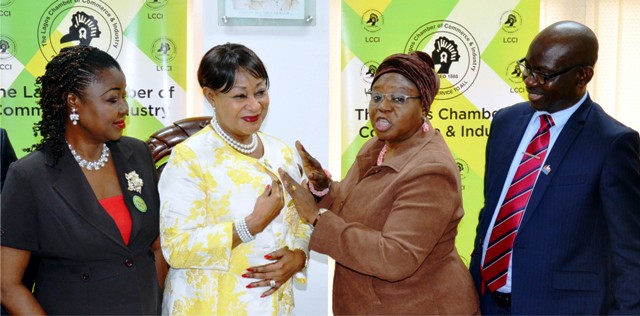
The Vice President, Prof. Yemi Osinbajo has urged the three tiers of government to ensure adherence to fiscal discipline, enhance revenue generation, and rational allocation.
He also called on them to be conscious of the efficient use of resources for Nigeria to achieve sustainable growth.
Osinbajo gave the advice at the opening of a three-day workshop organised by the Revenue Mobilisation, Allocation and Fiscal Commission (RMAFC).
The theme of the workshop is ” Alternative Sources of Revenue Generation for Sustainable Development in States and Local Government Councils in Nigeria.”
Osinbajo, represented by the Minister of Finance, Mrs Kemi Adeosun, described the workshop as timely, adding that it came at a time the present administration was working hard to re-position Nigeria’s economy after a period of declining revenue.
“The recently announced exit from recession is simply one of the stages in the development of this economy and the growth of this economy for future generation.
“We are determined to build an economy that works for all Nigerians; not just for the rich, not just for when oil prices are high, but also for everybody for the long term.
“This commitment is critical and the engines for this commitment are the state and local government.
“As you know, there are no federal people, everybody lives in a state or local government.
”For this economy to grow in the way it was intended, every state, every local government must be fiscally sustainable and must be able to meet its obligation.
“The obligation of state and local governments is not just the payment of salaries; they have critical roles in development.
Osinbajo said that the President Buhari-led administration had been working very hard to ensure that not only could states pay salaries but were also be able to lay the foundation for growth.
He commended RMAFC for the initiative and opportunity to re-emphasise the need to look beyond traditional revenue sources and strive for the viability of each state government.
Osinbajo advised all states to develop their own sources of Internally Generated Revenue (IGR) while commending those that had started doing that.
According to him, one of the biggest ingredients to getting revenue for states and local governments is accountability.
“People would support government when they can see what is happening to the money; it is important that we approach transparency.
“This is not a time for us to relax, this is a time for us to double our efforts, we deserve a better Nigeria, the future generation of Nigerians are looking up to us,” he said.
The vice-president urged participants to engage actively in the workshop and create implementable plans with specific timelines on how to increase public revenues, sustainable within participating states and local governments.
Earlier, the Acting Chairman, RMAFC, Alhaji Shettima Abba-Gana, said the various economic programmes of the present government had helped in getting the country out of recession.
According to him, new additional sources of revenue are being studied, adding that the commission is designing ways of generating and collecting these revenues for the benefit of the states and local governments.
He expressed optimism that the over dependence on statutory transfers of funds from the federation account for governance by the states and local governments would soon begin to reduce.
Abba-Gana said that the workshop would avail the participants with various untapped revenue sources and would introduce them to modern revenue collection techniques.
“The workshop is geared to among others, achieve the burdens of taxation in the development of states and local governments and strategies in generating revenue in solid mineral sector.
“It will help in improving agricultural activities in states and local governments, to enhance revenue generation and encourage PPP to improve economic activity to generate more revenue
“It will also help to reduce cost of governance in Nigeria in order to save more funds,” he said.
The acting chairman expressed optimism that the programme would address and proffer solutions to the most crucial challenges in revenue generation and collection.



Business
NAFDAC Decries Circulation Of Prohibited Food Items In markets …….Orders Vendors’ Immediate Cessation Of Dealings With Products


Importers, market traders, and supermarket operators have therefore, been directed to immediately cease all dealings in these items and to notify their supply chain partners to halt transactions involving prohibited products.
The agency emphasized that failure to comply will attract strict enforcement measures, including seizure and destruction of goods, suspension or revocation of operational licences, and prosecution under relevant laws.
The statement said “The National Agency for Food and Drug Administration and Control (NAFDAC) has raised an alarm over the growing incidence of smuggling, sale, and distribution of regulated food products such as pasta, noodles, sugar, and tomato paste currently found in markets across the country.
“These products are expressly listed on the Federal Government’s Customs Prohibition List and are not permitted for importation”.
NAFDAC also called on other government bodies, including the Nigeria Customs Service, Nigeria Immigration Service(NIS) Standards Organisation of Nigeria (SON), Nigerian Ports Authority (NPA), Nigerian Maritime Administration and Safety Agency (NIMASA), Nigeria Shippers Council, and the Nigeria Agricultural Quarantine Service (NAQS), to collaborate in enforcing the ban on these unsafe products.
-

 Politics2 days ago
Senate Receives Tinubu’s 2026-2028 MTEF/FSP For Approval
-

 News2 days ago
RSG Lists Key Areas of 2026 Budget
-
 News2 days ago
Dangote Unveils N100bn Education Fund For Nigerian Students
-

 News2 days ago
Tinubu Opens Bodo-Bonny Road …Fubara Expresses Gratitude
-
News2 days ago
Nigeria Tops Countries Ignoring Judgements -ECOWAS Court
-

 Sports2 days ago
New W.White Cup: GSS Elekahia Emerged Champions
-

 Featured2 days ago
Fubara Restates Commitment To Peace, Development …Commissions 10.7km Egbeda–Omerelu Road
-
Sports2 days ago
Players Battle For Honours At PH International Polo Tourney