
Business
Minister Seeks Support For Economic Recovery Plan

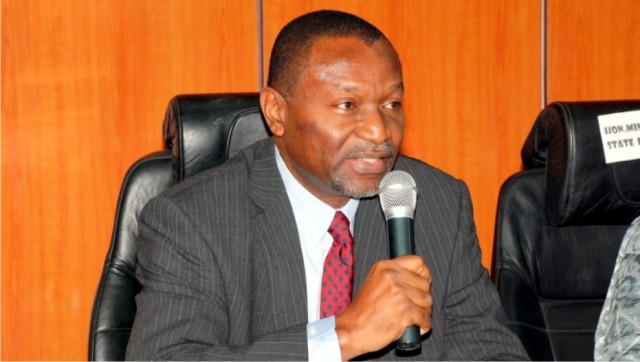
The Minister of Budget and National Planning, Sen. Udoma Udo Udoma, has urged Nigerians to support the Federal Government’s Economic Recovery and Growth Plan (ERGP) to enable it succeed.
Udoma made the call while receiving delegates of the National Institute for Policy and Strategic Studies (NIPSS), led by the Course Leader, Policy Strategy and Leadership, Mr Asipita Umar, yesterday, in Abuja.
According to the minister, a lot of work still needs to be done to convert the ERGP into action, adding that the support of NIPSS and every Nigerian will go a long way at ensuring this.
“Your support and your input is very important for the success of this plan. The input of every Nigerian is important, we want this plan to be owned and internalised by every single Nigerian.
“It is only when we operate it collectively, when we all accept it well within its confines, when we are propelled by the desire to make this plan work that it will work.
“We believe that when we work together, we will succeed.
“As a government, we will show the way. As a government, we will give the leadership but the success depends on all of us working collectively,’’ Udoma said.
It would be recalled that the ERGP was inaugurated by the president to help stimulate production, stimulate domestic and foreign trade, and strengthen key sectors of the economy.
On the ERGP, the minister explained that an extensive consultation was carried out before the plan was put in place to ensure that things improved in the country.
“The plan was built since the inception of this administration, it was not made in one day, we brought together various plans in one document for ease of access.’’
According to him, the implementation of the plan also started from the inception of the plan as it is a continuous process.
“We are producing a further detailed implementation roadmap that sets out the strategy broken into component activities and actions with each action supported by clearly assigned responsibilities.
“We are also setting up a delivery unit in the Presidency and beefing capacity in this unit, and we also have a special tax force.
“This tax force has been working on the production of rice, power sector and solid minerals, and that is why we have seen improvements in some of these areas.’’
Udoma said the government was mandated to ensure an inclusive growth and that was why government was embarking on social intervention programmes “to bring our people out of poverty’’.
“We want to harvest the ideas of Nigerians and use them to transform our economy.’’
Udoma urged Nigerians to ensure that in all their endeavours, they think of ways of adding value to the country so as to help transform the country’s economy.
“We must go back and add value. If every Nigerian should think of that, the economy will be entirely transformed; we will become the leading economy that is the engine of Africa.’’
The minister commended the management of NIPSS for supporting government’s programmes and policies, and urged them to continue in their efforts.
“I am always impressed by the work of the institute. It is easily one of the foremost think-tanks that look at current issues in order to come up with actionable ideas.
“The reason why it is well placed is that it consists of practitioners, people working in government and in the private sector, so, it is not an academic exercise.
“People who are experienced should bring their experience to bear, spend time away from their day-to-day affairs to reflect on the issues and problems of the country.
“I commend the institute for all the work they are doing.’’



Business
Jonathan, Diri, Others Laud Firm’s Milestone in Bayelsa …Says Project Will Drive Industrialisation, Create Jobs



-

 News4 days ago
RSG Targets Nine Million Residents in Mosquito Net Distribution Campaign
-

 Oil & Energy4 days ago
Aiyedatiwa Signs New Electricity Bill
-

 Oil & Energy4 days ago
NLNG Commissions Research And Innovation Centre In RSU
-

 Maritime4 days ago
Marine Minister Commends President Tinubu On NPERA Bill Assent
-

 News4 days ago
KenPoly Holds Eight Convocations, August 29
-

 News4 days ago
RMAFC Completes Revenue Sharing Review, Proposes New Pay
-

 News4 days ago
RSG Begins Another Phase of Projects Commissioning Today
-

 Maritime4 days ago
NAGAFF Petitions IGP Over Alleged Maritime Police Harassment