
Opinion
Between Sagay’s Tirades And Senate’s Summons

Again, the Red Chamber of the National Assembly has extended its summon to the Chairman, Presidential Advisory Committee Against Corruption, (PACAC) Professor Itse Sagay; a Senior Advocate of Nigeria, over remarks the distinguished senators considered as demeaning. This has added to the politically-motivated summons the Senate is battling with which, without a doubt, would be dividing its concentration from performing objective legislative duties.
Earlier, the Comptroller-General (CG) of Nigeria Customs Service, Col. Hammed Ali (rtd) and the Senate had sumptuously entertained the nation with free comedies episodically on officialuniform. At about three appearances of the CGC at the Senate’s chamber in honour of his summon, no vital issues were presented to him except queries for appearing on mufti instead of Customs uniform. It lingered until the appearances was eventually halted by the directives of the Attorney General of the Federation (AGF) following a suit filed in relation to the matter.
Aggregately, the Senate is, appears to be fighting hardheartedly all the arrowheads of anti-corruption agencies in President Muhammadu Buhari’s administration. The transgression of the Comptroller-General pointed to a resolute position to discharge his duties without the usual regard to the self acclaimed ‘sacred cows’, and therefore had to step on toes of some principal officers of the Senate. Ditto for the acting-chairman of Economic and Financial Crimes Commission (EFCC), Ibrahim Magu who is investigating series of allegations on criminal misconducts of some distinguished senators and honourable members of the National Assembly. And presently, the PACAC helmsman, Professor Sagay. Incontrovertibly, the nation is in a calamitous state.
Following these summous, PACAC chairman unequivocally summed the actions of the Senate as “childish and irresponsible’ and described the Red Chamber as one ‘filled by people of questionable character; particularly its refusal to confirm the 27 persons nominated as Resident Electoral Commissioners (RECs) on account of alleged Presidency’s disregard for Senate resolutions on Magu and others.
The distinguished senators forgot that those that live in glass houses do not throw stones. Unfortunately, the cantankerous, childish and egoistic traits and time always allocated on frivolities that have no significant bearing on the nation is to say the least, height of absurdities.
Holistically, the lawmakers are evidently ridiculing democracy in practice. Perhaps, the distinguished senators have forgotten so soon that it’s less than a year a female colleague and wife of former governor of Lagos State, Senator Oluremi Tinubu was verbally assaulted and threatened with a rape and pregnancy by Senator Dino Melaye. Our distinguished lawmakers also forgot that despite the heat of unprecedented economic recession on the country, all their concerns and focus were directed at padding the annual budget for selfish gains.
As if that was not enough, the appointment of the Resident Electoral Commissioners which forms the integral part of any democracy is at the moment subjected to a conditional aimed at vendetta against a political opponent, Magu.
By implication, if President Buhari presented incompetent persons for confirmations, they will get automatic clearance with their usual thunderous “…the yeas have it…” This clearly confirms that the country is in a serious mess by the constitution of the 8th Republic of the National Assembly.
As for summoning of the learned professor, the Constitution is clear on it. Section 88 of the 1999 Constitution of the Federal Republic of Nigeria (CFRN), as amended albeit empowers each chamber of the National Assembly to direct investigations into the conduct of any persons, authority, ministry or government department charged, or intended to be charged, with the duty of or responsibility for; but strictly for executing or administering laws enacted by the National Assembly. It, therefore, implies that the powers to summon persons do not cover personal opinions, expressions or remarks by citizens but strictly for legislative purposes.
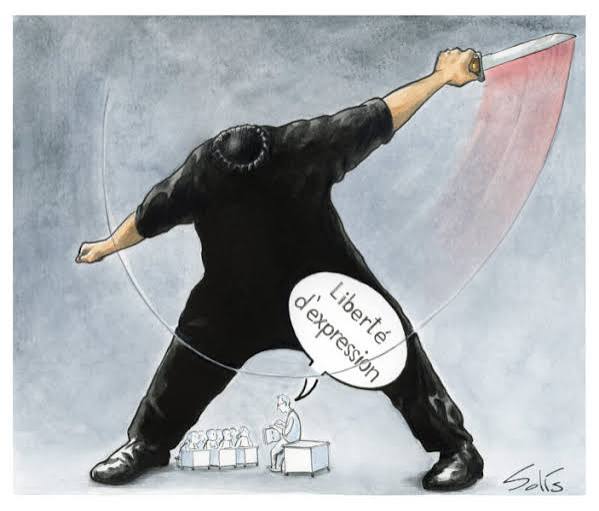
Furthermore, such arbitrary and incessant summons contravenes the Freedom of Expression as guaranteed in Section 39 (supra) as amended. At most, the senators, if believed that such appointee of the President under the category of persons the Constitution exclusively empowers the President to appoint as part of workforce, either by conduct or speech crossed boundary, is to petition the President who is vicariously liable to acts done by his agents in line with “qui facit per alium facit per se” (he who acts through another is deemed to act by himself) or to report to the Police or approach the court. But to summon citizens over expressions and remarks is outside the purview of powers of the lawmakers. They are instead, usurping the powers of the Police and the court.
Incidentally, the remarks by PACAC chairman are logically apt vis-à-vis the ridiculous developments in the National Assembly. The salient question begging for answers is; could the Senate responsibly clear the Resident Electoral Commissioners under such a proposed ‘strike-a-deal’ with Mr. President using Magu’s sack as a condition for confirmation, bearing in mind the importance of their assignments in elections for the nation?
Logically, the Senate is gradually becoming a slaughter house where personal scores are without restraint settled against perceived enemies who would be helplessly intimidated by their numbers and perhaps molested in the name of official duties. To continue issuing summons recklessly under the guise of oversight functions will amount to abuse, and in no distant time reduce the Senate to a market square instead of hallowed legislative chamber.
Umegboro, a public affairs analyst, lives in Abuja.
Carl Umegboro



Quote: “Ogoniland does not
The latest attack by Chief
Instead, the gathering and
The proposal for a unified
The question should be: who
It is easy to criticise
The people are looking beyond
onest people can reach
Society must therefore

Quote: “Privilege should
There is an old saying that
While motivations cannot
A person who benefits from a
This is why citizens should
We must not assume that
By: Michael Abraham
Quote:”Although the Federal
The recent outburst by the
The senator also alleged
They connect ports, airports,
To address these challenges,
Rwanda and Morocco, for
FERMA should also prioritize
Many Nigerians have asked
-

 News2 days ago
RSG Targets Nine Million Residents in Mosquito Net Distribution Campaign
-

 Oil & Energy1 day ago
Aiyedatiwa Signs New Electricity Bill
-

 Maritime1 day ago
Marine Minister Commends President Tinubu On NPERA Bill Assent
-

 Oil & Energy1 day ago
NLNG Commissions Research And Innovation Centre In RSU
-

 News2 days ago
KenPoly Holds Eight Convocations, August 29
-

 News2 days ago
RMAFC Completes Revenue Sharing Review, Proposes New Pay
-

 News2 days ago
RSG Begins Another Phase of Projects Commissioning Today
-

 Maritime1 day ago
NAGAFF Petitions IGP Over Alleged Maritime Police Harassment