
Nation
THE STATES

Benue
The Nigeria Security and Civil Defence Corps (NSCDC) in
Benue State has alerted the public of the existence of employment racket within the command.
The NSCDC Commandant, Mr Shuaibu Jibrin, told newsmen in Makurdi that the racket had been collecting money from applicants in the guise of offering them employment into the organisation.
Jibrin, however, assured that its searchlights had already been beamed on the perpetrators while explaining that all recruitment exercises by the organisation “are properly advertised through the mass media”.
“Currently, the NSCDC is not carrying out any recruitment, the NSCDC recruits based on certain criteria and merit which is always advertised through the mass media.”
Borno
The wife of the President, Mrs Aisha Buhari, has inaugurated
the distribution of relief materials, including drugs, to families and malnourished children in Internally Displaced Persons’ (IDPs) camps in Maiduguri, Borno State.
The relief materials are targeted at meeting the immediate needs of the families and children suffering from malnutrition occasioned by the activities of insurgents in the State.
The relief materials were part of the items donated during the inauguration of the “Get Involved’’ initiative, which was a component of the wife of the president’s pet project, ‘The Future Assured’ Programme.
The disturbing rate of malnutrition among children in the IDPs’ camps, necessitated the distribution of the relief materials by the wife of the president.
Ekiti
Teachers and students in Ekiti State have been urged to
build on their 2016 National Examination Council (NECO) performance in future public examinations.
A retired school headmistress, Mrs Ruth Olugbamila, gave the advice in an interview with newsmen in Ikole, Ekiti State.
It would be recalled that the state emerged as the best performing state in 2016 National Examination Council (NECO) result
Olugbemila noted that the current feat by the state should be sustained and also improved upon in the 2017 West African Examination Council result “so that every Nigerian will know that Ekiti is truly Fountain of Knowledge.”
Gombe
The Gombe State Government has established 313 health
facilities providing Family Planning (FP) services.
The state Family Planning Coordinator, Mrs Rejoice Bala, said the policy was part of efforts to reduce maternal and child mortality rate in the state.
Bala spoke during a one-day workshop organised by Pathfinder International for journalists and faith based organisations in Gombe.
She said the state currently has about 556,109 women within reproductive age, yet a huge number of them die as a result of preventable complications.
The Programme Facilitator, Pathfinder International, Dr Sakina Bello, said the effort was out of concern on the threatening rate of maternal mortality and its devastating effects to the family and societal well being.
Jigawa
The Chairman of Jigawa State Revenue Board, Alhaji Ibrahim
Sani, has said that the board was set to increase the state internally generated revenue in view of dwindling federal allocations.
Sani told newsmen in Dutse that the state government was looking inward to raise revenue to meet its socio-economic responsibilities to the people.
He said that the board had blocked all channels of revenue leakages.
The chairman said that since his appointment a year ago, there had been significant improvement in revenue collection in the state.
Kaduna
A Chief Magistrates’ Court sitting at Chediya G.R.A. Zaria,
Kaduna State, has remanded 4 among 14 youth from Unguwan Kaura, Zaria-city, for alleged attempted homicide.
The Police Prosecutor, Sgt. Abubakar Ibrahim, told the court that the police received a complaint on July 6 that the accused conspired and attacked one Abdurrahman Tanimu of No. 127 Anguwar Kaura, Zaria-city.
Ibrahim added that the police arrested four of the 14 accused persons found with dangerous weapons in their possession.
.
Kano
The Nigeria Labour Congress (NLC), Kano State chapter,
has raised concern over the casualisation of workers and refusal by some employers in the private sector to allow unions in their establishment.
The Chairman of the NLC in the state, Alhaji Kabiru Minjibir, who disclosed this to newsmen in Kano, said that the congress would soon take action on these issues.
He said that the union had received series of complaints from workers in some private organisations in the state on this trend.
“We have come to the realisation that some of the private organisations in the state do not engage permanent staff. And such action denies the workers some of their rights and benefits after working for many years. Not having Unions also denies workers the avenue to express their grievances.”
Kebbi
A 35-member medical team from the United States of
America is providing free surgery and treatment of patients suffering from cancer and diabetes in Kebbi State.
The state’s Deputy Governor, Alhaji Samaila Yombe, told newsmen in Birnin Kebbi that the surgical operations were part of government’s efforts to provide effective service delivery to the people.
He called on the people to turn out in order to avail themselves the opportunity to be treated by the visiting doctors and nurses.
Yombe said the APC-led government would continue to redeem its campaign promises as it had started boosting the agricultural activities in the state.
Kogi
The Kogi State Immunisation Officer, Mr Amaje John, says
the state has been polio-free since 2009.
John told newsmen in Lokoja that the last wild polio case in the state was in Dekina Local Government Area in 2009, stressing that the state had not recorded any other case since then.
The immunisation officer said that the state had enough vaccines for various immunisation cases, especially the polio vaccine.
“Right now, the state is doing what we called ‘Intensifying Routenisation Activities’ in all our health facilities to strengthen immunisation of children below the age of one.
Kwara
The Kwara State Government says it will commence a
task shifting policy on health to reduce maternal mortality in the state.
The State Commissioner for Health, Dr Atolagbe Alege, announced this in Ilorin during the National Task Shifting Policy Dissemination meeting with stakeholders.
Alege explained that the policy would help specialised health workers take on some responsibilities of more specialised workers.
He said multiple efficiencies might arise from task shifting, given that the cadre to which tasks were shifted often required shorter training periods and lower educational qualifications.
Nasarawa
The Commissioner for Education in Nasarawa State, Mrs
Ramatu Ajuji-Abubakar, says the state government is contemplating education for prison inmates in the 2017 budget.
Ajuji-Abubakar made the disclosure in an interview with newsmen in Lafia.
According to the commissioner, the move will ensure that inmates in all federal prisons in the state are properly reformed, in line with global best practices.
She said that even though the prison is a federal government establishment, the state government is a stakeholder, hence, the desire to provide for the education of inmates.
The commissioner said the modern prison yard is supposed to be a place where inmates are reformed morally, and learn one skill or the other, and be educated.
Niger
Academic Staff Union of Polytechnics (ASUP), Bida
chapter, has expressed delight with the Federal Ministry of Education for the release of N48 million for the payment of allowances for its members.
The ASUP Chairman, Dr Umar Saganuwan, made the disclosure in an interview with newsmen in Bida.
He said the allowances paid was from January to May and that they were still awaiting allowances of June , July, August and September.
He commended the Minister of Education, Alhaji Adamu Adamu, for the gesture.
Saganuwaný expressed displeasure with the management for reducing the allowances .
Ogun
Some students in public primary and secondary schools in
Ogun State have called on Governor Ibikunle Amosun to attend to the demands of striking workers in the state.
The students, who spoke separately in interviews with newsmen in Abeokuta, described the strike as very “unfortunate.’’
They said that the strike was already affecting their academic calendar.
An SSS 2 student of African Church Grammar School, Abeokuta, Samson Asade, called for early resolution of the crisis.
He said that their colleagues in private schools were already ahead of them, and urged the state government to cooperate with the workers to end the strike.
Ondo
The Peoples Democratic Party (PDP) in Ondo State, says
it has no plans to change its governorship candidate in the November 26 election.
A press statement issued in Akure by the party’s Publicity Secretary, Mr. Banji Okunomo, said nothing will happen to the candidacy of Eyitayo Jegede (SAN).
Okunomo urged party supporters to disregard what he called ”rampaging distortion of facts and misrepresentations” on the matter by a section of the party.
“We are also in the know of the syndicated report/newsflash which aim to misinform the public as regards the status of the true PDP candidate in the fast approaching gubernatorial election in the state.”
The publicity secretary assured that the party at state and national level, is working to ensure that Jegede’s candidacy remain.
Osun
The Osun Police Command said it had arrested a member of the Peace Corps of Nigeria (PCN), Mr Imran Olalekan, 24, for alleged rape.
The Police Public Relations Officer (PPRO) of the command, SP Folasade Odoro, disclosed this to newsmen on Thursday in Osogbo.
Odoro said that the suspect committed the offense at St. Charles High School, Osogbo.
She said that the 17-year-old victim (names withheld), is an SSS III student of the school.
She said preliminary investigation revealed that the suspect had intercourse with the victim.
The PPRO said that the suspect would be charged to court as soon as investigation into the crime was concluded.
Oyo
The Nigeria Medical Association (NMA), Oyo State chapter, says the National Health Act, if implemented, will benefit the citizenry and solve the problems militating against the health sector.
The Chairman of the association, Dr Omolola Oladele, said this when he led a delegation to submit a letter on the issue to the Gov. Abimbola Ajimobi.
The National Health Act, which took 10 years and several readings at the National Assembly was eventually passed and signed into law in 2014.
Oladele said that the objective of the visit was to awaken the consciousness of the government to the implementation of the act and for the states to key in.
“According to her, the Act protects the right of healthcare users to receive treatment and not to be rejected in the case of accident.
Oladele said that the nation had all it takes to be great.

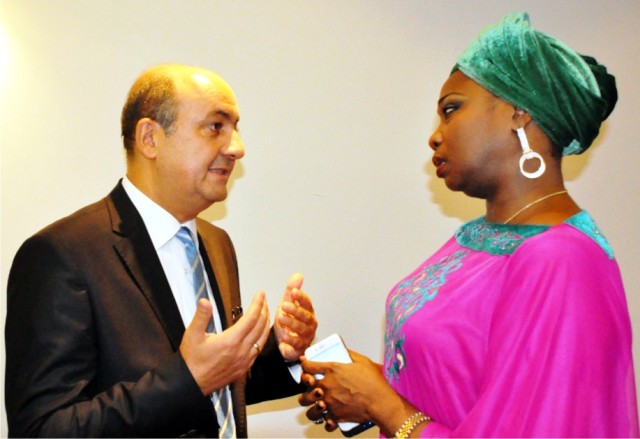
Rivers state Deputy Governor Professor Ngozi Nma Odu has commended “The Port Harcourt City One Love,”a Port Harcourt based humanitarian orgnisation For it’s commitment towards alleviating the sufferings of the poor and vulnerable in the society.
Professor Ngozi Nma Odu said this while speaking at this year’s edition of “operation feed the needy” a yearly outreach program of “The Port Harcourt City One Love ” in Port Harcourt.
The Deputy Governor said by feeding more than sixty thousands hungry people within the past six years, the Port Harcourt City One Love Movement has distinguished itself as a club that cares for the less privilege in the society.
She commended the , organization for listing eleven thousand persons to be fed in the current exercise.
Meanwhile The Port Harcourt City One Love has planned a permanent solution to the problem of feeding the poor in the state.
The leader of the group Mr Idaere Gogo Ogan who said this in an interview with newsmen during the distribution of food items to the poor and vulnerables in Port Harcourt said the organization is planning a permanent food kitchen where poor and vulnerable persons can work in anytime and get fed.
Idaere Gogo Ogan said more than sixty thousands poor and vulnerable persons across Port Harcourt City and environs have been fed since the inception of “The operation feed the needy” program six years ago,adding that so far sixty thousands poor and vulnerable persons have beneffited.
He described the group as a platform to promote friendship, brotherhood, community development empathy and feeding the less privilege and hungry people
“That’s what we are doing today here,so we started the exercise six years ago”.he said.
Ogan said the effort was a private sector driven initiative but added “it also involves people in Government because the platform does not recognize any division,we bring everybody together in unity , friendship and brotherhood”he said.
He said the effort will go along way in alleviating hunger especially following the prevailing hunger in the country.
According to him “you know the country is very tough, people are hungry people are starving, there is a whole lot of economic hardship,so for us, this is just our own way of reaching out, our own social contribution to what is very difficult”he said.
Over eleven thousand persons were fed in the just concluded exercise.
Areas of coverage include, Isaac Boro park, Port Harcourt prison/Macoba, Borokiri/Enugu waterside Bundu areas Waterlines and others.
Some of the beneficiaries including an 80 years old widow commended the movement for the annual programm and urged other organizations to emulate them
John Bibor,/Esuuk Oyet/Suotor Memoye /Jeremiah Hannah
Nation
We’ll Partner Private Sector to Industrialize Rivers State – Fubara …Hints Revitalization of Ahoada, Trans Amadi Industrial layout

“Inclusive growth requires access to capital and the right conditions for businesses to deploy that capital effectively. Women-led enterprises are critical to economic activity, yet they face structural barriers.
“This intervention aims to help close that gap by providing financing that supports job creation, business expansion, and long-term sustainability for women entrepreneurs”, Edun said.
Group Head, SheVentures and Impact Segments at First City Monument Bank (FCMB), Nnenna Jacob-Ogogo said access to affordable finance remains a major constraint for women entrepreneurs.
-

 Featured4 days ago
WASSCE: RSG Distributes Science Materials To Secondary Schools
-
News4 days ago
Xenophobic Attacks: Nigerian Lives More Important Than Foreign Investment – Oshiomhole
-
Rivers4 days ago
MBA Forex Trial Adjourn To June 3, Amid Bereavement … As Court Declines Cost Application
-
News4 days ago
ActionAid Demands Probe Of Govs Using Public Funds For Campaign
-
Aviation4 days ago
Passengers Stranded As Delta Airline From Atlanta Route Back Eight Hours After
-
Business4 days ago
Customs Impound N2.35bn Cocaine, 15 Trailers of Rice
-
Politics4 days ago
2027: Bayelsa Senator Gets Critical Endorsement For Second Term
-

 Politics4 days ago
INEC Sets Rivers South-East Senatorial By-Election For June 20