
Featured
Again, The Niger Delta Issue …A Call For Honest Dialogue

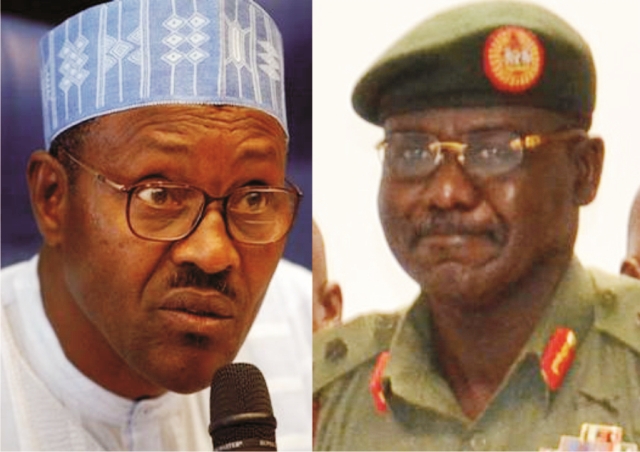
Rather than abate, from little known Niger Delta Avengers (NDA), the fresh insurgency in the oil rich Delta is giving birth to more and more groups. Although the leadership, profile and membership of such insurgent gangs still remain foggy, there are growing concerns that all may not be well in the area and by extension Nigeria.
When the NDA started its threats of attacking oil production facilities, it was dismissed with a wave of the hand until Agip and Chevron were hit in two separate attacks. Government’s immediate reaction was an order from the Commander-in-Chief, to the Military High Command to crush the militants.
That hurried reaction did not take into cognizance the currents and history of Niger Delta militancy, its threat to the economic profile of the country and how the Yar’Adua Presidency chose the amnesty option. It did not also consider the inherent danger such face-off, involving oil facilities and concomitant pollution would further endanger the environment and lives of the people. Also not put into proper perspective was the likelihood of civilian casualties, destruction of key public institutions and further aggravation of the crippling economic situation.
It was for all these that notable Nigerians called on the Federal Government to quickly consider and initiate dialogue, rather than use of force. They posited that such military posturing would rather than solve the impasse, aggravate it and return Nigeria back to the past when its oil production recorded its historical lowest.
Another option canvassed by many was a return to history, identify the wrongs associated with the forced amalgamation of 1914, and see how component parts of the ‘union’ today known as Nigeria would be made to have a sense of belonging and true nationhood. Appraising prevailing realities, influential Nigerians, like legal doyen, Prof. Nwabueze and former Vice President Atiku Abubakar, called for the restructuring of the Federation, in line with prevailing realities, as the present federal system being operated has failed to meet the yearnings and aspirations of the stakeholders.
Such a restructuring should make for stronger and economically more viable states as opposed to bigger centre, which negates true federalism. In such circumstance, each federating unit shall be encouraged to create its own resource base, develop and manage such resources and pay tax to the centre, as opposed to the present situation where all states depend on the oil from the Niger Delta for their survival and monthly rush to Abuja for hand-outs.
Those notable Nigerians insist that every state in the Federation has sufficient resources to develop and manage for growth. The problem is the laziness created by the oil which States now consider their meal ticket.
The strongest argument is that the central government is too large, expensive, over-reaching, inspiring and indeed greedy in the distribution of national resources. Its powers should be divested to reflect the true tenets of federalism.
Some of these arguments were captured during the last national conference which produced a report that many believed could address some of the agitations today creating insecurity in the land. Many have therefore called on the Buhari Presidency to look at the report with a view to implementing it.
But the body language of the President does not portray any iota of urgency. In fact, the Presidency has not as much as commented on the various issues raised by well-informed Nigerians.
It is perhaps that silence that has evoked the recent call by a new militant group, for a referendum, to determine the sovereignty of Nigerians. From insisting that major oil companies left the Niger Delta and calls for a revocation of the oil blocs allocated to prominent Northern elites, the militants are today calling for resource control. The militants now insist that the Niger Delta should be allowed to manage its resources, bear the consequences of the environment and pay taxes to the centre. Alternatively, a referendum be conducted to ascertain whether the Niger Delta still wishes to remain in the Nigerian Federation.
Unfortunately, rather than address the danger which this new line of debate holds, some Northern Senators have again raised the question: Where was the money used in developing oil in the Niger Delta sourced from? Their argument was that proceeds from agriculture and other resources from other lands together formed the capital to develop crude oil in the Niger Delta.
Really? How much? In those years of the groundnut pyramids, the regions enjoyed nearly 100 per cent derivation and resource control while the centre survived on taxes even from oil palm produced in the South East and South-South areas.
Besides, the Federal Government did not unilaterally develop crude oil. It was counterpart funding with major oil production multi-nationals who capitalised on the unholy marriage to short-change the Niger Delta. In those days, the argument of the Northern elite was that oil was a gift from God and belonged to no one in particular.
With such mindset, virtually every military regime, predominantly headed by Northerners turned natives of the oil bearing states into beggars while resources accruing from oil sales were used to develop major Northern cities.
The question still remains, how much was voted to develop crude oil? How much was the cost of building Abuja alone? How much profit has the central government made from its investment?
Everywhere in the world, ownership of land also determines ownership of resources there in. Nowhere in the world are land-owners, totally denied ownership of the treasures buried beneath. It is only in Nigeria where land belongs to the Niger Delta people but the oil buried there in, for all.
With civilisation and education, those mundane arguments can no longer hold water. Reality is that government must re-negotiate the terms of engagement with land-owners or investors may reconsider new investments in more conducive climes.
Silence on the part of the Federal Government is no longer healthy to the debate. Government must take a position and determine next line of action to douse the impending rift. From the stand point of the new militant groups, nothing short of resource control will bring peace. This means putting the entire area at risk in the event of arms confrontation or guided attacks on oil facilities.
The Buhari Presidency should take urgent steps at addressing the growing insurgency in the South-South, the increasing protestations, and sense of marginalisation in the South-East, the pressing sense of insecurity caused by rampaging herdsmen in the South-West and bring an end to Boko Harm in the North-East.
All these are battles that must be fought and won using the lean resources available to government. Allowing such funds to be depleted even further on account of ego, shame and pride, or a hurried resort to armed combat would indeed be injurious to the nation and its people.
This is why the Buhari Presidency must heed the advice of statesmen that the report of the last National Conference be revisited or outright restructuring be initiated. That is the wise thing to do.
While this is awaited, the militants should realise that the planned war is not against the same people whose interest it professes to champion. That each attack further degrades the environment and the ecosystem and by extension further threatens the people’s occupation of fishing and farming.
They must therefore embrace cease fire and allow dialogue so as to let the conversation flow freely. It should not be all about threats and violence, sometimes, maturity and commonsense should play their roles.
My Agony is that the comments of some Northern Senators could incite violence, rather than abate it, for true dialogue to take place. That’s how greed drives people to self-destruction.
Perhaps, they should be told, “strength and wisdom are not opposing values. They complement each other,” according to former US President Bill Clinton.
Soye Wilson Jamabo



Rivers State Governor, Sir Siminalayi Fubara, has charged the newly appointed Secretary to the State Government (SSG) and Chief of Staff (CoS) to carry out their duties with discipline, loyalty and a firm commitment to the success of the administration and the wellbeing of the people of Rivers State.
The governor warned that any involvement in unauthorised nocturnal meetings or any conduct capable of embarrassing the government will attract immediate dismissal.
Fubara gave the warning yesterday shortly after the newly appointed Secretary to the State Government (SSG), Dr Dagogo S.A. Wokoma and the new Chief of Staff (CoS), Barrister Sunny Ewule, were sworn in at the Executive Council Chambers of Government House, Port Harcourt.
As part of the ceremony, the Chief Registrar of the State High Court, David Ihua-Maduenyi administered the Oath of Allegiance and Oath of Office on the duo before the governor gave his charge.
Addressing the appointees, Fubara reminded them that their elevation to the new positions was a call to service and not a platform for political grandstanding or the pursuit of personal ambition.
He stressed that their foremost responsibility should be to themselves and to the people of Rivers State, stressing that their conduct must always reflect integrity, restraint and dedication to public good.
Speaking directly to Dr. Wokoma, whom he described as an accomplished academic and mathematician, the governor expressed confidence in his intellectual depth and capacity to deliver on the new assignment.
The office of the Secretary to the State Government, Fubara stressed, demands thoroughness, discipline and a deep sense of responsibility. He charged the SSG to represent the State with honour at all times.
“Your duty includes representing the state government. You need to represent us in a way and manner that will bring honour to us.
“What is important to this administration is to see that the good works that we started and the ones that we met, are concluded in a way that will bring progress and development to our dear state,” he stated.
Turning to the new Chief of Staff, the governor explained that he is expected to ensure smooth administrative coordination, managing official engagements effectively and safeguarding the image of the Government House.
He underscored the sensitive and personal nature of the role and emphasised that the position operates strictly under the authority of the governor.
Fubara stressed that the role does not permit independent political engagements or private strategy meetings without his knowledge and consent.
“Let me sound it here very clearly. Your duty is to make sure that you handle the administrative duties and image making roles perfectly well, liaising with whoever is coming for any official assignment here.
“If you involve yourself in nocturnal meetings and all those things, I will sack you. I’m very serious. What is important to me today is peace, progress and prosperity of this state. I’m not going to compromise anything for it,” he said.
The governor cautioned that involvement of the new appointees in any action capable of bringing the government or his office to disrepute would attract appropriate sanctions.
While congratulating the new appointees, Fubara expressed optimism that they would justify the confidence reposed in them.
He called on all public officials to work together in unity, observing that collective success is stronger and more enduring than individual achievement.
The governor who also addressed the Permanent Secretaries present at the ceremony, directed those of them who have reached retirement age to start preparing their handover notes without delay.
The notice, he said, was not intended to scare anybody but to prepare their minds towards the inevitability of exiting the service one day and to pave way for an orderly transition.
He warned against any attempt to engage in financial misconduct or last-minute irregularities, stressing that he was closely monitoring the system to ensure strict enforcement of accountability rules.

Rivers State Governor, Sir Siminialayi Fubara, has dissolved the State Executive Council.
The governor announced the cabinet dissolution yesterday in a statement titled ‘Government Special Announcement’, signed by his new Chief Press Secretary, Onwuka Nzeshi.
Governor Fubara directed all Commissioners and Special Advisers to hand over to the Permanent Secretaries or the most Senior officers in their Ministries with immediate effect.
He thanked the outgoing members of the State Executive Council for their service and wished them the best in their future endeavours.
The three-paragraph special announcement read, “His Excellency, Sir Siminalayi Fubara, GSSRS, Governor of Rivers State, has dissolved the State Executive Council.
“His Excellency, the Governor, has therefore directed all Commissioners and Special Advisers to hand over to the Permanent Secretaries or the most Senior officers in their Ministries with immediate effect.
“His Excellency further expresses his deepest appreciation to the outgoing members of the Executive Council wishing them the best in their future endeavours.”
The Independent National Electoral Commission (INEC) yesterday told the National Assembly that it requires N873.78bn to conduct the 2027 general elections, even as it seeks N171bn to fund its operations in the 2026 fiscal year.
INEC Chairman, Prof Joash Amupitan, made the disclosure while presenting the commission’s 2026 budget proposal and the projected cost for the 2027 general elections before the National Assembly Joint Committee on Electoral Matters in Abuja.
According to Amupitan, the N873.78bn election budget covers the full conduct of national polls in 2027.
An additional N171bn is needed to support INEC’s routine activities in 2026, including bye-elections and off-season elections, the commission stated.
The INEC boss said the proposed election budget does not include a fresh request from the National Youth Service Corps seeking increased allowances for corps members engaged as ad-hoc staff during elections.
He explained that, although the details of specific line items were not exhaustively presented, the almost N1tn election budget is structured across five major components.
“N379.75bn is for operational costs, N92.32bn for administrative costs, N209.21bn for technological costs, N154.91bn for election capital costs and N42.61bn for miscellaneous expenses,” Amupitan said.
The INEC chief noted that the budget was prepared “in line with Section 3(3) of the Electoral Act 2022, which mandates the Commission to prepare its election budget at least one year before the general election.”
On the 2026 fiscal year, Amupitan disclosed that the Ministry of Finance provided an envelope of N140bn, stressing, however, that “INEC is proposing a total expenditure of N171bn.”
The breakdown includes N109bn for personnel costs, N18.7bn for overheads, N42.63bn for election-related activities and N1.4bn for capital expenditure.
He argued that the envelope budgeting system is not suitable for the Commission’s operations, noting that INEC’s activities often require urgent and flexible funding.
Amupitan also identified the lack of a dedicated communications network as a major operational challenge, adding that if the commission develops its own network infrastructure, Nigerians would be in a better position to hold it accountable for any technical glitches.
Speaking at the session, Senator Adams Oshiomhole (APC, Edo North) said external agencies should not dictate the budgeting framework for INEC, given the unique and sensitive nature of its mandate.
He advocated that the envelope budgeting model should be set aside.
He urged the National Assembly to work with INEC’s financial proposal to avoid future instances of possible underfunding.
In the same vein, a member of the House of Representatives from Edo State, Billy Osawaru, called for INEC’s budget to be placed on first-line charge as provided in the Constitution, with funds released in full and on time to enable the Commission to plan early enough for the 2027 general election.
The Joint Committee approved a motion recommending the one-time release of the Commission’s annual budget.
The committee also said it would consider the NYSC’s request for about N32bn to increase allowances for corps members to N125,000 each when engaged for election duties.
The Chairman of the Senate Committee on INEC, Senator Simon Along, assured that the National Assembly would work closely with the Commission to ensure it receives the necessary support for the successful conduct of the 2027 general elections.
Similarly, the Chairman of the House Committee on Electoral Matters, Bayo Balogun, also pledged legislative support, warning INEC to be careful about promises it might be unable to keep.
He recalled that during the 2023 general election, INEC made strong assurances about uploading results to the INEC Result Viewing portal, creating the impression that results could be monitored in real time.
“iREV was not even in the Electoral Act; it was only in INEC regulations. So, be careful how you make promises,” Balogun warned.
The N873.78bn proposed by INEC for next year’s general election is a significant increase from the N313.4bn released to the Commission by the Federal Government for the conduct of the 2023 general election.
-

 News2 days ago
Nigeria Recorded Two World’s Deadliest Terror Attacks In 2025 –Report
-

 Politics2 days ago
Eid-el-fitr: INEC Urges Staff Discipline Ahead Ekiti, Osun Guber Polls
-

 Editorial2 days ago
Thumbs Up For Sit-At-Home Reversal
-

 News2 days ago
Perm. Sec Pats Rivers NUJ On The Back
-

 News2 days ago
Explosions Rock Lagos, C’River, Kill One, Injure 40
-

 News2 days ago
Fubara Hails Umah Ukpai’s Contributions To Global Christian Evangelism
-

 Education2 days ago
Opobo Kingdom moves to incorporate Ibani Language Into School Curriculum, Takes Off April
-
News2 days ago
Etche Monarch Alleges Death Threats, Assault