
Nation
THE STATES


L-R: Senate Majority Leader, Senator Mohammed Ali-Ndume, Governor Kashim Shettima of Borno State, Chief Executive Officer, Ayoade Olatunbosun-Alakija Global (AOA), Dr Ayoade Olatunbosun-Alakija and Senate Committee on Health, Senator Lanre Tejuoso, during the 1st annual dialogue on Rebuilding Borno in Abuja, on Tuesday.
Borno
University of Maiduguri has presented first class
degree certificates to 172 students of the institution during its 22nd combined convocation.
The Vice-Chancellor of the institution, Prof. Ibrahim Njodi, who announced this at the ceremony said 37, 259 students, comprising five sets of students from 2009 to 2015 graduated at the convocation.
“It is gratifying to inform you that the university graduated five sets of students from 2009/2010, 2010/2011, 2012/2013, 2013/2014, and 2014/2015 academic sessions from 12 colleges, faculties, distance learning centre and 23 affiliated colleges.
“A total of 37, 259 students were graduated, out of this 32, 869 were regular students, 841 students were from affiliated colleges and 3,549 students were from the Distant Learning Programme,’’ Njodi said.
FCT
A 38-year-old auto mechanic, Kolawole Murtala, who
allegedly defrauded one Kunle Dosunmu of N200,000, has appeared before a Wuse Zone 2 Senior Magistrate’s Court, Abuja.
Murtala, a resident of Sector ‘F’ Lugbe, Abuja was docked for allegedly collecting N200,000 from Dosunmu to replace his car engine but failed to do so.
He is standing trial on a two-count charge bordering on fraud and breach of trust.
The prosecutor, Mr Okere Chimaeze, told the court that the accused committed the offences in December 2015.
He alleged that the defendant collected money from Dosunmu to repair his Peugeot 406, but opted to convert the money to his personal use.
Jigawa
The Kiyawa local government council of Jigawa has
banned fishing activities in all rivers and streams in the area.
The council’s Information Officer, Malam Balarabe Abdullahi, said this in an interview with newsmen in Dutse.
Abdullahi said that the council’s Caretaker Committee Chairman, Alhaji Abdullahi Sulaiman, announced the decision after the council’s security meeting recently.
He explained that the action was taken following disputes among fishermen in the area.
The spokesperson quoted the chairman as saying that no fisherman should fish in any of the waters in the area without obtaining permission from the authorities.
Kaduna
Examination Ethics Committee of Kaduna State Ministry
of Education, Science and Technology has paid an unscheduled visit to schools in Kaduna to check examination malpractice in the ongoing WAEC examination.
The committee made of the Christian Association of Nigeria (CAN), Jama’atu Nasir Islam (JNI), National Association of Private Schools, Quality Assurance Board, and Civil Society Organizations (CSOs), paid the visit.
The state Commissioner for Education, Dr Shehu Adamu, told newsmen shortly after the visit that the exercise was to ensure compliance to examination procedure, rules and regulations in all schools in the state.
Adamu said that members of the committee were going round the schools to serve as invigilators in both public and private schools suspected to be operating as ‘miracle or deliverance centres’.
Kwara
Prof. Adetayo Talabi of the Department of Human Ki
netics, Faculty of Education, University of Ilorin, has advised Nigerians not to over-dress in humid weather to avoid dehydration.
Talabi gave the advice in an interview with newsmen in Ilorin.
He said that hot and humid environment being currently experienced in the country could cause more loss of water from the body system.
Talabi said that over-clothing in hot and humid environment would disturb the cooling effect of the body which could lead to dehydration.
Lagos
The Acting Director-General, Standards Organisation
(SON), Mr Paul Angya, said the agency would need additional 10,000 staff to fight substandard products in the country.
Angya stated this in an interview with newsmen in Lagos.
He said that if more staff were employed, they would be able to go far places in the country to check substandard products.
“We have just 1,500 staff at hand and there is no how they can cover the market places in the country.
“It was recommended in 1993 by government officials that SON needed 10, 000 staff for its operations,’’ he said.
Angya said that many lives had been lost due to substandard products coming into the country, adding that the integrity of SON concerning the laboratory tests results had not been compromised.
Nasarawa
The Nasarawa State Urban Development Board (NUDP)
has arraigned 2 filling stations owners at Chief Magistrates’ Court in Lafia for operating in residential areas.
The defendants were MM Nigeria Ltd. and Chibo Oil Investment Limited.
Representatives of the two stations, Adamu Usman and Mamman Maji, applied for out of court settlement.
The Acting General Manager Development Control of NUDP, Juliana Haruna, told newsmen that the board instituted a legal action against them because they had not complied with set down rules.
“Everyone knows the degree of hazards posed by siting filling stations close to people’s houses. So, we are out to ensure that things are done properly.
“If anything occurs today, which we do not pray for that to happen, only God knows the level of damage it would cause.
Niger
The Speaker of the Niger House of Assembly, Mr Ahmed
Marafa, has solicited for media support for the state government to deliver on its electoral pledges.
Marafa made the call while addressing newsmen at the state Assembly complex in Minna.
He noted that the developmental progress has been made in the state without adequate publicity.
According to him, the poor media coverage given to such improvement in the lives of the people makes them insignificant.
He said adequate coverage of state government activities was critical to the success of the administration.
“The three arms of government in the state are working very hard to improve the state and its economy since the inception of this administration.
“The media is central to the success of any government, so I want to enjoin you all to help play your part in the development of our state by constantly keeping the people informed of the policies and programmes of government.
Ogun
A 50-year old woman, Omolabake Adeshina, who alleg
edly assaulted one Taibat Akinlabi with electrical wire, has been charged before an Ota Chief Magistrates’ Court in Ogun.
Adeshina, who lives at No. 21 Olayemi St., Iyana-Iyesi, Ota, is facing a charge of assault.
The Prosecutor, Cpl. Abdulkareem Mustapha, told the court that the accused committed the offence on March 28 at about 2:30pm at Oyewole Street, Iyana-Iyesi, Ota.
Mustapha said that the accused assaulted Akinlabi by using electrical wire to inflict injury on her.
He said that the offence contravened Section 355 of the Criminal Code, Vol.11, Laws of Ogun, 2006.
The accused, however, pleaded not guilty to the charge.
The Chief Magistrate, Mrs A.I. Adelaja, granted the accused N200, 000 bail with two sureties in like sum.
Adelaja said that the sureties must reside within the court’s jurisdiction and should swear to affidavit of means as well as produce evidence of one year tax payment to Ogun State.
Osun
The Ooni of Ife, Oba Adeyeye Ogunwusi Ojaja II, has
described late Governor Adekunle Fajuyi as an embodiment of patriotism, victim of absolute loyalty and symbol of national unity.
Ooni Ogunwusi said this while playing host to a delegation of “Adekunle Fajuyi Education Trust“ led by its Executive Secretary, Mrs Desola Olajuyigbe at his palace, in Ile-Ife.
“Fajuyi, a governor of the defunct Western region, was killed alongside the former Head of State of Nigeria, Maj.–Gen. Aguiyi Ironsi, during the coup d’état of July 29, 1966.
“A patriotic Nigerian, victim of absolute loyalty and symbol of national unity that should not be forgotten in the history of Nigeria, “ he said.
The royal father pledged to give his full support to the trust in its noble quest to uphold and promote the Yoruba race.
Sokoto
Nigeria Security and Civil Defence Corps (NSCDC),
Sokoto State Command, has beefed up security at Nigeria’s border with Niger Republic to curtail illegal diversion of petroleum products.
The state Commandant of the corps, Mr Adamu Soja, told newsmen in Sokoto, that its officers on surveillance patrols at Gudu, Tangaza, Sabon-Birni and Illela border communities had been adequately briefed.
He warned petroleum marketers against diversion of the products to black market, saying that sensitive security measures had been adopted to monitor the sale of the commodity in and outside the metropolis.
He solicited the assistance of traditional and religious leaders in border communities by providing useful information that could assist in the arrest and prosecution of these ‘saboteurs.’



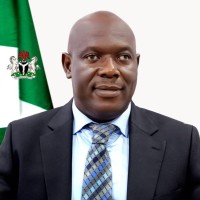
The Hydrocarbon Pollution Remediation Project (HYPREP) has commemorated the 15th anniversary of the release of the United Nations Environment Programme (UNEP) Environmental Assessment Report on Ogoniland, reaffirming its commitment to restoring the environment and improving the livelihoods of affected communities.
In a statement signed by the Project Coordinator, Prof Nenibarini Zabbey, to commemorate the anniversary, HYPREP described the anniversary as a significant milestone in Nigeria’s environmental restoration efforts, noting that the project has made remarkable progress in implementing the recommendations of the landmark UNEP report released on August 4, 2011.
The UNEP report had revealed extensive oil pollution across Ogoniland, severe environmental degradation, and serious public health risks resulting from decades of petroleum operations. It also recommended an initial $1 billion fund to commence the cleanup of the affected communities.
According to HYPREP, the Federal Government formally launched the Ogoni clean-up in 2016, while the Project Coordination Office was established in 2017 to drive the implementation of UNEP’s recommendations.
Zabbey said the current administration has continued to prioritise the project under the Renewed Hope Agenda.
Providing an update on the cleanup, the Project Coordinator disclosed that 30 of the 65 contaminated sites identified by UNEP have been fully remediated, while work is ongoing at several medium- and high-risk locations. It also stated that more than 1.5 million mangrove seedlings have been planted as part of what it described as the world’s largest restoration of oil-degraded mangroves, with over 1,000 hectares of shoreline already rehabilitated.
Zabbey further revealed that 49 Ogoni communities have been connected to potable water schemes through multiple water projects and booster stations aimed at providing safe drinking water across the region.
In the health sector, he said the 100-bed Ogoni Specialist Hospital in Kpite and the 43-bed Cottage Hospital in Buan are nearing completion, adding that several existing health facilities have been upgraded with modern medical equipment, while five ambulances have been donated to improve emergency healthcare services. The Project Coordinator also disclosed that a three-year human health biomonitoring study is being conducted in collaboration with the World Health Organization’s International Agency for Research on Cancer (IARC).
On economic empowerment, Zabbey stated that the Project has created more than 8,000 direct jobs and trained thousands of Ogoni youths and women in various vocational and technical skills, including software development, cybersecurity, aviation, commercial diving, seafaring, mechatronics, and creative arts. The project also reported awarding scholarships to more than 1,000 students, providing grants to small businesses, and supporting persons living with special needs through skills acquisition programmes.
The statement further highlighted ongoing legacy projects, including the Ogoni Power Project and the Centre of Excellence for Environmental Restoration, which it said is about 96 per cent complete. HYPREP also welcomed the recent designation of the Ogoni Wetland as a Ramsar Site of International Importance and pledged to continue promoting biodiversity conservation and sustainable management of the ecosystem.
Marking the anniversary, Zabbey said the progress achieved over the past 15 years demonstrates the collective commitment of government, development partners, stakeholders, and local communities to restoring Ogoniland. He called for renewed collaboration to sustain the cleanup effort, promote environmental sustainability, and support the long-term development of the region. 3
-

 News2 days ago
RSG Targets Nine Million Residents in Mosquito Net Distribution Campaign
-

 Oil & Energy1 day ago
Aiyedatiwa Signs New Electricity Bill
-

 Oil & Energy1 day ago
NLNG Commissions Research And Innovation Centre In RSU
-

 Maritime1 day ago
Marine Minister Commends President Tinubu On NPERA Bill Assent
-

 News2 days ago
KenPoly Holds Eight Convocations, August 29
-

 News2 days ago
RSG Begins Another Phase of Projects Commissioning Today
-

 News2 days ago
RMAFC Completes Revenue Sharing Review, Proposes New Pay
-

 Maritime1 day ago
NAGAFF Petitions IGP Over Alleged Maritime Police Harassment