
Nation
THE STATES

Adamawa
The Executive Secretary of National Human Rights
Commission (NHRC), Prof. Ben Angwe, has urged affected states to hasten the evacuation of their returnee indigenes from transit camps in Adamawa State.
Angwe made the call in Yola when he visited transit camps in Fufore and Malkohi to address hundreds of Nigerian returnees from Cameroon and Central Africa Republic.
He said many of the returnees had spent many weeks in the camps waiting to be evacuated, noting that NHRC was concerned about the welfare of the returnees and Internally Displaced Persons (IDPs) in the camp.
“We have a responsibility from the NHRC for the promotion, protection and enforcement of all Nigerians’ rights, including the right of vulnerable Nigerians, such as the IDPs.
“We are working with other stakeholders like NEMA,, United Nations Human Rights Commission, Red Cross and various state emergency management agencies to ensure that,” Angwe said.
FCT
The Executive Secretary, National Universities Commission
(NUC), has condemned the rate at which Nigerian students seek admission in foreign universities.
Okojie made his feeling known at the communication’s session of the Capacity Enhancement and Sustainability Workshop for the African Centres of Excellence (ACEs) in Nigerian Universities in Abuja recently.
According to Okojie, Nigerian universities remain among the best in the world as their products are acquitting themselves creditably well.
He cautioned Nigerian media against running down Nigerian universities with negative reports instead of promoting their positive sides.
Kaduna
The Kaduna State government has awarded scholarship
to 30 female students from the State to study medical courses in Uganda.
The Commissioner for Education, Dr Shehu Adamu, said in a statement in Kaduna that the students would depart for Uganda before the end of January.
He said the aim was to encourage girl-child education by enhancing access to educational opportunities.
Adamu also announced that all teachers on deputy director level serving outside classrooms must return to classes before being promoted as director henceforth.
He said the policy, which came into effect from January 1, was to enhance the quality of teaching and learning in public schools.
Kano
Former Managing Director of Nigerian Ports Authority
(NPA), Alhaji Aminu Dabo, has advised Nigerian youths to avoid acts capable of destroying their future.
He made the call when the National Association of Nigerian Students (NANS) presented him an award in Kano recently.
He said the advice was necessary in view of the fact that they were the future leaders of the country.
He advised that “as future leaders of Nigeria, youths are supposed to exhibit good conduct and avoid anything that will destroy their future.
He commended the Association for finding him worthy of the award and urged members to face their studies with the seriousness it deserved to enable them to contribute their quota toward the development of the country.
Kwara
The Department of Petroleum Resources (DPR) in Kwara
State, said that it would collaborate with security agencies to curb sale of petrol in black markets.
The Operations Controller, Mr Philips Salvation told newsmen in Ilorin that the DPR would also seek the support of the media and other stakeholders to ensure proper monitoring of filling stations.
Salvation stressed that the sale of fuel in black market, especially within the vicinity in filling stations, was purely a security issues which cannot be solved by the department alone.
“Eradication of black market joints is a collective effort of the law enforcement agents, media, and unions in the oil sector which the department will champion,” he said.
Lagos
A 25-year-old, driver, Olakunle Adetunde has appeared in
an Ikeja Magistrates’ Court for allegedly beating up a police woman.
Adekunle, who lives at 1 Adeyemi Close, off Oke Aro Bus-Stop, Ogun State, was arraigned on a three-count charge of assault, breach of peace and unlawful obstruction of duty.
The Prosecutor, Insp. Idowu Onime, told the court that the offence was committed on December 23 at Pen Cinema Roundabout, Agege, a suburb of Lagos.
Onime said that the accused beat up Sgt. Alonge Bridget, when he was arrested for disobeying traffic rules.
“He tore the woman’s uniform and left her half naked,’’ he said.
Niger
A Minna Magistrates Court has sentenced the Manager of
Mary Raphael Electronics to three months imprisonment for non-payment of waste disposal bill.
The state counsel, Jibrin Alfa, told the court that the accused had refused to comply with demand notice to pay N12,000 as waste disposal bill served on him on August 31, 2015.
Alfa said the action contradicted Section 143 of the state criminal procedure code.
He said that the offence was punishable under Section 36 sub-section 1 and 2 of the Niger State Environmental Protection Agency Laws.
Ogun
A university teacher, Prof. Jonathan Osemeobo, has urged
the Federal Government to evolve policies which would promote sustainable forest management.
Osemeobo, who is the Dean of College of Natural and Applied Sciences, Bells University, Ota, Ogun State, made the appeal at the institution’s second inaugural lecture.
He said the ability of the Federal Government to make consistent forest policies would lay a good foundation for the nation to diversify its revenue base and reduce dependence on oil.
In a lecture entitled, “Crisis in Forest Conservation in Nigeria: Threats to Livelihood and Human Survival,’’ the lecturer said government needed to partner with stakeholders in forest management.
“Policy inconsistency has often led to policy failure which has great repercussions on the nation.
Oyo
A consultant Haematology Oncologist,Prof. Olufunmilayo
says succour has now come to leukemia patients with the discovery of a drug, capable of curing the disease.
Falusi-Olopade, who is the Director, Centre for Clinical Cancer Genetics, University of Chicago, Illinois, USA, disclosed this in an interview with newsmen in Ibadan.
She said that the new drug has the potential for breakthrough in treating ChronicLymphocytic Leukemia (CLL), which is the most common, with fewer side effects than chemotherapy.
“When this drug was first developed, they made sure everyone had access to it in Nigeria and everywhere else in the world.
Plateau
The Plateau State Commissioner for Tourism, Mr John
Mwankon has warned residents who have illegally possessed government land to stay off such property or face the wrath of the government.
The commissioner made the call during his inspection of the ministry’s outlets and parastatals in Jos recently.
He said that it was unfortunate that lands reserved for government projects had been illegally possessed or not maintained by occupants and had defaced the Plateau master plan.
He said that part of the reserved area for the tourism ministry which also houses the indoor theatre in the heart of the town had been illegally occupied.
He expressed worry that most of the outlets he visited were dilapidated or totally abandoned.
Yobe
The Yobe State Commissioner for Justice, Alhaji Ahmed
Goniri, says the independence of the judiciary in the state has led to improvement in the administration of justice and industrial harmony in the sector.
Ahmed made this known in an interview with newsmen in Damaturu.
“The judiciary just like the legislature in the state enjoys freedom without interference from the executive arm of government, thereby promoting independence among the three arms of government.’’
The commissioner said government provided quarterly allocation of funds to the judiciary for financial independence.
“Government allocates funds to the judiciary quarterly in accordance to their budgetary provisions and revenues accrued to the state.
Sokoto
The Sokoto State Commissioner for Finance, Alhaji
Saidu Umar, says that the government has begun the full implementation of the Treasury Single Account ( TSA).
Umar told newsmen in Sokoto that the ministry had issued a circular to all ministries, agencies and parastatals on the need to close all dormant accounts operated before now.
He said that the measure was aimed at blocking all loopholes of siphoning public funds and other revenues due to the state government.
The commissioner explained that with the new implementation policy, government would have full control over its internally generated revenue and ensure the checks and balances of its finances.
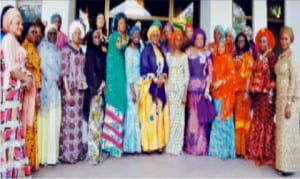
Wife of the President, Mrs Aisha Buhari (8th left), wife of the Vice President, Mrs Dolapo Osinbajo (6th right), wife of the Speaker of the House of Representatives, Mrs Gimbiya Dogora (7th left), with wives of State Governors, after their meeting at the Presidential Villa in Abuja on Monday.



The Rivers State Commissioner for Education, Dr. Peters Nwagor, has commended the orderly conduct of the ongoing 2026 West African Senior School Certificate Examination in the state and urged schools to sustain the standard.
Dr. Nwagor gave the commendation on Tuesday during a monitoring tour of selected secondary schools in Port Harcourt and environs where the WAEC exam is ongoing.
The commissioner, who was accompanied by directors and monitors from the Ministry of Education, said he was impressed with the peaceful atmosphere at the centres visited.
“The students conducted themselves properly and wrote their papers under conducive conditions. Invigilators and supervisors also performed their duties professionally,” he stated.

Nwagor noted that the Rivers State Government had invested heavily to ensure the smooth and credible conduct of the examination across the state
He urged candidates to reciprocate government’s effort by shunning all forms of examination malpractice and focusing on their studies.
“Government has done so much to ensure successful examinations in our schools. Students should take advantage of it by remaining focused,” the commissioner said.
While no case of malpractice was recorded in the centres inspected, Dr. Nwagor warned that any principal, teacher, invigilator, or official caught aiding malpractice would face strict sanctions in line with regulations.
He also commended school administrators, teachers, WAEC officials, and security personnel for upholding the integrity of the process.
Centres visited included County Grammar School, Ikwerre/Etche; Government Comprehensive Secondary School, Borokiri; Government Secondary School, Borokiri; and Pabod Model Secondary School.

Rivers State University and the Otonti Nduka Foundation for Values Education jointly hosted a two-day National Conference on 8 and 9 May 2026 to examine the state of values in Nigeria.
The two days conference held at Rivers State University convocation arena brought together academics, policymakers, legal experts and education leaders under the theme _“Trends and Challenges in Upholding Values in Nigeria.”_
The gathering focused on policy gaps, curriculum reform, and the role of ethics in public service and education.
The event opened on Friday with remarks from Vice Chancellor Prof. Chief Isaac Zeb-Obipi, who stressed the need to address declining moral and civic values across Nigeria’s education and public sectors. A book of abstracts for the plenary sessions was also presented to participants.
Key speakers included former Attorney General Chief Dr Kanu Agabi, SAN; NERDC Executive Secretary Prof. Shehu Salisu; Prof. Hauwa Imam, FNAE, of the University of Abuja; former Rivers SUBEB Chairman Ven Dr Fyneface Akah, ; former NIMASA DG Dr Hon. Dakuku Adol-Peterside; and RSU Director of ICT Prof. Sunny Orike.
Discussions centered on integrating values education into schools, tertiary institutions and public institutions, alongside the impact of technology on moral development among young Nigerians. Panel and plenary sessions produced practical recommendations for curriculum and policy reform.
On Saturday, the foundation marked its centenary with the unveiling of the book _Otonti Nduka in History_, launched by Chief Engr. Grant Offor, FNSE. The Nigerian Academy of Education held a ceremonial procession led by its President Prof. Olu Jegede and the Ikwerre Professors Forum.
In a communiqué, participants called for stronger collaboration between government, civil society and academia to mainstream values education nationwide. They recommended reviewing teacher training curricula and expanding digital platforms to promote ethical civic engagement, with the foundation pledging to share the outcomes with education authorities for implementation.
Dignitaries present included Ogbakor Ikwerre Worldwide as Chief Host, Prof. Emeritus Chief T. Uzodimma Nwala, the Ikenga 1 of Mbaise and first philosophy student of Prof. Otonti Nduka, alongside scholars and community leaders.
Amadi Akujobi
-

 Rivers2 days ago
Police arrest 3 suspects over killing of driver in Rivers
-
Politics2 days ago
I DIDN’T PROMISE YOU TICKETS, AKPABIO TELLS APC SENATORS WHO FAILED PRIMARIES
-

 News2 days ago
FUBARA ASSURES NUT OF SECURITY OF SCHOOLS IN RIVERS
-

 News2 days ago
NDLEA Arrests Four Notorious Female Drug Dealers In Four States
-

 Sports2 days ago
Okpekpe Road Race Gets Mobility Solutions, Fan Engagement
-

 News2 days ago
WORLD FOOD SAFETY DAY: VETERINARIANS TASK GOVT ON MODERN ABATTOIR IN RIVERS
-
Politics2 days ago
Court Dismisses Rivers PDP Members’ Suit Over LG Election Candidates
-
Politics2 days ago
POST PRIMARIES: IKWERRE MONARCHS ADVOCATE ISSUES-BASED POLITICS IN RIVERS