
Nation
THE STATES

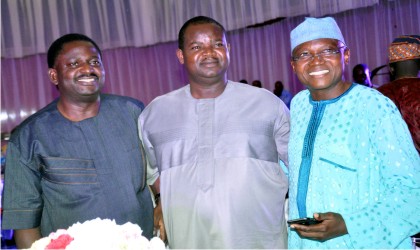
L-R: Special Adviser, Media and Publicity to President Muhammadu Buhari, Mr Femi Adesina,Managing Director, News Agency of Nigeria (Nan), Mr Ima Niboro and Senior Special Assistant to President Buhari on Media and Publicity, Garba Shehu, during a Guild of Editors’ Dinner in honour of two media icons, Femi Adesina and Garba Shehu in Abuja recently
Ekiti
An Ado-Ekiti Chief Magistrates’ Court, has remanded one
Solomon Edward in prison custody over alleged defilement of a 10-year-old girl.
Chief Magistrate, Idowu Ayenimo, ordered that the accused be remanded in prison custody, and adjourned the case till October 16.
The prosecutor, Sgt. Bankole Olasunkanmi had told the court that the accused committed the offence on August 18 at Iye-Ekiti.
The plea of the accused was not taken, but his counsel urged the court to grant him bail in liberal terms.
The prosecutor, however, objected to the bail application, saying the act of defilement is now alarming.
FCT
The National Youth Council of Nigeria (NYCN), has asked the
National Assembly to initiate a legislation that will collapse the Federal Government-corruption agencies into a single formidable institution.
The group also said the agency which must be adequately funded, should have a department which would be responsible for tracking and verifying source of income of Nigerians living above their means.
National President of the NYCN, Mr. Ikenga Ugochinyere, stated this in Abuja at the official opening of registers to collect signatures in support of President Muhammadu Buhari’s anti-corruption war.
Ugochinyere, said the registers would be opened in all the 36 states of the federation, the Federal Capital Territory and Nigerian embassies in the United Kingdom, the United States and China for interested youth willing to support the Federal Government graft crusade.
He said the group will on September 17, mobilise thousands of Nigerian youth to stage a mass rally to the headquarters of the Economic and Financial Crimes Commission; the National Assembly and Presidential Villa, to assure Buhari of the youth’s commitment to his anti-graft crusade.
Gombe
The Senate of the University of Maiduguri (UNMAID), says it
has approved the establishment of its first Distance Learning Outreach Center in Gombe.
The Vice Chancellor of the Institution, Prof. Ibrahim Njodi, disclosed this when he paid a courtesy visit on the Gombe State Governor, Ibrahim Dankwambo, in Gombe.
Njodi called on the state government to provide a befitting place for the immediate take-off of the centre.
He said that the approval of the programme by the Senate had made the university an institution that provided both conventional academic programmes and the Distance Learning.
Jigawa
The Jigawa State Special Worker Verification Committee has
said it screened 1169 of 1206 teaching and non-teaching staff in Malammadori Local Government Area.
The Chairman of the Nigeria Union of Teachers (NUT) in the area, Malam Aliyu Balarabe, who made this know to newsmen in Malammadori, Jigawa, said the exercise was conducted smoothly in all public primary and junior secondary schools.
It will be recalled that the state government had embarked on verification of pensioners, teachers and workers of the 27 local government areas of the state.
The council’s Education Secretary, Mukhtar Mukaddiri, said the exercise would enable the government to make proper planning toward improving the welfare of teachers.
Kaduna
Some Kaduna-based lawyers have urged their colleagues to
support President Muhammadu Buhari’s fight against corruption.
The lawyers spoke in separate interviews in Kaduna, while reacting to Buhari’s call on lawyers to desist from protecting crooks.
One of the lawyers, Mr Pascal Nickaf, said the call was timely and even long overdue.
He, however, said that the fight was not a one-man battle but a battle that required the support of all stakeholders.
Kano
The Kano State Agency for the Control of Aids (KSACA),
has asked stakeholders to collaborate with it to fight the spread of HIV/AIDS, particularly mother to child transmission of the disease.
The Director General of the agency Dr Sa’adatu Bala, made the call when she paid an advocacy visit to Hasiya Bayero Paediatrics Hospital in Kano.
She said the call was necessary in order to ensure continued support and stronger collaboration between the agency and the hospital to achieve the desired objective.
Responding, the Medical Director of the hospital, Dr Hafsat Kabir, said that the hospital needed assistance to install some laboratory equipment donated to it by a donor agency, FH1360.
Katsina
The National Emergency Management Agency (NEMA) in
Daura, Katsina State, has distributed relief materials to no fewer than 2,000 flood-disaster victims.
The NEMA Director-General, Mr Muhammad Sani-Sidi, who handed over the materials to the victims, said the flood had affected seven local government areas of the state.
According to him, the major cause of the flooding was the blocking of drains with refuse and building of houses on water ways.
He said that the intervention was sequel to the receipt of the report of the disaster and subsequent needs assessment from conducted by the State Emergency Management Agency.
Kebbi
Governor Atiku Bagudu of Kebbi State has pledged to im
prove girl-child education in the state.
This is contained in statement issued by Chief Press Secretary to the governor Alhaji Abubakar Muazu, in Birnin Kebbi.
The statement stated that the governor made the pledge when he received a delegation of a non-governmental organisation, Voices of the Girl-Child Education.
Bagudu described female education as vital to human resource and social development, stressing that education could be conveniently combined with motherhood.
The wife of the governor, Dr Zainab Bagudu, who accompanied the group during the visit, said female education was paramount in building a virile society.
Kogi
The Catholic Bishop of Lokoja, Dada Olorunmolu, has reiter
ated Catholic church’s position against gay marriage, saying it was unequivocal and the church would not compromise on it.
The Bishop who made this known in an interview in Lokoja , said that approving gay union would amount to standing the Bible on its head.
According to him, the issue is against the teachings of the church and the Bible; it will amount to bending its teachings, its injunctions, just to accommodate what is unnatural.
The bishop prayed for those who indulged in the act, asking God to give them the grace to understand what was right.
Lagos
A coalition of civil society organisations in the country, has
alleged that former President Goodluck Jonathan, deliberately embarked on policies that directly promoted corruption and impunity in public offices during the six years that he administered the affairs of the country.
They, therefore, said it would be a great disservice to the entire Nigerian populace if his successor, President Muhammadu Buhari, heeded the advice of those asking that Jonathan should not be probed and brought to book.
The CSOs, which jointly addressed a press conference in Lagos, admitted that corruption in public offices did not begin under Jonathan, but they described the Jonathan’s era as one during which “Nigeria literally became a looting field; where big thieves became bigger; where new and powerful thieves were created; and where big, destructive ‘rats’ and ‘termites’.
Nasarawa
A 21-year-old bus conductor, Shedrach Ezekiel of Mararaba,
has been sentenced to18 months in prison by a Mararaba Grade 1 Area Court for stealing a phone valued at N11,000.
The presiding judge, Albert Maga, convicted Ezekiel after he pleaded guilty for the offence of conspiracy and theft.
Earlier the prosecutor, Cpl. Friday Adaji told the court that the convict was first arraigned on August 14 but remanded in custody for his accomplice to be arrested.
Niger
Ward Head, Nuatuko, in Bosso Local Government Area of
Niger State, Malam Usman Aliyu, has, implored the state government to provide the community with potable water and access roads.
Aliyu who made the appeal during interview in Nuatuko, said the only source of water in the community was from Dagbai stream, three kilometres away from the village.
The ward head said the immediate past administration in the state had promised the community a borehole on four different occasions but could not fulfill the promise.
He added that the main road linking the village with Bosso was in a deplorable condition, adding that, “right now, it is not passable, especially in this rainy season.
Ogun
The Ogun State Judiciary has commenced series of refresher
courses for Magistrates, Judicial Assistants, Secretaries, Court Registrars, Clerks and Bailiffs across the state, the Chief Judge, Mrs Olatokunbo Olopade, has said.
Olopade, who made the statement in Abeokuta while speaking with newsmen, said the four-day training was organised in partnership with the National Judicial Institute (NJI), Abuja.
She said the training was organised to improve the standard and quality of the state judicial system and judiciary staff.
The Director of Studies, NJI, Mr Cyprain Ajah, said the training, which includes Information Communication Technology (ICT), became imperative because of the need to build the capacity of judicial officers and staff.
Ondo
A commercial motorcyclist, Kamil Ibrahim, 25, was arraigned
in an Okitipupa Magistrates’ Court, for allegedly assaulting a salesgirl who refused him N200 worth of cigarette on credit.
The prosecutor, Insp. Zedekiah Orogbemi, told the court that the accused, on July 6 around 7:00 a.m. at Okitipupa market, beat up Bolaji Kusoro, and inflicted injuries on her.
Orogbemi added that the accused was still owing Kusoro N1,000, which made her to refuse further credit facility.
Magistrate Banji Ayeomoni, granted the accused bail in the sum of N20,000 and a surety in like sum, and adjourned the case till September 2 for further hearing.
Oyo
Chief Medical Director of the University College Hospital
(UCH), Ibadan, Prof. Temitope Alonge, has said that the hospital will extend its ongoing Human Papillo Virus (HPV) vaccination to rural areas.
Alonge made this disclosure on the sideline of the ongoing 9th Annual Scientific Conference with the theme “The Role of Pathologists in Oncologic Diagnosis and Management”, in Ibadan.
The five-day conference was organised by the West African Division International Academy of Pathology in conjunction with United States and Canadian Academy of Pathology.
Alonge said cervical cancer was the second silent killer in women, noted that vaccination against the virus was the surest way of preventing cervical cancer in Nigerian women.



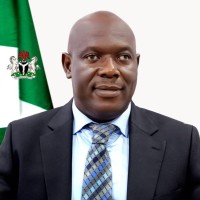
The Hydrocarbon Pollution Remediation Project (HYPREP) has commemorated the 15th anniversary of the release of the United Nations Environment Programme (UNEP) Environmental Assessment Report on Ogoniland, reaffirming its commitment to restoring the environment and improving the livelihoods of affected communities.
In a statement signed by the Project Coordinator, Prof Nenibarini Zabbey, to commemorate the anniversary, HYPREP described the anniversary as a significant milestone in Nigeria’s environmental restoration efforts, noting that the project has made remarkable progress in implementing the recommendations of the landmark UNEP report released on August 4, 2011.
The UNEP report had revealed extensive oil pollution across Ogoniland, severe environmental degradation, and serious public health risks resulting from decades of petroleum operations. It also recommended an initial $1 billion fund to commence the cleanup of the affected communities.
According to HYPREP, the Federal Government formally launched the Ogoni clean-up in 2016, while the Project Coordination Office was established in 2017 to drive the implementation of UNEP’s recommendations.
Zabbey said the current administration has continued to prioritise the project under the Renewed Hope Agenda.
Providing an update on the cleanup, the Project Coordinator disclosed that 30 of the 65 contaminated sites identified by UNEP have been fully remediated, while work is ongoing at several medium- and high-risk locations. It also stated that more than 1.5 million mangrove seedlings have been planted as part of what it described as the world’s largest restoration of oil-degraded mangroves, with over 1,000 hectares of shoreline already rehabilitated.
Zabbey further revealed that 49 Ogoni communities have been connected to potable water schemes through multiple water projects and booster stations aimed at providing safe drinking water across the region.
In the health sector, he said the 100-bed Ogoni Specialist Hospital in Kpite and the 43-bed Cottage Hospital in Buan are nearing completion, adding that several existing health facilities have been upgraded with modern medical equipment, while five ambulances have been donated to improve emergency healthcare services. The Project Coordinator also disclosed that a three-year human health biomonitoring study is being conducted in collaboration with the World Health Organization’s International Agency for Research on Cancer (IARC).
On economic empowerment, Zabbey stated that the Project has created more than 8,000 direct jobs and trained thousands of Ogoni youths and women in various vocational and technical skills, including software development, cybersecurity, aviation, commercial diving, seafaring, mechatronics, and creative arts. The project also reported awarding scholarships to more than 1,000 students, providing grants to small businesses, and supporting persons living with special needs through skills acquisition programmes.
The statement further highlighted ongoing legacy projects, including the Ogoni Power Project and the Centre of Excellence for Environmental Restoration, which it said is about 96 per cent complete. HYPREP also welcomed the recent designation of the Ogoni Wetland as a Ramsar Site of International Importance and pledged to continue promoting biodiversity conservation and sustainable management of the ecosystem.
Marking the anniversary, Zabbey said the progress achieved over the past 15 years demonstrates the collective commitment of government, development partners, stakeholders, and local communities to restoring Ogoniland. He called for renewed collaboration to sustain the cleanup effort, promote environmental sustainability, and support the long-term development of the region. 3
-

 News2 days ago
RSG Targets Nine Million Residents in Mosquito Net Distribution Campaign
-

 Oil & Energy2 days ago
Aiyedatiwa Signs New Electricity Bill
-

 Oil & Energy2 days ago
NLNG Commissions Research And Innovation Centre In RSU
-

 Maritime2 days ago
Marine Minister Commends President Tinubu On NPERA Bill Assent
-

 News2 days ago
KenPoly Holds Eight Convocations, August 29
-

 News2 days ago
RSG Begins Another Phase of Projects Commissioning Today
-

 News2 days ago
RMAFC Completes Revenue Sharing Review, Proposes New Pay
-

 Maritime2 days ago
NAGAFF Petitions IGP Over Alleged Maritime Police Harassment