
Environment
Illegal Dredging And Coastal Erosion In Rivers

Illegal dredging and
sand excavation is fast becoming a major source of employment for thousands of youths across the Niger Delta and the rest of the country.
For instance, in Rivers State Investigation revealed that these illegal activities are going on in places such as Etche, Oyigbo, Abuloma in Port Harcourt city Local Government Council and across the riverine local government areas of the state.
The Tide could not stumble on regulations guiding the activities of those engage in this act.
It is also interesting to note that apart from the fact that this situation is being carried out by across section of youths with little or no knowledge of its impacts on the environment, some how multinational corporations are engaged in it.
At the Otamiri river in Etche Local Government Area The Tide spotted large dredgers probably owned by some politicians.
Also in places like Abuloma, some youths and corporations are competing over ownership of dredging sites.
But the question being asked across the state is whether, there are some forms of approvals or regulations concerning these dredging activities.
When The Tide sought the views of the immediate past Commissioner for Environment, Dr. Nyema Weli, on the issue, he declined comment and directed the reporter to see the permanent secretary of the ministry who was also not available as at the time of filing this report.
The Tide later learnt from the officer incharge of the department of marine pollution in the ministry that the issue of regulation has been contracted out to consultant.
But The Tide could not trace the identity and whereabouts of this consultant.
However, stakeholders are expressing deep concern over the activities of illegal dredging activities in the state.
Some of those who responded to text messages on the issue, decried the activities of illegal dredging, contending that dredging in whatever form ought to be preceded with an Environmental Impact Assessment (EIA) Programme
They noted that, the absence of EIAs on the situation across the state have made the occupation to pose greater dangers to impacted communities.
The stakeholders also regretted the lack of concern on the situation by the authorities, adding that “in situation like this, there will be absence of standard and uniformity” as far as the occupation is concerned.
According to them, impacted communities, must rise up and demand for standard to save their areas from environmental degradation.
The state Director of the National Orientation Agency (NOA) Mr. Oliver Wollugbom was the first to respond to the text message on the issue.
In his response, Mr. Wollugbom said that therewas need for the authority to ensure that all dredging activities conform to acceptable standard, inline with international best practices.
The Director also regretted the lukewarm attitude being paid to the issue by those incharged.
“Government should ensure that all dredging activities conform to the standard practice, while following all the laws.
“It is unfortunate that, those entrusted with the responsibility to report and enforce our laws don’t carry out their jobs.
“We must ensure that, our environment is not damaged or polluted” he said.
Professor Mark Anikpo, an erudite scholar and a lecturer at the University of Port Harcourt, particularly decried the absence of Environmental Impact Assessments on dredging in Rivers State and parts of the Niger Delta, adding that this was responsible for the lack of information on environmental and human tragedies of dredging across the region.
Professor Anikpo said that the new Administrations of president Muhammudu Buhari and the governors of the various Niger Delta states must as a matter of urgency set out modalities for dredging and sand excavation in the region.
“It should conduct a pre-impact assesment of dredges that will provide information on the enormous human tragedy involved in such dredging activities” Prof Anikpo said.
On his part, the state coordinator of Rivers Sanitation Marhalls, Prince Sodin Akiagba, said that various communities in the state are being exposed to erosion and pollution as a result of illegal dredging activities.
He also condemned the activities of timber dealers, adding that the continous destruction of Rivers Rain Forests by timber dealers is exposing the environment to danger.
Prince Akiaba also stressed the need for the authorities to not only make the laws on this situation, but enforce their compliance .
“We need a government with strong political will to save our environment from destruction, we need an Environmental Impact Assesment (EIA) before people go into dredging activities.
“Our government must be ready to prohibit illegal dredging, no matter who is involved” he said.
On his part, the Public Relations Officer of the Movement for the survival of Ogoni People (MOSOP) Mr. Buriara Kpalap, said that the government should first and for most guide the coastline very well to check the activities of illegal dredgers.
Mr. Kpalap said that this is necessary as the communities are disempowered to do it, adding that, whoever that is caught in this nefarious act must be made to face the wrath of the law to serve as deterrent to others.
Other stakeholders who also reacted to the messages expressed the same sentiments.
However, as the new administration comes on board, the challenges are indeed enormous and there must be clearly defined policies to tackle these problems. The people are unanimous on this.
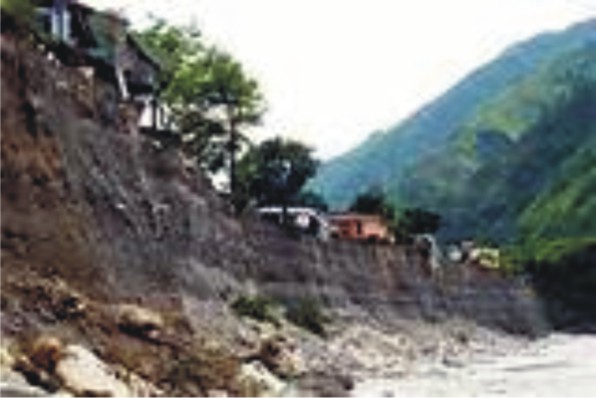
Erosion site in Niger Delta



-

 Editorial1 day ago
Enough Of Xenophobic Attacks On Nigerians
-

 Nation1 day ago
RSU, Otonti Nduka Foundation Holds Centenary Conference, Unveil Book on Values in Nigeria
-

 Oil & Energy1 day ago
Rivers PETROAN Elects 12-Member Executive
-
 Environment1 day ago
MOSOP – Tinubu Not Sincere With Ogoni People For Oil Resumption
-
Politics1 day ago
APC Group Protests Ex–Presidential Aspirant’s Disqualification From Rivers Senatorial Race
-

 News1 day ago
Fubara, Wife Hail Tinubu’s Renewed Hope Initiative …As Over 6,800 Families Benefit From Largesse In Rivers
-
Politics1 day ago
Reps Speaker Secures APC Return Ticket For Fifth Term
-

 Sports1 day ago
Oparaodu Urges Rivers United To Win Katsina United