
Environment
NGOs Task Media On Investing In Climate Literacy


Non Governmental Organisations in Abuja have urged media organisations to invest in climate literacy, aiming to move beyond basic weather reporting toward in-depth, solution-oriented journalism.
The NGOs made the call at a two-day Media Training Conference on “Climate Governance and Gender Mainstreaming in the United Nations Framework Convention on Climate Change (UNFCCC) and Minamata Conventions”.
The Tide source reports that the training was organised by EnviroNews Advocacy & Campaigns for Sustainability (Endvocas) in collaboration with the Women Environmental Programme (WEP).
Rep. Sam Onuigbo, a former two-time member of the House of Representatives, said the media is a critical bridge between scientific knowledge and public action, necessitating specialised reporting to counter misinformation and drive accountability.
Onuigbo, who is also the sponsor of Nigeria’s Climate Change Act 2021, urged the media to also do investigative reports and have specialised environmental desks capable of sustaining informed public engagement.
“Journalism is the bridge between scientific knowledge and public consciousness.
“Scientists can publish reports, legislators can enact laws, and governments can formulate policies, but without journalists who translate technical realities into human understanding, public mobilisation becomes difficult.
“Climate journalism extends far beyond reporting temperature increases or covering international climate summits,” Onuigbo said.
According to him, Climate journalism involves holding governments accountable for climate commitments, investigating climate financing and environmental corruption and also to amplify the experiences of vulnerable communities.
“The Minamata Convention and Environmental Sustainability is beyond greenhouse gas emissions and rising temperatures.
“Environmental governance must also address toxic pollution and hazardous substances capable of threatening both human health and ecological sustainability.
“One of the most important international frameworks in this regard is the Minamata Convention on Mercury, adopted in 2013 and named after Minamata Bay in Japan where industrial mercury poisoning caused devastating health and environmental consequences.”
He stated that mercury pollution remains a major concern, particularly within artisanal and small-scale mining activities where unsafe mercury usage continues to contaminate water bodies, destroy ecosystems, and endanger human lives.
“The consequences include neurological disorders, developmental impairments, respiratory illnesses, and long-term ecological degradation.
“It is now a lived reality affecting communities across Nigeria and beyond. From devastating floods and desertification to food insecurity, displacement, shrinking water bodies, and rising temperatures.
“The consequences of climate disruption are already altering livelihoods and threatening national stability.
“Climate change is too large for one institution to solve alone. It demands a multistakeholder response involving legislatures, executives, the media, civil society, academia, the private sector, traditional institutions, women, and youths,” Onuigbo said.
Mr Michael Simire, Publisher of EnviroNews Nigeria, said that as climate impacts intensify across Nigeria, from devastating floods to heatwaves, biodiversity loss, and pollution, the need for informed, responsible, and gender responsive climate governance has never been more urgent.
“This is where the media stands tall.Journalists are not just storytellers; they are agenda setters, watchdogs, educators, and catalysts for change.
“The narratives you shape influence public perception, policy direction, and community action. When the media is empowered with knowledge, context, and clarity, society benefits from better governance, stronger advocacy, and more inclusive decision-making.
“Women and girls are disproportionately affected by climate change and mercury pollution, yet their voices remain underrepresented in policy spaces.
“Integrating gender perspectives into climate and environmental reporting is not optional, it is essential for justice, equity, and effective solutions,” Simire said.
Mr Steve Abu, the National Network Coordinator, Climate and Sustainable Development Network (CSDevNet) said that in Nigeria and across Africa, climate change is no longer a headline about tomorrow, it is the reality people are surviving today.
“This is why the role of journalists, storytellers, editors, broadcasters, and digital creators has been more critical.
“It is the media that translates complexity into public understanding. It is the media that gives human faces to scientific statistics.
“It is the media that can transform climate conversations from conference halls into kitchen-table discussions across Africa.
Dr Priscilla Achakpa, Founder and Global Lead, Women Environmental Programme said that environmental communication must go beyond headlines.
“Across the world, climate change is no longer a distant threat. It is here with us. We see it in rising temperatures, devastating floods, prolonged droughts, food insecurity, displacement of communities, and growing threats to livelihoods and public health.
“These environmental crises are not just scientific or policy issues. They are human stories. They are economic stories. They are justice stories.
Achakpa added that the role of the media had never been more critical; the media is not merely a channel for information but a force for transformation.
“Without informed and consistent environmental reporting, many citizens may never fully understand the dangers of climate change or the hidden impacts of chemical pollution.
“We need reporting that helps citizens understand why flooding is becoming more frequent, Why heatwaves are intensifying, why unsafe mining practices and mercury exposure matter and why environmental policies should concern every Nigerian.
She emphasised that the fight against climate change and pollution cannot be won by governments alone.
“The stories you tell can influence national priorities.
The questions you ask can drive accountability.
The facts you publish can save lives. And the awareness you create can shape a more sustainable future.
“Because the future of our environment is ultimately the future of our people.
Together, let us amplify the voices for climate justice, environmental protection, and sustainable development,” Achakpa said.
Dr Iniobong Abiola-Awe Director, Department of Climate Change in the Ministry of Environment, advocated gender responsive reporting as regards climate change.


Continue Reading
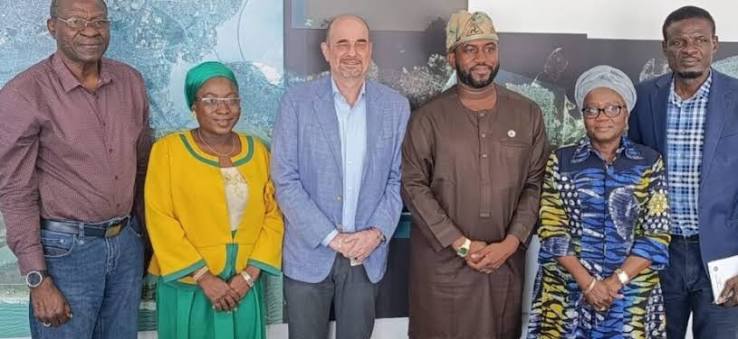
The Lagos Water Corporation (LWC) has commenced discussions with Julius Berger Nigeria Plc to strengthen coordination between water and road infrastructure projects.
This is contained in a statement issued by the corporation.
The corporation said the engagement followed a courtesy and familiarisation visit led by its Managing Director, Mr Mukhtaar Tijani, to Julius Berger’s Ijora office.
It said the visit was aimed at strengthening institutional relations and creating opportunities for deeper collaboration between both organisations.
The corporation stressed the importance of cordial relationships with neighbouring organisations and strategic stakeholders to promote future collaboration.
The meeting focused on road construction, water pipeline protection, water infrastructure development and sustainable water supply across Lagos Island and its environs.
Both organisations highlighted the need for early communication and technical coordination to prevent conflicts between road projects and existing water infrastructure.
Julius Berger Regional Commercial Manager, Region West, Mr Alexander Bauer, reaffirmed the company’s commitment to sustainable engineering solutions rather than short-term fixes.
Bauer stressed the importance of early stakeholder engagement and proper coordination before construction activities begin.
The meeting also examined access to project drawings and technical information required to improve coordination between water and road infrastructure projects.
Julius Berger explained that releasing detailed project drawings remained subject to approval from the appropriate client.
Both organisations therefore agreed on the need to engage the Lagos State Government to secure necessary approvals and strengthen technical collaboration.
The discussions also focused on accurate pipeline information and its importance in planning future water infrastructure and urban development projects.
The LWC delegation raised concerns about uncoordinated borehole drilling and its potential effects on groundwater resources and the ecosystem.
Participants noted that stronger public water supply systems could reduce dependence on individual boreholes and help protect underground water resources.
Construction & Maintenance
They also agreed on the importance of sharing information on construction activities, road conditions, project schedules and potential disruptions.
Security and community considerations were also discussed, with Julius Berger highlighting its engagement with relevant authorities on security infrastructure within the area.
The meeting ended with a shared commitment to open communication, stronger technical coordination and exploring further opportunities for collaboration.
The engagement is expected to strengthen synergies between water and road infrastructure planning and support resilient and sustainable infrastructure development across Lagos.
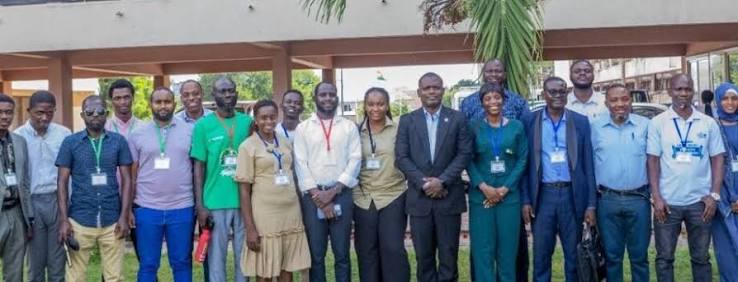
Some Climate Experts across Africa have called for investment in African youth to enhance future security.
They made the call on Wednesday during a webinar organised by Planet, People and Peace Foundation (PPPF), a non-governmental organisation, to observe 2026 International Youth Day (IYD).
According to them, there is a need to invest, listen and create opportunities for young African people.
The Tide source reports that the 2026 theme of the IYD is “Different Contexts, Common Aspirations’’.
Miss Bisi Kumuyi, the Secretary, Climate Beyond Border Caravan (CBBC), Nigeria, who canvassed for investment in youth, said the future of Africa would be determined by the opportunities the continent created for its young people today.
The CBBC, an initiative of PPPF, is a pan-African, youth-led campaign promoting climate action, cross-border cooperation and green economic transformation across the continent.
‘‘As Africa joins the rest of the world to commemorate International Youth Day on Aug. 12, 2026, we celebrate the energy, creativity, resilience and determination of young Africans who continue to shape the continent’s present and future.
‘‘This year’s theme reminds us that young people across Africa live in different social, economic and cultural circumstances.
‘‘They share common aspirations: access to quality education, decent employment, innovation, peace, inclusion, environmental sustainability and opportunities to fulfil their potential,’’ she said.
Also speaking, Mrs Nouran Farouk, an Egyptian Climate Activist, called for urgent investment in Africa’s youth.
According to her, Africa is the world’s youngest continent, and its youthful population represented one of its greatest assets.
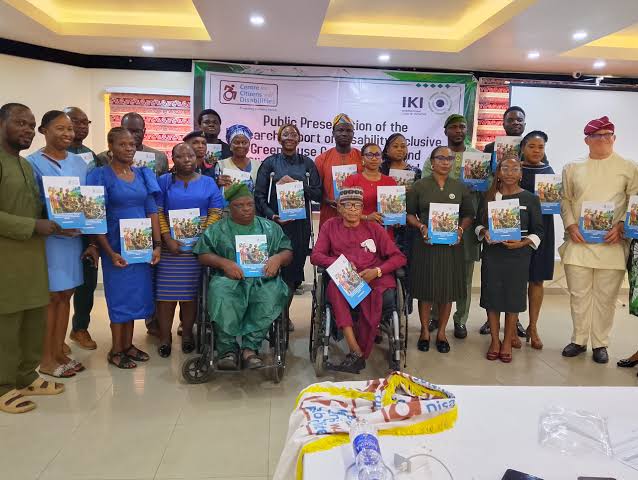
The Centre for Citizens with Disabilities (CCD) has unveiled a research report on impacts of climate change on Persons With Disabilities (PWDs), calling for its implementation in the country.
The Acting Director CCD, Mr Godwin Unumeri, made the call at the public presentation of the report titled: “Disability-Inclusive Greenhouse Gas Emission and Climate Change Adaptation and Mitigation in Nigeria” on Wednesday in Lagos.
The event brought together government institutions, development partners, civil society organisations, persons with disabilities and other key stakeholder to foster dialogue, collaboration and stronger commitment to disability-inclusive climate change adaptation and mitigation in Nigeria.
Unumeri urged stakeholders to strengthen collaboration and policy commitment toward building climate resilience and ensuring the inclusion of persons with disabilities in Nigeria’s climate response.
He noted that valuable insights and recommendations from stakeholders at a validation workshop in February had been incorporated into the report.
According to him, effective implementation of the recommendations requires sustained collaboration, strong policy commitment, adequate resource mobilisation and coordinated action across sectors.
“By working together, we can translate these findings into practical interventions that strengthen climate resilience and ensure the full inclusion of persons with disabilities in Nigeria’s climate response,” he said.
In her remarks, the General Manager, Lagos State Office for Disability Affairs (LASODA), Adenike Oyetunde-Lawal, urged the stakeholders to ensure that the report would be translated into practical interventions to enhance full inclusion of PWDs particularly in climate change policies.
-

 News2 days ago
RSG Targets Nine Million Residents in Mosquito Net Distribution Campaign
-

 Oil & Energy1 day ago
Aiyedatiwa Signs New Electricity Bill
-

 Maritime1 day ago
Marine Minister Commends President Tinubu On NPERA Bill Assent
-

 Oil & Energy1 day ago
NLNG Commissions Research And Innovation Centre In RSU
-

 News2 days ago
KenPoly Holds Eight Convocations, August 29
-

 News2 days ago
RSG Begins Another Phase of Projects Commissioning Today
-

 News2 days ago
RMAFC Completes Revenue Sharing Review, Proposes New Pay
-

 Maritime1 day ago
NAGAFF Petitions IGP Over Alleged Maritime Police Harassment