
Nation
THE STATES

FCT
The Exam Ethics Marshals International (EEMI), a Non-Governmental Organisation (NGO), said it would distribute 37,000 safe kits to schools across the country to promote security consciousness. Mr Ike Oneyechere, the chairman of the organisation, disclosed this in an interview with newsmen in Abuja. Oneyechere said the project would empower stakeholders to tackle insecurity in schools.
“Safe school is a project started in 2014 to address insecurity and safety challenges in schools. It is the only well researched, tested and acclaimed programme in Nigeria for building capacity of education stakeholders on safe school best practices.
“Our target is to distribute at least 37,000 kits to schools across the country; we plan to start in the first week of April.”
Gombe
The Gombe State Government has awarded contract for the construction of three cottage hospitals in Billiri, Shongom and Balanga local government areas at a combined cost of N600 million.
Dr Kennedy Ishaya, the state’s Commissioner for Health, told newsmen in Gombe on Thursday that the hospitals would be constructed in Dezari, Bore and Nyuwar villages, respectively.
He said the decision to construct the hospitals was informed by the immediate need of the community.
The commissioner said that each of the hospital would gulp N200 million and they would be completed within five months.
She said the hospitals would be fully equipped with modern facilities on completion.
Kennedy said that “there is enough manpower that will work in the hospitals.
“In the last three years, we were having problem of manpower; we had only 127 nurses and midwives, but now we have 500 of them,” he said.
Jigawa
Malam Abdullahi Muhammad, the World Health Organisation (WHO) representative in Malammadori, Jigawa, has called for greater involvement of livestock farmers in polio immunisation exercise.
Muhammad made the call at the polio task force committee meeting in Malammadori.
He also urged the local council to provide adequate logistics and allowances to immunisation personnel to facilitate smooth conduct of the exercise.
He said that the forum was created to mobilise herdsmen to present their children for immunisation against the disease.
“Miyetti-Allah Fulani organisation should engage its people in the communities to enhance participation in polio immunisation,” he said.
The WHO representative noted that effective participation by communities would ensure total eradication of the disease.
Kano
The Code of Conduct Bureau (CCB) on Thursday stated that it issued 12,242 forms to members of the public in Kano State in the past 12 months.
The state Director of the CCB, Malam Umar Saulawa, disclosed this when he spoke with newsmen in Kano.
He said that the primary aim of the bureau was to maintain public morality and accountability.
The Director reaffirmed that “it is mandatory to all public officers to fill the forms, in order to scrap fraud and corruption in the society.” Mati said that 90 per cent of the forms issued had been completed by public officers and returned to the bureau.
“We receive assets declaration, examine the assets declaration and ensure that they comply with the requirements.
Kaduna
The Kaduna State command of the National Drug Law Enforcement Agency (NDLEA) said it would raid all the black spots in the state before the February elections. The commandant of the agency, Mr Samuel Azige, said this in an interview with newsmen in Kaduna.
According to Azige, the aim of the exercise is to rid the state of political thugs who usually perpetrate unscrupulous acts after taking illicit drugs. He said the agency was disturbed by the negative attitude of youths at political rallies.
He called on parents and communities to support the agency in the efforts to deter the youths from indulging in drug abuse and trafficking.
“We want to ensure a peaceful election by raiding all black spots which the youths mostly use as avenues for hawking and using illicit drugs.
Kebbi
Maj.-Gen. Sarkin-Yaki Bello (rtd), the Peoples Democratic Party (PDP) governorship candidate in Kebbi state, has pledged to transform the state, if voted into office.
Speaking at a rally in Zuru, headquarters of Zuru Local Government Area, Bello said that he would focus on economy, education, health, power, and agriculture sectors.
He appealed to the people to vote for him, promising to improve their social and economic lives.
The PDP candidate also said that he would provide equal opportunities to all communities, irrespective of tribal, religious and political affiliations.
He added that improvement in the economic status of households and provision of infrastructure would be enhanced under his administration.
He pledged to uphold equity in the provision of amenities, especially in the agriculture and education sectors.
Katsina
The Police in Katsina State have arrested 24 persons in connection with the attack on the convoy of PDP Presidential campaign in Katsina last Tuesday.
The Deputy Commissioner of Police in the state, Mr Bala Zamasenchi, told newsmen in Katsina that knives, daggers, and machetes were recovered from the suspects.
He said the suspects would be prosecuted after investigation, stressing that “anybody behind the act will face the wrath of the law.’’
Zamasenchi advised politicians to stop over- heating the polity and play politics in accordance with the provisions of the law.
Lagos
Some graduates of the National Open University (NOUN) on have appealed to the Federal Government to allow them to enroll in the National Youth Service Corps (NYSC).
Speaking with newsmen in Lagos, Mrs Chioma Emmanuel, a 29-year-old graduate of Mass Communication, said participating in the scheme would enable graduates to get jobs faster. “They told us that we are not going for the National Youth Service. I just want them to do something very fast, because I believe going for service is an opportunity for one to get a job fast.
“Also, it will give us an opportunity to go to the different fields or those places where we are supposed to work at least to get enlightened.“
Oyo
The Country Manager, HarvestPlus Nigeria, Dr Paul Ilona, says the organisation has trained 300 National Youth Corps (NYSC) members on the benefits of vitamin A cassava production. Ilona told newsmen in Ibadan that the corps members were serving in Akinyele Local Government Area of Ibadan. HarvestPlus is an international organisation that collaborates with the International Institute of Tropical Agriculture (IITA), Ibadan.
The organisation is currently leading a global effort to breed and disseminate micronutrient rich staple food crops to reduce hunger in rural areas.
The country manager said the corps members were sensitised on the opportunities that could be derived in vitamin A cassava production, its value and marketing.
He said this would help to make them self-employed rather than waiting for white collar jobs.
Plateau
The Plateau office of the Public Complaints Commission has said that it resolved a total of 313 cases in 2014.
The Director of Investigation, Mr Marcellinus Suwa, told newsmen in Jos on Thursday that the cases were among the 638 complaints the commission investigated in the period under review, adding that 325 complaints were still under investigation. Suwa said that majority of the complaints arose from non-payment of pension and gratuity.
He urged concerned authorities to stop frustrating pensioners over their entitlements.
He also called for prompt response by public and private organisations in Plateau to the commission’s inquiries or be prepared to face the wrath of the law.
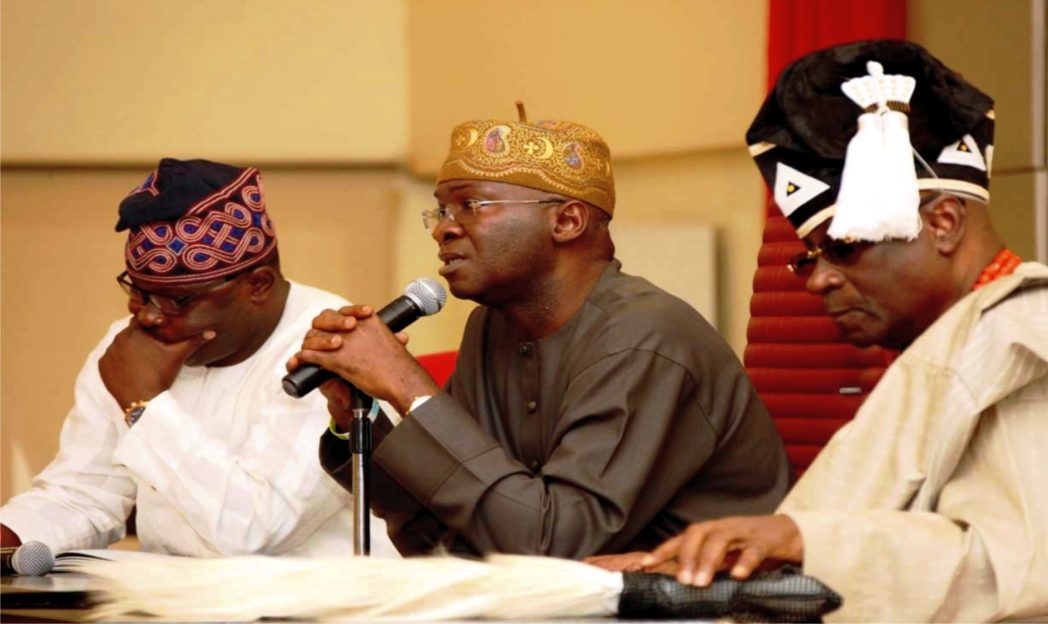
L-R: Lagos State Commissioner for Local Government and Chieftaincy Affairs, Mr Ademorin Kuye; Governor Babatunde Fashola and Oba Rilwan Akiolu of Lagos, at a meeting of traditional rulers with Governor Fashola in Lagos recently.



-

 News1 day ago
Family Seeks Police Help As Woman Goes Missing After Fleeing Female Circumcision Threat
-
 News1 day ago
Nigeria Hosts World Public Relations Forum Sept …As Experts Seek Inclusion Of PR In Decision Making
-
 News1 day ago
Uphold Principles Of Dev, Rivers SSG Charges Tertiary Institutions
-

 News1 day ago
Tinubu, Fubara Condole Amaechi Over Mother’s Death
-

 News2 days ago
Spain Are World Champions ….. End Argentina, Messi’s Dreams
-

 News1 day ago
Rivers NUJ Seeks Recruitment Into State Media Houses …Urges Govt To Reposition Public Service
-
 News1 day ago
Badejo-Okusanya Emerges 33rd NBA President …Says We’ll Build NBA Where Lawyers Live Better
-
 News1 day ago
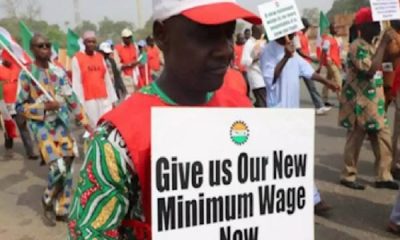
Minimum Wage Review: We’re Battle Ready For Major National Struggle -NLC