
City Crime
Consciousness, Witchcraft And Literature

Normal human beings who have slept for at least six hours will not be drowsy at work, at home and on any other occasion. If he lapses into sleep, he oscillates between the conscious and the unconscious realms. One who is awake is in his full consciousness: he sees objects and people; he hears sounds around him and meditates. He is capable of reacting to any attempts of doing him harm physically, he can refuse or accept food if offered him. He can make coherent speech on any subject. It is difficult for witchcraft to operate at this level except hypnosis is induced. Witchcraft works with the unconscious mind and sub-conscious mind. One’s mind must operate at the cognitive realm, where self is in its active powers: the ‘I’ reason with representation. It associates one thing with another and is the investigator that garners experience.
‘I’ cannot determine what is witchcraft without knowing. What is witchcraft? It is non-existent without experiencing it or, it is a narrative constructed by I-connections based on the relations between the right hemisphere and the left hemisphere of the brain. If there is an occurrence of witchcraft that ‘I’ directly experience, ‘I’ interpret it in relation to background as Lancaster avows in his work about the construction of a narrative of a patient, where the right hemisphere received the message and the left hemisphere gave it an interpretation based on previous background.
Consciousness may be compared to a theatre. Most actions are dramatised on stage but some events are reported on stage having happened previously off stage. When the mind is passive, resting from active preoccupation with social, political and academic activities, one slips into the state of sleep, where the possibility is there to interact with the spirit realm depending on the state of the individual’s consciousness. At most times, the busy person finds it difficult to transcend into the realm of pure consciousness having been worried or preoccupied by so many issues in the day. The body becomes weary.
Witchcraft operates at the level of the body’s weakest point or ineptitude which corresponds with low level of spirituality. The body is induced to sleep and, the soul is covered with or without a blind. In the case of the earlier, the soul is kept in a darkroom where it becomes impracticable to know what happens in the realm of physical reality. The individual becomes vulnerable to the witch or the wizard who comes as the unwanted guest, who metamorphosis into a commander and makes the victim do his wishes. If he is a cruel antagonist, he sends him to weed or fetch water. He does anything without his will. The blind that covers his soul does not allow him to see through the event(s). He is left with physical signs to help him decipher the occurrence of the night.
The victim whose level of consciousness is higher sees through the event(s), but is incapable of disengaging from it. He wakes up with an I-narrative which he constructs from the scenes of the occasion or experience. He may not be capable of identifying the individual, but is certain that someone has done an inauspicious act.
A higher state of consciousness is when an individual’s level of spirituality becomes higher that he struggles to wake up under the powerful influence of the oppressor. He becomes aware of his presence and contends with him. He struggles and eventually grapples with him or he escapes. The I-connections are known from the beginning to the end; the stuff of narrative, plotting the beginning, the conflict, the characters involved, the climax and the end. The I-interpreter starts with the sense of the occurrence, the reception in the mind, its establishment, its register and the interpretation.
Few examples, consider these narratives:
Narrative 1
I was sleeping one day when some unknown person came into my house through magical means and assaulted me. It continued for weeks intermittently. On every occasion, I could not wake up; I felt drowsy, overwhelmed by the spell the wizard castled on me. I found my body in an unkempt state.
The persona in our context is at the lower state of consciousness. He recollects her helpless encounter with the wizard. Her sub-conscious mind reports hours after about the tragic dramatic encounter. The I-interpreter narrates the story with cues from the dream state like a dark figure walking into the room, the feeling of some strange person lying beside her on the bed and physical signs: naked and salt-like particles around her thighs. The feeble dramatic action of turning on the bed is the struggle seen in the dream state with an unknown person.
Narrative 2
The wife advised his wife A to fast for three days in his company. The wizard came as usual through comatose and entered the house. The wife felt the impact of his entrance, she struggled to get up, waiting for the man to undress before gripping him. She succeeded and discovered that her neighbour was responsible for her illegal sex exploitation.
The unconscious mind and the subconscious mind are subdued with the elevation of her consciousness through the spiritual exercise. The event registers on her conscious mind with a prop of the I-connections from sense through reception of the entrant to registration on the memory, until the I-narrator becomes ready for the composition of the story.
Narrative 3
A wizard entered my compound. I was asleep but I felt a sensational vibration within me. I woke up and listened keenly to sounds in my environment. There were showers of rain in the background and the barking of a dog in the compound, I switched on my torch and looked at my wristwatch, it was 1.00p.m. I kept it back and lay down on my bed ready to sleep; a strange movement made me turn left, looking at the wall, I saw a gecko transforming into a human being. I took my machete from beneath my bed and chased him; he changed into a gecko, disappeared and turned into a man outside. I opened the door and saw the man few yards ahead of me. I chased him and shouted: ‘I will kill you today’. He ran away faster, fear drove him from being slaughtered. ‘I will kill you if you come back again’, I said as I gave up the chase. The wizard ran on without saying a word, keeping mute intentionally to prevent disclosure.
The I-narrator’s consciousness has been trained to live at a higher state of consciousness.
Motivation
The witchcraft is motivated by hatred which could be because of a previous quarrel or jealousy. The witch or wizard seeks to hurt an opponent who has disagreed with him on the ownership of land, stream, business deal, contest for kingship, political position, academic position, and other issues. It could be that it was not motivated by trespass or offence, but jealousy emanating from the prosperity of an individual.
I-narrator from the perspective of the witch or wizard picks an action around which the hunt is fore-grounded, whether it is an irrational rationalisation of a framed event or action. He weaves the story with hatred, the thread that knits the setting, plot, character, action and performance. It may be a tragedy that could lead to the fall of the central character or his frustration in social status, political or religious. The I-locus ends in triumph. It could end in the tragic disgrace of the tragedian: reduction in social status, political deprivation and physical damage. There are always two persons or groups in the drama of good and evil which continue to replicate itself in humanity with different narrative perspectives, blends, prospects and outcomes. It depends on individuals, their levels of consciousness, cosmology, spiritual laws, developmental level of the society and human rights.
To be continued.
Dr. Barine Sanna Ngaage, resides in Bayelsa State.
Barine Saana Ngaage


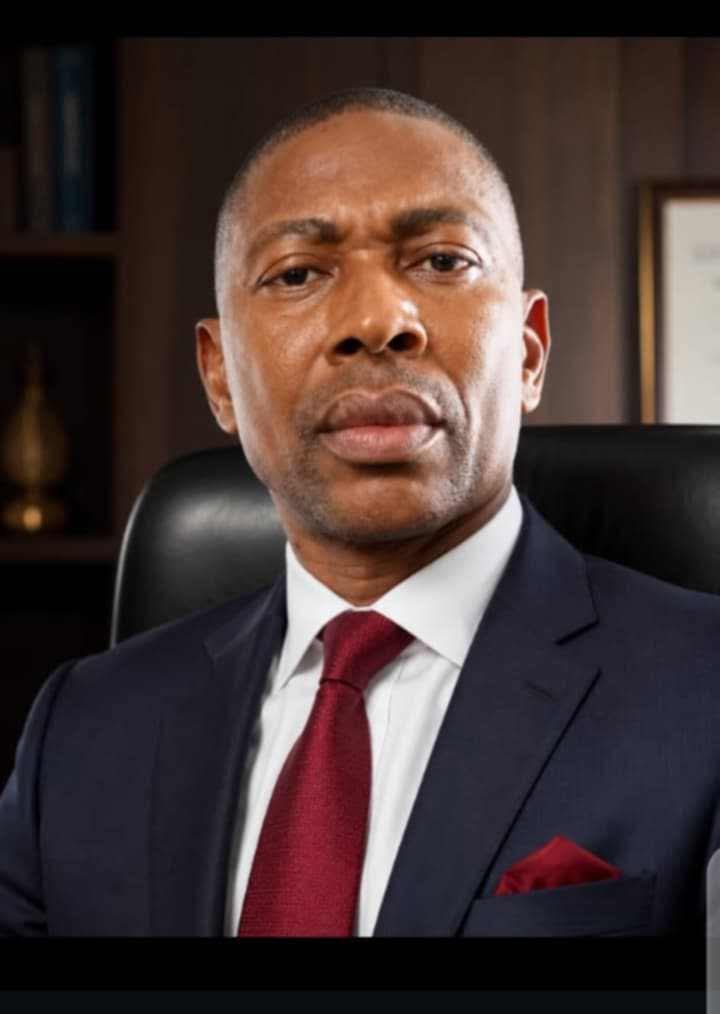
A former staff of the Rivers State Newspaper Corporation, publisher of The Tide Newspapers, Idongpee Akwaowo Reuben, has been appointed the Acting Registrar/Chief Executive Officer of Chartered Chemists of Nigeria (ICCON) by the Federal Government of Nigeria.
Akwaowo’s appointment follows the expiration of the second tenure of the former Registrar, Chemist Jwalshik Wilford.
According to a letter released from the office of the Minister of State for Health and Social Welfare dated August 5, 2026, the Minister of State for Health and Social Welfare, Dr. Iziaq Adekunle Salako, said the appointment was with immediate effect.
The minister had earlier announced Akwaowo’s appointment during a meeting with the Permanent Secretary, Heads of Departments, and Directors in June 10, 2026 in the Minister’s Conference Room.
He said the appointment was automatic and effective 1st June, 2026 following the satisfactory handover that followed the succession procedure.
The Minister nullified the earlier process put in place for a substantive appointment, citing it as a contravention of the provision of the ICCON Act.
He further directed that the appointment letter be issued without further delay.
The Minister admonished the new ICCON Chief Executive to take charge and ensure that the Institute is on the path of peace and progress to deliver her mandates.
In his response, Akwaowo thanked the the Federal Government for the appointment which, he said, has laid every uncertainty surrounding the leadership of the Institute to rest.
He pledged his unalloyed loyalty to the Federal Government and the Minister and promised to work with his Management Team to align with the policy directives of the Ministry as well as the renewed hope agenda of the Federal Government.
Akwaowo joined ICCON in 2005 as a pioneer staff, rose through the ranks and served in many capacities transcending virtually all the departments in the Institute including HOD, Administration/Accounts & Finance.
Most recently, he served as the pioneer Team Lead and the Registrar/CEO Representative in the National Chemical Personnel Audit excercise to Chemical companies and Chemistry Departments in Tertiary Institutions as part of the Institute’s regulatory mandates.
He has attended several courses and workshops and represented the Institute at various conferences and fora.
Akwaowo is a Chartered Chemist and also a member of a number of professional bodies.
He rose to the rank of Director, Scientific in 2025, and was until his appointment, the Coordinator, Zonal Offices of ICCON.
City Crime
Bayelsa Water Coys Raise Alarm Over Business Threats …Set To Resist Multiple Levies Amid High Production Cost

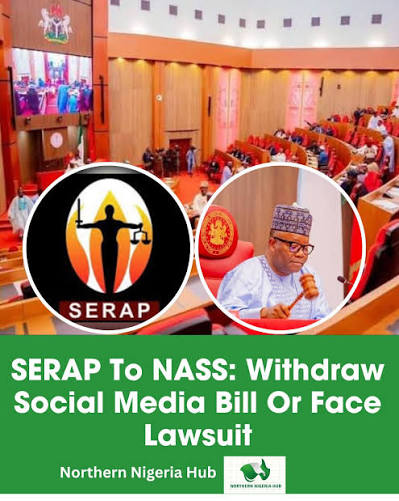
The Socio-Economic Rights and Accountability Project has asked the National Assembly to immediately withdraw the proposed Nigeria Data Protection (Amendment) Bill, 2026, describing it as a backdoor attempt to regulate social media and expand government control over online expression.
SERAP warned that it would institute legal action if the bill is passed in its current or substantially similar form.
The bill, sponsored by Senator Ned Nwoko (APC, Delta North), seeks to compel social media platforms, data controllers and data processors operating in Nigeria to establish physical offices in the country.
It also empowers the Nigeria Data Protection Commission to shut down or prohibit the operations of any entity that fails to comply within 30 days.
In a letter dated July 18, 2026, and addressed to Senate President Godswill Akpabio and Speaker of the House of Representatives Tajudeen Abbas, SERAP said the proposed amendment posed a threat to constitutionally guaranteed rights.
The letter, signed by SERAP Deputy Director Kolawole Oluwadare and issued on Sunday, read in part, “Requirements compelling technology companies to establish local offices would increase government leverage over platforms, facilitate political pressure, make censorship demands easier and expose local employees to retaliation.
“The Bill would create sweeping powers capable of shutting down or excluding social media platforms from the Nigerian market and expose millions of Nigerians to serious violations of their constitutionally and internationally guaranteed human rights.”
SERAP argued that the bill revives previous attempts to regulate social media that attracted widespread public opposition.
“The current Bill revives substantially similar proposals previously introduced by Senator Nwoko, raising renewed concerns that localisation requirements are being used as a vehicle for expanding governmental control over digital platforms and online expression,” it said.
The organisation warned that it would challenge the legislation in court if enacted.
“Should the Bill be enacted into law in its current or substantially similar form, SERAP shall promptly take all appropriate legal actions to challenge its legality in the public interest and to ensure that Nigerians’ fundamental rights are fully protected,” the letter stated.
According to SERAP, the proposed legislation would give the Nigeria Data Protection Commission excessive powers to block digital platforms without adequate procedural safeguards.
“The Bill constitutes a backdoor attempt to regulate social media and increase governmental control over online expression through corporate localisation requirements rather than through transparent and constitutionally permissible regulation,” it said.
The group argued that the bill lacks provisions for prior judicial authorisation, meaningful opportunities for compliance beyond the proposed 30-day period, and safeguards to protect the rights of millions of Nigerians who rely on digital platforms.
SERAP also cited the judgment of the ECOWAS Court of Justice on Nigeria’s suspension of Twitter, arguing that the proposed amendment could produce similar consequences by indirectly excluding social media platforms from operating in the country.
“The Bill also risks recreating the very dangers previously condemned by the ECOWAS Court of Justice. In SERAP and Others v. Federal Republic of Nigeria, the Court held that the suspension of Twitter violated the rights to freedom of expression, access to information and media freedom protected under the African Charter.
“Although the present Bill differs from the Twitter suspension in form, it creates the possibility of achieving the same result indirectly by empowering regulators to prohibit digital platforms from operating in Nigeria.
“The National Assembly should not enact legislation capable of producing, through indirect regulatory means, the very restrictions on fundamental rights that regional human rights law prohibits,” the organisation said.
It maintained that while governments have a legitimate interest in regulating digital platforms, such measures must comply with constitutional guarantees and international human rights standards.
The organisation further warned that mandatory localisation requirements would increase compliance costs for technology companies, startups, educational institutions and artificial intelligence developers.
“The proposed amendment conflicts directly with the objectives of the Nigeria Startup Act 2022 and the National Digital Economy Policy and Strategy.
“Mandatory localisation requirements substantially increase compliance costs, particularly for startups, open-source projects, educational institutions, research organisations, AI developers and smaller technology companies, while reducing Nigeria’s attractiveness as a destination for innovation and investment.
“No major democratic jurisdiction requires every social media platform to establish a physical office as a blanket precondition for providing services.”
SERAP added, “The National Assembly should immediately reject and withdraw the Bill, as it is manifestly incompatible with the Nigerian Constitution and Nigeria’s obligations under the African Charter on Human and Peoples’ Rights and the International Covenant on Civil and Political Rights.”
-

 News5 days ago
RSG Targets Nine Million Residents in Mosquito Net Distribution Campaign
-

 Oil & Energy5 days ago
Aiyedatiwa Signs New Electricity Bill
-

 Oil & Energy5 days ago
NLNG Commissions Research And Innovation Centre In RSU
-

 Maritime5 days ago
Marine Minister Commends President Tinubu On NPERA Bill Assent
-

 News5 days ago
KenPoly Holds Eight Convocations, August 29
-

 News5 days ago
RSG Begins Another Phase of Projects Commissioning Today
-

 News5 days ago
RMAFC Completes Revenue Sharing Review, Proposes New Pay
-

 Maritime5 days ago
NAGAFF Petitions IGP Over Alleged Maritime Police Harassment