
Nation
THE STATES

Adamawa
The Federal Inland Revenue Service (FIRS), has advised staff to partner with local communities and governments at all levels for the needed support to generate more revenue.
The Executive Chairman, Mrs Ifueko Okauru, gave the advice at the opening of the North East Region Enlarged Management and Town Hall meeting of the organisation in Yola.
Ifueko also called for the cooperation of states and local governments in the zone, to show commitment to off-setting all tax arrears within the shortest possible time and to avoid situations where arrears piled up again.
Bauchi
Governor Isa Yuguda of Bauchi State has approved N597,000 as maximum Hajj fare for intending pilgrims in the 2010 pilgrimage to Saudi Arabia.
Alhaji Ibrahim Ninge, the Permanent Secretary in the state Muslim Pilgrims Welfare Board, made this known on Saturday in Bauchi while addressing newsmen.
Ninge also said that the sum of N582,000 was approved as medium fare while N488,000 was approved as minimum fare.
He explained that each pilgrim in the three categories would be given 750 dollars, 1,000 dollars and 1,500 dollars respectively as Basic Traveling Allowances (BTA).
He called on intending pilgrims who had already made deposits with officials of the board in the 20 local government councils to complete the payment before July 28, 2010.
Benue
FRSC’s “Operation Eagle Eye” will this month focus on the violation of the over loading regulation, driving with worn-out tyres and non-possession of spare tyres nationwide.
Mr Osita Chidoka, the Corps Marshal of the FRSC, made the disclosure in Makurdi, on Friday, while flagging off the operation.
He said the FRSC would continue to invest in call centres and ambulance services to ensure safety on the road.
Chidoka, who was represented by Mr Bake Kwaga, the Zonal Commanding Officer in Markurdi, expressed readiness to involve mobile courts in the prosecution of erring traffic offenders on the spot.
Borno
The Borno State Government on Friday warned its pilgrims to Saudi Arabia to avoid prostitution, child labour and other negative vices.
“We have observed that some Nigerian women are of the habit of staying back in Saudi Arabia after the pilgrimage with the intent to engage in some activities that are negative in nature,”Hajiya Hauwa Mai-Musa, Commissioner for Women Affairs, said at Train-the-Trainer workshop in Maiduguri.
She was speaking at the North East workshop for women group on this year’s pilgrimage, added that some women also engaged in child trafficking to Saudi Arabia.
Mai-Musa said that rather than indulge in criminal activities in Saudi Arabia, the pilgrims should return home and engage in lawful businesses.
Ekiti
As part of its efforts to provide quality healthcare delivery, the Ekiti State Government is to redistribute more health workers to rural areas, Governor Segun Oni has said.
Oni said this on Friday, in Ado-Ekiti, when the people of Ilokun-Ekiti led by Onilokuno of Ilokuno-Ekiti, Oba Adebayo Jegede paid him a courtesy visit.
He said that the efforts would also combat the inadequacy in the number of qualified health personnel in the rural areas.
The governor noted that the inability of past administrations in the state to ensure fair play in the distribution of the available human resources in the sector led to the drought of qualified health workers in the rural areas thereby putting communities in the areas at a disadvantage .
FCT
Vice-President Namadi Sambo, has given an assurance that the execution of the Zungeru hydropower plant will be fully financed through appropriation.
He said this had become imperative in view of the fact that concessionary loans had yet to be sourced for the project.
Sambo made the disclosure at a meeting of the co-ordinating ministries, consultants, contractors and stakeholders handling the Mambilla, Zungeru and Gurara phase two hydropower projects at the State House.
The meeting was to address issues bordering on the provision of adequate hydropower supply in the country.
Kebbi
The National Environmental Standards and Regulations Enforcement Agency (NESREA) in Kebbi State plans to collaborate with the youth corps members to expand the scope of tree planting in the state.
Dr Kasim Ahmed, the agency’s coordinator in the state, announced this in Birnin Kebbi while addressing batch ‘B’ NYSC members posted to the state.
He said the agency would engage corps members posted to rural communities to embark on tree planting to protect the environment even as the agency would seek the cooperation of corps members to create awareness among the people on the relevance of tree planting and the need to discourage tree felling.
Lagos
An NGO, Gender-Based Violence Response Network (GBVRN) on Friday, in Lagos ,called for a multi-level approach to stem the spate of child sexual abuse in Nigeria.
Its Programme Officer on Human Rights Education, Miss Kate Ibeanusi, told newsmen that sexual assault and harassment of underage female children had become rampart.
“The increasing reports of cases of child sexual abuse in the state are a worrisome development that needs urgent concerted efforts to stem the tide,’’ she said in a statement.
Ibeanusi disclosed that at least 24 cases were reported between April and June.
Niger
A Minna Chief Magistrate Court on Friday, sentenced one Ayuba Umar of Suleja town in Niger, to two years imprisonment with hard labour, for extortion.
Umar was convicted on a charge of extorting N72, 000 from one Patrick Marshal of Otunsha Hotel, Keffi in Nasarawa.
Umar was charged with “systematically extorting the money from the complainant after series of telephone calls threatening to assassinate him if he refused to cooperate’’.
The Police Prosecutor, Mr Ahmed Danladi, told the court that Umar committed extortion punishable with death under section 294 of the Penal Code.
He told the court that from May 9 to July 9, 2010, Umar called Marshal on phone consistently, saying that he was hired to assassinate him
Ondo
An official of the Ondo State Ministry of Women Affairs, Mr Adeyemi Sarumi, has called on the state government to introduce sex and moral education into the school curriculum.
Sarumi, who is also a supervisor in the state Motherless Babies Home, made the call while speaking with newsmen on Friday in Akure.
According to him, adequate sex education for children will facilitate prevention of unwanted pregnancies and loss of lives among youths.
He also called for sensitisation of adults on fami
ly planning and sex education, while students should abstain from sex to avoid unwanted pregnancies.
Osun
The Obafemi Awolowo University (OAU), Ile- Ife, authority has dismissed allegations of its involvement in a recent students’ clash in the institution as false.
During the clash, some students reportedly sustained injuries during the clash which erupted in the university on July 12.
Mr Abiodun Olanrewaju, the Public Relations Officer of university, told newsmen in Ile-Ife on Saturday, that it was the management that rescued some students from the spot of the attack.
Olanrewaju said that efforts were being made to reconcile the students with a view to restoring peace.
Meanwhile, a pressure group, the United Action For Democracy (UAD), Osun Chapter, has expressed reservations over the incident.
Sokoto
The Sokoto State Government has awarded contract for the rehabilitation of the state Rima Radio at the cost of N120 million.
The Commissioner for Information, Malam Dahiru Maishanu, told newsmen in Sokoto, on Saturday, that the contract included the construction of perimeter fencing, rehabilitation of the entire structures and upgrading of the studios.
Maishanu said the project was aimed at giving the premier radio station in the north west a facelift.
He said the government had also embarked on projects worth N178 million to upgrade the state-owned newspaper company.
Yobe
The Yobe State Commissioner for Women Affairs, Hajiya Asmau Kolo on Friday, said 85 women master trainers selected across the state had been trained in five skill acquisition programmes for economic empowerment.
The commissioner made the disclosure to newmen in Babangida, Tarmuwa local government area, at the graduation of 35 women trainees from zone ‘A’.
She said that the women were trained on soap, cream, liquid soap, room freshner and balm making.
“The women are mostly housewives whose economic status is low. They have been trained to train others in their localities for a wider coverage on skill acquisition”.
Zamfara
The Zamfara State Government has introduced a dress code for female teachers in academic institutions in its bid to inculcate discipline in the education sector.
Alhaji Isa Maru, the Public Relations Officer of the Ministry of Education, said in a statement that the state government was disturbed by the upsurge of indecent dressing among female teachers.
Under the new dress code, female teachers must be dressed in a reasonable outfit that could guarantee them respect, not only among staff and students, but by the general public. Isa said that, “henceforth, it is prohibited for any teacher to dress indecently, especially in ‘half-naked wears’ during school hours.



Eight states across Nigeria have converged in Port Harcourt for the 2026 edition of the President’s Inter-Senior Secondary Schools Debate Championship, hosted by Rivers State Government.
The three_days championship, themed “27th Democracy & 3rd Year Anniversary of President Ahmed Tinubu Inter-Senior Schools Debate Championship,” opened on Monday at Government Girls Secondary School, Rumueme, Port Harcourt.
The participating states are Ebonyi, Abia, Delta, Sokoto, Yobe, Kwara, Enugu, and host state Rivers. Each state is represented by its top debaters selected through state-level contests.
Declaring the event open, the Rivers State Commissioner for Education, Dr. Peters Nwagor, said the championship goes beyond winning trophies. He described it as a national investment in the next generation of leaders.
“This platform is for nurturing young minds,” Nwagor said. “It builds critical thinking, research skills, confidence, effective communication, and the ability to engage constructively with views different from one’s own. These are the very qualities upon which responsible leadership and nation-building are founded.”
The Commissioner commended the organizers, participating schools, teachers, and coordinators for their commitment to promoting intellectual excellence among Nigerian youths.
He urged the students to compete with confidence, discipline, and respect. “Debate is not merely about winning an argument,” he noted. “It is about listening carefully, reasoning with clarity, presenting your evidence with honesty, and having the grace to learn from others. Let the quality of your ideas and the strength of your character define your participation here.”
Nwagor assured the participants that Rivers State is proud to play its part in raising a generation that will bring bold and innovative solutions to the country’s challenges. He wished all teams a rewarding, memorable, and successful championship.
Earlier in his welcome address, the National Coordinator of the President’s Schools Debate Nigeria, PSDN, Elder Dare Oritu, called the event a “gathering of minds” drawn from different parts of the country.
According to Oritu, debate is about three things. “It is about _unity_. It brings us together from different schools and backgrounds to learn from one another. It is about _broadening the mind_. It teaches you to think deeply, to listen well, to ask ‘why,’ and to defend your ideas with facts and respect. It is about _preparing you for leadership_. The problem-solvers and decision-makers of tomorrow are in this hall today.”
He reminded the students that debate is not a contest of aggression. “Debate is _not a fight_. We challenge ideas, not people. It is _not about who is better_. And it is _not do-or-die_. We win with grace, and we learn with humility,” Oritu said.
The PSDN National Coordinator encouraged all participants to compete with integrity, speak with clarity, and leave wiser than they came. He wished them the very best throughout the competition.
Highlights of the opening ceremony included the official draw for debate matches, administered by PSDN officials. The pairings will determine which states face each other in the preliminary rounds as the battle for the 2026 national title begins.
Amadi Akujobi

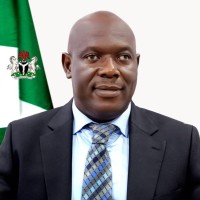
The Hydrocarbon Pollution Remediation Project (HYPREP) has commemorated the 15th anniversary of the release of the United Nations Environment Programme (UNEP) Environmental Assessment Report on Ogoniland, reaffirming its commitment to restoring the environment and improving the livelihoods of affected communities.
In a statement signed by the Project Coordinator, Prof Nenibarini Zabbey, to commemorate the anniversary, HYPREP described the anniversary as a significant milestone in Nigeria’s environmental restoration efforts, noting that the project has made remarkable progress in implementing the recommendations of the landmark UNEP report released on August 4, 2011.
The UNEP report had revealed extensive oil pollution across Ogoniland, severe environmental degradation, and serious public health risks resulting from decades of petroleum operations. It also recommended an initial $1 billion fund to commence the cleanup of the affected communities.
According to HYPREP, the Federal Government formally launched the Ogoni clean-up in 2016, while the Project Coordination Office was established in 2017 to drive the implementation of UNEP’s recommendations.
Zabbey said the current administration has continued to prioritise the project under the Renewed Hope Agenda.
Providing an update on the cleanup, the Project Coordinator disclosed that 30 of the 65 contaminated sites identified by UNEP have been fully remediated, while work is ongoing at several medium- and high-risk locations. It also stated that more than 1.5 million mangrove seedlings have been planted as part of what it described as the world’s largest restoration of oil-degraded mangroves, with over 1,000 hectares of shoreline already rehabilitated.
Zabbey further revealed that 49 Ogoni communities have been connected to potable water schemes through multiple water projects and booster stations aimed at providing safe drinking water across the region.
In the health sector, he said the 100-bed Ogoni Specialist Hospital in Kpite and the 43-bed Cottage Hospital in Buan are nearing completion, adding that several existing health facilities have been upgraded with modern medical equipment, while five ambulances have been donated to improve emergency healthcare services. The Project Coordinator also disclosed that a three-year human health biomonitoring study is being conducted in collaboration with the World Health Organization’s International Agency for Research on Cancer (IARC).
On economic empowerment, Zabbey stated that the Project has created more than 8,000 direct jobs and trained thousands of Ogoni youths and women in various vocational and technical skills, including software development, cybersecurity, aviation, commercial diving, seafaring, mechatronics, and creative arts. The project also reported awarding scholarships to more than 1,000 students, providing grants to small businesses, and supporting persons living with special needs through skills acquisition programmes.
The statement further highlighted ongoing legacy projects, including the Ogoni Power Project and the Centre of Excellence for Environmental Restoration, which it said is about 96 per cent complete. HYPREP also welcomed the recent designation of the Ogoni Wetland as a Ramsar Site of International Importance and pledged to continue promoting biodiversity conservation and sustainable management of the ecosystem.
Marking the anniversary, Zabbey said the progress achieved over the past 15 years demonstrates the collective commitment of government, development partners, stakeholders, and local communities to restoring Ogoniland. He called for renewed collaboration to sustain the cleanup effort, promote environmental sustainability, and support the long-term development of the region. 3
-

 News2 days ago
RSG Targets Nine Million Residents in Mosquito Net Distribution Campaign
-

 Oil & Energy2 days ago
Aiyedatiwa Signs New Electricity Bill
-

 Oil & Energy2 days ago
NLNG Commissions Research And Innovation Centre In RSU
-

 Maritime2 days ago
Marine Minister Commends President Tinubu On NPERA Bill Assent
-

 News2 days ago
KenPoly Holds Eight Convocations, August 29
-

 News2 days ago
RSG Begins Another Phase of Projects Commissioning Today
-

 News2 days ago
RMAFC Completes Revenue Sharing Review, Proposes New Pay
-

 Maritime2 days ago
NAGAFF Petitions IGP Over Alleged Maritime Police Harassment