
Business
… Releases 45,000 Tonnes Of Grains For Public Sale

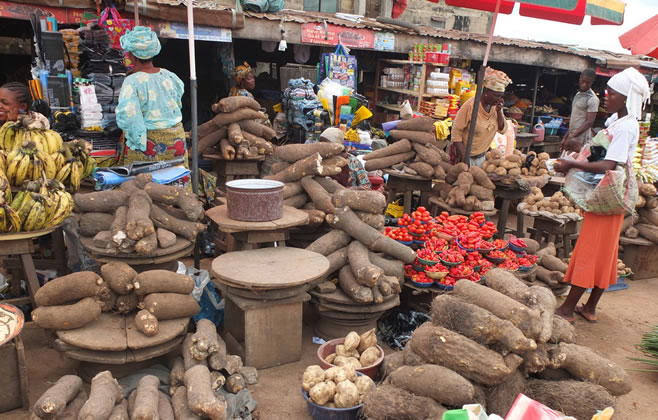
The Federal Government has released 45,000 tonnes of assorted grains, from the National Strategic Food Reserve (NSFR); to the general public, to cushion the effect of high prices of food commodities in the Country. The grains are paddy rice, garri, millet, maize and sorghum.
Prof Sheik Ahmed Abdallah, Minister of Agriculture while flagging off the occasion, said it was meant to ease the high prices of food stuffs in the country, adding that President Goodluck Jonathan had directed that the grains be sold at subsidised prices. He said that 15,000 tonnes of assorted grains had been approved, as donation, to Niger and Chad Republics, to fight hunger in the two countries, as requested by the ECOWAS Committee of Ministers.
According to Abdallah, the commodities were to be sold at 30 per cent subsidy as follows; 50 kg of maize N1, 855 or N37, 100 per tonne, sorghum N 33,600 per tonne and N1, 680 per 50kg bag, 50 kg of millet, N1, 890 or N37, 800 per tonne while 20 kg of gari would go for N1,050 or N42, 100 per tonne while paddy rice goes for N42, 000 per tonne and per 50 kg of the commodity would be sold at N2, 100
He said similar exercise would be carried out in eight other states where the food reserve silos were located; pointing out that some allocations had been made for sale to some stakeholders and various groups in the states. Abdallah expressed the hope that state governments would complement the efforts of federal government by releasing food items from their buffer stock for effective realisation of the aims and objectives of the programme.
Mallam Ahmed Gafar, a beneficiary commended the government for the release of the grains and called on the officials, charged with the responsibility of executing the programme to shun corruption. Another beneficiary, Mrs Funke Akinloye noted that the effort would go a long way in ensuring that many household, especially the low income earners have easy access to varieties of grains. She urged government to ensure proper monitoring of the programme to avoid it being hijacked by the middle men.





-

 Education1 day ago
FCE Yola Graduates 3,555 Teachers , Seeks Upgrade to University
-

 Sports1 day ago
Nigerian Trio Target Titles At PFL Africa Finals
-

 Niger Delta1 day ago
Diri Restates Stance On Lagos-Calabar Coastal Highway
-

 Niger Delta1 day ago
C’River, NUJ Pay Tribute To Late Guardian Editor
-

 News1 day ago
NDLEA Recovers Tons Of Illicit Drug Consignments In Nine States
-

 Opinion1 day ago
Checking Voter Apathy In Nigeria’s Electoral Process
-

 Politics1 day ago
2027: DICKSON’S EX-ALLY VOWS TO WORK AGAINST NDC INTEREST IN BAYELSA
-

 Politics1 day ago
2027: GROUP PLEDGES 40,000 SUPPORTERS FOR COALITION CANDIDATES IN RIVERS