
Politics
President Yar’Adua And Second Term Agenda

The lid over political campaign moves to get President Umaru Yar’Adua re-elected in 2011 has been blown open. The president recently halted all shades of campaign, citing the need to concentrate on governance as motive behind his decision. In defiance of this presidential directive, promoters of this project, mostly the president’s henchmen and chieftains of his party, the Peoples Democratic Party (PDP), have commenced campaign for his re-election. Nwife, one of the arrow heads of the initiative denied an on-going campaign for re-election of the president, but confessed: “But if you ask me whether I want Mr. President to be re-elected, I will say, yes, because Nigeria has never had it so good. This is despite denials by those involved that their moves are not tantamount to re-election campaign for the president”. The political antecedents of these men, and the style adopted are reflective of the regular deceptive pastern of the president’s friends, super rich businessmen and political jobbers in the past at the corridors of power.
The re-election campaign is very hypocritical and an attempt to unduly outsmart the opposition when the political campaign whistle has not been officially blown. Curiously too, we are concerned within why (PDP) must push the president for another term, when nothing had worked in the country, more than two years after the president came on board.
In the first place, why we think President Yar’Adua is qualified to rule the nation if not for his imposition on Nigerians by President Olusegun Obasanjo who manipulated the votes of Nigerians in 2007. the president acknowledged this by admitting publicly in the early days of his administration that the election that brought him to power was flawed; hence his setting up of the electoral reform panel headed by retired Justice Mohammed Lawal Uwais.
So far, there is nothing on ground to show that president deserves a second term. His seven-point agenda merely exists on paper and appropriation, infrastructure level is zero, the roads are in a shambles, unemployment is soaring to high heavens, potable water remains elusive while insecurity looms large across the country.
Under developed democracy, the president’s poor performance would have attracted his resignation. He has travelled abroad on many occasions to put his health in shape, sometimes when the nation is facing challenges.
With a leader like president Yar’Adua, Nigerians don’t need anybody to remind us that we have remained too long in the comity of under developed country. With the huge lot left unattended to in the country due to leadership incompetence, allowing the president another term of four years, though legal, will not augur well for the country.
Dr. Charles Anosike a lecturer at Obafemi Awolowo University, said, “We now have more impoverished people walking on the streets today than in the past. Everything points to the fact that this administration does not have the panacea for remedying the country’s anomalies”.
“For running an incompetent government that has inflicted pains on the people and distress, the president does not deserve a second term. He should call his Lapdogs that are behind his re-election campaign to order”, he said.
“Take a look at the president’s Democracy Day’s address. It is instructive that half way into his four year tenure none of his promises in his seven point agenda have concretely materialised, they all seems to remain in the pipeline. The promised to generate or boost electricity supply, improvement of the road network, resuscitation of the of the moribund rail system and dredging of water channels, and the reinvigoration of the agricultural sector to ensure food scarcity, security of lives and property and rampage by criminals. “You could say that isn’t for lack of noble intention on the president’s past but, as have been often said, because the decay is deep-rooted and requires prolonged gestation in planning and effecting a remedy”. But the citizens in the interim are getting the raw deal and wondering what impact governance has. It marked the second year and of the administration of President Umaru Yar’Adua at the federal level and more than two-thirds of governors at the state level. Given our historical antecedents, these represents a testimony that our people have clearly shown their preference for democratic governance and an abiding faith in its transformative power.
You could say that this country earned in the last 10 years from her crude oil resource more than she did in all the previous years of independence, but this hasn’t rubbed off much on its citizenry. Prof. Dora Akunyili, has vigorously carried on with a campaign to rebrand Nigeria but how much of a bad product can you rebrand by changing the package without improving the content? But we have every cause to celebrate and defend this rule and ultimately grow it into a true democracy. Is it time to 2011 in order to roll out the drums and celebrate concrete accomplishments in national development, or time to complain about the published failure and wastages of the past or time to persuade masses loss of memory (amnesia) and simply look forward to deferred promises of the gains of nationhood.
Ucheonye Onyekachi is IT student from Anambra State University.
Ucheonye Onyekachi

Politics
Alleged Coup: Protests Rock N’Assembly As Detained Officers’ Children, Wives Demand Justice

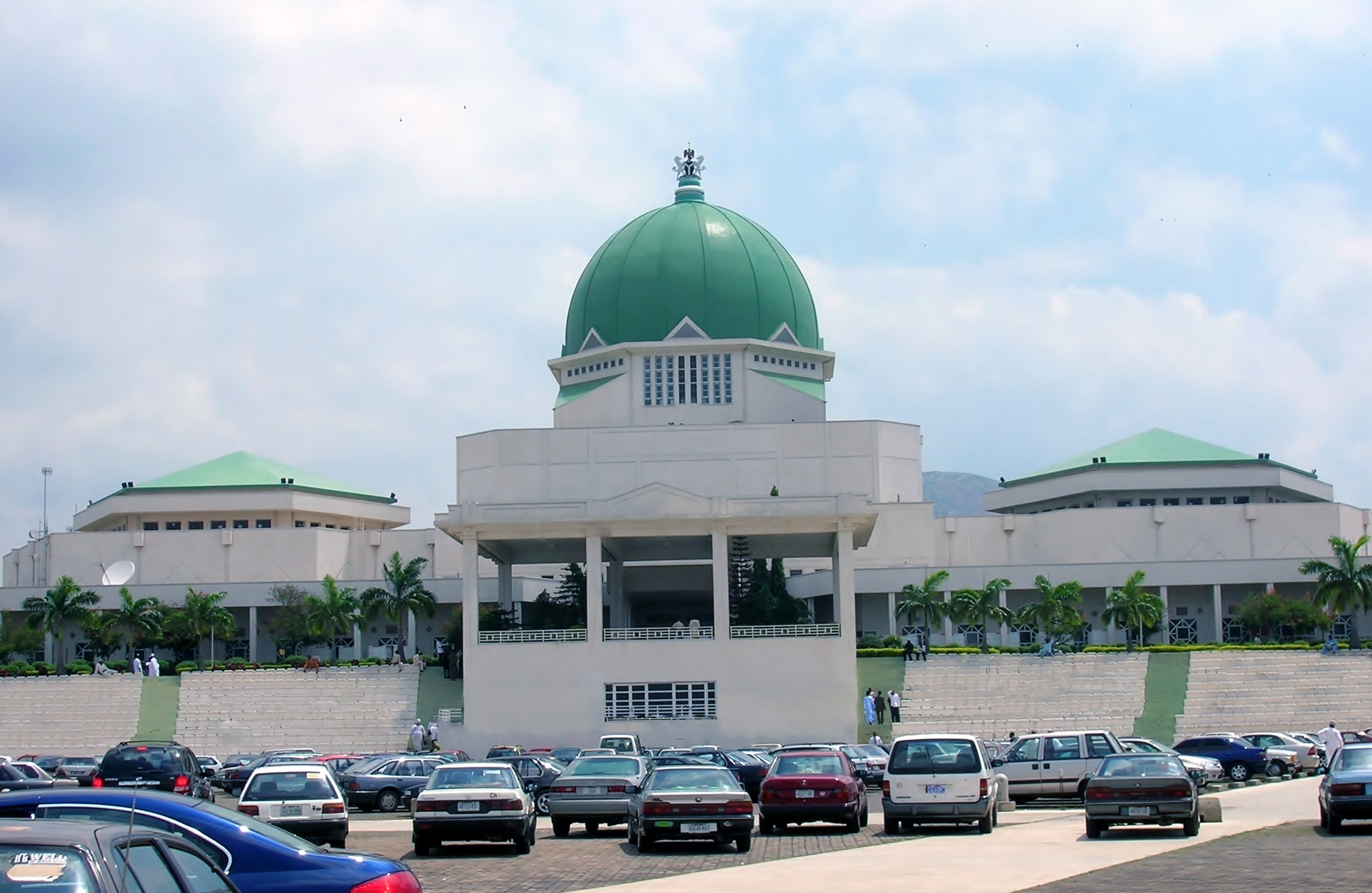
Scores of children and wives of military officers detained over an alleged coup plot yesterday staged a peaceful protest at the National Assembly, demanding a speedy trial and the release of the accused officials.
The protesters who gathered at the entrance of the National Assembly complex, moved in a slow procession while clutching placards with inscriptions such as “Don’t Kill Our Daddies,” “Detention Without Trial is Injustice,” and “Six Months of Torture: Enough Is Enough.”
Amid tears and trembling voices, the children appealed for justice and access to their detained fathers, many of whom they said they had not seen for months.
The appeal was made during a press briefing in Abuja attended by no fewer than 20 wives and several children of the detained officers, including a two-month-old baby.
The families were accompanied by human rights lawyer, Deji Adeyanju and activist Omoyele Sowore.
At the briefing, the families lamented that the officers had been held for over 160 days without trial or contact with their relatives, describing the situation as a violation of their fundamental rights.
Speaking on behalf of the families, Memuna Bashiru said the prolonged detention had thrown their households into uncertainty and emotional distress, noting that while allegations had been widely publicised, families remained in the dark about the fate of their loved ones.
The arrest of the indicted officers was first announced on October 4, 2025, by the then Director of Defense Information, Brigadier General Tukur Gusau, who disclosed that 16 officers were taken into custody for alleged breaches of military regulations and acts of indiscipline.
However, an interim investigation later suggested the existence of a clandestine network of officers, allegedly coordinated by a senior Army officer, which had begun preliminary planning for a coup.
According to the report, the alleged plot involved surveillance of key national assets, including the Presidential Villa, Armed Forces Complex, Niger Barracks in Abuja, and major international airports, with October 25, 2025, cited as the planned date for the operation.
Those reportedly in custody include Brig Gen M. A. Sadiq, Col M. A. Maaji, Lt Col S. Bappah, Lt Col A. A. Hayatu, Lt Col P. Dangnap, Lt Col M. Almakura, Maj A. J. Ibrahim, Maj M. M. Jiddah, Maj M. A. Usman, Maj D. Yusuf, Capt I. Bello, Capt A. A. Yusuf, Lt S. S. Felix, Lt Cdr D. B. Abdullahi, Sqn Ldr S. B. Adamu and Maj I. Dauda.
The alleged plot, according to findings, targeted senior government officials, including President Tinubu and Vice President Kashim Shettima.

In a statement issued yesterday, the party’s National Publicity Secretary, Mr Felix Morka, said the exercise would take place in all wards and designated centres nationwide.
He called on existing members to update their records, while encouraging new entrants to join the party through the digital platform.
“As the electronic membership registration exercise resumes in all wards and designated locations nationwide, we urge existing members to validate their membership while new members are encouraged to register and join the progressive family,” Mr Morka said.
According to him, eligibility for registration is limited to individuals aged 18 and above who possess a valid National Identification Number (NIN).
The party said the initiative is part of efforts to modernise its operations by transitioning to a digital database that would enhance record accuracy and accessibility.
Mr Morka noted that the e-registration would “digitise the party’s membership register, ensure the integrity of records, and enhance efficient access to membership data for planning and management decisions.”
He added that the move is also aimed at promoting internal democracy within the party and strengthening its commitment to democratic innovation.
The APC had previously introduced electronic registration as part of broader reforms to streamline its membership system and improve organisational efficiency.
-
Opinion5 days ago
Ozoro Festival: Tradition or Tyranny?
-
News2 days ago
Decentralizing Pipeline Surveillance Poses Greater Dangers To Niger Delta …. Group Warns
-
 Politics2 days ago
APC Resumes Electronic Membership Registration Nationwide
-
 Rivers2 days ago
Court Rules Out Interim Administration In Jumbo House, Bonny
-
Politics5 days ago
RIVERS WOMEN RALLY SUPPORT, CONTINUOUS PRAYERS FOR TINUBU
-
Politics5 days ago
AKPABIO, DIRI, OBOREVWORI, OTHERS VOW TO REELECT TINUBU …AS GIADOM RETAINS APC ZONAL CHAIR
-
 Business2 days ago
33 Banks Raise N4.65tn As Recapitalisation Ends
-
Politics5 days ago
Viral 2027 Nomination Forms Price List Fake, Misleading – APC