Oil & Energy
Products Monitoring: DPR Gives Filling Stations Ultimatum
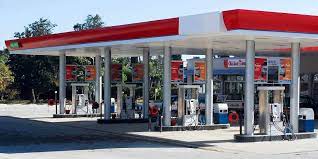
The Department of Petroleum Resources (DPR) has given owners of petroleum products retail outlets a December 31 ultimatum to migrate their operations to its Downstream Remote Monitoring System (DRMS).
Director, DPR, Mr Sarki Auwalu, gave the ultimatum during a meeting between the Economic and Financial Crimes Commission (EFCC) and agencies in the petroleum sector last Thursday in Lagos.
Newsmen report that other agencies at the meeting included the pipelines and products marketing company, petroleum products pricing and regulatory agency and the petroleum equalisation fund management board.
Auwalu said: “The DRMS, also known as e-Station, is an inventory and regulatory tool that tracks product level across retail outlets and depots.
“The system also tracks the movement of products from depot to retail outlets.
“The app was developed in-house by DPR staffers to track products in order to curb cross border smuggling and diversion of products.
“We want every marketer to migrate into this platform and each of them will have their unique ID to monitor their activities.”
He noted that out of the 33,000 retail outlets registered with the DPR, only about 6,700 have migrated to the platform.
Auwalu said any outlet which failed to comply with the directive would have its licence withdrawn and would not be allowed to load petroleum products at the depots.
He said the DRMS would bring sanity to the down stream sector of oil and gas industry.
Auwalu added that the move would also go a long way to complement the efforts of sister agencies in their bid to regulate the industry.
“We have been able to capture so many diversions, check overloading, under-dispensing and other illegal practices of operators, because with DRMS, we can track all the activities of these operators on our platform,” he said.
Earlier, Chairman, EFCC,Mr Abdulrasheed Bawa, said there was need for synergy and collaboration among agencies in the petroleum sector to tackle the issue of oil theft.
Bawa, represented by Director of Operations, EFCC, Mr Abdulkerim Chukkol, said the agency was saddled with investigation of financial and economic crimes.
He said the oil and gas industry was the mainstay of Nigeria’s economy and it was therefore the duty of the commission to protect the nation’s resources.
On their parts. Executive Secretary, PEF Management Board, Mr Ahmed Bobboi, Executive Secretary, PPPRA Mr Abdulkadir Saidu, and Managing Director, PPMC, Mr Musa Lawan, commended the DPR for the initiative.
They called for more engagements between the agencies and leveraging on the DRMS platform to achieve their mandates.

Oil & Energy
Take Concrete Action To Boost Oil Production, FG Tells IOCs
Speaking at the close of a panel session at the just concluded 2026 Nigerian International Energy Summit, the Minister of State for Petroleum Resources (Oil), Senator Heineken Lokpobiri, said the government had created an enabling environment for oil companies to operate effectively.
Lokpobiri stressed that the performance of the petroleum industry is fundamentally tied to the success of upstream operators, noting that the Nigerian economy remains largely dependent on foreign exchange earnings from the sector.
According to him, “I have always maintained that the success of the oil and gas industry is largely dependent on the success of the upstream. From upstream to midstream and downstream, everything is connected. If we do not produce crude oil, there will be nothing to refine and nothing to distribute. Therefore, the success of the petroleum sector begins with the success of the upstream.
“I am also happy with the team I have had the privilege to work with, a community of committed professionals. From the government’s standpoint, it is important to state clearly that there is no discrimination between indigenous producers and other operators.
“You are all companies operating in the same Nigerian space, under the same law. The Petroleum Industry Act (PIA) does not differentiate between local and foreign companies. While you may operate at different scales, you are governed by the same regulations. Our expectation, therefore, is that we will continue to work together, collaborate, and strengthen the upstream sector for the benefit of all Nigerians.”
The minister pledged the federal government’s continued efforts to sustain its support for the industry through reforms, tax incentives and regulatory adjustments aimed at unlocking the sector’s full potential.
“We have provided extensive incentives to unlock the sector’s potential through reforms, tax reliefs and regulatory changes. The question now is: what will you do in return? The government has given a lot.
Now is the time for industry players to reciprocate by investing, producing and delivering results,” he said.
Lokpobiri added that Nigeria’s success in the upstream sector would have positive spillover effects across Africa, while failure would negatively impact the continent’s midstream and downstream segments.
“We have talked enough. This is the time to take concrete actions that will deliver measurable results and transform this industry,” he stated.
It would be noted that Nigeria’s daily average oil production stood at about 1.6 million barrels per day in 2025, a significant shortfall from the budget benchmark of 2.06 million barrels per day.
Oil & Energy
Host Comm.Development: NUPRC Commits To Enforce PIA 2021
Oil & Energy
PETROAN Cautions On Risks Of P’Harcourt Refinery Shutdown
The energy expert further warned that repeated public admissions of incompetence by NNPC leadership risk eroding investor confidence, weakening Nigeria’s energy security framework, and undermining years of policy efforts aimed at domestic refining, price stability, and job creation.
He described as most worrisome the assertion that there is no urgency to restart the Port Harcourt Refinery because the Dangote Refinery is currently meeting Nigeria’s petroleum needs.
“Such a statement is annoying, unacceptable, and indicative of leadership that is not solution-centric,” he said.
The PETROAN National PRO reiterated that Nigeria cannot continue to normalise waste, institutional failure, and retrospective justification of poor decisions stressing that admitting failure is only meaningful when followed by accountability, reforms, and a clear, credible plan to prevent recurrence.
-
Maritime16 hours agoCustoms Hands Over Seized Cannabis Worths N4.7bn To NDLEA
-
News18 hours agoNLC Threatens Nationwide Protest Over Electoral Act Amendment
-
Maritime17 hours agoOver 6,223 Seafarers Abandoned In 2025 – Says ITF
-
Sports15 hours agoArsenal Women End Man City’s Invincibility
-
Politics16 hours agoI DEFECTED OUT OF CONVICTION …NO ONE COULD’VE IMPEACHED MY LATE DEPUTY ~ DIRI
-
Environment14 hours agoRivers State Government Suspend Fire Service Collection Levies
-
Sports15 hours agoU-20 WWC: Falconets claim qualifier win
-
Politics16 hours agoWe’ve Not Recognized Any PDP Faction — INEC