
Featured
Insecurity: Hire Private Contractors To Fight Insurgency, Reps Tell Buhari

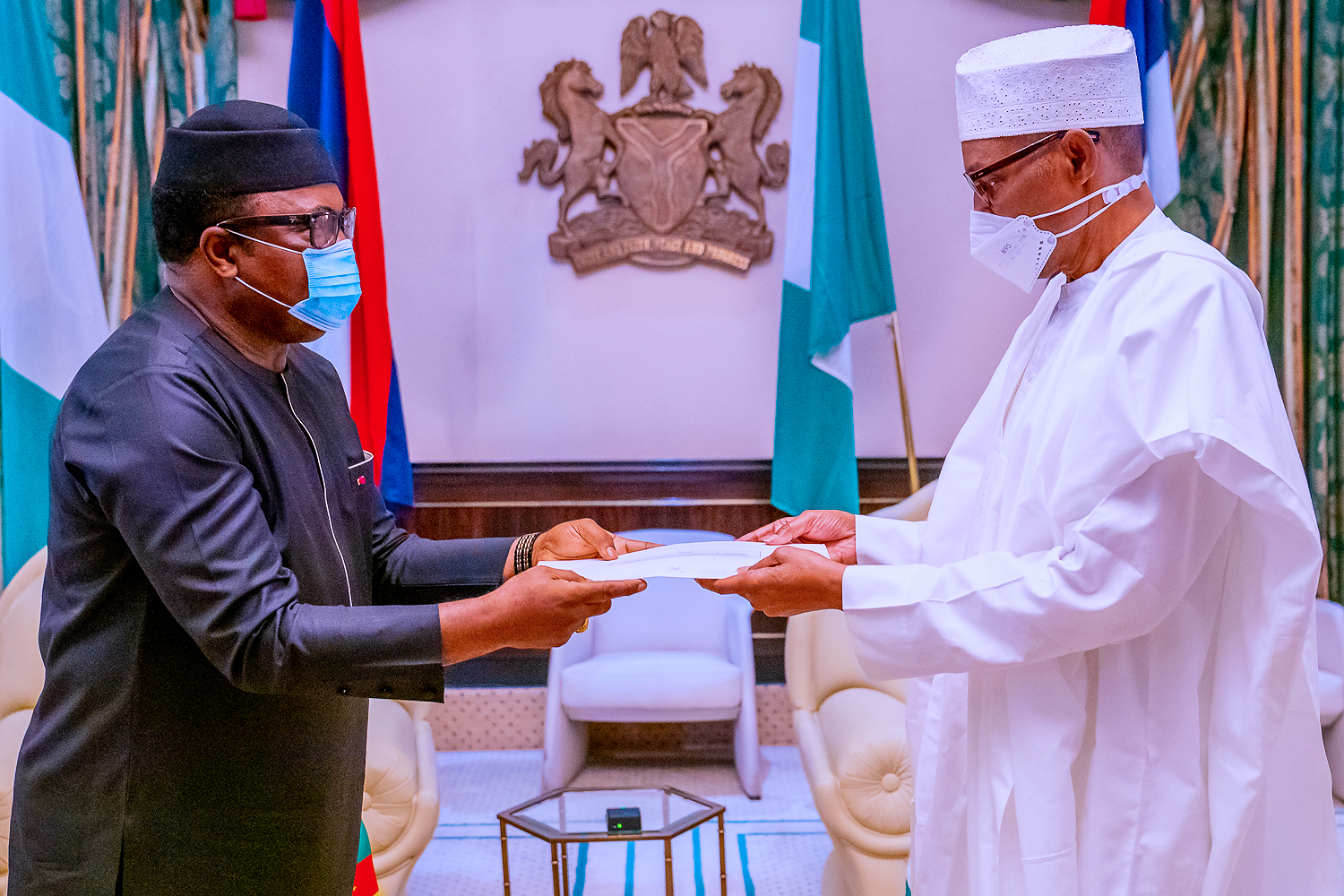
The House of Representatives has urged President Muhammadu Buhari to urgently consider the use of private defence contractors for targeted security operations to combat insurgency and terrorism.
This was among the 19 recommendations made by the Special Committee on National Security.
It would be recalled that following the escalating security situation in the country, the House in June this year convoked a summit to help find lasting solutions to the menace.
The report of the committee laid before the House on July 8, 2021, was considered in the Committee of the Whole, yesterday.
Moving the motion for its consideration, the Speaker, Hon Femi Gbajabiamila said that a large number of Nigerians from different backgrounds and experiences were consulted on the matter to make inputs.
The House also recommended that a special team of 40,000 Police Mobile Unit officers should undergo special training to improve their capacity in dealing with issues of insecurity.
It detailed that 1,000 of the officers be deployed to every state for immediate operations, stressing that the North-East, South-West, South-East can receive the officers remaining out of the 40, 000 men.
The Green Chamber also urged the federal government to deploy early warning systems nationwide including installation of CCTV cameras and other surveillance, satellite and electronic equipment along major highways, public places, and major cities and the borders.
It also called for the creation of Local Security Committees in all 774 Local Government Areas to be managed by the Nigerian Police Force as part of its community policing mandate.
According to the House, the panel should include traditional rulers, religious institutions, and local opinion leaders.
The parliament also recommended the use and development of grazing reserves and ranching be pursued in lower population areas, saying that pilot schemes should commence immediately in all states that are positively disposed to it.
The recommendations ran thus, “Instruct the immediate enhanced training for the Police Mobile Unit to improve their capacity to deal with insecurity. A special team of 40,000 Police Mobile Unit officers should undergo this special training. 1,000 should then be deployed to every state for immediate operations. North-East, South-West, South-East can receive the officers remaining out of the 40,000.
“Create a new team under the Nigeria Police Force (NPF) to train and work with the guards of Nigeria’s forest. This unit will collaborate with the current Forest Guards who will remain under the control of states.
“Encourage the intelligence agencies (working with the National Security Adviser and the Chief of Defence Staff) to initiate a screening and vetting program of all frontline officers of the Nigerian military to fish out moles and double-agents who have so far compromised most efforts at combating insecurity and win the war against insurgents and terrorists.
“Strategically, the Executive should initiate a Presidential Police Reform initiative that will be resident in one central place within the Presidency. Also, an operational specialised unit should be established within the NPF to champion and drive all the change initiatives (based on a Presidential Policing Reform Roadmap) from within the institution.
“Direct the use of the Nigerian Police Trust Fund to procure some of the immediate equipment need by the rank-and-file police officers in Nigeria. This intervention will include the procurement of modern critical equipment for the Nigeria Police Force as specified by the leadership of the NPF.
“Give immediate consideration to the use of Private Defence Contractors for targeted security operations to combat insurgency and terrorism, especially.
“Urge the Executive to use all means at its disposal (while Legislation is pending), to require the creation of a protocol that will compel intelligence (as a matter of necessity) sharing amongst all security agencies.
“Deploy Early Warning Systems nationwide including installation of CCTV cameras and other surveillance, satellite and electronic equipment along major highways, public places, and major cities and our borders.
“Establish and strengthen a National Crisis Centre (NCC) within the Nigerian Police. The NCC will be the national coordinating centre for all civil security response actions and monitoring of resolutions of such with monthly reporting on all incidents. It will also be the central place for any Nigerian to report major security incidents.
“Through an Executive Order, initiate a Civilianisation program in all our security agencies. This should compel the agencies to use civilian staff to perform most back-office and non-tactical duties. This initiative will free up thousands of security personnel for frontline duties immediately.
“Encourage and resource the National Orientation Agency and the Federal Ministry of Information to begin a structured strategic Communication and orientation campaign using all available media channels and platforms to promote peaceful coexistence and national unity.
“Support for the creation of Local Security Committees in all 774 Local Government Areas. This panel should include Traditional Rulers, Religious institutions, and local opinion leaders.
“This should be managed by the NPF as part of its Community Policing mandate.
“The use and development of grazing reserves and ranching should be pursued in lower population areas. Pilot schemes should commence immediately in all states that are positively disposed to it.
“Strengthening the judicial and law enforcement administration through a digitisation initiative for the Judiciary. This will speed up the administration of Justice and reduce corruption. Swift administration of justice will help reduce causes of disaffection which feeds into insecurity.
“Strengthen and instruct widespread use of the centralized national criminal database by the NPF and mandate access for other security agencies, providing resources to ensure this can be done. This should also include modernization of the national fingerprint database.
“The NSA in collaboration with civil security agencies should identify, map, and arrest cult group leaders, violent agitators, and networks of criminal groups at tertiary education level as well as society at large.
“The nation’s dependence on the import of basic security requirements should be reduced by enhancing the existing military production facilities and private companies across the country for immediate supply of needed security equipment.
“Target poverty as a must; as poverty is the main driver for all the insecurity issues currently prevalent across the nation. This can be done through a focus on infrastructure and a new jobs’ creation drive and initiative by the Federal Government of Nigeria, the Executive is also urged to consider doing even more by declaring a state of emergency on job creation considering the high rate of unemployment.
“That Nigeria must take major steps to control the flow of illegal arms into the country. The first step must strengthen the control of our borders to detect and seize any illegal shipment of arms into the country, and arrest and prosecute any person associated with the illegal flow of arms into the country.
“In the next step, Nigeria should reach out to overseas arms dealers to enlist their cooperation against the sales of arms to non-state actors. A third step should be a major diplomatic initiative with the governments of countries known to have companies engaged in selling arms to non-state actors. Continuous Arms-Collection and Depository scheme should be established national to encourage disposal and collection of illegal firearms.”















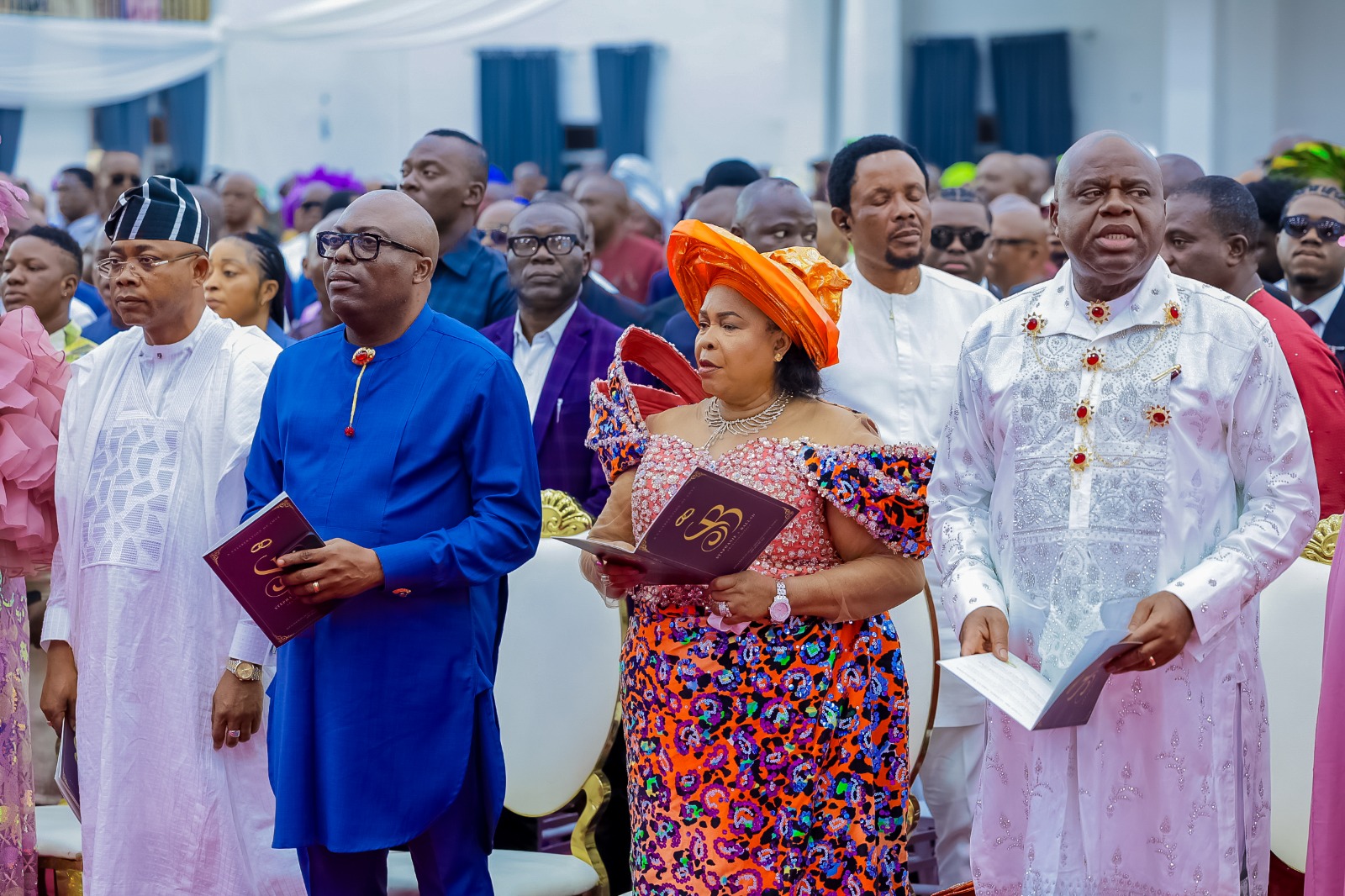
Fubara gave the assurance last Friday at the NYSC permanent orientation camp, Nonwa-Gbam, Tai Local Government Area in the State, during the swearing-in ceremony of 2026 Batch B Stream II orientation course.
Represented by the Permanent Secretary, Cabinet Bureau, Office of the Secretary to the State Government, Dr. Promise Oguzie, the governor said the State Government would remain intentional in providing the necessary support to improve the NYSC scheme and enhance the experiences of corps members deployed to the state.
He charged the corps members to be role models and quality nation-builders in their service to the good people of Rivers State in particular, and Nigeria at large.
“I charge you to be exemplary, dedicated and committed in all you do. Take full advantage of all the camp programmes and activities to enrich yourselves”, he said.
In his welcome address, the State Coordinator of NYSC in Rivers State, Mr. Moses Oleghe, urged corps members to see their deployment to Rivers State as a “veritable opportunity to make meaningful contribution to the growth of the State in particular and Nigeria at large.”
He further charged them to serve with all sense of “integrity, discipline, and the fear of God, especially when they will be engaged as INEC ad-hoc staff that will conduct the 2027 general elections.”
A total of 3,584 corps members composed of 1,421 males and 2,163 females were sworn in by the Chief Judge of Rivers State, who was represented by Justice Godspower Aguma.

The Governor stated this yesterday when he received in audience, the World President of the Seventh Day Adventist Church, Pastor Erton Kohler; his wife, Andriene Marques Kohler; daughter Mariana Marques Kohler and a retinue of ministers of the church at Government House, Port Harcourt.
Fubara who hailed the Seventh Day Adventist Church for its contributions to education and the grooming of future leaders in Nigeria, expressed delight that the Church had over the years, been investing in education at various levels and currently runs two universities in the country.
He commended the church for not only using its institutions to spread the gospel of Christianity but to groom future leaders for the country.
According to him, religion should not be just about defending one’s faith, but also making meaningful impact on the lives of the people.
He said that by floating these educational institutions, the church has demonstrated capacity to support Nigeria in the task of producing not only educated people but a breed of God-fearing leaders.
“Our country is where it is today because we lack the fear of God. If you have the fear of God, there should be a limit to what you can do because you understand the supremacy of God. But when God is not in your equation, you’ll go beyond the line and that is what has brought us to where we are today.
“So, I feel very happy that you are contributing to the development of our future leaders in this country. We need the right people being in the right place; prepared properly with good minds; that is what we need, not just in Nigeria but round the whole world.,” he said.
Governor Fubara further observed that the absence of God-fearing people in high places to take the right decisions that could impact positively on the society, has also given rise to other problems such as social inequality, poverty, corruption and criminality. According to him, Nigeria needs a system where the average parent could afford quality education for their children and a guarantee that upon graduation, the average child will have the capacity to compete favourably with anybody, anywhere in the world.
“If we have a situation where the little money that you’re being paid as wage can also afford you quality healthcare and after working at least for 15-20 years, you have a roof over your head, tell me why you should be involved in any kind of crime? At that point, you’ll feel secured and this attitude of insecurity about the future that leads to all the social vices we have today won’t be there,” he said.
Governor Fubara expressed appreciation to the delegation for the visit and for their prayers for Rivers State, assuring them of his continued support for their programmes in the state.
Leader of the delegation and World President of the Seventh Day Adventist Church, Pastor Erton Kohler said he was in Nigeria for a special conference of the church during which thousands of the church’s ministers will be undergoing an empowerment programme to further equip them for the task of herding their flocks and serving the society.
He expressed gratitude to the Governor for the warm reception accorded his entourage, saying the memory of the visit will linger in his mind for a lifetime.
Kohler disclosed that the Church has over twenty -four million (24,000,000) members and more than 182,000 places of worship, spread across 212 countries of the world.

This reaffirms the lawmakers’ commitment to enacting laws and taking legislative actions geared towards the overall development of the State.
The Assembly gave the approval during its Second Legislative Sitting of the Fourth Session held last Friday.
Speaking on the MTEF document during plenary, the House Speaker, Rt. Hon. Martin Amaewhule, noted that by the provision of Section 10(1)(b) of the Rivers State Fiscal Responsibility Law No. 8 of 2010, the MTEF ought to have been laid before the House in September 2025.
Amaewhule explained that traditionally, the document is expected to be presented four months before the commencement of the next financial year and immediately after the expiration of every three-year fiscal cycle.
He, however, stated that in the interest of the State and its people, the House considered it necessary to deliberate on the document, describing it as a precursor to the 2026 Budget Estimates.
The Speaker expressed concern that the year had already progressed significantly before the presentation of the framework.
During deliberations on the document, members examined the assumptions and projections contained in the MTEF and observed that strict adherence to the outlined fiscal parameters would ultimately serve the interest of Rivers people.
The lawmakers maintained that effective implementation of the framework would promote prudent financial management and enhance developmental planning across the State.
Following the debate and positive consideration by members, the Speaker put the question to the House and members voted overwhelmingly in support of the approval of the MTEF.
Meanwhile, during the same sitting last Friday, the House also received a petition from the Chairman of Obio/Akpor Local Government Council, Dr. Gift Worlu.
The petition was presented by the member representing Obio/Akpor Constituency II, Hon. Emilia Amadi.
According to the petition, concerns were raised over an imminent security breach, threats to lives, destruction of property and alleged forceful takeover of property by some lawless persons within parts of the Local Government Area.
Presenting the petition before the House, Hon. Amadi appealed to the lawmakers to revisit the matter and take necessary steps aimed at safeguarding lives and property in the affected communities.
The House is expected to further deliberate on the petition and consider measures to address the concerns raised in order to sustain peace and security in the area.
King Onunwor
-

 News4 days ago
RSG Targets Nine Million Residents in Mosquito Net Distribution Campaign
-

 Oil & Energy4 days ago
Aiyedatiwa Signs New Electricity Bill
-

 Oil & Energy4 days ago
NLNG Commissions Research And Innovation Centre In RSU
-

 Maritime4 days ago
Marine Minister Commends President Tinubu On NPERA Bill Assent
-

 News4 days ago
KenPoly Holds Eight Convocations, August 29
-

 News4 days ago
RSG Begins Another Phase of Projects Commissioning Today
-

 News4 days ago
RMAFC Completes Revenue Sharing Review, Proposes New Pay
-

 Maritime4 days ago
NAGAFF Petitions IGP Over Alleged Maritime Police Harassment