
News
Insecurity: No Amnesty For Bandits, Criminals, Buhari Insists

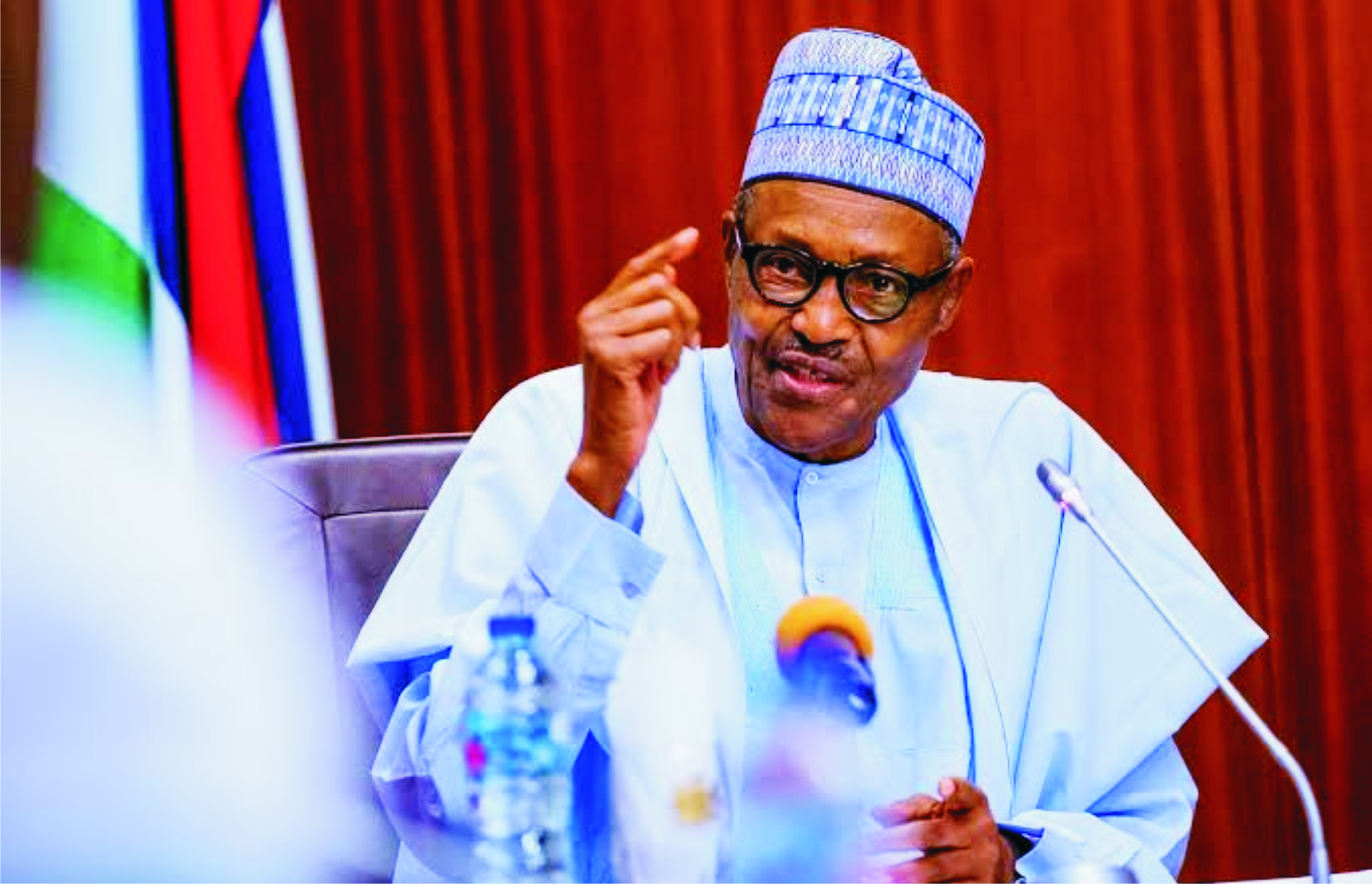
Governors of the 19 Northern States and traditional rulers of the region have begun a strategy meeting in Kaduna where they are x-raying the security challenges bedevilling the region.
The two-day meeting of NGF, which opened, yesterday, at the Sir Kashim Ibrahim House, Kaduna, is also being attended by the Senate President, Dr Ahmad Lawal, Chief of Staff to the President, Prof. Ibrahim Gambari, and Information Minister, Lai Mohammed.
Others are National Security Adviser, Maj-Gen Mohammed Monguno, Inspector General of Police, Mohammed Ibrahim, and Director General, State Security Service, Yusuf Bichi.
Speaking at the event, President Muhammadu Buhari said that government shall continue to deal with insurgents, as bandits, kidnappers and other criminals constitute threat to citizens across the country.
“Criminals are criminals and should be dealt with,” he said.
Represented by the Chief of Staff, Prof. Ibrahim Gambari, the President appreciated the efforts of the Northern States Governors for their contribution towards National Growth and development, “especially in this challenging period in our nation’s being where certain fundamental corporate existence needs to be frankly deliberated upon and actionable resolutions reached.”
He said the meeting was coming at a time when they were making steady progress in addressing the many challenges impeding development, such as providing critical infrastructure like roads, railways, airports among others, which are critical to economic prosperity.
He said government was also providing economic opportunities for citizens to pursue legitimate aspirations, adding that even though they were confronting the various dimensions of security challenges, they would continue the emancipation of the people from poverty and economic deprivation.
“I have already tasked the new service chiefs to devise new strategies that will end this ugly situation where the lives of our people continue to be threatened by hoodlums and criminals. I expect that at this meeting, your forum will also discuss of building stronger collaboration with the security architecture and devise ways and the people in defeating criminality across the region and the nation at large.
“I wish to advocate for, between the Northern Governors Forum synergy and other Forums in the other regions for the collective good of our nation. You should endeavour to compare notes and peer-review one another to exchange ideas and adopt best practices for the good of the people you govern.
“In this regard, I wish to commend the chairman and members of this forum for rising to the occasion to de-escalate the recent tension arising from clashes between herders which resulted in the loss of lives and properties. The efforts of the forum in engaging all farmers, other parties and supporting the efforts of the Federal Government have gone a long way to ameliorate the situation. We need to sustain this tempo to attain total calm.
“Today’s gathering also demonstrates the collective will of the people of the Northern part of this country to promote living together and staying amongst all Nigerians irrespective of religious differences,” he said.
Buhari also downplayed the possibility of the Federal Government granting amnesty to criminals and bandits.
Buhari warned that his government would deal decisively with all forms of criminality in the country.
He said he has directed the security chief to evolve strategy on how to deal with all forms of criminalities.
He said, “I must appreciate the efforts of the 19 Northern States Governors’ Forum for their contribution towards national growth and development, especially in this challenging period in our nation’s being where certain fundamental corporate existence needs to be frankly deliberated upon and actionable resolutions reached.
“At the same time, we are confronting the various dimensions of security challenges that continue to slow down the emancipation of our people from poverty and economic deprivation. The government shall continue to deal with insurgents, bandits, kidnappers and other criminals who constitute a threat to innocent citizens across the country.
“Criminals are criminals and should be dealt with accordingly, without resorting to ethnic profiling. I have already tasked the new service chiefs to devise new strategies that will end this ugly situation where the lives of our people continue to be threatened by hoodlums and criminals.”
Buhari’s comment is coming at a time popular Islamic cleric, Sheikh Abubakar Gumi had called on the Federal Government to grant amnesty to bandits.
Gumi had explained that granting amnesty to bandits was better than engaging them in what he termed “operation fire-for-fire.”
He had also pointed out that amnesty to bandits would help calm down the tense insecurity situation.
The governors at the meeting, holding at Sir Kashim Ibrahim House, include those of Plateau, Adamawa, Sokoto, Nasarawa, Jigawa and Katsina.
However, governors of Niger, Zamfara, Yobe, Benue, Kogi, Kabbi were represented by deputy governors of the states, among others.
At their last meeting on November 2, 2020, the Northern governors had set up two committees to push for statutory roles for traditional rulers and another on youth and civil societies.
The committee on roles of traditional rulers is chaired by the Emir of Lafia, Justice Sidi Bage, with two representatives from the National Assembly, one from each of the three zones, and a minister as members.
The Committee on Youth and Civil Societies has the Emir of Zazzau, Amb Ahmad Bamalli as chairman, with one representative of elders, youth, women, persons with disability as members from each of the three zones.
The November meeting had also backed efforts to regulate the spread of fake news through the social media bill.



The Chief of Army Staff (COAS), Lt.-Gen. Waidi Shaibu, has tasked troops of Operation SAVANNAH SHIELD to dominate the battlespace and intensify offensive operations against kidnappers, bandits and other criminal elements in the North Central region.
Shaibu gave the directive yesterday during his maiden operational visit to the Headquarters, Joint Task Force North Central (JTF-NC), at Sobi Barracks, Ilorin.
This is contained in a statement by the Acting Director, Army Public Relations, Col. Appolonia Anele, in Abuja, yesterday.
Shaibu said the Nigerian Army would remain resolute in its constitutional responsibility of safeguarding lives and property, stressing that troops must sustain pressure to decisively deny criminal elements freedom of action.
He assured personnel of continued deployment of combat enablers and operational resources to enhance clearance operations and dismantle criminal hideouts across Kwara and Niger states.
The COAS reaffirmed his commitment to troop welfare, noting that improved welfare remained critical to sustaining morale, operational effectiveness and combat readiness.
He urged the troops to remain disciplined, professional and loyal to the Constitution and the democratically elected government.
Earlier, the Theatre Commander, JTF-NC Operation SAVANNAH SHIELD, Maj.-Gen. Yakubu Yahaya, commended the COAS for his strategic leadership and support.
Yahaya assured that troops would remain committed and steadfast in restoring peace and stability in the region.

The Nigerian Navy says it is expanding training and infrastructure to address emerging security threats and strengthen operational efficiency across formations and units nationwide.
The Chief of Naval Staff, Vice Adm. Idi Abbas, spoke during the inauguration of projects at the Nigerian Navy Basic Training School (NNBTS) in Onne, Rivers as part of activities marking the Nigerian Navy’s 70th anniversary.
Abbas, represented by the Flag Officer Commanding, Naval Training Command (NAVTRAC), Rear Adm. Ebiobowei Zipele, said the projects reflected significant progress made by the navy since its establishment in 1956 from the British Royal Navy.
“Training and infrastructure have improved significantly to meet contemporary security challenges and fulfil the navy’s constitutional responsibilities.”
According to him, the anniversary provides the navy an opportunity to reflect on its achievements and contributions over the past seven decades.
Projects inaugurated included a remodelled female trainees’ hostel accommodating more than 500 occupants and an expanded golf course upgraded from one to nine holes.
Others were the NNBTS fuel dump, Chief Boatswain’s Mate House, renovated pharmacy department and a new theatre block at the Naval Medical Centre, Onne.
Abbas described the new theatre as a major milestone for the navy’s medical services.
“Previously, injured personnel requiring surgeries were referred outside the facility.
“With this theatre, surgeries can now be conducted within the base.’’
He added that a 30KVA inverter had also been installed to guarantee uninterrupted electricity supply at the training school.
The naval chief assured officers, ratings and trainees that the navy leadership remained committed to their welfare and wellbeing.
“These infrastructure upgrades show the commitment of the Chief of Naval Staff to addressing operational and welfare challenges promptly,” he said.
In addition, NAVTRAC distributed educational materials to pupils of Community Primary Schools One and Two, Ogale, in Ebubu-Eleme area of Rivers.
Items distributed included exercise books, school bags and other writing materials as part of the navy’s civil-military engagement initiative.
Zipele said the outreach was designed to strengthen relations between the navy and host communities while supporting children’s education.
“Education remains critical to national growth and youth empowerment. Some of these pupils may eventually serve in the Nigerian Navy,” he said.
He noted that the initiative demonstrated the navy’s commitment to educational development, peace, security and sustainable community relations.
Zipele urged the pupils to remain disciplined, focused and committed to their studies while embracing patriotism, integrity and hard work.
He thanked the Ebubu community for its continued support for the naval training command headquarters and the navy.
-
News2 days ago
Obuah’s Victory Excites Former Lawmaker as APC Primaries Conclude in Rivers West
-

 Politics4 days ago
APC PRIMARIES: FUBARA’S WITHDRAWAL, HISTORIC SACRIFICE FOR NATIONAL STABILITY ……. GROUP
-

 News4 days ago
Court Sentences Seven To Death Over Murder Of Cleric In Rivers
-
News2 days ago
105 Nigerians Killed In S/Africa In Seven Years
-

 Sports4 days ago
PH Arsenal Community Set For Streets Procession, Saturday
-

 Niger Delta2 days ago
Royal Father Endorses PH Arsenal Community, Pledges To Support
-

 Politics4 days ago
IPAC Flays INEC Over Election Guidelines Judgement
-

 Politics4 days ago
NDC To Adopt Electronic Voting For Future Primaries