
Editorial
Task Before Biden

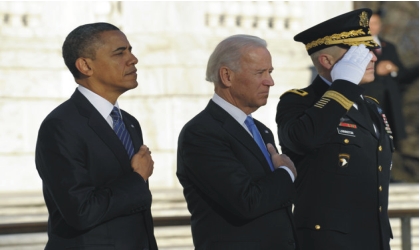
The President-elect of the United States of America (USA), Joseph Robinette Biden Jr. will be sworn in
today as the 46th president of the country, alongside his running mate, Senator Kamala Harris. Harris is the first woman and woman of colour to serve as US Vice-President. At age 78, Biden will become the oldest president in US history.
Born on November 20, 1942, Biden was declared the president-elect of the U.S. on November 7, 2020, following an initially tight electoral college contest against incumbent President Donald Trump and four days of vote-counting. The campaigns leading up to the election were individuated by mudslinging as the results were vigorously contested in court by Trump. Biden’s victory makes him the first former vice president to win the Oval Office since George H. W. Bush, who won in 1988 after eight years under Ronald Reagan.
In an election carried out during a pandemic, as well as a national reckoning over racial injustice, Biden won over 74 million popular votes — the most in U.S. presidential election history. On December 14, 2020, the Electoral College cast a majority of votes for him, formalising the presidential election in the manner set out in the constitution.
Before his run for the nation’s highest office. Biden served 36 years as a U.S. Senator from Delaware, a small Mid-Atlantic state, and went on to rule as vice president of the United States with former President Barack Obama. As a two-term vice president, Biden focused largely on economic and foreign policy issues. The foregoing is an indication of his preparedness to occupy the most exalted and dominant seat in the world.
We warmly congratulate the president-elect on his victory and commend him for his composure in the face of provocation by Trump. As he takes his oath of office, he will surely be faced with enormous pressures to implement a laundry list of priorities on a range of issues from foreign policy to the climate crisis, reversing many of the stark changes implemented by his predecessor.
As a first step, Biden must unite and heal America, now a deeply divided country. Trump’s baseless claims of voter fraud prove that to heal the country, Biden must be clear about what is dividing Americans and that is racism. He has to do away with racial anxieties often rooted in status and privilege. He should desist from building his policies on how it may assuage or enflame a particular race.
The Coronavirus pandemic is another sensitive area to be pushed forward. With over 23.9 million cases and about 397,000 deaths, Biden will have so much in his hands. Upon his inauguration, he should get his Covid-19 team to hit the ground running immediately. A new nationwide plan needs to be rolled out against the pandemic while measures to fix the disastrous economic fallout should be determined. The team could put together a serious public information campaign which has been missing.
With the outcome of the election and his assumption of office finally set in stone, Biden can now turn his attention to pandemic-ravaged U.S. economy that has caused widespread devastation to the livelihoods of millions. The U.S. economy, crippled by the global health crisis, has since shown strong signs of slump. A grave point of entanglement where attention is needed is the humongous number of Americans that are jobless, struggling to make ends meet.
During his campaign, the former vice president promised voters what he would do if elected president. These include re-entering the Paris Climate Agreement, returning to the 2015 Iran nuclear deal, in which Tehran agreed to limit its nuclear activities in return for the lifting of harsh economic sanctions, restoring U.S. membership of the World Health Organisation (WHO), and reversal of travel ban for travellers from Muslim countries. There are strong global expectations that the new U.S. leader would fulfill these promises.
After four years of what many view as President Trump’s irrationally abrasive treatment of key U.S. allies, an instant improvement in the atmospherics between Washington and the international community under a Biden administration can be anticipated. That matters in a bilateral relationship that is ever more important as an anchor for the broader partnership between the United States and other countries. It is believed that Biden’s foreign policy credentials, institutionalist track record, and the promise of a return to a more multilateral approach in U.S. policy will create much goodwill for America.
As Biden confronts enormous challenges, we urge him to reverse the four years of Trump’s administration that was largely delineated by disdain, disinterest and derision towards Africa. The change of guard in the White House today is expected to herald a shift towards the African continent, which has always yearned for a prime spot on a crowded U.S. foreign policy agenda.
Most African countries are prepared for a U.S. administration that treats Africa with civility, certainty, dignity and respect. Africa is looking forward to Biden to intervene in the precipitous decline in democratic governance across the continent in the last few years, ease the travel ban on African countries including Nigeria, continue U.S. engagement on African security issues, particularly anti-terrorism campaigns, and renew Africa/U.S. relations in the critical domain of trade and investment, among others.
The president-elect must be equally lauded for appointing some women of colour into his cabinet. This way, he has opened up his cabinet to all without prejudice. Biden’s appointment of two Nigerian-born women, Adewale Adeyemo, as the deputy treasury secretary and Funmi Olorunnipa Badejo, as one of his legal advisers at the White House, is indeed instructive. It portends his willingness to work with anyone regardless of colour or race.
The role of the judiciary in the handling of Trump’s election lawsuits is worthy of emulation. Judges appointed by Republicans and Trump himself became singularly uncooperative conspirators in the assault unleashed by the president. The judges have shown their devotion to judicial principle and constitutional fidelity. This is food for thought for Nigerian judges who would do the bidding of their appointors in similar circumstances.
Also, the certification of Biden’s Electoral College victory by the federal lawmakers in defiance of violent attempts to discombobulate the process by Trump and his mob is especially notable. We extol the lawmakers for affirming their independence and loyalty to the constitution when they ate away Trump’s moves to halt the peaceful transfer of power by staging a violent insurrection inside the U.S. Capitol.
As Trump vacates the White House today, rather reluctantly, with an awfully low approval rating of 29%, the 74 million Americans who voted for him, the pro-Trump alliance, the ultra-right Trumpers that he inebriated with the oxygen of hate, the anarchists who bought into his politics of deception meant to de-legitimize Biden’s victory, that is, those who attacked the U.S. Capitol on January 6, may be pained that their era is over, at least for now. But for the rest of the world, Trump’s exit is a big relief, the end of horror and a terrible nightmare.



Nigeria stands at a critical juncture as the world marked World Press Freedom Day (WPFD) on May 3. This annual observance is a reminder that a free press is central to democratic life, good governance, and public accountability. For Nigeria, it is also a moment for sober reflection on how far the country has come and how far it still has to go in safeguarding the independence of its media.
World Press Freedom Day exists to highlight the fundamental importance of freedom of expression and to honour journalists who risk their lives in pursuit of truth. It underscores the idea that without a free press, societies cannot function transparently, nor can citizens make informed decisions. In countries like Nigeria, where democracy continues to evolve, the observance carries particular urgency.
This year’s theme, “Shaping a Future at Peace: Promoting Press Freedom for Human Rights, Development and Security”, places journalism at the heart of global stability. It emphasises that a peaceful society cannot be built on silence, fear, or manipulated information. Rather, it depends on the free flow of accurate, timely, and independent reporting.
At its core, the theme highlights the role of journalism in fostering accountability, dialogue, and trust. These are not abstract ideals. In Nigeria, where public confidence in institutions is often fragile, the media remains one of the few platforms through which citizens can question authority and demand transparency. When press freedom declines, so too does public trust.
Journalism serves as a foundation for peace, security, and economic recovery. Countries with robust media systems tend to attract greater investment, maintain stronger institutions, and resolve conflicts more effectively. Nigeria’s economic challenges, ranging from inflation to unemployment, require open scrutiny and informed debate, both of which depend on a free press.
However, the issue of information integrity has become increasingly complex in the digital age. Artificial Intelligence (AI) and online platforms have amplified the spread of misinformation and disinformation. In Nigeria, where internet penetration has grown rapidly, false narratives can travel faster than verified facts. This makes the role of credible journalism more vital than ever.
The challenge is not only technological but also ethical. AI-driven manipulation of information threatens to distort public discourse, influence elections, and deepen social divisions. In such an environment, professional journalism must act as a stabilising force, ensuring that truth prevails over sensationalism and propaganda.
Equally troubling is the safety of journalists. Across Nigeria, reporters face growing levels of online harassment, judicial intimidation, and physical threats. Self-censorship is becoming more common, as media practitioners weigh the risks of reporting sensitive issues. This trend undermines the very essence of journalism.
A particularly alarming incident involved a serving minister in the present administration, who openly threatened to shoot a journalist during a televised exchange. Such conduct, broadcast to the public, sends a dangerous signal that hostility towards the press is acceptable. It erodes the norms of democratic engagement and places journalists in harm’s way.
This year’s theme aligns closely with the United Nations Sustainable Development Goal (SDG)16, which promotes peace, justice, and strong institutions. Freedom of expression is a cornerstone of this goal. Without it, institutions weaken, corruption thrives, and justice becomes elusive. Nigeria’s commitment to SDG 16 must therefore include genuine protection for the media.
Historically, the Nigerian press has been a formidable force. From resisting colonial rule to challenging military dictatorships, our journalists have played a central role in shaping the nation’s political landscape. Today, however, that legacy appears to be under strain, as the media operates under what can best be described as a veneer of freedom.
Beneath this facade lies a troubling reality. Journalists are routinely harassed, detained, and prosecuted for performing their constitutional duties. Reports from media watchdogs indicate that dozens of Nigerian journalists face legal threats or arrest each year, often for exposing corruption or criticising those in power.
The Cybercrimes (Prohibition, Prevention, etc.) Act of 2015 has become a focal point of concern. Originally intended to combat cyber threats, it has increasingly been used to silence dissent. Sections 24 and 27(1)(b), in particular, have been invoked to target journalists, bloggers, and social commentators.
Although amendments introduced in February 2024 were meant to safeguard journalists, concerns persist. The law continues to be wielded in ways that stifle investigative reporting and restrict freedom of expression. Legal reforms must go beyond cosmetic changes to address the root causes of misuse.
To safeguard the future of journalism in Nigeria, decisive action is required. The Cybercrimes Act must be revisited to ensure it cannot be weaponised against the press. Law enforcement agencies must operate free from political influence, upholding the rule of law and protecting journalists’ rights. Civil society and international partners must also strengthen independent media through funding, training, and platforms for wider reach.
In this rapidly evolving world shaped by artificial intelligence and digital innovation, Nigeria faces a clear choice. It can either allow press freedom to erode under pressure, or it can champion a truly independent media landscape. The path it chooses will determine not only the future of journalism, but also the strength of its democracy and the peace it seeks to build.

-

 Featured2 days ago
WASSCE: RSG Distributes Science Materials To Secondary Schools
-
News2 days ago
Xenophobic Attacks: Nigerian Lives More Important Than Foreign Investment – Oshiomhole
-
Rivers2 days ago
MBA Forex Trial Adjourn To June 3, Amid Bereavement … As Court Declines Cost Application
-
News2 days ago
ActionAid Demands Probe Of Govs Using Public Funds For Campaign
-
Aviation2 days ago
Passengers Stranded As Delta Airline From Atlanta Route Back Eight Hours After
-
Business2 days ago
Customs Impound N2.35bn Cocaine, 15 Trailers of Rice
-
Politics2 days ago
2027: Bayelsa Senator Gets Critical Endorsement For Second Term
-

 Politics2 days ago
INEC Sets Rivers South-East Senatorial By-Election For June 20