
Rivers
Rivers Infrastructal Revolution Beneficial To RSU, Woke Insists

The human capital development aspect of the state government on-going infrastructural projects, will be of immense benefits to Rivers State University, if properly harnessed.
The Chief of staff to Rivers State governor, Engineer Emeka Woke, gave this charge during the 2020 End of Year Award Ceremony of the Faculty of Engineering of the Rivers State University.
The chief of staff stated that, the state government has deliberated enacted a policy that makes it mandatory for all major companies handling road and flyover construction projects to engage indigenous engineers.
“You and I can agree that there is a revolution and infrastructural development going on in Rivers State, and you cannot construct roads and flyovers without engineers. So, there is so much to gain by this Faculty with the infrastructural development that is on going in Rivers State.
Woke explained that, “Rivers State Government is awarding contracts to reputable companies in Nigeria; Berger, MCC and all the rest of them. But, we have also as major matter of state policy, incorporated the human capital development aspect of every contract.
“For every contract we have awarded, we have ensured that the contractor must bring our engineers. We have the human capital, we have the people, so we can’t continue forever to depend on expatriates. And so we need to train our people who will take over construction and maintenance of even these projects that are being constructed by these major companies.”
Woke, who is an alumnus of the university, said it was important that the Dean and management of the Faculty of Engineering key into human capital development of Rivers State government to ensure that while engihhneers are being trained and gaining experience in the oil sector, they should also be prepared for the future maintenance of the beautiful infrastructure being put in place by the government.
The Chief of Staff used the occasion to announce that he will be rewarding the best graduating student in the Department of Chemical/Petrochemical Engineering beginning from this academic session.
He lauded the management of the institution for sustaining academic standard over the years and ensuring that academic activities are not disrupted by incessant industrial action.
He commended this year awardees for excelling in their various fields of human endeavours, particularly in the academia and corporate world.
On his part, the Vice Chancellor, Prof Nlerum S. Okogbule, said the university is very proud of the Faculty of Engineering, which is its pioneering Faculty.
Okogbule, noted that in the past 40 years, the faculty has produced men and women of substance in society.
He, however, insisted that the faculty must begin to be in the forefront of addressing some of the challenges affecting the Niger Delta region.
“As people from the Niger Delta, we want to fall back on the vision of the founding fathers of this university to use our intellect and intellectual resources to be able to respond to the challenges that we face in the Niger Delta and the Engineering Faculty is a very good position to provide leadership in that direction.”
He thank multinational oil companies operating in the state like Shell, for their continuous partnership with the university.
Among the 17 awardees are: the Managing Director of Shell, Mr Osagie Okunbor; Prof k.D.H Bob Manuel; Prof M.J Ayotamuno; Prof Emenike Wami and others.




The Nigerian Bar Association (NBA) will inaugurate its newly elected National Exexutive, led by President-elect Oyinkansola Badejo-Okusanya, during its 2026 Annual General Conference scheduled to hold in Port Harcourt, Rivers State, between August 21 and 28.
Badejo-Okusanya emerged winner of the association’s Presidential election conducted through electronic voting, polling 12,317 votes to defeat her two male challengers and become the 33rd President of the NBA.
According to the final results released by the Electoral Committee of the Nigerian Bar Association (ECNBA), the Senior Advocate of Nigeria (SAN) secured 47.18 per cent of the 26,106 valid votes cast in the election.
Her closest rival, Lateef Omoyemi Akangbe (SAN), garnered 7,934 votes, representing 30.39 per cent, while Olumu Akinboro (SAN) polled 5,855 votes, or 22.43 per cent.
Her election is historic, as she becomes only the second woman to lead the NBA in its 66-year history, following Priscilla Kuye, who served as the association’s first female president between 1991 and 1992.
The inauguration of Badejo-Okusanya and other newly elected national officers will be one of the major highlights of this year’s Annual General Conference in Port Harcourt, which is expected to attract thousands of lawyers, judges, legal scholars and policymakers from across Nigeria and beyond.
Called to the Nigerian Bar in 2002, Badejo-Okusanya studied Law at the University of Lagos after earning a Bachelor of Arts (Honours) degree in English from the same institution.
She began her legal career at Olaniwun Ajayi LP and, in recognition of her outstanding contributions to legal practice, was elevated to the rank of Senior Advocate of Nigeria on September 29, 2025.
Her career has combined legal practice with public service. In 2007, she was appointed Senior Special Assistant on Justice Sector Reform to the then Governor of Lagos State, Babatunde Fashola, working in the office of the then Attorney-General and Commissioner for Justice, Olasupo Shasore.
She is a respected arbitration and dispute resolution expert and belongs to several prestigious professional bodies, including the London Court of International Arbitration (LCIA), International Council for Commercial Arbitration (ICCA), African Arbitration Association, ArbitralWomen, International Bar Association (IBA), Commonwealth Lawyers Association (CLA), International Federation of Women Lawyers (FIDA), and the African Women Lawyers Association (AWLA). She also serves on the Board of the Lagos Court of Arbitration.
Within the NBA, Badejo-Okusanya has held several strategic leadership positions, including Assistant Secretary of the NBA Lagos Branch, member of the Future of the Legal Profession Committee, Conference Investigation Committee, and the NBA Lagos Branch Building Committee.
She also served as Alternate Chair of the 2023 NBA Annual General Conference Planning Committee before chairing the committee for the 2024 conference.
In 2022, she was co-opted into the NBA National Executive Council and, in August 2024, received the NBA Presidential Medal of Service in recognition of her contributions to the association.
A founding partner of Africa Law Practice NG & Company since 2017, Badejo-Okusanya currently co-heads the firm’s Litigation and Dispute Resolution Practice. The firm is regarded as one of Nigeria’s leading commercial law firms, with affiliations across Africa.
Her emergence has raised expectations that her administration will prioritise lawyers’ welfare, institutional reforms and a more inclusive Bar, in line with her campaign promise to build “a bolder Bar that works for everyone” where lawyers can earn better, live better and practise better.

The Commander of Nigerian Naval Shipyard Pathfinder, Commodore Mutalib Ibikunle Raji, has described the National Youth Service Corps (NYSC) as a critical pillar of national unity and sustainable development, while reaffirming the Nigerian Navy’s commitment to deepening its long-standing partnership with the scheme in Rivers State.
Raji made the remarks when he received the NYSC Rivers State Coordinator, Moses Oleghe, on a courtesy visit to his office at the Naval Shipyard in Port Harcourt.
The naval chief praised the 56-year-old NYSC scheme for its strategic role in nation-building, saying it has remained a “bedrock of national unity and sustainable development” since its establishment.
He also commended the cordial relationship between the NYSC and the Nigerian Naval Shipyard, describing the synergy between both institutions as “very healthy and mutually beneficial.”
According to him, the partnership has continued to yield positive results, particularly in service delivery by corps members posted to the Shipyard.
Raji assured the NYSC management in the state of his readiness to support the successful implementation of the scheme’s programmes and activities, noting that closer collaboration between the two institutions would further strengthen their bond.
“My administration remains available and committed to supporting the NYSC in the successful implementation of its programmes and activities in the state”, he said.
He appreciated the quality of service rendered by corps members serving at the Shipyard and pledged that their welfare would remain a top priority under his leadership.
“We will continue to prioritise the welfare of corps members in order to encourage and motivate them for optimum performance”, he Commander added.
Earlier, Oleghe said the visit was aimed at formally interfacing with the Commander, familiarising with him and welcoming him to Rivers State following his recent appointment.
He noted that the relationship between the NYSC and the Nigerian Naval Shipyard had remained strong over the years and called for its sustenance.
The State Coordinator thanked the Commander for his assurances of support and stressed the importance of strategic stakeholders such as the Nigerian Navy in ensuring the security and welfare of corps members.
Oleghe added that the support of the Navy would provide corps members with the enabling environment required to serve the nation effectively and without hindrance.
The visit, both officials agreed, underscored the shared commitment of the NYSC and the Nigerian Navy to national integration, youth development and the continued strengthening of institutional collaboration in Rivers State.
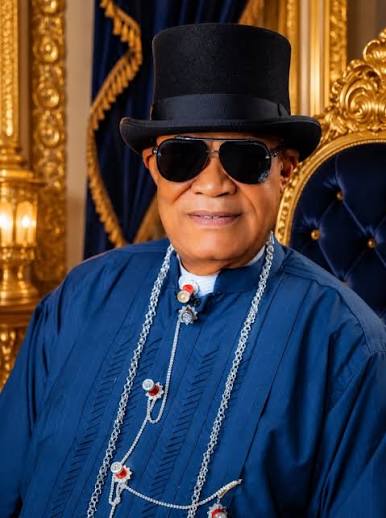
The Opobo Council of Alapu (Chiefs) has announced that Opobo Kingdom will officially crown His Majesty, King Charles Douglas MacPepple Jaja, Jeki VI, as the Amanyanabo and Treaty King of Opobo Kingdom on September 26, 2026, marking the beginning of a new era in the historic riverine kingdom.
The coronation, which forms the highlight of a week-long programme of activities scheduled to hold from September 18 to 27, 2026, is expected to attract traditional rulers, government officials, captains of industry, members of the diplomatic community, sons and daughters of Opobo Kingdom, and guests from across Nigeria and beyond.
In a statement issued by the Chief of Protocol and Public Relations of the Opobo Council of Alapu, Alabo Godwin Omoni Nengia Bupo, Abayebupo Duke Norfolk III, the Council described the event as a defining moment in the history of the kingdom.
Founded in 1870 by the legendary merchant prince, King Jaja of Opobo, and his compatriots, Opobo Kingdom has remained one of the Niger Delta’s most celebrated traditional institutions, renowned for its rich cultural heritage, maritime trading history, diplomatic influence and resilience.
According to the Council, the ascension of King Charles Douglas MacPepple Jaja, Jeki VI, as the sixth monarch in the Jeki lineage signals the dawn of a new chapter that will build on the kingdom’s enduring legacy while promoting unity, cultural preservation and sustainable socio-economic development.
The statement noted that the coronation would be “more than the crowning of a king,” describing it as a celebration of the kingdom’s resilience, identity, ancestry and enduring traditions.
“This historic coronation is not merely the crowning of a king, but a celebration of our resilience, our identity, our ancestry and our enduring heritage”, the statement said.
The Council added that a comprehensive programme of cultural, spiritual and ceremonial activities have been lined up across the kingdom to commemorate the historic occasion, culminating in the official coronation on September 26.
It called on friends of Opobo Kingdom, cultural enthusiasts and well-wishers from around the world to join in celebrating what it described as a landmark event in the history of one of Nigeria’s oldest and most respected traditional kingdoms.
By: Theresa Frederick & Charity Amiso