Opinion
Checking Indiscriminate Waste Disposal
Since the beginning of time, people have always devised a way of disposing their trash. It is imperative to note that proper waste disposal is important to ensure safety of life and avoid possible health hazards.
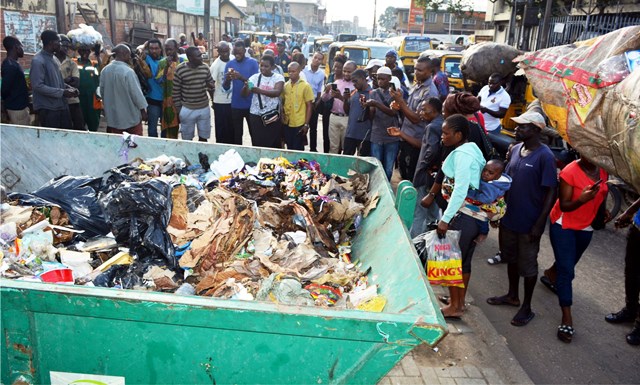
Indiscriminate waste disposal is an improper way or manner by which individuals and organizations get rid of their trash. These practices include dumping refuse by the roadside, along streets, on major roads, as well as in the various rivers.
Solid waste generation has greatly improved to an uncontrollable rate in the society, this happens due to daily human activities.
Due to inadequate waste disposal methods, dumping of refuse in unauthorized places is now the order of the day. Overpopulation, industrial revolution and urbanization have become major causes of waste generation as well as improper waste disposal.
Lack of appropriate storage facilities, unavailability of proper waste management and planning,wrong perception by residents and nonchalant attitude toward the environment cleaning and sanitation, is also a cause of this indiscriminate waste disposal.
The problem of indiscriminate waste disposal has brought so much pain and ills to the environment and society at large. We can point to the outbreak of various epidemics, infectious diseases, and other human environmental degradation such as flooding, drainage obstruction and waterway blockages in most parts of our county like Lagos, Port Harcourt, Aba, etc. It has been noted that heaps of trash are virtually in all market areas, on the streets and even by the roadside; and these wastes remain there for many weeks without devising any means of waste collection either by private individuals or the government. Some areas have also been abandoned when inspections are going on by the government, or even during environmental sanitation. I assume such attitude is an act of negligence on the part of waste disposal agencies or the ministry of environment.
Waste management and indiscriminate waste disposal and checkmating of the activities of persons who dispose waste products in an improper way, must be done from the grass root level. It is a joint effort from both the government an citizens of the nation and this must start from the house hold and family.
Government should focus on collection of waste products from households. They should encourage homes and individuals to bag their waste in plastic bags as this would help to avoid littering.
Most people drop biscuit sachets, cans, bottles and water sachets by the roadside while driving in cars, and on highways; that is why the government should move faster to ensure a cleaner and healthier environment.
There should be adequate financing for each state to support and help them in waste disposal projects. Waste bins must be placed in strategic areas on the streets and in communities for effective garbage collection.
Illiteracy and low level of education is another factor that can constrain the thinking of most citizens. For instance, in places such like GRA, Victoria Island, and other known places where the supposed educated elite reside, and do daily business, the activities of inadequate waste disposal or improper refuse dumping is barely seen or is at the lowest because they know the dangers of the act and how dirty their environment can be. But in the places where the average or low class citizens live, littering is higher. Therefore, proper sensitization and advocacy programmes should be carried out to educate the general public on why they should desist from dumping waste indiscriminately.
The government should also encourage individuals who set up private waste collection agencies by reducing taxes paid also workers of the ministry of environment. Those who take part in cleaning these waste from the roadside from time to time, should be encouraged by increasing their take home pay. This would enable them see the work as a responsibility and thereby curb nonchalance.
Laws and sanctions should be made and enforced to discourage persons who engage in indiscriminate waste disposal. Persons could be arrested and prosecuted by a court if they flout orders. Fines can also be imposed depending on the magnitude of default by anyone who is caught.
Apart from all these measures, government should also encourage practice such as recycling of industrial waste products such as cans, bottles, papers, clothes, etc. Also, biowaste products which include those materials that can degrade such as food items, leaves, banana peels should be biologically turned into manure and fertilizers.
This is why the government should set up recycling agencies and also monitor the collection of this waste to avoid improper disposal.
Unlawful solid waste dumping in the society must be stopped or, at least, checkmated. There is an urgent need for government and private stakeholders to implement policies to prevent the littering of waste in the environment. Human health and the environment need to be safe guarded from unsustainable conditions which are caused by indiscriminate waste disposal in our society.
Government alone should not be left with the responsibility of checking indiscriminate waste disposal. Also it is the duty of every organization and individual to take it upon themselves to keep the environment healthy and clean.
Dennar wrote from Port Harcourt.
Ngozi Dennar

Opinion
Time and Season Can Tell
Opinion
Why Adaeze Deserves A Second Chance
Opinion
Empowering Youth Through Agriculture
Quote:”While job seeking youths should continuously acquire skills and explore opportunities within their immediate environment as well as in the global space through the use of digital platforms, government, corporate/ multinational organizations or the organised private sector should generate skills and provide the enabling environment for skills acquisition, through adequate funding and resettlement packages that will provide sustainable economic life for beneficiaries”.
The Governor of Rivers State, Sir Siminalayi Fubara, recently urged youths in the Rivers State to take advantage of the vast opportunities available to become employers of labour and contribute meaningfully to the growth and development of the State. Governor Fubara noted that global trends increasingly favour entrepreneurship and innovation, and said that youths in Rivers State must not be left behind in harnessing these opportunities. The Governor, represented by the Secretary to the State Government, Dr Benibo Anabraba, made this known while declaring open the 2026 Job Fair organised by the Rivers State Government in partnership with the Nigeria Employers’ Consultative Association (NECA) in Port Harcourt. The Governor acknowledged the responsibility of government to create jobs for its teeming youth population but noted that it is unrealistic to absorb all job seekers into the civil service.
“As a government, we recognise our duty to provide employment opportunities for our teeming youths. However, we also understand that not all youths can be accommodated within the civil service. This underscores the need to encourage entrepreneurship across diverse sectors and to partner with other stakeholders, including the youths themselves, so they can transition from being job seekers to employers of labour,” he said. It is necessary to State that Governor Fubara has not only stated the obvious but was committed to drive youth entrepreneurship towards their self-reliance and the economic development of the State It is not news that developed economies of the world are skilled driven economies. The private sector also remains the highest employer of labour in private sector driven or capitalist economy though it is also the responsibility of government to create job opportunities for the teeming unemployed youth population in Nigeria which has the highest youth unemployed population in the subSahara Africa.
The lack of job opportunities, caused partly by the Federal Government’s apathy to job creation, the lack of adequate supervision of job opportunities economic programmes, lack of employable skills by many youths in the country have conspired to heighten the attendant challenges of unemployment. The challenges which include, “Japa” syndrome (travelling abroad for greener pastures), that characterises the labour market and poses threat to the nation’s critical sector, especially the health and medical sector; astronomical increase in the crime rate and a loss of interest in education. While job seeking youths should continuously acquire skills and explore opportunities within their immediate environment as well as in the global space through the use of digital platforms, government, corporate/ multinational organizations or the organised private sector should generate skills and provide the enabling environment for skills acquisition, through adequate funding and resettlement packages that will provide sustainable economic life for beneficiaries.
While commending the Rivers State Government led by the People First Governor, Sir Siminilayi Fubara for initiating “various training and capacity-building programmes in areas such as ICT and artificial intelligence, oil and gas, maritime, and the blue economy, among others”, it is note-worthy that the labour market is dynamic and shaped by industry-specific demands, technological advancements, management practices and other emerging factors. So another sector the Federal, State and Local Governments should encourage youths to explore and harness the abounding potentials, in my considered view, is Agriculture. Agriculture remains a veritable solution to hunger, inflation, and food Insecurity that ravages the country. No doubt, the Nigeria’s arable landmass is grossly under-utilised and under-exploited.
In recent times, Nigerians have voiced their concerns about the persistent challenges of hunger, inflation, and the general increase in prices of goods and commodities. These issues not only affect the livelihoods of individuals and families but also pose significant threats to food security and economic stability in the country. The United Nations estimated that more than 25 million people in Nigeria could face food insecurity this year—a 47% increase from the 17 million people already at risk of going hungry, mainly due to ongoing insecurity, protracted conflicts, and rising food prices. An estimated two million children under five are likely to be pushed into acute malnutrition. (Reliefweb ,2023). In response, Nigeria declared a state of emergency on food insecurity, recognizing the urgent need to tackle food shortages, stabilize rising prices, and protect farmers facing violence from armed groups. However, without addressing the insecurity challenges, farmers will continue to struggle to feed their families and boost food production.
In addition, parts of northwest and northeast Nigeria have experienced changes in rainfall patterns making less water available for crop production. These climate change events have resulted in droughts and land degradations; presenting challenges for local communities and leading to significant impact on food security. In light of these daunting challenges, it is imperative to address the intricate interplay between insecurity and agricultural productivity. Nigeria can work toward ensuring food security, reducing poverty, and fostering sustainable economic growth in its vital agricultural sector. In this article, I suggest solutions that could enhance agricultural production and ensure that every state scales its agricultural production to a level where it can cater to 60% of the population.
This is feasible and achievable if government at all levels are intentional driving the development of the agricultural sector which was the major economic mainstay of the Country before the crude oil was struck in commercial quantity and consequently became the nation’s monolithic revenue source. Government should revive the moribund Graduate Farmers Scheme and the Rivers State School-to-Land agricultural programmes to operate concurrently with other skills acquisition and development programmes. There should be a consideration for investment in mechanized farming and arable land allocation. State and local governments should play a pivotal role in promoting mechanized farming and providing arable land for farming in communities. Additionally, allocating arable land enables small holder farmers to expand their operations and contribute to food security at the grassroots level.
Nigeria can unlock the potential of its agricultural sector to address the pressing needs of its population and achieve sustainable development. Policymakers and stakeholders must heed Akande’s recommendations and take decisive action to ensure a food-secure future for all Nigerians.
By: Igbiki Benibo
-
Politics3 days agoAPC Releases Adjusted Timetable For Nationwide Congresses, Convention
-
Sports3 days ago
DG NIS Wants NSC Board Constituted, Seeks Increased In Funding
-
Business3 days agoCustoms Seek Support To Curb Smuggling In Ogun
-
Sports3 days agoSWAN Rivers Set-up Five Functional Committees
-
News3 days ago
Police Bust Kidnapping Syndicate In PH
-
Featured3 days agoINEC Proposes N873.78bn For 2027 Elections, N171bn For 2026 Operations
-
Sports3 days ago
NSC Disburses N200m Training Grants To 26 Athletes
-
Sports3 days ago
‘NTF Will Build On Davis Cup Success For Brighter Future’