
Opinion
Africa And Children’s Rights Protection

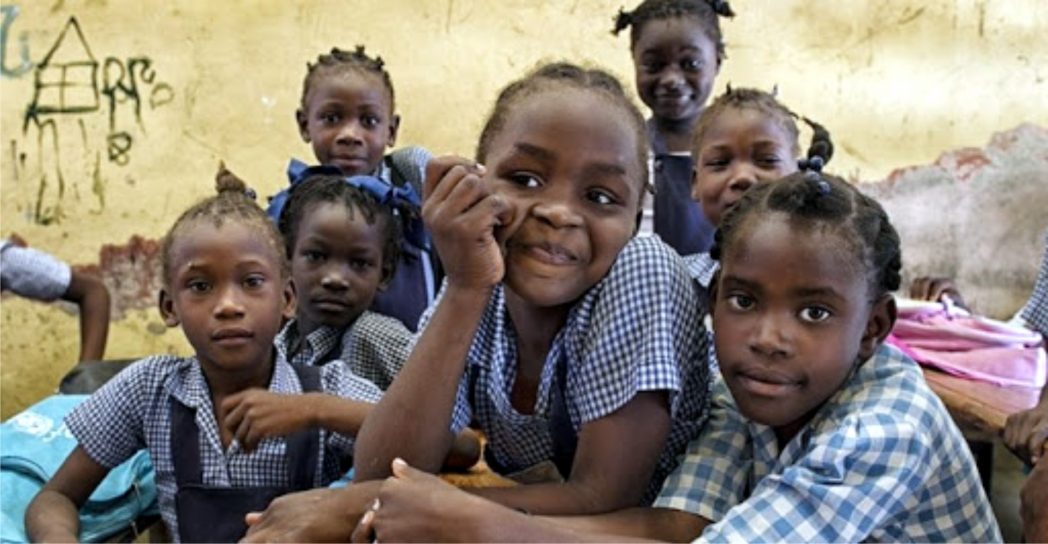
Africa’s foremost sage and rights activist, late Nelson Rolihlahla Mandela, on 2nd August, 1996 groaningly emphasized, “Africa is renowned for its beauty, its natural heritage and prolific resources – but equally, the image of its suffering children haunts the conscience of our Continent and the world”. Similarly, at the launch of the Blue Train, Worcester Station, South Africa on 27th September, 1997, Mandela ardently expressed, “The true character of a society is revealed in how it treats its children”. Yet again, at a luncheon hosted by the then United Nations Secretary General, Kofi Annan, another pride to the Continent at the Special Session of the UN for Children, New York City on 9th May, 2002, Mandela exploded, “History will judge us by the difference we make in the everyday lives of children”.
From these remarks, Mandela aristocratically, foresightedly fixated his eyes on the future of the society considering children as the leaders of tomorrow. Orchestrating the garbage-in, garbage-out recipe, invariably – whatever investment made in a child today extensively determines the society’s future. Unfortunately, the wellbeing of children particularly in African countries leaves much to be desired. The pertinent question precisely to leaders is; what future is in view vis-à-vis investment in children in the society outside their own?
To lend a hand, the pathetic conditions children in most public schools find themselves cannot be overemphasized. The psychological effects alone are awful. Some pupils even sit on bare floors owing to shortage of chairs. That’s where there are actually classrooms. Above all, children’s hawking defiantly to Article 28 of United Nations Convention on Child’s Rights (CRC) particularly during school sessions poses another question for parents, guardians and governments. Calculably, the Convention hit thirty years this year, 2019.
Correspondingly, an Italian renowned educationalist, Maria Montessori (1870-1952) remarkably avowed, “Early childhood education is the key to the betterment of society”. Could this consequently imply the society is deservedly reaping what it sowed by oversights of some fundamentals in the past? For example, the number of children and teenagers consistently participating in protests in the recent times in Nigeria’s federal capital is worrisomely, a pointer to out-of-school large population. The ugly situation unconsciously presents a clue of high numbers of supposed pupils and secondary school students roving the streets. Concisely, this is abysmal failure on the system.
By Article 1 of the CRC, “Everyone under the age of eighteen has all the rights in the Convention”. Article 2 elaborately provides, “The Convention applies to every child without discrimination, whatever their ethnicity, gender, religion, language, abilities or any other status, whatever they think or say, whatever their family background”.
The CRC is the first legally-binding international agreement setting out the civil, cultural, economic, political and social rights of every child, regardless of their race, religion or abilities. The provisions and principles of the CRC guide UNICEF in its operations with 54 Articles and three Optional Protocols. Equally, the Convention spells out the basic human rights that children everywhere have: the right to survival; to develop to the fullest; to protection from harmful influences, abuse and exploitation; and to participate fully in family, cultural and social life.
An Optional Protocol on the other hand, is an accord that complements and adds to an existing human rights treaty. For this reason, only States that have already agreed to be bound by a parent treaty may choose to be parties to optional protocols. However, it is fundamentally pertinent to note that whilst the Convention protects children from harmful and exploitative works, it doesn’t prohibit them from helping out at home in ways that are safe and commensurate to their age. Notwithstanding, under no circumstances would children’s work jeopardize any of their other rights, particularly the right to education.
The Unitarian Universalist – United Nations Office (UU-UNO) through its “Every Child is Our Child” (ECOC) programme has supposedly recorded laudable feats in ensuring that vulnerable children reach their full potential by providing them with opportunities to attend school and receive all necessary medical attention.
Splendidly, UNICEF–Nigeria has been in the lead of avid crusades on the protection of children’s rights in the country especially through public enlightenment programmes. Similarly, President Muhammadu Buhari’s Primary School Pupils’ Feeding Programme; a policy for promoting child-education is a booster. From investigations, the feeding-programme has remarkably, strategically increased the population of pupils in schools it is operative. Nonetheless, a lot still needs to be done. Government at all levels should make it a priority to provide standard learning environments alongside competent teachers and teaching materials.
Commendably, the Inner City Mission; an arm of Christ Embassy Church, established and efficiently manages a standard school – The Inner City Schools for indigent children in society. Other corporate organizations can considerately join forces as a social responsibility. The bad news – any untrained child may turn into a terror later against the entire society including the trained ones, thus, an undesirable convergence point.
Permit me to sum up with Nelson Mandela’s remarks in 2003 at the University of Witwatersrand, South Africa. The noble said, “Education is the most powerful weapon which you can use to change the world.” Conceivably, the Boko-Haram and other deadly sects in Nigeria may not have come into existence if past leaders did the needful by making child-education appealing in the society. Possibly, amongst the sects today could have been scores of eminent medical doctors, lawyers, scientists, professors and other professionals, had the governments avidly promoted child-education accordingly.
Umegboro, a public affairs analyst, wrote from Abuja.
Carl Umegboro




Quote: “Ogoniland does not
The latest attack by Chief
Instead, the gathering and
The proposal for a unified
The question should be: who
It is easy to criticise
The people are looking beyond
onest people can reach
Society must therefore

Quote: “Privilege should
There is an old saying that
While motivations cannot
A person who benefits from a
This is why citizens should
We must not assume that
By: Michael Abraham

Quote:”Although the Federal
The recent outburst by the
The senator also alleged
They connect ports, airports,
To address these challenges,
Rwanda and Morocco, for
FERMA should also prioritize
Many Nigerians have asked
-

 News3 days ago
RSG Targets Nine Million Residents in Mosquito Net Distribution Campaign
-

 Oil & Energy3 days ago
Aiyedatiwa Signs New Electricity Bill
-

 Oil & Energy3 days ago
NLNG Commissions Research And Innovation Centre In RSU
-

 Maritime3 days ago
Marine Minister Commends President Tinubu On NPERA Bill Assent
-

 News3 days ago
KenPoly Holds Eight Convocations, August 29
-

 News3 days ago
RMAFC Completes Revenue Sharing Review, Proposes New Pay
-

 News3 days ago
RSG Begins Another Phase of Projects Commissioning Today
-

 Maritime3 days ago
NAGAFF Petitions IGP Over Alleged Maritime Police Harassment