
Politics
Africa’s Leadership Question: ‘Most Countries Need Revolution Of Thought’

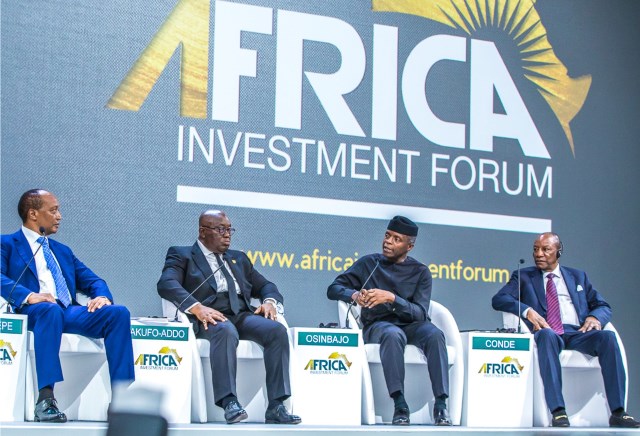
The President, Nations Leadership Institute (NLS) Mr Akogun Oyedepo, says most African countries need revolution of thought to breed future leaders in their countries.
Oyedepo, a lawyer and political scientist made this known on Monday while speaking at the official unveiling of the institute in Ilorin.
Our source reports that the unveiling of the institute was performed by the Speaker, Kwara House of Assembly, Mr Salihu Danladi.
Oyedepo declared that successive leaders in most African countries had nothing to learn from the past apart from corruption, tribalism and nepotism.
“We now have a better governance environment in some African countries where we have in place governments that even jailed members of their ruling elites.
“This, I consider a remarkable feat in the fight against corruption in the system.
“Otherwise, the hitherto norm was to protect the ruling oligarchy by shielding members of the class from justice,” Oyedepo said.
He said it was as a result of the turmoil in political landscape that NLI was born.
“We are of the view that as at today in Africa, there is an acute leadership deficiency,” he added.
According to the NLI president, leadership is exerting special influence within a group, community or even the country to move toward permanent beneficial goals that fulfil the group’s real needs.
“A leader therefore must be one that will use his or her informal power, authority and influence to direct and control other people in the pursuit of common goal.
“Leadership is not greed, selfish ambition, showmanship, nepotism, hat sectionalism, tribalism. Leaders that exhibit all these tendencies in position of authority are mere pretenders and they are not leaders properly so called,” Oyedepo said.
He explained that the institute was born to correct all the misconceptions and wrong perception of leadership in a world heading for disaster.
“What we need in most African countries is revolution of thought; thought that will change our perceptions about true meaning of political power and authority.
“We need body thoughts and actions that will not make our leaders enemies of themselves.
“When leaders embark on primitive accumulation of wealth and throw several people in penury; they jeoperdise their own security.
“If the poor must live, they must do so by visiting violence on the rich (incidences of kidnapping, ritual killings, internet fraud and even violent religious extremism are instructive here).
“Corrupt leaders create their own nemesis as their life style and their selfish belief system create material condition for violence,” Oyedepo added.
He called on African leaders to emulate Lee Kuan Yew of Singapore, who through personal charisma and well informed selfless leadership moved the country from the third world to the first world within a space of 50 years, adding that President Yew achieved the feat without fighting any internal war.
“Therefore, we need not fight wars before many countries in Africa change from the present primitivity to modernity.
“And sometimes war and violence in the attainment of a political power can lead to a new progressive direction or it could also lead to stagnancy and backwardness in all facets of life,” Oyedepo said.
He however commended President Paul Kagame of Rwanda for creating out of from a war torn country, a stable, unified and reconciled country.
“Rwanda has been a success story of a country that moved from violence to posterity, yet the story of South Africa is different.
“From the developing trends in that country, the post-Apartheid South Africa is different from the expected outcome.
“It is not only that the inequalities of the Apartheid years are sustained, the xenophobic attacks on non-South Africans living in the country have put to question years of Mandela’s struggles.
“Perhaps there is the need for another way of social justice in that country or a revolution of thought,” Oyedepo stressed
Oyedepo said NLI was for revolution of thought that would re-direct what he considered as perishing nations.
“There is the need for altruistic leaders that will be honest, bold, knowledgeable and compassionate.
“There is the need for leaders of integrity and character. Leaders that will not promote an ethnic, sectional agenda or a preferred section of their country to be number one in a multi-ethnic society,” he added.
Oyedepo said Nigerians need a country where corruption was no more a norm, where crimes were loathed and leaders that would be nationalistic and patriotic so much that they would know the real needs of the people.
NAN reports that NLI has six schools made up of School of Party Organisation and Campaign Management, School of Legislative Training and Consultancy Service, and School of NGO Training and Operation.
Ohers are the School of Tourism and Hospitality, School of Entrepreneurship and Skill Development, and School of Leadership Values.
The unveiling ceremony was attended by members of Kwara House of Assembly, academics and politicians, while the Deputy Governor of the state, Mr Kayode Alabi, was represented by Alhaji Femi Yusuf. (NAN)



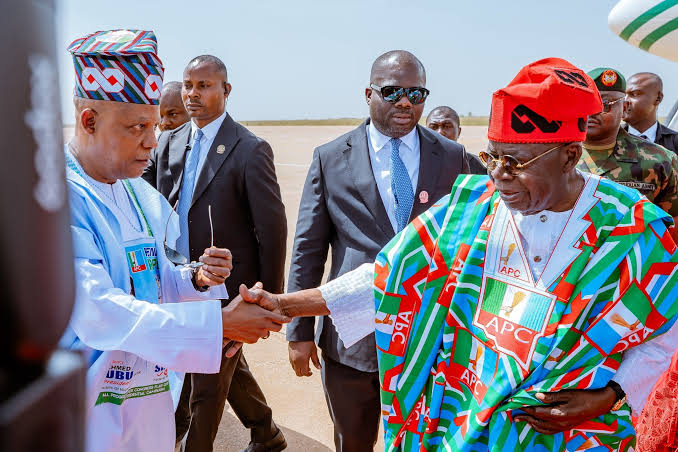
The campaign rally, held at the Kaduna Township Stadium, attracted Vice-President Kashim Shettima, APC governors, party leaders, federal and state lawmakers, political stakeholders and supporters from across the country.
The flag-off marks the beginning of the APC’s drive to secure a second presidential term for President Tinubu, with the party expected to promote its achievements, defend its economic reforms and outline its policy priorities under the proposed Renewed Hope 2.0 agenda.
Kaduna’s selection for the campaign launch underscores the strategic importance of the North-West, a region with a substantial voting population and considerable influence on presidential election outcomes.
The APC faces a significant challenge in Kaduna, where the Peoples Democratic Party’s presidential candidate, Alhaji Atiku Abubakar, defeated President Tinubu in the 2023 election. The rally therefore provides the ruling party an opportunity to strengthen its grassroots structures and regain electoral support in the state.
Addressing supporters, Vice-President Shettima appealed to Northern voters, highlighting President Tinubu’s political relationships with prominent Northern leaders, including Alhaji Abubakar, Mallam Nuhu Ribadu and the late President Muhammadu Buhari.
The Vice-President’s appeal reflects the APC’s determination to consolidate its support in the North as the party intensifies preparations for the presidential contest.
The Renewed Hope 2.0 agenda is expected to feature prominently in the campaign, providing a platform for President Tinubu to explain his administration’s economic policies and outline plans for another term.
However, the President’s record on economic reforms, rising living costs, petrol prices, employment, infrastructure and insecurity is expected to attract considerable scrutiny during the electioneering period.
-
 Education1 day ago
FCE Yola Graduates 3,555 Teachers , Seeks Upgrade to University
-

 Sports1 day ago
Nigerian Trio Target Titles At PFL Africa Finals
-
 Niger Delta1 day ago
Diri Restates Stance On Lagos-Calabar Coastal Highway
-
 Niger Delta1 day ago
C’River, NUJ Pay Tribute To Late Guardian Editor
-

 News1 day ago
NDLEA Recovers Tons Of Illicit Drug Consignments In Nine States
-
 Opinion1 day ago
Checking Voter Apathy In Nigeria’s Electoral Process
-
 Politics1 day ago
2027: DICKSON’S EX-ALLY VOWS TO WORK AGAINST NDC INTEREST IN BAYELSA
-
 Politics1 day ago
2027: GROUP PLEDGES 40,000 SUPPORTERS FOR COALITION CANDIDATES IN RIVERS