
Politics
Obasanjo’s Open Letter To President Buhari

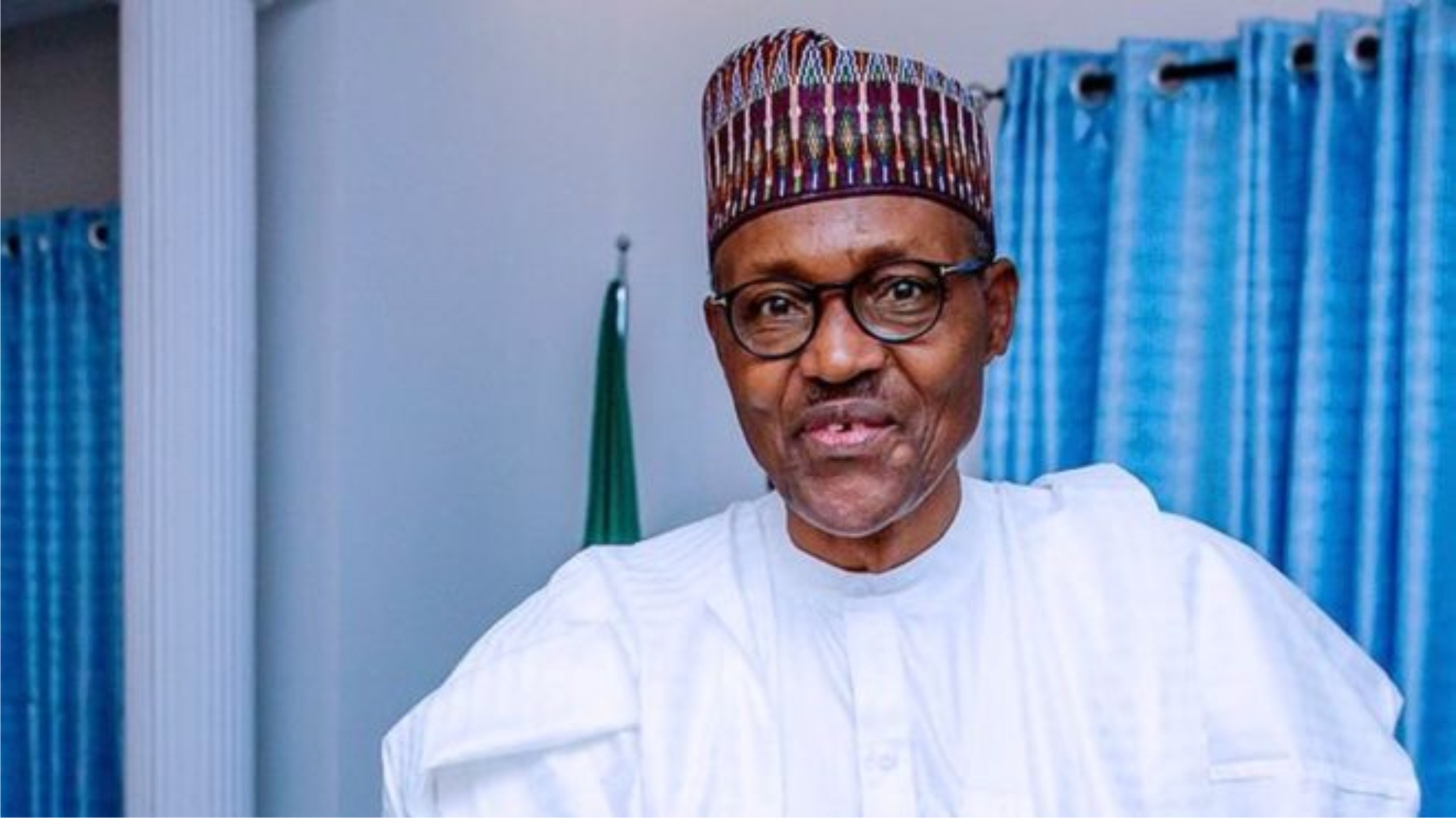
I am constrained to write to you this open letter. I decided to make it an open letter because the issue is very weighty and must be greatly worrisome to all concerned Nigerians and that means all right-thinking Nigerians and those resident in Nigeria. Since the issue is of momentous concern to all well-meaning and all right-thinking Nigerians, it must be of great concern to you, and collective thinking and dialoguing is the best way of finding an appropriate and adequate solution to the problem. The contents of this letter, therefore, should be available to all those who can help in proffering effective solutions for the problem of insecurity in the land.
One of the spinoffs and accelerants is the misinformation and disinformation through the use of fake news. A number of articles, in recent days, have been attributed to me by some people who I believe may be seeking added credence and an attentive audience for their opinions and view-points. As you know very well, I will always boldly own what I say and disown what is put into my mouth. But the issue I am addressing here is very serious; it is the issue of life and death for all of us and for our dear country, Nigeria. This issue can no longer be ignored, treated with nonchalance, swept under the carpet or treated with cuddling glove. The issue is hitting at the foundation of our existence as Nigerians and fast eroding the root of our Nigerian community. I am very much worried and afraid that we are on the precipice and dangerously reaching a tipping point where it may no longer be possible to hold danger at bay. Without being immodest, as a Nigerian who still bears the scar of the Nigerian civil war on my body and with a son who bears the scar of fighting Boko Haram on his body, you can understand, I hope, why I am so concerned. When people are desperate and feel that they cannot have confidence in the ability of government to provide security for their lives and properties, they will take recourse to anything and everything that can guarantee their security individually and collectively.
For over ten years, for four of which you have been the captain of the ship, Boko Haram has menacingly ravaged the land and in spite of government’s claim of victory over Boko Haram, the potency and the activities of Boko Haram, where they are active, remain undiminished, putting lie to government’s claim. The recent explanation of the Chief of Army Staff for non-victory due to lack of commitment and lack of motivation on the part of troops bordering on sabotage speaks for itself. Say what you will, Boko Haram is still a daily issue of insecurity for those who are victimised, killed, maimed, kidnapped, raped, sold into slavery and forced into marriage and for children forcibly recruited into carrying bombs on them to detonate among crowds of people to cause maximum destructions and damage. And Boko Haram will not go away on the basis of sticks alone, carrots must overweigh sticks. How else do you deal with issues such as only about 50% literacy in North-East with over 70% unemployment?
Herdsmen/farmers crises and menace started with government treating the issue with cuddling glove instead of hammer. It has festered and spread. Today, it has developed into banditry, kidnapping, armed robbery and killings all over the country. The unfortunate situation is that the criminality is being perceived as a ‘Fulani’ menace unleashed by Fulani elite in the different parts of the country for a number of reasons but even more, unfortunately, many Nigerians and non-Nigerians who are friends of Nigeria attach vicarious responsibility to you as a Fulani elite and the current captain of the Nigeria ship. Perception may be as potent as reality at times. Whatever may be the grievances of Fulanis, if any, they need to be put out in the open and their grievances, if legitimate, be addressed; and if other ethnic groups have grievances, let them also be brought out in the open and addressed through debate and dialogue.
The main issue, if I may dare say, is poor management or mismanagement of diversity which, on the other hand, is one of our greatest and most important assets. As a result, very onerous cloud is gathering. And rain of destruction, violence, disaster and disunity can only be the outcome. Nothing should be taken for granted, the clock is ticking with the cacophony of dissatisfaction and disaffection everywhere in and outside the country. The Presidency and the Congress in the US have signalled to us to put our house in order. The House of Lords in the UK had debated the Nigerian security situation. We must understand and appreciate the significance, implication and likely consequences of such concerns and deliberations.
No one can stop hate speech, violent agitation and smouldering violent agitation if he fans the embers of hatred, disaffection and violence. It will continue to snowball until it is out of control. A stitch in time saves nine, goes the old wise saying.
With the death of Funke, Chief Fasoranti’s daughter, some sympathetic Nigerian groups are saying “enough is enough”. Prof. Anya, a distinguished Nigerian merit Laureate, has this to say “We can no longer say with certainty that we have a nation”. Niger-Delta leaders, South-Eastern leaders, Middle-Belt leaders and Northern Elders Forum have not remained quiet. Different ordinary Nigerians at home and abroad are calling for different measures to address or ameliorate the situation. All the calls and cries can only continue to be ignored at the expense of Nigerian unity, if not its continued existence.
To be explicit and without equivocation, Mr. President and General, I am deeply worried about four avoidable calamities:
1. abandoning Nigeria into the hands of criminals who are all being suspected, rightly or wrongly, as Fulanis and terrorists of Boko Haram type;
2. spontaneous or planned reprisal attacks against Fulanis which may inadvertently or advertently mushroom into pogrom or Rwanda-type genocide that we did not believe could happen and yet it happened.
3. similar attacks against any other tribe or ethnic group anywhere in the country initiated by rumours, fears, intimidation and revenge capable of leading to pogrom;
4. violent uprising beginning from one section of the country and spreading quickly to other areas and leading to dismemberment of the country.
It happened to Yugoslavia not too long ago. If we do not act now, one or all of these scenarios may happen. We must pray and take effective actions at the same time. The initiative is in the hands of the President of the nation, but he cannot do it alone. In my part of the world, if you are sharpening your cutlass and a mad man comes from behind to take the cutlass from you, you need other people’s assistance to have your cutlass back without being harmed. The mad men with serious criminal intent and terrorism as core value have taken cutlass of security. The need for assistance to regain control is obviously compelling and must be embraced now.
A couple of weeks ago at a public lecture, I had said, among other things, that:
“In all these issues of mobilisation for national unity, stability, security, cooperation, development, growth and progress, there is no consensus. Like in the issue of security, government should open up discussion, debate and dialogue as part of consultation at different levels and the outcome of such deliberations should be collated to form inputs into a national conference to come up with the solution that will effectively deal with the issues and lead to rapid development, growth and progress which will give us a wholesome society and enhanced living standard and livelihood in an inclusive and shared society. It will be a national programme. We need unity of purpose and nationally accepted strategic roadmap that will not change with whims and caprices of any government. It must be owned by the citizens, people’s policy and strategy implemented by the government no matter its colour and leaning.
Some of the groups that I will suggest to be contacted are: traditional rulers, past heads of service (no matter how competent or incompetent they have been and how much they have contributed to the mess we are in), past heads of para-military organisations, private sector, civil society, community leaders particularly in the most affected areas, present and past governors, present and past local government leaders, religious leaders, past Heads of State, past intelligence chiefs, past Heads of Civil Service and relevant current and retired diplomats, members of opposition and any groups that may be deemed relevant.”
The President must be seen to be addressing this issue with utmost seriousness and with maximum dispatch and getting all hands on deck to help. If there is failure, the principal responsibility will be that of the President and no one else. We need cohesion and concentration of effort and maximum force – political, economic, social, psychological and military – to deal successfully with the menace of criminality and terrorism separately and together. Blame game among own forces must be avoided. It is debilitating and only helpful to our adversary. We cannot dither anymore. It is time to confront this threat headlong and in a manner that is holistic, inclusive and purposeful.
For the sake of Nigeria and Nigerians, I pray that God may grant you, as our President, the wisdom, the understanding, the political will and the courage to do what is right when it is right and without fear or favour. May God save, secure, protect and bless Nigeria. May He open to us a window of opportunity that we can still use to prevent the worst happening. As we say in my village, “May God forbid bad thing”.



Prof. Amupitan gave the warning on Saturday, in Port Harcourt, Rivers State, during the South-South Zonal Readiness Assessment and Interactive Staff Engagement organised ahead of the 2027 general elections.
He said insecurity remained a potential challenge to the electoral process but stressed that the Commission would not allow threats against its personnel to undermine its constitutional responsibilities.
“Insecurity may pose a challenge, but our collective constitutional resolve is far stronger. Let me again send a clear message from Port Harcourt: anyone who attempts to threaten, intimidate, or harm our ad-hoc staff, NYSC members, or permanent personnel will be brought to justice under the full weight of the law,” he said.
The INEC Chairman, who was accompanied by National Commissioners, directors and technical aides, disclosed that the South-South engagement was the fifth in a series of zonal assessments, following similar exercises in the South-West, North-West, South-East and North-East.
He explained that his physical presence across the geopolitical zones reflected the Commission’s field-first approach, emphasising that electoral integrity must be established through effective operations at the grassroots.
According to him, the assessment would cover operational preparedness across the 123 Local Government Areas in the six South-South states.
On election security, Prof. Amupitan said INEC had moved away from reactive security arrangements traditionally activated around election day to a proactive, intelligence-driven framework known as the “ICCES Tentacle”.
He explained that the framework was designed to extend inter-agency security coordination from national and state headquarters to local government areas and Registration Area Centres, including remote communities.
He identified three critical pillars of the framework as mapping and mitigating security threats, protecting electoral personnel and infrastructure, and guaranteeing safe access to polling units.
The INEC boss said the security arrangement would provide comprehensive protection for electoral personnel, technological infrastructure, including Bimodal Voter Accreditation System (BVAS) devices and server infrastructure, as well as voters.
He added that the framework was intended to ensure that every polling unit, irrespective of its geographical location or history of security challenges, remained safe and accessible for the exercise of democratic rights.
Prof. Amupitan disclosed that the South-South security architecture comprised approximately 60 major operational formations, headquarters and state commands operating under the Inter-Agency Consultative Committee on Election Security (ICCES).
The network, he said, brings together military, naval, air, police and other security and intelligence agencies across the six states.
“Together, this integrated multi-agency network represents the operational backbone that guarantees intelligence-led protection across every riverine creek, coastal axis, and land-based polling unit in the Niger Delta,” he stated.
Providing an overview of the region’s electoral significance, the INEC Chairman said the South-South had the fourth-largest voting bloc in the country, with 15,823,550 registered voters, representing 15.30 per cent of the national register.
Rivers State alone, he said, accounts for 3,736,434 registered voters spread across the 23 local government areas.

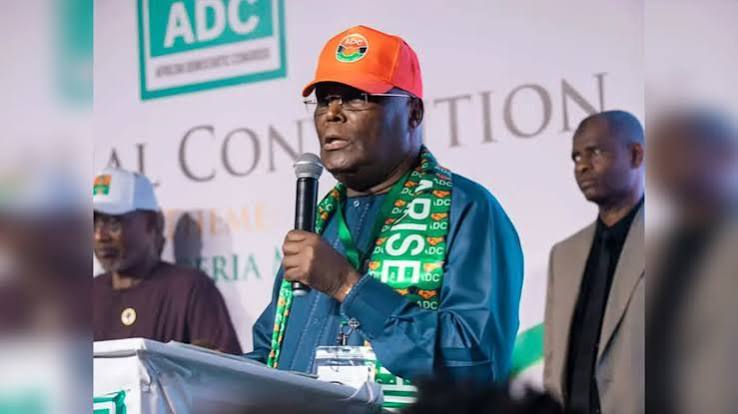
Alhaji Abubakar made the demand following revelations that some INEC registration officers allegedly abused their access to the voter registration system to introduce irregular records into the database.
In a statement issued by his Director of Strategic Communications, Mr Phrank Shaibu, the former vice-president described the development as a serious breach of the Commission’s internal safeguards and raised concerns about the integrity of the electoral process.
He urged INEC to identify the officials implicated in the alleged misconduct and explain what disciplinary or legal measures had been taken against them.
Alhaji Abubakar also called for an independent forensic audit of the preliminary voters’ register to establish the scale of the alleged manipulation, identify affected records and determine how the questionable entries were introduced into the system.
He further insisted that INEC preserve all relevant voter records, image files, system access logs and electronic audit trails to prevent the destruction or alteration of evidence before an independent examination could be conducted.
The former vice-president also demanded that the Commission disclose the identities of companies contracted to produce sensitive election materials ahead of the 2027 polls, arguing that transparency was essential to building public confidence in the electoral process.
INEC’s Director of Information and Communication Technology, Dr Lawrence Bayode, had earlier disclosed during a television interview that some registration officers across the country allegedly used their official login credentials to introduce irregularities into the voters’ database.
Dr Bayode explained that the Commission’s Automated Biometric Identification System helped identify questionable records and establish how some irregularities entered the system.
He, however, clarified that not all suspicious photographs were AI-generated, as some resulted from poor registration procedures.
The development followed public concerns over suspected AI-generated photographs, alleged duplicate entries and other inconsistencies discovered in the preliminary voters’ register published online on October 26, 2026.
INEC has maintained that the published document is a preliminary register and that it is reviewing questionable records ahead of the certification of the final Register of Voters.
The controversy has intensified calls for greater transparency and accountability in the management of the voters’ register as preparations gather momentum for the 2027 general elections.
-
Opinion5 days ago
Ancestorial Worship: My Take (1)
-

 Education2 days ago
PAMO MEDICAL UNIVERSITY -Nullifies Arrest warrant on VC
-
Niger Delta2 days ago
PANDEF Seeks 50% Oil Derivation Allocation Increase
-
Rivers1 day ago
Don Seeks Repositioning Of Tech Education For Dev
-

 Education2 days ago
IAUE MOVES TO END GHOST WORKERS SYNDROME AS 400 NEW NON-TEACHING STAFF UNDERGO MANDATORY ETHICS TRAINING
-

 News2 days ago
Fresh Ebola Scare As NCDC Records Two Cases
-
News2 days ago
Customs Partners EFCC, NDLEA, Others To Tackle Money Laundering, Terrorism Financing
-
 News5 days ago
FG Must Address Nigerians’ Concerns On Reforms -Shettima …Warns Against Misuse of AI, Social Media