Connect with us

Oil & Energy

Residents, Traders Protest Indiscriminate Location Of Gas Stations

Published

on

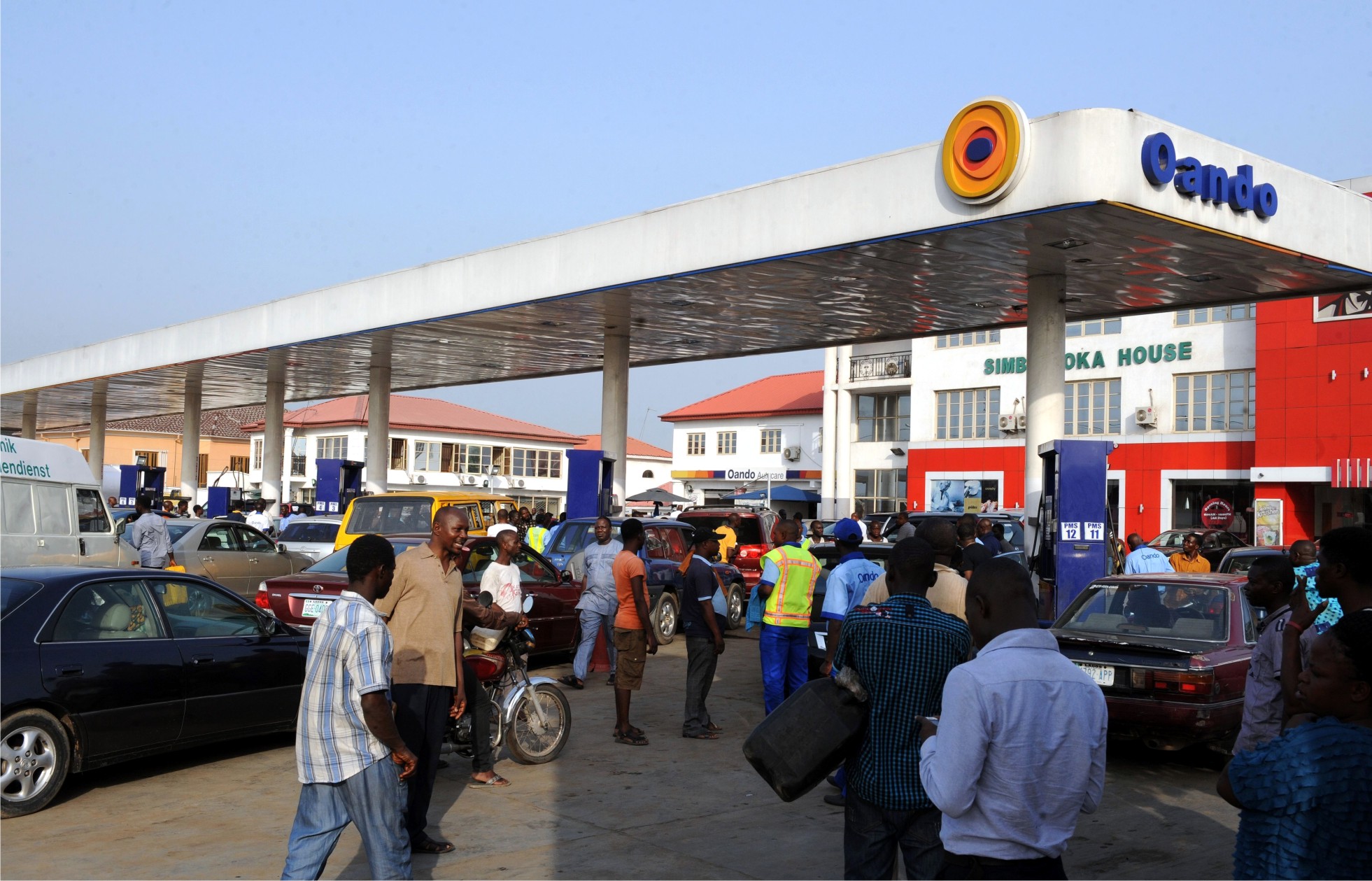
Residents and traders in Akure took to the streets over the weekend to protest what they called indiscriminate location of gas stations in their neighbourhood.
The protesting residents and traders, mainly from Ireakari and Temidire quarters at the popular Roadblock area of Akure, alleged that petrol dealers attempted to erect two more gas stations near an existing one.
They said that the step could lead to fire incident capable of consuming the entire neighbourhood.
According to one of the protesters, Mr Abayomi Ajijola-Ajofe, a youth leader, the protest was triggered by a midnight inferno, which occurred behind the proposed site of a new gas station, 24 hours ago.
“We are protesting because we don’t want any more gas stations in our area, we have one already and that is okay.
“We fear fire incident that could consume our houses if another one is located here. We are concerned about our safety, the one we have already is okay.
“Therefore, we the youths will take unpleasant actions against the dealers of the proposed gas stations if they continue with the construction. We learnt that one government agency has given them licence or permission to operate, we will not take that. They should withdraw the licence now or else, we will make this area unpleasant for them,” Ajijola-Ajofe said.
The chairman of Temidire landlords, Mr Ibrahim Adeuyi, called on the Ondo State Government and the Department of Petroleum Resources (DPR) to withdraw the certificate of allocation of gas stations in the area.
Adeuyi, who noted that a plank market was located behind the proposed gas station, pointed out that locating gas stations in residential areas would be prone to fire incidents.
A trader, Mr Kazeem Jinadu, said residents would resist any attempt by the petrol dealers to induce officials of the DPR or that of the state government to approve such new gas stations at the roadblock axis of the town.
A plank trader among the protesters, Mrs Jumoke Akinsele, said that nobody would be safe again if new gas or filling stations were allowed to be located in the area.
“We, plank sellers here appealed to our baba (father), Governor Oluwarotimi Akeredolu, to stop the location of another gas station beside a filling station and a house that was on fire yesterday.
“Most of us are widows, this is where we get money to feed our children and send them to school, we don’t want fire to consume our markets,” she said.
Another plank seller, Mrs Eunice Akeju, who also spoke with journalists, said it was unacceptable to have three gas stations in such an area.
“We discovered recently that another gas station is about to be located around us here, we are protesting against this. We have a gas station, we also have petrol stations there, and that is why we are saying that we don’t want another one here because of our safety,” Akeju said.
The residents said they had written a petition to the state government and the DPR not to allow another gas station in the area.
Meanwhile, one of the victims of fire incident, Mrs Monisola Adewumi, pleaded with the state government to come to her aid as she took loan to set up her business.
Adewumi, who was crying profusely, appealed to well meaning individuals to assist her and other victims of the inferno.
An eyewitness also told newsmen that the fire which started in the night, gutted five rooms and shops with three big deep freezers, four big generators and other electronic appliances worth millions of naira.
The Tide recalls that last week, the Federal Government, through officials of the DPR, in conjunction with the Nigeria Security and Civil Defence Corps, NSCDC, started clamping down on illegal “roadside dealers” of cooking gas, originally known as Liquefied Petroleum Gas, to prevent fires.


Continue Reading

Oil & Energy

NUPRC Unveils Three-pillar Transformative Vision, Pledges Efficiency, Partnership 

Published

on

The Nigerian Upstream Petroleum Regulatory Commission (NUPRC), has unveiled Its vision for the country’s upstream sector.
This transformative vision rests on three pillars of Production Optimization and Revenue Expansion; Regulatory Predictability and Speed; and Safe, Governed and Sustainable Operations.
The Chief Executive, NUPRC, Mrs Oritsemeyiwa Eyesan, who disclosed this at a stakeholders meeting with members of the Oil Producers Trade Section (OPTS), the Independent Petroleum Producers Group (IPPG), emerging players and other major stakeholders in the oil and gas industry, in Lagos, recently, said this aligns with President Bola Ahmed Tinubu’s renewed hope agenda and his plan to hit a production target of 2mbpd by 2027 and 3mbpd by 2030.
Eyesan plans on increasing production and revenue expansion through the recovery of shut-in volumes with economic value, arresting decline, reducing losses, and accelerating time-to-first oil—without increasing burdens or transaction cost.
This, she said, had already begun by recently “turning on the light” in a long shut-in asset.
Eyesan explained that regulatory predictability and speed can be achieved by running regulation like a service, enforcing rules transparently and making quick time-bound decisions.
The new NUPRC boss plans to strengthen governance, process safety, host community outcomes, and encourage decarbonisation through safe, governed and sustainable operations.
“Going forward, the Commission will be measured on the following key success metrics -Faster, predictable regulatory approvals, higher, more secure and sustainable production, credible licensing and disciplined acreage performance, world-class Health, Safety and Environment (HSE) and process safety outcomes, trusted measurement, transparency, governance and data integrity,” she said.
Eyesan promised that under her leadership, the NUPRC would enhance regulatory efficiency and predictability by publishing Service Level Agreements (SLAs) for all major approvals adding that the timeline to production would be reduced through proactive discussions regarding all necessary approvals, implementation of stage-gate processes, and mutual agreement on timelines with the commission.
She said “Stakeholders are encouraged to submit their projects for consideration. For matured opportunities, please submit your request latest end of Q1, 2026. This would provide a simplified and holistic framework that creates obligations for both operators and the Commission.
“The Commission will launch a digital workflow for permitting, reporting and data submissions. NUPRC will work with the industry to identify capacity gaps and develop tiered intervention in the most critical areas with immediate impact on regulatory efficiency while we harmonize our own internal processes to eliminate conflicting regulatory actions and reduce friction”.
She revealed that the NUPRC’s internal transformation programme through a project Management office is in flight saying “I will provide more details on this in the coming days”.
The NUPRC boss also convened a CCE–Operators Leadership Forum for monthly engagement with participants including all operators of NNPC, OPTS, IPPG, and emerging players adding that it would be focused on approval timelines, production restoration, infrastructure integrity, and gas monetisation and development.
“This is expected to enable the NUPRC to identify systemic bottlenecks and provide greater predictability”, she said .
Eyesan also stressed the need to improve hydrocarbon accounting and measurement by tracking every barrel produced and promptly addressing discrepancies or losses.
On host community, the NUPRC boss encouraged all operators to liaise with the commission “as we plan first engagement with host community leaders to reaffirm commitment to HCDT (Host Community Development Trust) implementation”.
She also said one of her key goals is to ensure 100% to the Petroleum Industry Act within 12 months. This, she said, will be monitored with a dedicated team situated in her office.
“The commission going forward will issue quarterly progress reports. Let therefore bring all high impact shut in fields for approval. “On the Commission’s part, a 90-day program to fast track approvals for near-ready FDPs, well interventions, rig mobilisation and other quick-win opportunities have commenced,” the CCE stated.
Continue Reading

Oil & Energy

Electricity Consumers Laud Aba Power for Exceeding 2025 Meter Rollout Target

Published

on

Nigeria’s newest Electricity Distribution Company (DisCo), Aba Power, has gained consumers’ commendation for the provision of more smart meters than the other 11 Discos in the country combined in 2025.
The Electricity Consumers Association of Nigeria (ECAN), Southeastern Zone, gave the commendation in a statement signed by it’s Chairman, Engr.Joe Ubani, and Secretary, Comrade Chris Okpara, and  issued at the end of its first 2026 Executive Committee meeting, held in Abakaliki, the Ebonyi State capital, at the weekend.
The statement revealed that all 12 DisCos in Nigeria provided 175,302 meters under the Meter Asset Provider (MAP) scheme and 44,104 prepaid meters under the vendor-financed framework as of the third quarter of 2025.
It said “Aba Power alone gave end-users over 100,000 smart meters by the end of last September.This means that Aba Power exceeded its 2025 target of giving its customers 100,000 smart meters by 2025, which many analysts thought was a stretch goal, meaning something that was initially thought to be impossible.
“More importantly, the data shows that Aba Power, despite being Nigeria’s youngest DisCo and the smallest in terms of population and geographical spread as it covers only nine of the 17 local government areas (LGAs) in Abia State, provided more prepaid meters than the other 11 DisCos combined”.
Citing figures sent monthly to NERC by the Head of the metering team at Aba Power, Engr. Alfred Atega, ECAN noted that the other 11 DisCos were carved out of the defunct Power Holding Company of Nigeria (PHCN) and got privatized in November 2013, stating though that the Nigerian government retains 40% shares in each.
The association disclosed that Aba Power was able to provide 122, 464 prepaid meters by the end of last year through vendor-finance arrangements with four Chinese and Nigerian metering firms adding that it supplied 116,883 single-phase meters and 5,581 three-phase meters.
Quoting the Aba Power senior brand and communication manager, Edise Ekong, ECAN explained that this utility metered all 122,464 customers from 27 feeders in and around Aba, Abia State’s economic nerve-centre.
According to the statement, Ekong said “We have actually since this year increased the number of metered customers to 133,000”, stated Ekong, also an engineer, according to ECAN.
“Work is progressing on three feeders, namely, the Omoba Feeder, the Geometric Feeder, and the Polymer Feeder as they have system issues.
“The customers on these feeders will be metered once repair and rehabilitation work on them is concluded”.
Continue Reading

Oil & Energy

Petrol Consumption Hits 63.7m Litres/day, Diesel Dips …….NMDPRA Report

Published

on

The Nigerian Midstream and Downstream Petroleum Regulatory Authority (NMDPRA) has released its December 2025 factsheet report, revealing an upsurge in domestic Premium Motor Spirit (PMS) supply and consumption.
According to the report, PMS supply rose to 74.2 million litres/day in December 2025, up from 71.5 million litres/day in November 2025.
Consumption also increased to 63.7 million litres/day, compared to 52.9 million litres/day in November 2025.
According to the report, the Dangote Refinery demonstrated robust performance, achieving a maximum capacity utilization of 71% in December.
Its PMS domestic supply jumped from 19.47 million litres/day in November 2025 to 32.012 million litres/day in December 2025, against an initial plan of 50 million litres/day.
In contrast, Automotive Gas Oil (Diesel) domestic supply decreased to 17.9 million litres/day in December 2025 from 20.4 million litres/day in November 2025, despite a rise in daily consumption to 16.4 million litres/day from 15.4 million litres/day in November 2025.
It reported that the Liquefied Petroleum Gas (LPG) domestic supply edged up to 5.2 metric tonnes/day in December 2025 from 5.0 metric tonnes/day in November 2025.
The state-owned refineries recorded zero production, with the Port Harcourt Refinery remaining shut down.
However, evacuation of prior AGO produced averaged 0.247 million litres/day. The Warri and Kaduna Refineries also remained shut down.
Modular refineries showed promising performance: Waltersmith (Train 2) completed pre-commissioning, with hydrocarbons introduction slated for January 2026, averaging 63.24% capacity utilization and 0.051 million litres/day AGO supply.
Edo Refinery achieved 85.43% capacity utilization, with 0.052 million litres/day AGO supply. ARADEL averaged 53.89% capacity utilization, with 0.289 million litres/day AGO supply.
Total AGO supply from modular refineries averaged 0.392 million litres/day, with other products including Naphtha, HHK, fuel oil, and MDO.
“Daily consumption benchmarks for 2025:Petrol (PMS): 50 million litres/day,Diesel (AGO): 14 million litres/day.
Aviation Fuel (ATK): 3 million litres/day, Cooking Gas (LPG): 3,900 MT/day
“Actual daily consumption (truck out):Petrol (PMS): 63.7 million litres/day,
Diesel (AGO): 16.4 million litres/day, Aviation Fuel (ATK): 2.7 million litres/day and Cooking Gas (LPG): 4,380 MT/day”, the report stated.
Continue Reading

Trending