
Politics
‘Classical Education, Our American Roots, Make Us Unique’

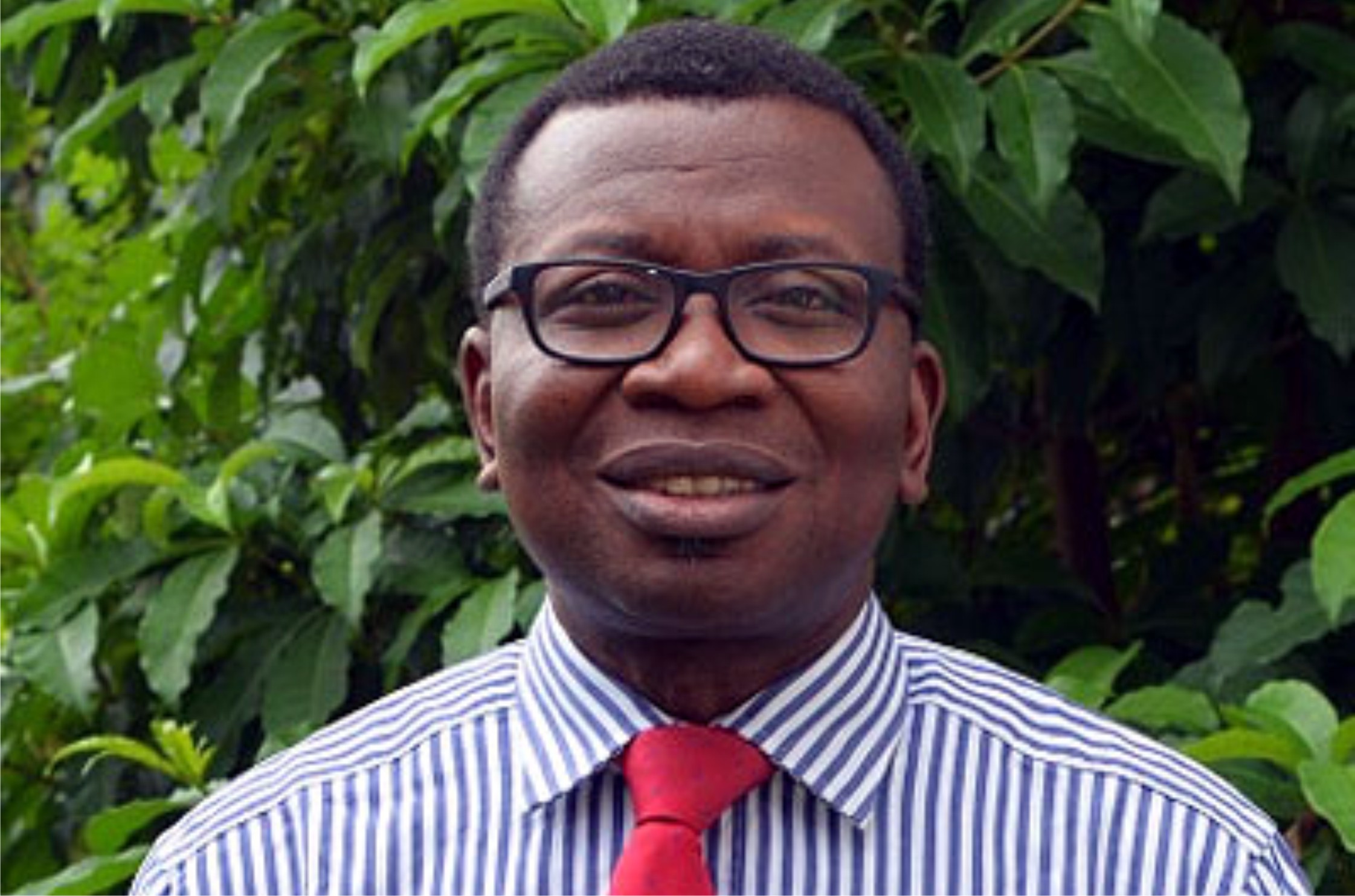
Mr Wole Aderinkomi, Director, Bethel American International School, Fiditi, Oyo State, is in charge of school administration and coordinates all other activities in the school. He speaks about the school and new educational philosophy being introduced into Nigeria’s education sector. Excerpts:
When was Bethel American International School established?
Bethel American International School, Fiditi, Oyo state, is seven years old now, established specifically in 2012. We had our first graduation July 2018, so we are preparing for the second graduation this year by the grace of God in July. So far it’s been an exciting journey.
Is Bethel American International School founded and owned by the American Government ?
The school is owned by the Good Samaritan Society of America. It is a non-profit, non-governmental organisation. The society was established by some Nigerians and Americans with the main purpose to providing the following: (i) health care facilities to the people irrespective of their background, ethnic or race, (ii) education – Bethel
American International School is serving that purpose. (iii) Agric Project – American-Nigerian Palm Oil Production – currently has a large oil palm plantations in various locations within Oyo State. (iv) Processing Co. – water and vitamin drink production. (v) Building & Construction Co – which is engaged in all its construction activities. (v) Vacation Bible School (VBS)- an annual camp for children between the ages of 7-17. VBS was established to help children grow in the knowledge of their Creator. We have volunteers and sponsors from different parts of the world. So, the Bethel American International school is one of the various activities of the Good Samaritan Society of America.
Where we are located here is called the Good Samaritan Society Mission Village, it is the mission village of the society. The society’s headquarters is based in Minnesota, United States of America.
What is unique about the group’s educational innovation being in practice in this school?
The major unique thing about Bethel American International School is the Classical Christian model that we run here. By this, I mean we teach three main subjects that are not being taught in other schools. (i) We teach Latin, you know that over 50 percent of English Language vocabularies come from Latin. So, if students have a good understanding of Latin, there is no way such students will not do well in English Language and any other language that might be of interest to learn. (ii) We teach logic. If you have a good understanding of language, you should be able to think also. Logic helps you to think deeply and to be able to reason well. (iii) The last stage of our classical model is what we call Rhetoric. In rhetoric, if you can think very well you should be able to communicate and marshal your points and convince people.
When these children grow up, they won’t just engage in shallow discussions or arguments but think deeply, reason and argue persuasively. These are three major subjects that we teach our students that give us an edge and make us a classical school in addition to meeting the local and international requirements.
We prepare students for local examinations like WAEC, NECO, JAMB. These enable those parents education to find a space in their homeland. We also prepare students for international exams, whether PSAT, SAT, IGCSE among others. Those are the new things we’re bringing into the table that make us different while we are very conscious of the place of our children in the world. In addition we place premium on discipline, morals and ethical values. We train our children to have strength of character, so that
when they leave, we know that they’ve developed necessary skills and discipline to be able to stand tall wherever they are.
We have an exchange programme with some schools in the United States. We also have relationships with some universities like Bethel University, Minnesota, USA, Fort Hays State University, Kansas, we’re in discussions with some other reputable universities in the US to facilitate admissions, faculty training, etc. Learning outside of the classroom enables us to take our students on an educational excursions to various places of interest in and outside of the country such as Educational excursion to the United States, Language Immersion programs to some French speaking countries, etc. During the excursion, our students attend classes on the in order to learn new things and also to evaluate the difference between our own system and other countries.
With all these qualities that you have enumerated, do you think that taking students on transfers could still guarantee sustenance of these virtues in your school?
We usually take transfer students but such transferred students must meet certain criteria that the set by our school. We would like to know why the student is moving from where he or she was coming from, we would also want to see the previous school records, where it is available, we can ask for reference from those schools. We welcome students from different parts of the country, and even outside the country, but we want to be sure of the background of the intending students. This is just to check the character of transfer students so as to know more about the student, but we do welcome transfer students.
Do you structure the education in line with American model or Nigerian model?
We structure and style is a blend of both Nigerian and American curricula. The rest is just in nomenclature. We run a six year program (3 years in junior school and 3years in high school). So it is in line with the current Nigeria structure.
Do you run primary and secondary school together here?
No, we only run junior (JS1-3) and high school (SS1-3) We don’t have primary school yet, maybe in future. The school is full boarding, no day student.
And members of staff?
Most of our staff members lives on campus so they are available at any time including weekends. Once the teachers are available, students are ready to learn. Classes hold anytime of the day when there is reason for it. Once you’re here in this kind of environment, the only thing you need to do is to just learn and engage in some other extra curricular activities to make you a completed student.
In the nearest future, where do you see these students and possibly is the school targeting a vacuum for them to fill in the society?
Here at BethelAIS, we are raising change agents. We definitely cannot continue like this in Nigeria. We’re raising children that will have sense of responsibility and duty of care, children that will impact the society positively. We are persuaded that any child that passes through this school will be Daniel of their generation. Children that will not compromise or corrupt themselves even in the face of adversities. Even if such a child would be the only voice in the midst of multitude. Such will know that they might be in the minority when it come to standing for righteousness and integrity. We do not fail to drum it to their hearing every day the reason why they’re apart and why they’re in BethelAIS. We teach them to obey God and the law of the land, we teach them to take care of the environment, and we teach them to accept correction when they’re wrong. He who hates correction is stupid so says the Bible.
What is the assurance that the teachings and whatsoever you instil in these children will not take away the Nigerian in them and make them think it’s better to be an American on their own soil?
Of course not. Our educational system is not taking anything away from them, apart from mixing Nigerian and American curricula, we ensure that they learn and acquire necessary knowledge about their environment. Most of our staff members are Nigerians and are being trained on what to do in a way to meet the school requirement. Bethel American International School is a technological driven school, all the teachers have their devices (iPads), our classrooms are fitted with projectors and there is 24 hours internet service. So, if you’re taking a class and you need to explain things to the children, all you need is to just go on your device, google and project it on the board for the children. You don’t need to be explaining things and you subject them to imagine it, just function with your device. The children of nowadays learn faster with pictures more than reading.
With the expanding difference between private schools and public schools, how much did you think it would cost the government to close the gap?
Let me borrow a quote from Mother Theresa, she said “if each of us will sweep our doorstep, the whole world will clean”. The issue with Nigerian educational system has to do with leadership, if every educational leader will take responsibility for students’ success and achievement in their own respective school, honestly, it won’t take much time. The focus is on the educational leaders, what are they doing? What are you delivering? How are you helping a child to grow? Our focus is every child that comes here, we take them as if this were to be our child, how do I want to see him/her tomorrow? That is the focus for me and every members of staff. The reason is that there are no bad students, you only have students that the teachers or school gave up on. If you are able to follow them through, if you’re able to nurture them, if you’re able to encourage them with the word of God, if you’re able to let them know the benefits in doing things in right way, they will do it.
All our teachers are mentors. Every student in this school is assigned to one mentor or the other. We have a mentoring day that the students will sit with their mentors, they will talk to them, they will ask questions about what is going on in their homes. In most cases, you might have a brilliant student that is not doing well in the class, the fault might not be in school, it might be from home. So, you inquire on what they are experiencing at home, their friends, etc, from the feedback we then come up with solutions to help the student.
Our policy is that no child should be left behind and no matter how challenging you think your situation might be, we still believe that there is something that you’re good at and we want to identify that thing and help you build on it very well so that it becomes yours strength. From that your strength, you can overcome other weaknesses.
How many students do you have on your roll, or do you have a specific number you look forward to admit yearly?
Well, because we are growing school and we don’t want to be overwhelmed by our growth, so we have benchmark every year that we set. Like, this year we are not admitting more a certain number, because if you bite more than you can chew, it becomes a problem. So we want to take the numbers that we know that we have facilities to train. What we do is to look at the ratio of our students to the teacher. Our standard is maximum of 20-25 students to a teacher. We want to make sure that at least, one teacher should be able to effectively coordinate the activities of 20-25 students. So, we try as much as possible to make sure that we stick to the ratio as the benchmark.
You know as some are leaving, many are coming in, then we go back and check the ratio again. This will also enable the teachers to have quality time and class periods to take per week without stretching them beyond their capacity. Because once they are overstretched their productivity will be low.
At the moment, what’s the population of the students?
In all, we have about 100 students and for the next session, we are not taking more than 60 students. Right now, we are nearing admitting that figure already.



The Independent National Electoral Commission (INEC) has extended the deadline for political parties to submit the list of candidates for the 2027 governorship and state Houses of Assembly elections from Saturday, August 8, to Tuesday, August 11, 2026.
The commission announced the extension in a statement issued on Saturday and signed by the National Commissioner and Chairman of its Information and Voter Education Committee, Mohammed Haruna.
According to INEC, the decision followed appeals by political parties for additional time to complete the submission process through the dedicated online portal.
“The submission window, which according to the revised Timetable and Schedule of Activities for the General Election was originally scheduled to close on Saturday, 8th August, 2026, has been extended to Tuesday, 11th August, 2026,” the commission said.
In a a related development, INEC announced the suspension of PVC collection in Osun State ahead of the August 15 governorship election.
The commission said voters who applied for replacement of lost, damaged or defaced Permanent Voter Cards would have until midnight on Sunday, August 9, to print downloadable copies of their cards.
The electoral body explained that the deadline was necessary to enable it compile data on downloaded PVCs and produce final statistics on the total number of cards collected ahead of the election.
INEC said PVC collection in Osun commenced at the Registration Area level from July 22 to 28, 2026, but was extended to July 31 following complaints about large crowds and difficulties experienced by voters at collection centres.
The exercise subsequently moved to the local government level and ran from August 1 to 7.
The commission also disclosed that replacement downloadable PVCs had been made available to voters in Odo-Otin and Ife Central Local Government Areas following the theft of cards during attacks on the two collection centres.
It stressed that the stolen cards could not be used to vote.
INEC reassured Osun residents of its preparedness for the August 15 governorship election.
“The commission reiterates that the stolen cards cannot be used to vote.
“INEC reassures the people of Osun State of its readiness to conduct a free, fair, credible and inclusive governorship election on 15th August, 2026,” the statement said.
The commission said the deadline, initially set for Saturday, 8 August, has been extended to Tuesday, 11 August 2026, following appeals from political parties for more time.
INEC also announced that the window for voters who applied to replace lost, damaged or defaced PVCs to download their replacement cards will close at midnight on Sunday, 9 August.
The move is to enable the commission compile final PVC collection figures ahead of the 15 August Osun governorship election.
INEC said replacement downloadable PVCs have also been provided to affected voters in Odo-Otin and Ife Central Local Government Areas after hoodlums carted away cards from two collection centres, stressing that the stolen cards cannot be used to vote.
The commission reaffirmed its readiness to conduct a free, fair, credible and inclusive election in Osun State.
Gov. Kefas made the remarks over the weekend at the Federal Medical Centre (FMC), Jalingo, during the flag-off of the second phase of the Renewed Hope Medical Outreach in Taraba State, organised as part of activities marking Prof. Yilwatda’s 58th birthday.
The governor commended Prof. Yilwatda for choosing to mark his birthday by providing medical care to people in need.
“What Professor Nentawe did is a powerful demonstration of what leadership should be,” Gov. Kefas said.
He assured that his administration would continue to support initiatives that complement government efforts to improve healthcare delivery and the wellbeing of residents.
Speaking at the event, Prof. Yilwatda called on Nigerian leaders to embrace the culture of giving and use their positions to touch the lives of the less privileged.
He said his decision to celebrate his 58th birthday in Taraba State was deliberate and informed by the needs of underserved communities, particularly people who face difficulties accessing healthcare because of distance and financial constraints.
According to him, the intervention followed a needs assessment and was extended across the three senatorial districts of the state.
He said the exercise commenced on August 3 at Takum General Hospital and covered the Federal University Teaching Hospital, Wukari; First Referral Hospital, Sunkani, Ardo-Kola Local Government Area; General Hospital, Bali; General Hospital, Gembu; and FMC Jalingo.
Prof. Yilwatda said the intervention provided medical services to thousands of beneficiaries, including people who required surgical procedures.
He said sustainable national development could only be achieved when strong institutions placed Nigerians at the centre of development.
“Leadership is about service,” he said, urging political and public leaders to make giving back to society an important part of their responsibilities.
He reaffirmed his commitment to serving Nigeria and its people, saying his personal vision was to make every day of his life useful to humanity.
“Every day that I live, the vision is: let it be useful to humanity,” he said.
The Taraba State Commissioner for Health, Dr. Bordiya Buma, commended the initiative, saying it was consistent with the Renewed Hope agenda and efforts to strengthen healthcare delivery in the state.
Dr Buma said the second phase followed the successful completion of the first phase, which was conducted simultaneously in six local government areas, with two LGAs selected from each of the three senatorial districts.
According to him, more than 10,000 patients were attended to during the first phase, including people with medical and surgical conditions.
He disclosed that 327 general surgeries, 71 eye surgeries and 575 dental procedures were carried out during the exercise.
The commissioner expressed appreciation to President Bola Tinubu for the Renewed Hope Medical Outreach and thanked Prof. Yilwatda for supporting the initiative and choosing Taraba State as a beneficiary.
The Minister of Health and Social Welfare, Prof. Muhammad Ali Pate, also commended Prof. Yilwatda for choosing Taraba State to mark his 58th birthday through a medical outreach.
Prof. Pate said making healthcare the centrepiece of the birthday celebration was significant because health affects everyone.
-

 News3 days ago
RSG Targets Nine Million Residents in Mosquito Net Distribution Campaign
-

 Oil & Energy3 days ago
Aiyedatiwa Signs New Electricity Bill
-

 Maritime3 days ago
Marine Minister Commends President Tinubu On NPERA Bill Assent
-

 Oil & Energy3 days ago
NLNG Commissions Research And Innovation Centre In RSU
-

 News3 days ago
KenPoly Holds Eight Convocations, August 29
-

 News3 days ago
RSG Begins Another Phase of Projects Commissioning Today
-

 News3 days ago
RMAFC Completes Revenue Sharing Review, Proposes New Pay
-

 Maritime3 days ago
NAGAFF Petitions IGP Over Alleged Maritime Police Harassment