
News
APC, PDP Govs Conspired To Seize Rivers -Wike …Inaugurates Audit Panel On LG Accounts


Rivers State Governor, Chief Nyesom Wike yesterday alleged that the All Progressives Congress and some governors of Peoples Democratic Party (PDP) joined forces to take over the state.
However, the governor said his re-election was as a result of God’s miraculous intervention in the face of internal and external conspiracy to truncate the will of Rivers people on March 9.
He made the remarks at a thanksgiving service held at the Yakubu Gowon Stadium, Port Harcourt to mark his electoral victory, noting that God rescued Rivers and its people from internal and external conspiracy.
Among others, the thanksgiving service was attended by former Rivers State Governor, Chief Peter Odili; the PDP National Chairman, Prince Uche Secondus, Senator Mao Ohuabunwa and the Presiding Pastor of Salvation Ministries, Pastor David Ibiyeomie.
At the service, the governor alleged that some governors of the Peoples Democratic Party (PDP) worked with the opposition to ensure that the PDP was cheated out of her victory in Rivers State.
He noted that the fight “was not just with the opposition. It was also within our party. When we lost the election in Ekiti State, one of our leaders in the South-West said that Fayose is finished and the next person is Wike.
“Some governors within the party joined forces with the opposition against the State. But then, the will of God prevailed. I was not bothered by what the opposition did, but what some of our party members did was worrisome.
“Some persons working with us in the state betrayed us. They felt there was no way that we would make it. They became agents of the opposition. But God’s intervention rescued Rivers and its people.”
Wike commended the clergy and Rivers women for standing by him and the PDP all through the electioneering, noting that their support ensured that the PDP emerged victorious.
The governor noted that the women of the state “indeed showed so much concern. Some of them were ready to die because of our election. I do not know how to thank them.
“For the first time, I saw women like Aba Women Riot, coming out to say no and we will not agree. Let me assure you that I will not disappoint the Christian community in Rivers State,” he said.
Wike assured the people of Rivers that he would work like a first term governor, delivering on his pledges and that his performance will not be affected by the second term syndrome.
He reiterated that he would remain committed to the olive branch that he extended to the opposition in the State. He said that it was done to promote peace and not out of fear of political fight.
He said that the state government would not abandon the families of courageous Rivers people who died in defence of democracy, praising the PDP Governorship Election Collation Agent, Dr Ferry Gberegbe who was allegedly murdered by the Federal Special Anti-Robbery Squad for defending democracy.
Wike singled out his wife for praise on the positive roles she has played in sustaining his family.
Former Rivers State Governor, Dr Peter Odili said without God’s intervention, the people of Rivers would not be on ground for this thanksgiving.
He called on Rivers elders “to unite and work for the restoration of peace in the state. Power comes from God. Hence, all leaders should support Wike to move the state forward.
“Power comes from God. Therefore, we must all stand behind our leader and governor. Enough is enough. It is time to work for the growth of Rivers State,” the former governor said.
Also at the service, Secondus said the states of the Niger Delta were under siege by the authorities during the elections.
He said that it was God that delivered Rivers State, noting that God confounded the army commanders and secular authorities to ensure the victory of Wike.
“It was written in Abuja. They issued several press statements. Security agencies and generals stood, but who can beat the Army of the Lord. They planned to take Rivers State by Force.
“In their plans, they excluded God from their plans. It was the power of God that delivered Governor Wike. When the Army Commanders took over, God intervened,” Secondus said.
He, therefore, urged President Muhammadu Buhari to involve the 36 Governors and other relevant stakeholders in any strategy aimed at tackling the worsening security situation in the country.
The PDP chairman explained that the security problems are overwhelming the federal government because it’s detached from the people through its isolationist system of governance.
He lamented that the federal government has lost focus and idea of how to handle the security challenges, saying Buhari “cannot isolate the people he governs and expects necessary cooperation and support needed to tackle issues like security.
“That is why they must try to carry the state governors along if they hope to decisively tackle the security challenges. They were in Abuja playing God sending military saying it will never happen. But they forgot that nobody can surmount the army of God.”
He commended the people of Rivers state for standing up in defence of democracy pointing out that the supreme sacrifice of deaths and other stress they were subjected to during the election cannot be in vain.
Ohuabunwa, currently representing Abia North Senatorial District, urged all PDP senators to work with Wike at all times. He said that they will continue to give him unflinching support to deliver on his mandate.
In a sermon, Ibiyeomie said an attitude of thanksgiving provides a platform for development, saying God deserved gratitude for the blessings He bestows on the State.
The cleric, therefore, prayed for peace to be restored in Rivers State through the direct control of God.
Meanwhile, the Rivers State Governor, Chief Nyesom Wike has approved the setting up of a “committee to investigate and audit the financial transactions of the 23 local government councils from May, 2018 to May, 2019.”
The seven-man committee has the state Deputy Governor, Dr Ipalibo Harry Banigo as chairman; with Dr Zaccheus Adango, Barrister Isaac Kamalu, Mrs Bunmi Akaakar, Prof Kaniye Ebeku, and Mrs Inime Aguma as members while the Permanent Secretary, Ministry of Information and Communications, Pastor Paulinus Nsirim would serve as secretary.
A statement by the Special Assistant to the Governor on Electronic Media, Simeon Nwakaudu, indicated that the committee would be inaugurated by the governor on Tuesday, 28th May, 2019 by 11am at the Executive Council Chambers of the Government House, Port Harcourt.
The statement further directed the affected members of the committee to be seated at the chambers by 10:30am.
The Tide learnt that the setting up of the committee has triggered panic and anxiety among top officers of the 23 local government councils, particularly the elected and appointed officers.



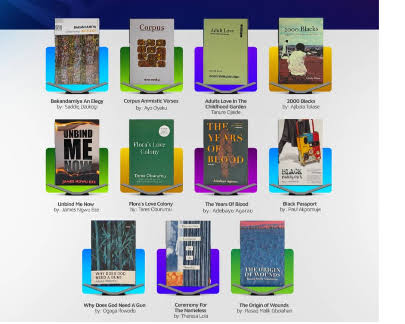
Eleven outstanding poetry collections are now in the race for the $100,000 Nigeria Prize for Literature, arguably Africa’s biggest and most prestigious literary prize.
The 11 collections were selected from a total of 223 entries received for this year’s competition.
Chairman of the Advisory Board for the Prize, Prof. Akachi Adimora-Ezeigbo, who announced the longlist, said the emergence of the 11 collections marks a significant milestone in this year’s competition and reflects the exceptional quality, creativity and diversity of contemporary Nigerian poetry.
According to her, the longlisted titles, arranged in alphabetical order, are: Adult Love by Tanure Ojaide; Bakandimiya by Saddiq Dzukogi; Black Passport by Paul Akpomuje; 2000 Blacks by Ajibola Tolase; Ceremony For The Nameless by Theresa Lola; Corpus: Animistic Verses by Ayo Oyeku; and Floral’s Love Colony by Tares Oburumu.
Other successful entries are, The Origin of Wounds by Malik Gbolahan; The Years of Blood by Adebayo Agarau; Unbind Me Now by James Ugwu Eze; and Why Does God Need a Gun by Ogaga Ifowodo.
Prof. Adimora-Ezeigbo described the announcement as an important stage in the 2026 edition of the prize.
She noted that the collections demonstrate the remarkable capacity of poetry to illuminate human experience through thoughtful reflection, cultural memory and artistic expression.
According to her, the works revisit history while interrogating dominant historical narratives and exposing the forces that shape collective identities and social relations.
She stated that despite their varied emphases, the books share a commitment to exploring the endurance of individuals and communities in the face of violence, oppression and social fragmentation.
On style and language, Prof. Adimora-Ezeigbo said the books display an impressive diversity of poetic techniques marked by lyrical intensity, symbolic depth and artistic innovation.
“Many employ densely poetic, allegorical, and elegiac modes that invite multiple layers of interpretation, while others draw extensively on folklore, oral traditions, and contemporary realities to create a compelling fusion of past and present. Their language is generally fluid, evocative, and aesthetically refined, relying on vivid imagery, emotional resonance, and intellectual sophistication to communicate complex ideas. These works demonstrate how poetic language can illuminate social realities; challenge established perspectives and give voice to both individual and collective experiences.
“The next stage will demand a closer reading of each work, with attention to language, form, originality and lasting literary value,” she stated.
The Board chairman commended the judges for their painstaking work and reaffirmed the Advisory Board’s commitment to a credible process, literary excellence and the promotion of a strong reading culture.
With the announcement of the 11-title longlist, the competition now moves to the next phase, with a shortlist of three expected in August and the winner to be announced in October.
Sponsored by the Nigeria Liquefied Natural Gas (NLNG), The Nigeria Prize for Literature carries a cash award of $100,000 for the author of the winning book.
Now in its 22nd year, the prize rotates annually across four genres – prose fiction, poetry, drama and children’s literature – with the 2026 edition devoted to poetry.
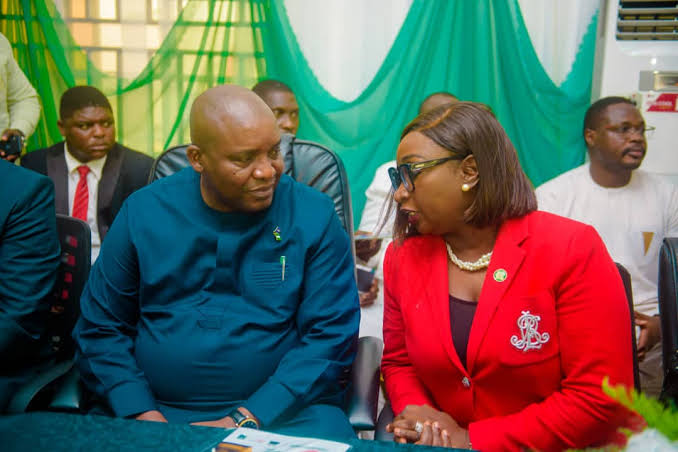
The Rivers State Government has applauded the Nigerian Medical Association (NMA), Rivers State Branch, for its steadfast dedication to advancing medical excellence and contributing significantly to healthcare development in the state and the country at large.
Speaking at the 2026 Annual General Meeting and Scientific Conference of the NMA held in Port Harcourt last Wednesday, the Secretary to the State Government, Dr. Dagogo Wokoma, described the association as a vital partner in the quest to improve healthcare delivery and outcomes.
Wokoma, according to a statement by the Head of Information and Public Relations Unit in his office, Julian Masi, noted that the NMA’s sustained advocacy for professional standards and quality medical practice has continued to impact positively on the healthcare sector and national development.
He said the conference theme, “Medical Practice in Nigeria: The Past, the Present and Quo Vadis,” offers a valuable platform for stakeholders to evaluate the progress made in the health sector, examine present realities, and develop practical solutions for future challenges.
He paid tribute to Nigerian doctors and other healthcare professionals for their sacrifices and unwavering commitment to service despite the challenges confronting the sector.
“We deeply appreciate the immense sacrifices made daily by Nigerian doctors and other healthcare professionals. In the face of numerous challenges, they continue to demonstrate exceptional resilience, professionalism, dedication and commitment to saving lives. Their contributions remain critical to national development,” he said.
In her keynote address, the immediate past Commissioner for Health, Prof. Adaeze C. Oreh, called on participants to critically examine the current state of medical practice in Nigeria and explore innovative approaches that will address emerging healthcare challenges in line with the conference theme.
Earlier, the Chairman of the Nigerian Medical Association, Rivers State Branch, Dr. (Prof.) Annabel Ureh Oparaodu, expressed gratitude to Governor Siminialayi Fubara for his continued support for the medical profession in Rivers State.
She urged delegates to maximize the opportunities provided by the conference through active engagement and knowledge sharing.
Highlights of the event included the commissioning of the Nigerian Medical Association Doctors’ Lodge and the NMA Water Factory, initiatives designed to improve members’ welfare and promote sustainability within the association.
The National Population Commission (NPC) has announced the commencement of a nationwide digital registration of births and deaths in Rivers State under the Electronic Civil Registration and Vital Statistics, E-CRVS, System, using the new VitalReg platform.
Federal Commissioner, NPC, Rivers State, Prof. Itotenaan Henry Ogiri, announced said this recently during a press briefing in his Port Harcourt office.
Ogiri said the full digital registration of births and deaths took effect nationwide on July 1, 2026, and is now being implemented across Rivers’ 23 Local Government Areas as part of the Commission’s rollout in the 36 States of the Federation and the FCT.
“Today’s announcement marks a significant milestone in Nigeria’s journey towards a modern, technology-driven civil registration system,
“It reflects the Commission’s commitment to ensuring that every birth and every death occurring in our country is accurately captured through a secure, efficient and digitally enabled platform,” he said.
The Federal Commissioner noted that while Nigeria records an estimated five million births annually, coverage remains low.
“Birth registration currently stands at about 57%, while death registration is below 20% nationwide.
“These gaps underscore the urgent need for a more efficient and accessible registration system,” he stated.
To address this, he said the commission has established 4,011 functional registration centres across the 774 LGAs, with plans to expand to about 8,000 centres nationwide.
According to him, in Rivers State, structures have been put in place and personnel are working with health facilities, LGAs and community stakeholders to ensure accessibility.
Ogiri explained that the VitalReg platform offers faster registration, 24-hour access, automated data validation for accuracy, reduced paperwork and waiting time, enhanced record security, and a stronger national database to support other government information systems.
He added that the platform would integrate seamlessly with Nigeria’s national digital identity framework, including the National Identity Management Commission (NIMC) to improve coordination and service delivery.
“The initiative builds on the launch of the E-CRVS System and the inauguration of the National Coordination Committee on CRVS by President Bola Ahmed Tinubu on November 8, 2023.
“It also aligns with the Federal Government’s Renewed Hope Agenda on digital transformation and transparency,” he said.
The NPC Commissioner stressed that success depends on partnerships and public participation and listed key collaborators as ALGON, NIMC, UNICEF and Barnksforte Technologies Limited.
“In Rivers State, we will continue to work closely with the State Government, Local Government Councils, healthcare providers, traditional institutions, religious organisations, development partners, civil society organisations and the media to ensure that no child or family is left behind,” he said.
The commissioner called on parents, guardians, healthcare workers and community leaders to ensure prompt registration of every birth and death, noting that a complete civil registration system strengthens governance and supports sustainable development.
He reassured the public that birth registration and birth notification services remain highly subsidised, though specialised administrative services such as record modification, certificate reissuance, attestations and verification will attract approved charges to support system sustainability.
Ogiri appreciated the Rivers State Government for its support, and commended NPC staff in the State, as well as development partners, LGAs, healthcare institutions, traditional and religious leaders for advancing civil registration in the state.
He also urged the media to continue to amplify the message “that every birth counts, every death matters and every Nigerian deserves a legal identity.”
“As we commence this new chapter, let us all work together to build a civil registration system that is modern, inclusive and trusted by all,” Ogiri concluded.