
Business
Operators Task CBN, NDIC On Ailing Banks

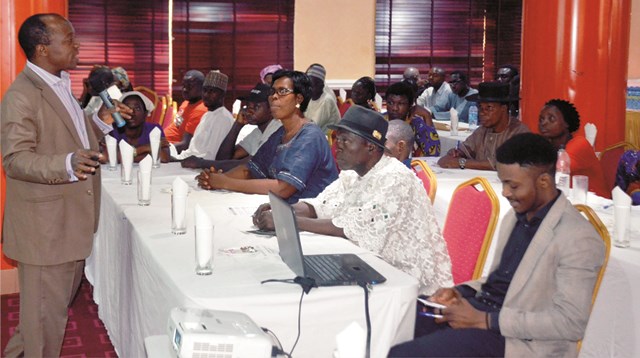
Capital market operators have urged the Central Bank of Nigeria (CBN) and the Nigeria Deposit Insurance Corporation (NDIC) to map out strategies to manage ailing banks rather than outright liquidation.
They stated this in separate interviews while reacting to the liquidation of Fortis Microfinance Bank Plc.
The operators said that CBN and NDIC should rather manage the affairs of any distressed financial outfit instead of resorting to liquidation in the interest of depositors, shareholders and the economy in general.
NDIC recently announced the official liquidation of Fortis Microfinance Bank and its branches nationwide.
Managing Director, APT Securities and Funds, Malam Garba Kurfi, said that operators expected the apex bank and NDIC to manage the affairs of Fortis Microfinance instead of liquidation.
Kurfi said that management of the bank’s affairs would have been better for the depositors and existing banks that had business relationship with Fortis.
“We expect the CBN and NDIC will rather manage the affairs of the bank before liquidation as that could have been better for the depositor.
“Liquidation will affect the existing banks that have business relationship with Fortis Microfinance Bank which can extend to other banks,” he said.
Kurfi said that appointing a new management and resale of the bank would have been better for entire economy rather than liquidation.
He, however, commended the Nigerian Stock Exchange (NSE) for being proactive in suspending the bank from trading in November due to non compliance with post listing requirements.
National Coordinator, Progressive Shareholders Association of Nigeria (PSAN), Mr Boniface Okezie, said that shareholders remained the victims without any compensation.
Okezie said that regulators must device other means of solving the problems in the financial industry instead of aggravating it through liquidation.
He said that regulators should take over the bank through bail out by appointing a new management to oversee its affairs instead of resorting to liquidation.
He said that microfinance banks must be adequately protected at all times by NDIC and CBN, noting that not much had been done.
Publicity Secretary, Independent Shareholders Association of Nigeria (ISAN), Mr Moses Igbrude, said that it was unfortunate that shareholders were subjected to suffering without due compensation.
Igbrude said that uncertainties and losses in the banking sector in the past few years were immeasurable.
“The anxiety and the question in mind of shareholders now is, which bank is next to go down?.
“Nobody knows which bank is stronger and that is what Fortis Microfinance Bank has shown”, he said.
Igbrude called on the shareholders to be cautious and careful when investing in banks stocks to avoid burning their fingers.
He said that government and regulators should bear in mind the effect and reputational risk sudden take over of distressed banks was having on the stock market and the economy.
Our correspondent reports that Fortis Microfinance Bank was licensed by CBN in 2007 and listed on NSE as the first private sector led Microfinance Bank in 2012.
The shares was suspended from trading on the floor of the NSE for failing to adhere to standard corporate governance and extant post-listing requirements that made it mandatory for quoted companies to submit their financial statements within stipulated timelines.
It had also been grappling with protracted governance crisis and internal breakdown of management controls which ultimately led to the resignation of its interim Managing Director, Mrs Bunmi Lawson; now the eventual collapse of the bank.


-

 Featured2 days ago
WASSCE: RSG Distributes Science Materials To Secondary Schools
-
News2 days ago
Xenophobic Attacks: Nigerian Lives More Important Than Foreign Investment – Oshiomhole
-
Rivers2 days ago
MBA Forex Trial Adjourn To June 3, Amid Bereavement … As Court Declines Cost Application
-
News2 days ago
ActionAid Demands Probe Of Govs Using Public Funds For Campaign
-
Aviation2 days ago
Passengers Stranded As Delta Airline From Atlanta Route Back Eight Hours After
-
Business2 days ago
Customs Impound N2.35bn Cocaine, 15 Trailers of Rice
-
Politics2 days ago
2027: Bayelsa Senator Gets Critical Endorsement For Second Term
-

 Politics2 days ago
INEC Sets Rivers South-East Senatorial By-Election For June 20