
News
Don’t Allow Your Ambition Consume Nigeria -Jonathan …Jonathan Saved Nigeria From Political Crisis -Abdulsalami

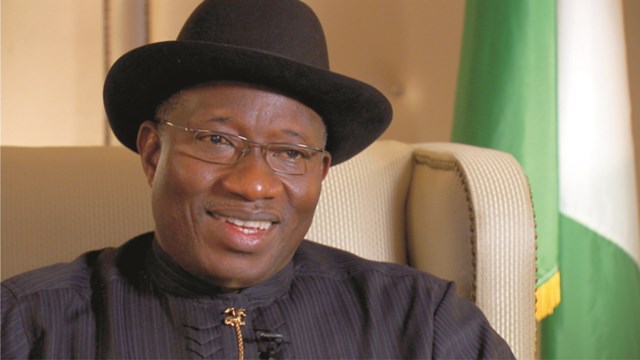
As the nation heads into general elections, former President, Dr Goodluck Jonathan has admonished political office seekers to be wary of their actions in order not to set the country ablaze.
Speaking at the opening session of a one-day peace conference with the theme, “Peaceful Elections and National Development,” organised by the Goodluck Jonathan Foundation (GJF) in Abuja yesterday, he observed that no meaningful progress can be achieved without peace.
While reminding the politicians that the entire world is watching, he said everything must be done to ensure that the elections are violence-free.
The former president was of the view that there will be serious repercussions for West Africa if the Nigerian elections do not go well
He, therefore, called on the Independent National Electoral Commission (INEC) and security agencies to be professional in the discharge of their responsibilities before, during and after the elections.
Jonathan said: “For democracy to endure and be productive on the continent, African politicians and other stakeholders must realize that true heroes of leadership are not those whose desperation to impose their will endanger society, but those who have the humility to subjugate their personal ambitions to the collective interest of their nations.
“Our political leaders must realize that the greatest and most enduring legacy to leave behind is that of peace and development.
“We are convinced that anyone, either in government or outside government, who truly loves Nigeria, will not want to play the role of the villain by lending his support to any action that instigates crises.”
According to the former president: “There is no gainsaying that when politicians resort to desperate measures in the bid to occupy important political positions, they run the risk of plunging their countries into serious crises that often lead to loss of lives, degradation of values as well as the destruction of private and public assets.”
He admonished African leaders to remember that failure to make the democratic process peaceful will make it difficult to attain growth.
He further said: “We know that good governance is the fertile ground upon which peace and sustainable economic growth are planted. In this regard, it is important to point out that in a democracy, periodic, credible and peaceful elections are the necessary gateways to improved governance and people-oriented development.”
“It is on record that despite the marked improvement on the regularity and number of democratic nations, election-related violence has continued to be experienced in many African nations, often to the detriment of peaceful co-existence, economic growth and sustainable development.”
“Although it is reassuring to note that democracy is being consolidated on the continent, with elections now conducted routinely by many African nations, it is however difficult to express such optimism on the peaceful nature of the electoral processes.”
Speaking as the chairman of the occasion, former Military Head of State, General Abdulsalami Abubakar (rtd) similarly advised tasked the nation’s leaders to imbibe the lessons of 2015.”
He recalled that while the enemies of Nigeria predicted doom; they were disappointed when the country conducted a transparent election that ushered in the incumbent government of President Muhammadu Buhari.
He said: “We all recall the tension in Nigeria during the 2015 elections where the doomsayers were predicting the balkanization of Nigeria but thank God through the action of Nigerians and the then President, Goodluck Jonathan; they were proved wrong because the gentleman kept his word that his Presidency was not worth the blood of any Nigerian and he graciously conceded defeat at that election.”
The Chairman, National Peace Commission said effort must be made to make the 2019 polls the most peaceful in the history of the nation.
The Special Guest of Honour and former President of Liberia, Professor Amos Sawyer in a veiled response to the threat issued against foreign observers by Governor Nasir el-Rufai of Kaduna state, said Nigerians must not see the presence of world leaders in the country as an intrusion.
He noted that Nigeria as Africa’s most populous nation means a whole lot to the West African sub-region.
Sawyer stayed: “Nigeria’s role in West Africa makes the election in this country is very critical. So elections in Nigeria cannot be seen solely as a Nigeria’s affairs,” he said, adding that the trouble currently rattling the nation’s judiciary should be resolved in accordance with the provisions of the law.”
“Nigerian judiciary has been in the news for quite some time now in a manner that is of deep concern. It is our hope that the issues involved are resolved in a manner that will leave the integrity of the judiciary intact.”
The Bishop of the Catholic Diocese of Sokoto, Matthew Hassan Kukah, who was the lead speaker at the occasion, stressed the need for inter-tribal bond among Nigerians.
He said the existence of such affinity will engender unity in the country. Kukah spoke on “Electoral Violence in Nigeria: Causes, Consequences and Options for Prevention.”
The clergyman who observed that Nigeria has refused to confront the realities of the state times, said killings no longer make meaning to people so long as those killed are not from their ethnic nationalities.
The occasion attracted many prominent personalities including members of the Diplomatic Corps.
Meanwhile, A former Nigerian Military Head of State, Abdulsalami Abubakar, said yesterday that by accepting defeat in 2015, ex-Nigerian President, Dr Goodluck Jonathan, saved the country from political crises.
Abubakar spoke at a one-day peace conference organised by the Goodluck Jonathan Foundation, with the theme “Peaceful Elections and National Development.”
Dignitaries at the event include Hassan Kukah, Catholic Bishop of Sokoto Diocese and Convener National Peace Committee of Nigeria; Al-Hassan Conteh, Liberia Ambassador to the Federal Republic of Nigeria as well as Fidele Sarassoro, Chief of Staff to the President of Cote d’Ivoire.
Mr Abubakar, who was the chairman of the conference, said Mr Jonathan kept to his words that his ambition was not worth the blood of any Nigerian.
He called on key political actors in Nigeria, particularly those seeking elective positions, to do everything possible to ensure peace in the forthcoming general elections because “Nigeria is not a stranger to electoral violence.”
He urged all stakeholders to ensure a peaceful nation because, “Without peace, there would be no nation, and without a nation, there would be no election.”
“The period of election in the country is often tension-soaked because of the competition involved. Nigeria is not a stranger to electoral violence. Jonathan kept his word that his presidency is not worth the blood of any Nigerian.”
“He graciously conceded defeat. He saved the country from falling into political crisis. Nigerians and indeed, the world are praying that the election would be peaceful. Without peace, there would be no nation, and without a nation, there would be no election,” he said.
Speaking earlier at the event, Mr Jonathan spoke about the need for unity in Nigeria.
“We experienced the civil war that ended since 1970. But up to date, the feelings are still in even children who were not born at that time because of the stories they get told. And that is why we must do everything to avoid conflict because it is always difficult to erase these feelings,” the former president said.
Dr Jonathan, before the announcement of the final results of the 2015 general presidential elections, in a move that shocked many political pundits, conceded defeat to the current president, Muhamadu Buhari, after a keenly contested poll.
That was the first time an incumbent would be losing the top seat (and conceding victory) to an opposition party in Nigeria.
Dr Jonathan has been celebrated globally for his action, which many believe saved the country from political turmoil.


The Rivers State chapter of the All Progressives Congress Christian Leaders Forum has expressed strong confidence in the capacity of All Progressives Congress (All Progressives Congress) candidates in the state to deliver effective governance if elected into office in the coming elections.
The State Coordinator of the forum, Archbishop Lucky Aroh, made this known during a breakfast and thanksgiving meeting held in Port Harcourt, where leaders gathered to pray for the stability of the party and the safety of its candidates ahead of the 2027 general elections.According to him, the meeting was convened to seek divine intervention for peace, unity, and security among APC candidates across Rivers State.
“Today we are praying for APC stability in Rivers State and the security of our candidates that have been elected to contest the 2027 elections. It is a breakfast meeting,” Aroh said.
He further expressed optimism that the party’s candidates would not disappoint the people if entrusted with leadership responsibilities.
“They will not fail when elected into office. We are here as fathers of the land to let them know, and I must tell you the truth that these are the authentic people that will do well in Rivers State,” he added.
Speaking earlier, the National Chairman of the forum, Professor Olanrewaju Abraham, commended the Rivers State chapter for organizing the programme, noting that the national body of the forum believes strongly in the power of prayer.
He stated that political leadership provides an opportunity to influence society positively, including advancing moral and spiritual values, while expressing confidence that APC candidates at all levels would emerge victorious in the upcoming elections.
Also speaking, the Rivers State Women Leader of the APC, Hon. Darling Amadi, praised the forum for its commitment to prayers for peace, stability, and the protection of party candidates.
Represented by the Deputy Women Leader of the party in the state, she described the initiative as commendable and urged other political and support groups within the party to emulate the gesture in promoting unity and stability.
By: John Bibor, Menebe Emmanuel & Fortune Paibi
Prominent businessman and philanthropist, Elder Anthony Osagwe-Ogo, was celebrated in grand style as he marked his 70th birthday anniversary, with distinguished Nigerians, business leaders, and golf enthusiasts gathering to honour his remarkable contributions to society.
The colourful celebration took place at the Port Harcourt Golf Club, where friends, associates, and well-wishers converged to pay tribute to the revered elder statesman.
Chairman of the occasion, High Chief (Dr.) Ikenna Okafor, described the celebrant as a detribalised Nigerian whose generosity, humility, and commitment to humanity have earned him admiration across different communities and backgrounds.
According to Dr. Okafor, Pa Osagwe-Ogo’s impact on society and the development of his community remains unparalleled. He noted that members of the golfing community are proud to be associated with a father figure who consistently promotes the welfare and well-being of those around him.
He further stated that the history and growth of the Port Harcourt Golf Club cannot be told without acknowledging the significant role played by the celebrant, whose wisdom, encouragement, and leadership have helped sustain the club over the years.
“We are here to celebrate a man who has impacted humanity positively, a peace-loving individual and an epitome of hope for the younger generation. We pray to emulate his virtues. Today, we celebrate a bridge-builder, a trailblazer, and an iconic leader whose life continues to inspire many,” Dr. Okafor said.
He expressed delight at the large turnout of guests from various walks of life, describing it as a testament to the respect and affection Pa Osagwe-Ogo commands within and beyond Rivers State.
In his response, the celebrant, Pa Anthony Osagwe-Ogo, expressed profound gratitude to God for preserving his life and granting him the privilege of attaining the milestone age of 70.
He also thanked members of the Port Harcourt Golf Club, family members, friends, and associates for identifying with him during the celebration and for their unwavering support over the years.
The event featured the cutting of the birthday cake, presentation of awards to deserving members of the club, goodwill messages, and moments of celebration among guests.
The ceremony was attended by notable personalities from the business community, the golfing fraternity, and other sectors, all of whom joined in celebrating the life and legacy of the respected elder statesman.
Rivers State Governor, Sir Siminalayi Fubara, and the Permanent Secretary of the Rivers State Ministry of Information and Communications, Dr. Honour Kuru Sirawoo, have been honoured with awards of recognition in connection with the 2026 Democracy Day celebrations held in Port Harcourt.
The awards, which formed part of activities marking Nigeria’s Democracy Day on June 12, were formally presented on Tuesday at the Ministry of Information and Communications in Port Harcourt.
Presenting the awards was Hon. Abdul Hameed Oladipupo Alli, popularly known as “Mr. Nigeria,” Publisher of Asiwaju Trumpet Magazine and Achievers World International Magazine.
Governor Fubara was recognised for his efforts in sustaining peace, stability, and a conducive political atmospherJohn Bibor / Menebe Emmanuel / Fortune Paibie in Rivers State. The organisers noted that his administration has fostered harmony and strengthened civic participation across the state.
Dr. Sirawoo, on the other hand, was honoured for his exemplary administrative leadership and significant contributions to effective information management within the Ministry of Information and Communications.
Representing Dr. Sirawoo at the presentation ceremony, Dr. Christian Davies received the award on his behalf and expressed gratitude for the recognition. He described the honour as a reflection of Dr. Sirawoo’s unwavering commitment to professionalism, excellence, and dedicated public service.
Dr. Davies assured the organisers that the award would be formally conveyed to the Permanent Secretary.
The event also featured the presentation of commemorative publications highlighting major governance and civic milestones in Rivers State, including Easter celebrations, Workers’ Day activities, the Governor’s third anniversary in office, and Democracy Day programmes.
Organisers of the awards commended the Rivers State administration for what they described as sustained peace, political stability, and improved civic engagement, noting that these achievements have contributed significantly to the state’s continued development.
By: Jessica Sambol
-

 Niger Delta2 days ago
Warri Airport Manager Disputes Air Peace Bird Strike Claim
-

 News2 days ago
Nigeria Won’t Surrender Any Territory To Criminals -Tinubu
-

 News2 days ago
FG Begins Trial Of Over 600 Terrorism Suspects
-

 Rivers2 days ago
79th IAUE Inaugural Lecture: Prof Anero Advoctes Tuition-Free Education For Children
-

 Politics2 days ago
Parties’ Deregistration: How Justice Lifu Overruled Appeal Court Justices
-

 News2 days ago
Rivers Judges Commence Annual Vacation, July 20
-

 Politics2 days ago
ADC: Okonkwo Rejects Amaechi As Presidential Running Mate, Withdraws Support
-

 Politics2 days ago
2027: Tinubu’s Projects Give APC Edge In South East – Yilwatda