
News
Southern Leaders, Buhari Disagree Over Nigeria’s Unity

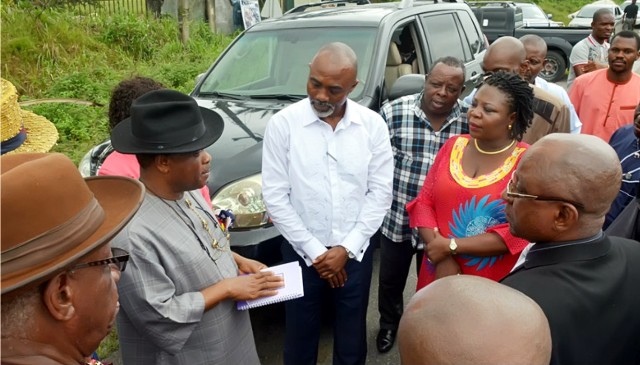
The Southern Leaders Forum has faulted President Muhammadu Buhari’s statement that issues of national discourse should be taken to the National Assembly and the National Council of State.
Buhari made the statement, among others, in his Monday broadcast after 104-day medical trip to the United Kingdom.
However, the forum stated that while it did not dispute the legality of the National Assembly and NCS, the bodies were not the appropriate bodies to superintend the discourse on the social contract that could bind Nigeria together.
The forum, represented by Chiefs Edwin Clark, Albert Horsefall (South-South); Chief John Nwodo, Prof. Joe Irukwu (South-East) and Chief Reuben Fasoranti, Chief Ayo Adebanjo (South-West), spoke in Lagos, last Wednesday, at a press conference titled, ‘Only Restructuring will Ensure the Unity, Peace and Development of Nigeria.’
Others at the event included Prof. Banji Akintoye, Tony Uranta, National Coordinator of the Oodua Peoples’ Congress, Chief Gani Adams; Supo Shonibare, Guy Ikokwu, Tony Nyiam and Prof. Walter Ofonagoro.
“While the composition of the National Assembly is clearly jigged and indeed one of the bodies to be restructured, the National Council of State is not open to Nigerians. If any discourse is to take place on constitutional changes within the democratic framework, Mr. President is the one who has the responsibility to initiate the process,” the SLF said.
The forum added that the attempt to treat hate speech as terrorism was a veiled threat to bare fangs and criminalising dissenting opinions in the national discourse.
The group accused the president of deploying the imagery of the late Chief Emeka Ojukwu in his broadcast to play down the demand for the renegotiation of the structure of Nigeria by saying they both agreed in Daura in 2003 that the country must remain one and united.
The SLF said, “The meeting between the two of them could not have been a Sovereign National Conference whose decisions cannot be reviewed. We agree with their conclusion that we should remain united, but that does not foreclose discussions of the terms and conditions of the union.
“The claim that Nigeria’s unity is settled and not negotiable is not tenable. Every country is in a daily dialogue and there is nothing finally settled in this life. Stable nations are still fine-tuning details of the architecture of their existence. How much more Nigeria that has yet to attain nationhood? If we are settled as a nation, we will not be dealing with the many crises of nation-building that are afflicting us today, which have made it extremely difficult to squarely face issues of growth and development.
“The British negotiated to put the various ethnic groups together. All the constitutional conferences held in the years before independence were negotiations. When the North walked out of the parliament in 1953 after Chief Anthony Enahoro moved the motion for independence, it took negotiations to bring them back into the union after an eight-point agenda, which was mainly about confederations.”
It pointed out that the one sentence in the President’s speech that every Nigerian could live anywhere without let or hindrance, if meant to address the quit notice by Arewa youth to the Igbo living in the North, was too short to check the unwarranted threat.
The group further said it was miffed by Buhari’s description of the attacks by deadly Fulani herdsmen on defenceless farmers as conflict between two quarrelling groups.
“To present the various onslaughts on farmers by the herdsmen as ‘two fighting,’ would portray the President as taking sides with the aggressive Meyitti Allah. While we do not hold the administration responsible for all agitations in Nigeria due to the crises of unitary constitution, there are clearly many errors of commission and omission that have accentuated the strong self-determination feelings across the country which only restructuring can tame,” the group said.
According to the leaders, some of the errors made by the current administration are lopsided recruitment and appointment into federal institutions, breach of the Federal Character principle, early retirement of mostly Southern senior officers from the Armed Forces and other security services and concentration of most heads of Armed Forces and other national security agencies in a section of the country.
The group identified others to include the appointment of the legal adviser of Meyitti Allah as the secretary of the Federal Character Commission, indifference to the deadly activities of herdsmen and the President’s declaration that he could not treat those who gave him five per cent votes equally with those who gave him 97 per cent votes in the 2015 presidential election.
The southern elders noted that having spent most part of their lives fighting for the country’s unity based on justice, fairness and equity, it was necessary to urge the president to realise the mess the country was in and exhibit statesmanship and not ethnic, religious, regional and political partisanship in renegotiating Nigeria along federal lines to tackle separatist feelings and agitations.
Similarly, some Niger Delta agitators, last Wednesday, faulted the position taken by President Buhari on the calls for restructuring.
They said without restructuring as being suggested by prominent Nigerians, the nation would not remain united.
The agitators’ position was contained in a statement made available to journalists in Abuja.
Signatories to the statement included John Duku (Niger Delta Watchdogs); Ekpo Ekpo (Niger Delta Volunteers); Osarolor Nedam (Niger Delta Warriors); Henry Okon Etete (Niger Delta Peoples Fighters); Asukwo Henshaw (Bakassi Freedom Fighters); Ibinabo Horsfall (Niger Delta Movement for Justice); Duke Emmanson (Niger Delta Fighters Network) and Inibeghe Adams (Niger Delta Freedom Mandate).
“We wish to thank all well-meaning Nigerians who threw their weight behind restructuring and disassociated themselves from the President’s position on restructuring.
“We want to remind him (the President) that without restructuring, there would be no united Nigeria,” the agitators said.
They said they were surprised that the President said the unity of Nigeria was not negotiable when “indeed he did not believe in other Nigerians apart from those from the North.”
They insisted that Northerners and the Yoruba must leave their region before October 1.
“The Coalition of Arewa youth quit notice to Igbo was in collaboration with the Northern elders, the President’s cabal and top security chiefs from the North. They were properly consulted by the youths.
“Therefore, we maintain our previous position that Northerners and Yorubas should vacate the Niger Delta region before October 1, 2017, until justice is done,” the statement read.
The agitators called on Buhari to reshuffle the Federal Executive Council, as well as appointments into boards of agencies and parastatals in a manner that would reflect federal character.
They also called for the return of oil blocks to natives of the region and the immediate relocation of the oil companies’ headquarters to their operational base, as well as relocation of the Nigerian National Petroleum Corporation’s headquarters to the Niger Delta region.
They claimed that over 75 per cent of the oil blocks in the Niger Delta region were owned by Northerners, 20 per cent by Yoruba, three per cent by Igbo and the remaining two per cent by people of the region.
“We can no longer tolerate this injustice, marginalisation and being treated as slaves in our own land. We, therefore, demand that the Northerners should return 70 per cent and Yorubas 15 per cent of their oil blocks to the Niger Delta people for justice to prevail,” they said.
They claimed that they had put all machinery in place to protect Niger Delta from external forces, adding that they would not hesitate to bring the Nigerian economy to a standstill.



The Katsina State Police Command has cautioned applicants for the upcoming police constable recruitment examination to adhere strictly to laid-down procedures and avoid falling victim to fraudsters.
The Commissioner of Police, Ali Umar-Fage, issued the warning in a statement released on Sunday by the command’s spokesperson, Abubakar Sadiq-Aliyu.
He disclosed that the nationwide examination is scheduled to take place from April 28 to April 30 in Katsina State and that the exercise will be conducted at Hassan Usman Katsina Polytechnic along Dutsin-Ma Road.
According to the commissioner, only candidates who successfully passed the recently concluded physical and credential screening will be eligible to sit for the examination.
Applicants have been directed to log on to the official recruitment portal from April 24 to print their coloured examination invitation slips, which contain details of their specific date, time, and venue.
Mr Umar-Fage stated that candidates must present a valid National Identification Number (NIN) slip issued by the National Identity Management Commission (NIMC), bearing a clear photograph, alongside their printed coloured invitation slip and a writing pen at the examination centre.
He added that the approved dress code for the exercise is a white T-shirt, white shorts, and white canvas shoes.
Reiterating that the recruitment process is entirely free of charge, the police chief warned applicants to be wary of individuals or groups seeking to extort money under the guise of facilitating recruitment.

The Rivers State Traditional Rulers Council has pledged to take decisive action to curb the rising cases of gender-based violence (GBV) across the state, in partnership with ActionAid and other relevant organisations.
The commitment was made during an event organised by ActionAid in collaboration with the Rivers State Ministry of Social Welfare and Rehabilitation in Port Harcourt. The programme, titled “Convening of Traditional Rulers for GBV Prevention,” carried the theme, “From Custodians to Champions: Redefining Culture for GBV Prevention and Community Protection.”
Speaking on behalf of the council, the Okilomuibe of Engenni Kingdom, HRM King Moore MacLean Ubuo, said traditional rulers are determined to move beyond mere responses to incidents of violence by adopting proactive strategies.
“We will establish and empower community-led structures, including traditional cabinets and women leaders, to identify early warning signs of violence and intervene before harm occurs,” he said.
King Ubuo added that traditional institutions are committed to enforcing the Violence Against Persons Prohibition (VAPP) Law within their domains, stressing that the longstanding culture of silence surrounding abuse would no longer be tolerated.
“We will ensure that our subjects understand their rights and that the law is respected as the ultimate standard for justice,” he added.
Also speaking, the Rivers State Government emphasised that tackling GBV requires more than policies and enforcement, noting that a transformation in societal attitudes is essential.
Permanent Secretary of the Ministry of Social Welfare and Rehabilitation, Mrs. Lauretta Dimkpa, who was represented by the Director of Child Welfare, Mrs. Fumilayo Adebayo, highlighted the critical role of traditional rulers in shaping societal values.
“As traditional rulers, your voices command respect, your decisions influence behaviour, and your institutions are trusted platforms for conflict resolution and social guidance,” she said.
She urged them to promote cultural norms that uphold dignity, respect, and equality, while also encouraging victims to report abuse without fear of stigma.
In his remarks, the Country Director of ActionAid Nigeria, Dr. Andrew Mamedu, described the gathering as timely, noting that GBV remains a widespread violation of human rights and a major obstacle to sustainable development.
Represented by Dr. Adedeji Ademefun, he cited data showing that 31 per cent of Nigerian women aged 15 to 49 have experienced physical violence, with many cases going unreported due to fear, stigma, and cultural silence.
“National surveys indicate that nearly three in ten women have experienced physical or sexual violence, underscoring the scale and urgency of this crisis,” he said.
Earlier, the Coordinator of the Rivers State Multi-Stakeholders Action Committee, Barrister Evelyn Asimie Membere, described GBV as one of the most persistent human rights violations, cutting across age, class, and geography.
According to her, traditional rulers are uniquely positioned to influence behaviour and drive meaningful change at the grassroots level.
“In many of our communities, your voice carries more weight than any policy or legislation,” she said.
The event brought together key stakeholders committed to strengthening community-based approaches to preventing GBV and protecting vulnerable groups across Rivers State.

A socio-political group, the Tinubu Youths Vanguard Organisation (TYVO), Rivers State chapter, has called on Nigerians to support the re-election of President Bola Ahmed Tinubu in 2027, citing the need to consolidate ongoing economic and infrastructural reforms.
The State Coordinator of the group, Hon. Emmanuel Fubara, made the appeal over the weekend in Port Harcourt on the sidelines of a meeting of the Southern Traditional Rulers Council.
He said granting the Tinubu administration a second term would enable it to fully implement its transformation agenda, particularly under the Renewed Hope initiative.
“It is important that the Tinubu administration is given another opportunity to complete its economic and developmental programmes for the benefit of the country,” he stated.
Fubara disclosed that the group is preparing for its formal inauguration in the State, along with the unveiling of its local government, ward and unit structures, including student and market women wings.
According to him, the organization will be fully mobilised to promote the policies and achievements of the current administration, with a focus on issue-based campaigns aimed at restoring public confidence in the nation’s economy.
He noted that the administration has made strides in revamping the economy and executing key infrastructure projects, including the ongoing coastal road development in parts of the country.
Fubara expressed confidence that the group’s campaign strategies would resonate with Nigerians, adding that opposition voices would be effectively countered through sustained grassroots engagement.
He also urged members of the group to intensify sensitisation efforts across communities, highlighting what he described as visible results of the administration’s reforms.
On security challenges facing the country, Fubara said the situation was inherited from previous administrations but maintained that the current government is taking decisive steps to address it.
He expressed optimism that ongoing efforts, including international collaborations, would significantly curb insecurity in the near future.
When asked whether the group would also campaign for Rivers State Governor, Sir Siminalayi Fubara, the TYVO coordinator said the organisation would take a position at the appropriate time, noting that directives from the All Progressives Congress (APC) would guide its activities.
-

 Sports18 hours ago
NFF mourns ex-Eagles striker Eneramo
-

 Maritime21 hours ago
CILT Nigeria Seeks Anti- graft Agency Collaboration
-

 Sports18 hours ago
W/Cup Qualifier: Flamingos In Impressive Opener
-

 Sports18 hours ago
European Giants Circle For Osimhen
-

 Sports18 hours ago
Tennis Event Boosts Grassroots Development Push
-
Sports18 hours ago
Four Private Clubs Gain Promotion To NPFL
-

 Sports18 hours ago
Financial Issues Stall Chelle’s Eagles Contract Talks
-

 Sports19 hours ago
Nigerian Player Closes In On Historic UEFA Honour