
Sports
Sports: A Harvest Of Achievements

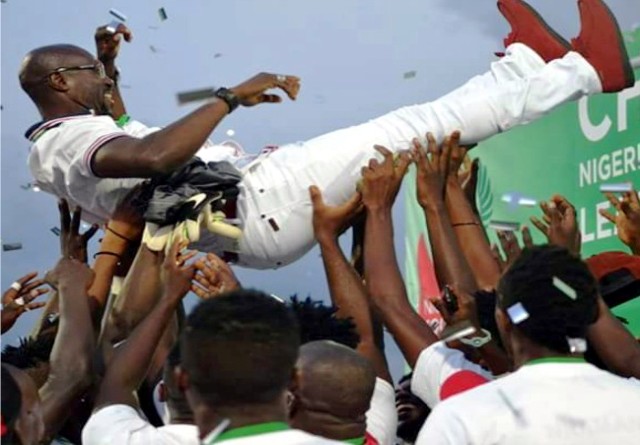
Since creation, about 50 years ago, the geographical expression called Rivers State has been one of the major players in the Sports industry in Nigeria. From the production of sportsmen and women, who grew to win laurels, national and international glory for the country, and the development of Sports infrastructure, the state has been central.
Therefore, at times like this, when scoresheets are collated, and past strides are analysed, counting the leaps and honour roll call of Rivers State in sports 50 years into its creation would not be out of place.
Looking back and, chronicling the giant strides of the state and her people would however not be a simple or an easy task.
Having been created on the 27th of May 1967, the State shaped its identity not only on the economic and social front but in sports as well. From the outset, the state played frontal roles in shaping the course of sports development and talent contribution to the country. From the provision of sports facilities that at different times were put at the disposal of the country, and thrusting forward athletes to fly the nation’s flag at international competitions, Rivers State has been among the top five. It is this vision, one of those of the founding fathers of the state that has kept the state in the front burner of players in the country’s sports industry. It has made Port Harcourt a destination of choice for national sports events.
From its creation to present day, the State can boast of facilities that have placed it at the top of proud owners of modern sports facilities that can be described as world class in Nigeria.
Since the days of the famous Recreation Stadium, to the impressive but uncompleted Liberation Stadium of Old, and the Civic Centre, later Christened the Alfred Diete-Spiff Sports Complex, Rivers State has improved infrastructurally.
Today, the State can celebrate the impressive and ultra modern Adokiye Amiesimaka Sports Complex which was started during the administration of the immediate past governor, Rotimi Amaechi and completed by the incumbent, Chief Nyesom Wike.
It is an imposing infrastructure that boasts of space and facilities for almost all kinds of sports, from athletics, ball games, racquet sports, aquatic sports, indoor halls, medical and administrative centres, a mainbowl and multiple training pitches to other facilities.
The complex has become an addition to the facilities put in place by the first Military Administrator of the state and now a respected elder statesman, King Alfred Diete-Spiff.
Due to the presence of these facilities and additional basketball, volleyball, handball and tennis facilities in the Town axis of Port Harcourt, the state capital has become a consummate centre for wearing and expression of talent and home for many national and international Sports events.
In fact, the state has at different times come to the rescue of Nigeria, particularly, as her teams tried to qualify for international competitions. The state under Sir Peter Odili played pivotal role in ensuring that the national football team, the Super Eagles qualified for the 2002 World Cup in Korea/Japan.
Governor Nyesom Wike also, barely months in office placed the Adokiye Amiesimaka Stadium at the disposal of the national team and the youth side, the Flying Eagles, as they laboured to relaunch themselves into international competitions.
The State’s ambience and hospitality played major roles in the teams’ progress at the time the Nigeria Football Federation, NFF, was in a difficult position and no other state wanted to shoulder the responsibilities of the national teams.
As hosts of the 1999 U-20 World Cup Sub seat of the Local Organizing Committee, LOC, Nigeria ’99, the State was among the subseats that received accolades for the way the teams were hosted, events organized and the spectators’ comportment throughout the first football World Cup played in Nigeria.
Apart from the football teams, Port Harcourt has also been a Mecca of sorts for intellectual discussions on ways of advancing the cause of the Sports sector in Nigeria. Many Sports federations would rather take their events, especially workshops, seminars and other events to the city rather that anywhere else.
It is on record that the state is among the list of few in the nation to have hosted the National Sports Festival, an event designed to be the discovery and launch pad for emerging and young talents into national assets, twice since inception, in 1988 with ‘Rivers 88’ and in 2011 when Garden City Games 2011 made headlines for the best reasons.
In fact, the Garden City Games was adjudged the most glamorous and best organized edition of the National Sports Festival. To date, a few have tried but no state has been able to match the standard set by that memorable festival.
It is to the credit of the state that one of the few Sports High Performance centres in Africa and the major one in West Africa is hosted in the State, with the centre at the University of Port Harcourt critical to the wearing and preparation of athletes for major competitions.
In addition to the infrastructural weight of the state as far as the Sports sector is concerned, there are also landmark achievements, stars and heroes of yore and present to celebrate.
Over the years, athletes discovered on the streets, creeks and coastal areas of the State have grown to win laurels and bring glory not only to Rivers, but Nigeria as a whole. From the time of the Old Rivers State to present day, athletes and teams from the State have made appreciable marks in the sands of time.
Therefore, as the drums are rolled out this day in celebration and reminiscences of the giant strides of Rivers and her people, some thoughts and recognition must be spared for those that have written the name of the state in gold though sports at one time or the other.
Multiple title winners, Rivers United Football Club of Port Harcourt in its days as Eagle Cement FC and Dolphins FC of Port Harcourt has severally won the National challenge Cup, now Federation Cup and the country’s top flight title to be regarded as one of the most successful football clubs in Nigeria. The Club is currently, under their new identity as Rivers United, the only survivor flying the country’s flag in a CAF’s continental football competition CAF Confederation Cup, this season. Rivers Angels FC, one of the pioneers of women football clubs in Nigeria has also become serial winner of all the national titles on offer, be it the League or the Federation Cup competition.
The state was also able to break the ice and wrote its name among the few that have won the National Sports Festival, when Rivers hosted and won remarkably the 17th edition in 2011.
At individual levels, athletes and sports administrators from the state have equally been able to hold their own and ensured that the state at different times was proud to have had worthy sons and daughters that represented her well.
“In the 1970s and ’80s, the state was so blessed with talents’ recalled one of the veteran athletics coach still around today, Tobias Igwe, fondly called ‘Toblow’ in a recent interview, ‘ that the state was a major supplier of athletes to the national camps, the state had a way of throwing up athletes as if they were on standby:
Interestingly, as the old generations fade, new ones emerge to take over the mantle.
Leading the old brigade was late Dr. George Ogan, an accomplished athlete and technocrat that was one of those Nigerians that were sent to study why the Germans were so successful in Sports in the 1950s and ’60s. He was also among those that wrote the letters of the National Sports festival in Nigeria. Dr. Ogan, who died recently was a pioneer long and triple jumper in the ’60s.
Another triple jumper, Chief Nemi Adoki bestrode the event at the Oluyole ’80 National Sports festival. He ruled the sport in his days before veering into sports administration. Adoki is among the pioneer members of the National Association of Athletics Technical Officials, NAATO.
Another old brigade athlete is Warisenibo Kalada Aminiokuma. The Bonny-born high Jumper of repute dominated and popularized the event in the State as he won several meets, especially in the then Eastern region of Nigeria.
There are several other athletes and stars of yester-years who deserve mention and recognition, particularly at this time of celebration. Mr. Joshua J. Kio, popularly known as J.J. Kio is one of such athletes. Kio took the baton for his Kinsman, Ogan and became synonymous with triple jump. He won several national and international laurels.
An astute technocrat, who has superintended over the Rivers State Sports Institute, Isaka and served as Director, Sports Development in the Ministry of Sports remains one of the state’s only two time Olympians. He was part of Nigeria’s contingent to the 1980 Moscow Olympies and the subsequent edition in Los Angeles in 1984.
Step out Chief Adokiye Amiesimaka, MON, JP, an erudite scholar, broadcaster, footballer and Sports administrator. Amiesimaka among other things remains one of the most celebrated members of the maiden title winning football team, Green Eagles when the country lifted the African Cup of Nations in Lagos in 1980. Amiesimaka, who played for the national team as an undergraduate also laced boots for the famous Rangers International of Enugu and Sharks FC of Port Harcourt, which he later managed as chairman.
Late Ombo G. Peters was one of the best sprinters to have come out of the state. He was a specialist in the sprints and long jump and was a member of the Nigerian team to Edinburgh 1986 Commonwealth games. There was also Ethel Jacks, a table tennis Amazon who ruled the circuit before the emergence of players from the South West as leading forces of the Sport.
Also part of the old guard were Tamunoemi Gibson, late Silas Ogwuama, Graywood Oruwari, Tari Tikili, Mbakabuari Fyneface and Godwin Banuna, who held sway in badminton and athletics.
Then enter the recent generation of athletes, who consistently put Rivers on the map by sustaining the character and performance of the state at national and international competitions.
Time was when the state was a colossus in weight-lifting. That time belonged to the likes of Ojadi Aduche, Oliver Toby and Benjamin Minimah were the leading lights.
Aduche blazed the trail in the 1990s, dominating almost every National Sports festival and flew the country’s flag at the All Africa games, Commonwealth Games and the Olympics. He won gold medals at Kenya and Cairo ’91 All Africa games Silver at the Commonwealth games in 1990 and represented Nigeria at the 1992 Olympic Games in Barcelona.
Following the trail of Aduche were Oliver Toby, a 64kg Category Weightlifter and Minimah, a heavyweight. Toby was a Junior Championship Champion at several World weight lifting Championships, winning gold in Florida in 1990 and in turkey in 1992. He also won three gold medals at the world junior Weightlifting Championships in 1994 in Canada and earlier secured two gold medals at the All Africa Games, Cairo 1991 and two gold and one Silver in Kenya. He is also an Olympic games in Barcelona.
Minimah on his part, rode the national scene, particularly the National Sports Festivals in the 1990s. he quit competitive weightlifting after Bauchi 2000 National Sports festival.
Gabriel Nwanetanya



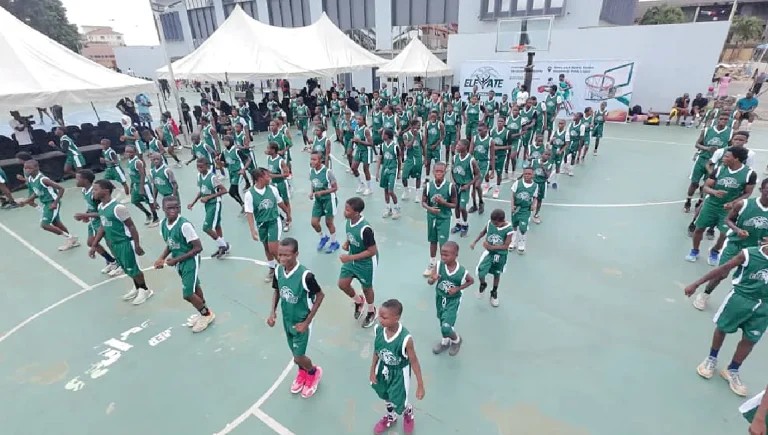
Young basketball players have been urged not to sacrifice their education for sporting ambitions, as stakeholders at the third Elevate Basketball Clinic stressed the need for young athletes to develop both on and off the court.
The call was the thematic preoccupation of the clinic held on Saturday at the Rowe Park Sports Centre, Yaba, Lagos, where hundreds of participants were taken through basic basketball skills and drills.
The third edition of the clinic, organised by Elevate Basketball Academy in partnership with the Lagos State Basketball Association, brought together hundreds of youngsters, mostly under the age of 16.
Founder and sponsor of the clinic, Akinwande Oshodi, said the initiative was designed to use basketball as a vehicle for youth empowerment while helping participants understand the values required to succeed in life.
“The end game is to elevate basketball and it’s about empowering the youth through basketball. It’s not just about the game, it’s about life, helping the students to understand what it takes to be successful,” Oshodi said.
Oshodi, who is Lagos-born but based in the United States, also disclosed plans to establish a foundation focused on basketball and athletics while creating opportunities for educational enrichment.
“This year, we are planning on tracking statistics so we can share with our sponsors what we have been doing over the last three years,” he added.
Oshodi’s mother, Bosede Ode, a sports nurse who worked with the Lagos State Government at Rowe Park, also stressed the importance of combining sporting development with academic pursuits.
“I’m very encouraged that more girls are in sports than what it used to be. I just want to encourage them to focus on not just sports but their education as well,” Ode said.
Ode said her son’s experience had reinforced the importance of education, recalling that an injury prevented him from pursuing basketball professionally but that his education had helped him build a life beyond the sport.
“I always tell my son about the importance of education, he had an injury which prevented him from playing professionally, but with education, that is helping him through life and giving back to the society. When he was small, he played basketball through school and I’ve always encouraged him,” she added.
The message was also reflected in the experience of one of the participants, Abdulkareem Abdulraheem, who attended the clinic for the second consecutive year.
Abdulraheem said the progress he observed among participants compared to last year had motivated him to keep improving, adding that he also makes time for his academics despite training regularly.
“The motivation is high. Last year I saw some people that were learning how to bounce the ball. This year, I’m seeing people play more and that is motivating me to never give up,” he said.
“For me, I train like three times a week and I make enough time for my academics as well, and that is one of the teachings of this clinic.”
Coordinator Gbade Olatona said the initiative was also aimed at using basketball to nurture discipline, leadership and responsible citizenship among young people.
Since its launch in 2024, the initiative has sought to position basketball as more than a competitive sport, using the game as a platform for mentorship, character development and creating opportunities for young people.
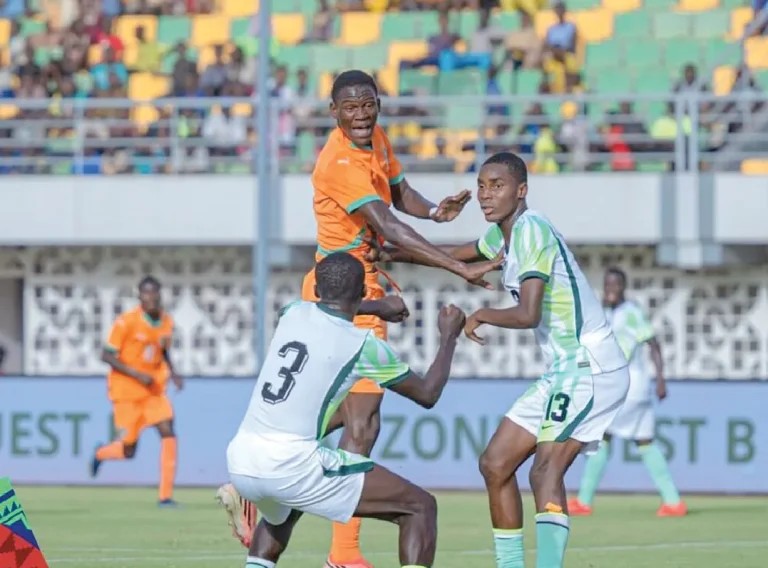
Nigeria’s Golden Eaglets will miss both the 2027 U-17 Africa Cup of Nations and the 2027 FIFA U-17 World Cup after they were eliminated from the 2026 WAFU-B U-17 Championship following a 1-1 draw with Ivory Coast in Ouagadougou on Saturday.
The result in their second Group B match at the Stade du 4 Août left the five-time world champions bottom of the table with a solitary point from two games, ending their hopes of qualification.
The Golden Eaglets needed a victory after losing 2-1 to Niger Republic in their opening match last Wednesday, but they could not find the result required to stay alive in the competition.
Nigeria fell behind in the 16th minute when Alex Fousseni scored for Ivory Coast, leaving head coach Eboboritse Uwejamomere’s side with an uphill task.
The young Nigerians continued to push for an equaliser and were rewarded in the 84th minute, when Abiodun John levelled the scores to set up a tense finish. Despite their late efforts, they could not find a winner.
Niger Republic finished top of Group B with four points, while Ivory Coast took second place with two points.
The failure to progress means Nigeria will miss the U-17 AFCON for the third consecutive edition, having also failed to qualify for the 2025 and 2026 tournaments, both hosted by Morocco. The North African country will also host the 2027 edition.
The disappointment extends to the global stage, as the team will miss the FIFA U-17 World Cup for the fourth consecutive edition. The Golden Eaglets last took part in the tournament in 2019.
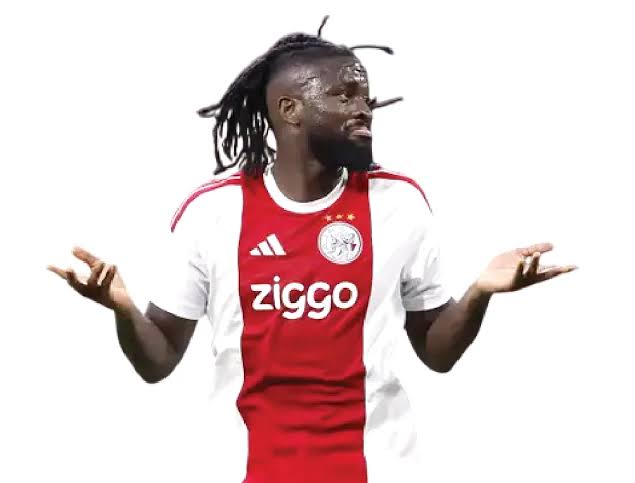
Former Ajax defender Frank de Boer has urged supporters to be patient with Super Eagles striker Tolu Arokodare, saying the forward should simply be allowed to play.
De Boer was speaking about the early excitement around the Nigerian at Ajax. He did not compare Arokodare to Marco van Basten or Patrick Kluivert. He used the two former Ajax strikers as an example of how Dutch fans tend to judge every new forward.
“We are used to comparing a striker to Van Basten and Kluivert, but I have also seen a few times that he is technically gifted and that you can make very good use of him. I have seen some great things. So just let him play,” De Boer told Tidesports source, via Ajax Showtime.
Arokodare joined Ajax from Wolverhampton Wanderers in the summer on a season-long loan with an option to buy, after a difficult spell in the Premier League.
He has scored seven goals and provided two assists in 11 appearances across all competitions, despite starting only six of those games.
The 25-year-old played the full 90 minutes of Ajax’s UEFA Conference League game away to Hajduk Split on Thursday but did not score.
De Boer, who played for Ajax and the Netherlands, also said the club could get more from Arokodare by delivering crosses from the flanks, which would suit his game in the penalty area.