
Nation
THE STATES

Borno
Governor Kashim Shettima of Borno State said he aban
doned the use of bullet proof cars as an act of sympathy with the suffering masses who had no means of self protection from terrorists.
Shettima stated this in an interview with newsmen in Maiduguri.
He said that the action was also aimed at showing that the terrorists had no super natural powers.
“We have to dare the terrorists; I have bullet proof cars, but I do not use them; I want to be exposed to the elements as the ordinary people do,” Shettima said.
He said the bullet proof cars were only kept for the use of visitors who might be afraid to use ordinary cars.
“We have so many bullet proof cars but we only use them for our guests”, he added.
Jigawa
The Jigawa State Government says it will immunise over
1.7 million children against polio in the ongoing immunisation campaign in the state.
Executive Secretary of the state Primary Health Care Development Agency (PHDCA), Dr Kabiru Ibrahim, disclosed this to newsmen in Dutse.
Ibrahim said that enough personnel had been engaged to conduct the exercise simultaneously across the 27 local government areas of the state.
The executive secretary commended traditional and religious leaders and other stakeholders in the state for their support and cooperation for the smooth conduct of the exercise, so far.
Kaduna
The Kaduna State Electricity Company says it has com
menced customer enumeration using Geographic Information System in four states under its franchise.
This is contained in a statement issued by the Head, Corporate Communication of the company, Abdulazeez Abdullahi and made available to newsmen in Kaduna.
The statement said that the exercise would be conducted across the company’s franchise states of Kaduna, Sokoto, Kebbi and Zamfara.
It said that the exercise had commenced in Kaduna State, using NYSC members.
The statement explained that the exercise would capture the data of existing customers, prospective ones, identify undeveloped and developed properties, as well as vacant houses.
Kano
Senator Shehu Sani (Kaduna Central), has called on ca
dets at the Nigeria Police Academy,Wudil, Kano State, to change the current perception of the society about the Nigeria police.
Sani made the call while addressing Kaduna State cadets currently undergoing training at the Academy.
“As cadets you have the duty to change the perception of the society about the Nigeria police as time has passed when the police was for those who could not make it academically,” he said.
Sani, who, is the Chairman, Senate Committee on Foreign and Local Debts, also urged the cadets to avoid corrupt practices and any act capable of denting the image of the Force.
Kebbi
The Kebbi State Government has procured firefighting
equipment worth N35million to effectively tackle fire outbreak in the state.
The State Director, of Fire Service, Alhaji Bello Zagga, disclosed this to newsmen in Birnin Kebbi.
He said the equipment would be distributed to the department’s outfits located in the 21 local government areas of the state.
“The equipment include fire extinguishers, safety jackets, fume and other relevant materials”, he said.
Zagga said the department had this year repaired four fire fighting vehicles and trained 30 officers on rapid response to emergency situations.
Kogi
A Kogi-based lawyer, Daniel Makolo, has called on Presi
dent Muhammadu Buhari to appoint a Kogi indigene to replace the Minister of State for Labour, late James Ocholi
Makolo made the call at a press conference in Lokoja in Lokoja.
He said that for almost seven months, Kogi had been denied representation in the Federal Executive Council meetings, adding that there was a dire need for the representation.
According to him, the meeting has the primary purpose of promoting good governance and welfare of all persons in the country on the principles of freedom, equality and justice and for the purpose of consolidating the unity of the people.
Lagos
The Nigerian Ports Authority (NPA) is to ensure that
there is steady electricity supply at the terminals to facilitate trade, the Executive Director, Finance, Mr Mohammed Bello-Koko has said.
Bello-Koko told newsmen in Lagos that power supply to port facilities was important.
He said that several grey areas of concern to stakeholders would be improved upon with constant power supply to facilities.
“We are looking at a 24-hour cargo clearing time frame as template to drive others. “If we can get the energy stabilised, things like cargo examination can take place, even in the evening.
“With power supply, several repair and maintenance services of equipment that tends to delay operations in terminals can be carried out in the night,’’ Bello-Koko said.
Nasarawa
The Federal University, Lafia, has terminated the appoint
ment of 35 of its non-teaching staff over the inability of the institution to pay their salaries.
Vice Chancellor of the university,Prof. Mohammed Sanusi-Liman, told newsmen in Lafia that the council took the decision due to paucity of funds.
Sanusi-Liman explained that the affected staff, who were employed by the institution earlier in the year, comprised 11 corps members who were retained after their service year and 24 others.
Niger
Rice and Cassava Value Chain Development Programme
(VCDP) farmers in Niger State have commended the Federal Government and International Fund for Agricultural Development for empowering farmers.
The Chairman Bankoregi Progressive Farmers Association, Malam Ibrahim Mohammed, made the commendation during a visit by Minister of Agriculture and Rural Development, Chief Audu Ogbe in Katcha, Niger State.
Oyo
Governor Abiola Ajimobi of Oyo State has received the
report of the State Committee on Participatory Management of Schools, saying the recommendations would form the fulcrum of the state’s new education policy.
According to him, countries that were developing were those who used education and technology to drive development, adding that they embraced discipline, rule of law and basic tenets of a modern society.
Our correspondent reports that the 31-man committee inaugurated on July 12 was headed by Prof Adeniyi Gbadegesin, the Vice Chancellor, Ladoke Akintola University of Technology (LAUTECH), Ogbomoso.
The committee was to review the status and standard of education in the state as well as recommend suitable and plausible options to government and other relevant means of emhancing the overall standard of education in the state.
Sokoto
Senator Aliyu Wamakko has challenged journalists in
the country to strive to foster unity amongst the nation’s heterogeneous society.
“You should work to foster sustainable, peace, unity and even socio-economic prosperity in the country”, Wamakko told newsmen in Sokoto.
Wamakko said that journalists as watchdogs should routinely educate the people on the realities on the ground.
He enjoined them to be objective, factual and adhere to the ethics of the profession, adding that this should be done devoid of any intimidation, blackmail or distortion of facts.
Wamakko, who represents Sokoto Central, further called on the journalists to always work professionally by reporting the facts in order to maintain the respect known in the field.
Taraba
Governor Darius Ishaku of Taraba State has ap
pointed Senator Jeremiah Useni as the Chancellor of Taraba University, Jalingo.
This is contained in a statement signed by the Governor’s Chief Press Secretary, Hassan Mijinyawa, and made available to newsmen in Jalingo.
According to the statement, the appointment is with immediate effect.
Our correspondent reports that Useni is a serving Senator of the Federal Republic of Nigeria, from Plateau State.
He is a retired Army General and also a former Minister of the Federal Capital Territory , Abuja.



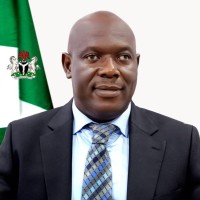
The Hydrocarbon Pollution Remediation Project (HYPREP) has commemorated the 15th anniversary of the release of the United Nations Environment Programme (UNEP) Environmental Assessment Report on Ogoniland, reaffirming its commitment to restoring the environment and improving the livelihoods of affected communities.
In a statement signed by the Project Coordinator, Prof Nenibarini Zabbey, to commemorate the anniversary, HYPREP described the anniversary as a significant milestone in Nigeria’s environmental restoration efforts, noting that the project has made remarkable progress in implementing the recommendations of the landmark UNEP report released on August 4, 2011.
The UNEP report had revealed extensive oil pollution across Ogoniland, severe environmental degradation, and serious public health risks resulting from decades of petroleum operations. It also recommended an initial $1 billion fund to commence the cleanup of the affected communities.
According to HYPREP, the Federal Government formally launched the Ogoni clean-up in 2016, while the Project Coordination Office was established in 2017 to drive the implementation of UNEP’s recommendations.
Zabbey said the current administration has continued to prioritise the project under the Renewed Hope Agenda.
Providing an update on the cleanup, the Project Coordinator disclosed that 30 of the 65 contaminated sites identified by UNEP have been fully remediated, while work is ongoing at several medium- and high-risk locations. It also stated that more than 1.5 million mangrove seedlings have been planted as part of what it described as the world’s largest restoration of oil-degraded mangroves, with over 1,000 hectares of shoreline already rehabilitated.
Zabbey further revealed that 49 Ogoni communities have been connected to potable water schemes through multiple water projects and booster stations aimed at providing safe drinking water across the region.
In the health sector, he said the 100-bed Ogoni Specialist Hospital in Kpite and the 43-bed Cottage Hospital in Buan are nearing completion, adding that several existing health facilities have been upgraded with modern medical equipment, while five ambulances have been donated to improve emergency healthcare services. The Project Coordinator also disclosed that a three-year human health biomonitoring study is being conducted in collaboration with the World Health Organization’s International Agency for Research on Cancer (IARC).
On economic empowerment, Zabbey stated that the Project has created more than 8,000 direct jobs and trained thousands of Ogoni youths and women in various vocational and technical skills, including software development, cybersecurity, aviation, commercial diving, seafaring, mechatronics, and creative arts. The project also reported awarding scholarships to more than 1,000 students, providing grants to small businesses, and supporting persons living with special needs through skills acquisition programmes.
The statement further highlighted ongoing legacy projects, including the Ogoni Power Project and the Centre of Excellence for Environmental Restoration, which it said is about 96 per cent complete. HYPREP also welcomed the recent designation of the Ogoni Wetland as a Ramsar Site of International Importance and pledged to continue promoting biodiversity conservation and sustainable management of the ecosystem.
Marking the anniversary, Zabbey said the progress achieved over the past 15 years demonstrates the collective commitment of government, development partners, stakeholders, and local communities to restoring Ogoniland. He called for renewed collaboration to sustain the cleanup effort, promote environmental sustainability, and support the long-term development of the region. 3
-

 News2 days ago
RSG Targets Nine Million Residents in Mosquito Net Distribution Campaign
-

 Oil & Energy2 days ago
Aiyedatiwa Signs New Electricity Bill
-

 Oil & Energy2 days ago
NLNG Commissions Research And Innovation Centre In RSU
-

 Maritime2 days ago
Marine Minister Commends President Tinubu On NPERA Bill Assent
-

 News2 days ago
KenPoly Holds Eight Convocations, August 29
-

 News2 days ago
RSG Begins Another Phase of Projects Commissioning Today
-

 News2 days ago
RMAFC Completes Revenue Sharing Review, Proposes New Pay
-

 Maritime2 days ago
NAGAFF Petitions IGP Over Alleged Maritime Police Harassment