
Business
US Boosts Investment Opportunities In Nigeria …Hosts Road Governance Caravan

The United States
Agency for International Development (USAID)/Nigeria, in partnership with the West Africa Borderless Alliance, has hosted a road governance caravan on the southern segment of the Lagos-Kano-Jibiya (LAKAJI) transport corridor.
A statement issued by the US Embassy in Nigeria, and made available to The Tide by email, indicated that the caravan started in Lagos on April 11, passed through Ogun and Oyo, and concluded in Kwara State on April 15, 2016.
Speaking at the event, USAID/Nigeria Director, Michael T. Harvey, said: “High shipping costs and long transit times are real disincentives to doing business in Nigeria,” adding that, “Reducing the time and cost of shipping goods on the LAKAJI corridor can serve as a boon for much needed investment”.
The Tide learnt that the road governance caravan is an advocacy platform, which aims to remove non-tariff barriers to enhance the competitiveness of the LAKAJI corridor.
The statement explained that throughout the week-long event, “leading agricultural producers, traders, transporters, and financiers proposed and advocated for systemic and practical improvements to the movement of goods, transport, capital, and services across Nigeria”.
The caravan’s participants included truck drivers; ministry/department/agency officials; Nigerian Shippers’ Council; the National Association of Chambers of Commerce, Industries, Mines, and Agriculture; civil society organizations; the Federal Road Safety Commission; and the National Association of Nigerian Traders.
It would be recalled that in 2013, USAID conducted a baseline study on the LAKAJI corridor, which revealed that it costs over $3,000 and takes approximately 12.5 days to send a 20-foot container from Jibiya in northern Nigeria to Lagos in the South-West, while it costs nearly $5,000 and takes approximately 19.5 days to ship a 20-foot container from Lagos to Jibiya.
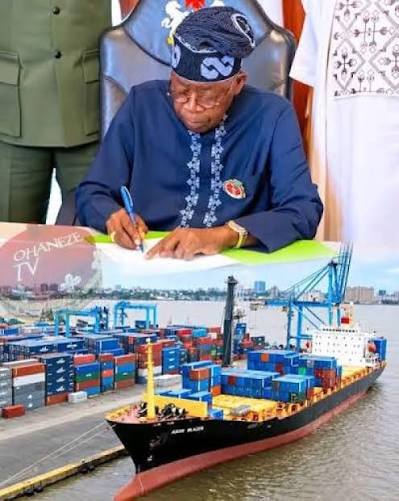
The Tide gathered that the higher cost to transport goods along the corridor is largely due to the lengthy clearance time and associated costs at the Lagos port, just as the overall cost and delivery times along the Lagos-Kano-Jibiya corridor are significantly greater than similar corridors in West Africa.
Susan Serekara-Nwikhana



-

 Education1 day ago
FCE Yola Graduates 3,555 Teachers , Seeks Upgrade to University
-

 Sports1 day ago
Nigerian Trio Target Titles At PFL Africa Finals
-

 Niger Delta1 day ago
Diri Restates Stance On Lagos-Calabar Coastal Highway
-

 Niger Delta1 day ago
C’River, NUJ Pay Tribute To Late Guardian Editor
-

 News1 day ago
NDLEA Recovers Tons Of Illicit Drug Consignments In Nine States
-

 Opinion1 day ago
Checking Voter Apathy In Nigeria’s Electoral Process
-

 Politics1 day ago
2027: DICKSON’S EX-ALLY VOWS TO WORK AGAINST NDC INTEREST IN BAYELSA
-

 Politics1 day ago
2027: GROUP PLEDGES 40,000 SUPPORTERS FOR COALITION CANDIDATES IN RIVERS