
Opinion
Politicians As Oppressors

Two days ago, a radio
presenter called for peoples’ reaction to a recent statement by Vice President Yemi Osinbajo, that Nigerian politicians use religion and ethnicity to oppress, divide the people. Expectedly, many agreed with the Vice President while some did not. A particular caller who supported the statement was able to link most of the crisis we have had and still have in the country to the selfishness of some politicians who in a bid to attain political and other selfish ends cause division among the people under the cover of religion and ethnicity.
Indeed the level of hatred among people of different ethnic and religious groups today is very alarming, no thanks to our political leaders who over the years have sown seeds of discord in Nigerians. Through their incitement of one ethnic group against another, citizens no longer see themselves as collective Nigerians anymore. Each time one goes to the social media and sees how people abuse one another in defense of politicians from their ethnic or religious group, it makes one wonder what the future holds for the nation.
In many civilized countries, people criticize government policies and even the leaders when necessary but in our country, whoever criticizes the President, the Governor or any of their policies is branded a disloyal citizen, an enemy of the nation or the state. Giving support to a candidate from another ethnic group is regarded as a betrayal. And that is why opinion leaders, statesmen and people who are expected to champion the interest of the masses keep mum even in the face of bad leadership. Thanks to people like the former president, Olusegun Obasanjo , who since he left office has not failed to speak out whenever he perceives that things are going wrong in the country. His recent outburst against the Economic and Financial Crimes Commission (EFCC) is still causing some ripples. Some people say he had the opportunity to make the country better during his period as the leader of the country but failed to utilize it so he should remain silent. But the truth is that we need people like Obasanjo who will help in checking the excesses of our politicians before they disintegrate the country due to their greed.
It is high time Nigerians realized that our politicians do not mean well for the people. Otherwise, they will not instigate communities to be at constant war with each other, killing themselves while they and their families are safe either in Abuja or overseas. Can we count how many lives have been lost in the country particularly in Rivers State due to alleged politically motivated crisis that had engulfed the state for many months? What of uncountable valuable properties and farm products destroyed because we are fighting for people who the moment they emerge victorious forget about their constituencies and the people that fought for them? The March 19 rerun elections in the state is by the corner and politicians are now at the peak of their divisive game, telling a Tai man that he is not an Ogoni man, that an Etche woman is not Ikwere and so on, all for their own gain.
Some analysts have observed that the poor leadership experienced in the country since independence is somehow the fault of the citizens who constantly make ethnic and religious considerations paramount in determining who leads them not minding whether they are suitable or not. We know that a particular person does not fit into a position but merely because he is from the same ethnic group with us or attends the same church with us we vote him in and in the end he makes our lives a living hell.
One therefore thinks that it is high time we began to play mature, policy based politics devoid of ethnic or religious sentiments. Our slogan should change from “vote an Igbo man, vote a Yoruba man, vote a Hausa man” to “Let the right person who will give quality leadership emerge”
However, this will continue to be a mere wish as long as the winner takes it all syndrome currently in place in the country and other practices that tend to make some ethic groups feel marginalized and alienated are not adequately addressed. A situation where some ethnic groups feel they are born to rule while others are meant to be ruled will only promote ethnic and religious diversification instead of unity and love. It is a natural tendency for people to desire that their own people will be in positions of authority so as to attract developmental projects to the localities , especially when previous occupants of those positions neglected them and focused on their own areas alone.
Again, we will cease being divided along religious and ethnic lines by the politicians those in authority regard all the people under their authority as important and act likewise. There is definitely no way people can be persuaded not to tow ethnic and religious lines when issues that concern them are not given attention while those that concern the ethnic or religious group of those in authority are acted upon promptly.
So in as much as one agrees with the Vice President everybody in the nation irrespective of tribe, tongue or religion should come together and join hands with President Mohammadu Buhari’s led administration to tackle the numerous challenges facing the country. There is need for the leaders both at the federal, state and local government levels to give us quality leadership such that will give people of all ethnic groups and religions a sense of belonging.
Calista Ezeaku



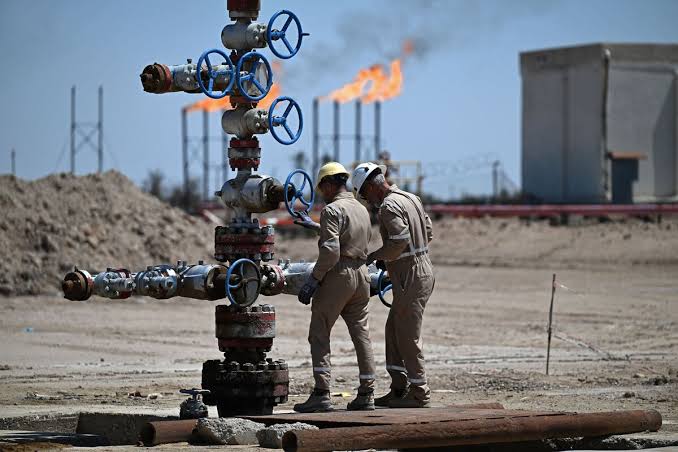
Quote: “No oil vessel, commercial contract or operational deadline is worth the loss of innocent lives; where environmental grievances are ignored and dialogue gives way to confrontation, the entire society pays a price that no compensation can adequately erase.”
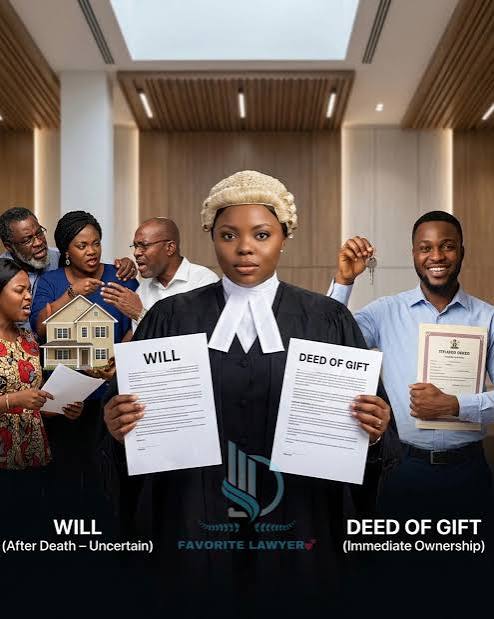
Quote:”The value of wealth is
Will and gifts are subjects
A Will is an important legal
Where documentation is
This does not mean every
Properly completed lifetime
Property owners must also
My appeal is simple: let us
-

 Education2 days ago
FCE Yola Graduates 3,555 Teachers , Seeks Upgrade to University
-

 Sports2 days ago
Nigerian Trio Target Titles At PFL Africa Finals
-

 Niger Delta2 days ago
Diri Restates Stance On Lagos-Calabar Coastal Highway
-

 Niger Delta2 days ago
C’River, NUJ Pay Tribute To Late Guardian Editor
-

 News2 days ago
NDLEA Recovers Tons Of Illicit Drug Consignments In Nine States
-

 Opinion2 days ago
Checking Voter Apathy In Nigeria’s Electoral Process
-

 Politics2 days ago
2027: DICKSON’S EX-ALLY VOWS TO WORK AGAINST NDC INTEREST IN BAYELSA
-

 Politics2 days ago
2027: GROUP PLEDGES 40,000 SUPPORTERS FOR COALITION CANDIDATES IN RIVERS