
Politics
APC And Change Momentum

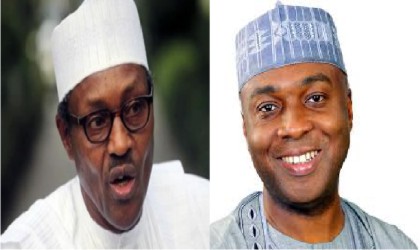
President Muhammadu Buhari and Senate President, Bukola Saraki
Only a few people will
disagree that President Muhammadu Buhari, is on the path of history.
Never in the history of Nigeria had an opposition party defeated the ruling party at the centre, as Buhari’s All Progressives Congress (APC) did to the Peoples Democratic Party (PDP) on March 28, this year.
May 29, which was the handover date, therefore presented a unique opportunity for President Buhari to assert himself as the agent of change that his party promised Nigerians.
In his inaugural speech, the president said the change that has already taken place, is going to positively affect the psyche of the Nigerian populace as the new government settles down to unleash its developmental agenda.
“Having just a few minutes ago sworn on the Holy Book, I intend to keep my oath and serve as President to all Nigerians.I belong to everybody and I belong to nobody,” he said.
This is one statement Nigerians would certainly not forget in a hurry. To think that after donkey’s years of the winner of an election taking all, even if it meant putting square pegs in round holes, or asserting superiority at the least presumed provocation, everybody, no matter affiliations, would be carried along, is one change Nigerians would eagerly look forward to.
Many have already given various interpretations to the statement, which is naturally expected. But,in recognition of the aspirations of the founding fathers of the Nigerian state, and how the leadership had hitherto deviated to the detriment of the country, the President confirmed thus:
“They might have differed in their methods or tactics or details, but they were united in establishing a viable and progressive country. Some of their successors behaved like spoilt children breaking everything and bringing disorder to the house”.
Since a house in disorder implies various forms of filth infestation, that Buhari has recognized this as fact is indicative of his resolve to embark on a thorough clean-up. How he will achieve such order that has eluded the country for over half a century is one big task most Nigerians would want to know, even as they look forward to it coming to fruition.
A pointer to where the President is headed in this wise seems to have been what manifested in the 8th Assembly during the election of key officials that produced a Senate President from the ruling party (APC), and his deputy from the opposition (PDP). It also saw the minority party producing the Majority Leader.
The President also knows how daunting the task may be, but he is also determined to realise that it is not insurmountable because, as he sees it,”there is now a national consensus that our chosen route to national development is democracy. To achieve our objectives we must consciously work the democratic system.
“The Federal Executive under my watch will not seek to encroach on the duties and functions of the Legislative and Judicial arms of government. The law enforcing authorities will be charged to operate within the Constitution. We shall rebuild and reform the public service to become more effective and more serviceable. We shall charge them to apply themselves with integrity to stabilize the system”, he said.
If it is true that Buhari was sort, as the Commander-In-Chief, to prevail on the happenings at the 8th National Assembly to ensure that his party had its way, yet he decided to allow nature to take its natural course, it can only mean that he is determined to let democracy be.
Contrary to the expectations of the APC, and the orthodox populace, Buhari said although he would have preferred that he would have wished that the process initiated and concluded by APC had been followed, he had no option than to accept the outcome because due constitutional process was followed.This is another way of saying that he backsNigerians’ determination to have a truly democratic government, which was set in motion when they decided tovote for the opposition against all odds.
Having been able to instil this level of democracy thus far, and if the Federal Executive under Buhari’s watch will indeed observe Separation of Powers to the letter, and law enforcement will be according to the constitution, not minding whose ox is gored, Nigeria would be on its path to contending with notably established democracies like the United State of America.
Rebuilding and reforming the public service to become more effective and more serviceable, among other things, imply that it will not be politicised as it is today. That, as it was in the days of yore, Permanent Secretaries will not come and go with the government of the day, they will naturally ascend the position through service and hard work in the given Ministry.
In other words, the Chief Executive will not have the sole power to sack, transfer, or carry out any disciplinary measure against a Permanent Secretary. The reason being that having grown through the ranks in the Ministry, the Permanent Secretary, as the Head of Administration, has become a custodian of rules and regulations, as well as the administration of the Ministry. A quality which a neophyte politician could hardly have.
This also means that measures taken in the good old days to make the civil service an epitome of discipline and encouraged education and hard work will be taken seriously. Such measures include ensuring that public servants are encouraged to take education seriously knowing that there is a limit to which level long service can get them.
Ultimately, he noted rightly that “It is only when the three arms act constitutionally that government will be enabled to serve the country optimally and avoid the confusion all too often bedevilling governance today”.
No doubt this has been one aspect of governance that had always been given lip service by past governments, even after they had sworn by the “holy book”. But the new President was not done. The same thing, he said, will trickle down to all sphere of governance.
“Constitutionally there are limits to powers of each of the three tiers of government but that should not mean the Federal Government should fold its arms and close its eyes to what is going on in the states and local governments. Not least the operations of the Local Government Joint Account.
“While the Federal Government cannot interfere in the details of its operations, it will ensure that the gross corruption at the local level is checked. As far as the constitution allows me I will try to ensure that there is responsible and accountable governance at all levels of government in the country.
“For I will not have kept my own trust with the Nigerian people if I allow others abuse theirs under my watch”.
Towards achieving what the new party in power aims at, he recognises that it can only be achieved with the cooperation of key stakeholders in the country’s development.
“No matter how well organized the governments of the federation are, they cannot succeed without the support, understanding and cooperation of labour unions, organized private sector, the press and civil society organizations. I appeal to employers and workers alike to unite in raising productivity so that everybody will have the opportunity to share in increased prosperity.
“The Nigerian press is the most vibrant in Africa. My appeal to the media today – and this inacludes the social media – is to exercise its considerable powers with responsibility and patriotism”.
With the tonic for expected change having been swallowed following President Buhari’s declarations in his inaugural speech, and the hitherto impossible having taken place in the National Assembly, expectations are fever-pitch high. By the end of thePresident’s first 100 days in office, the horizon may be clearer.

Politics
Alleged Coup: Protests Rock N’Assembly As Detained Officers’ Children, Wives Demand Justice

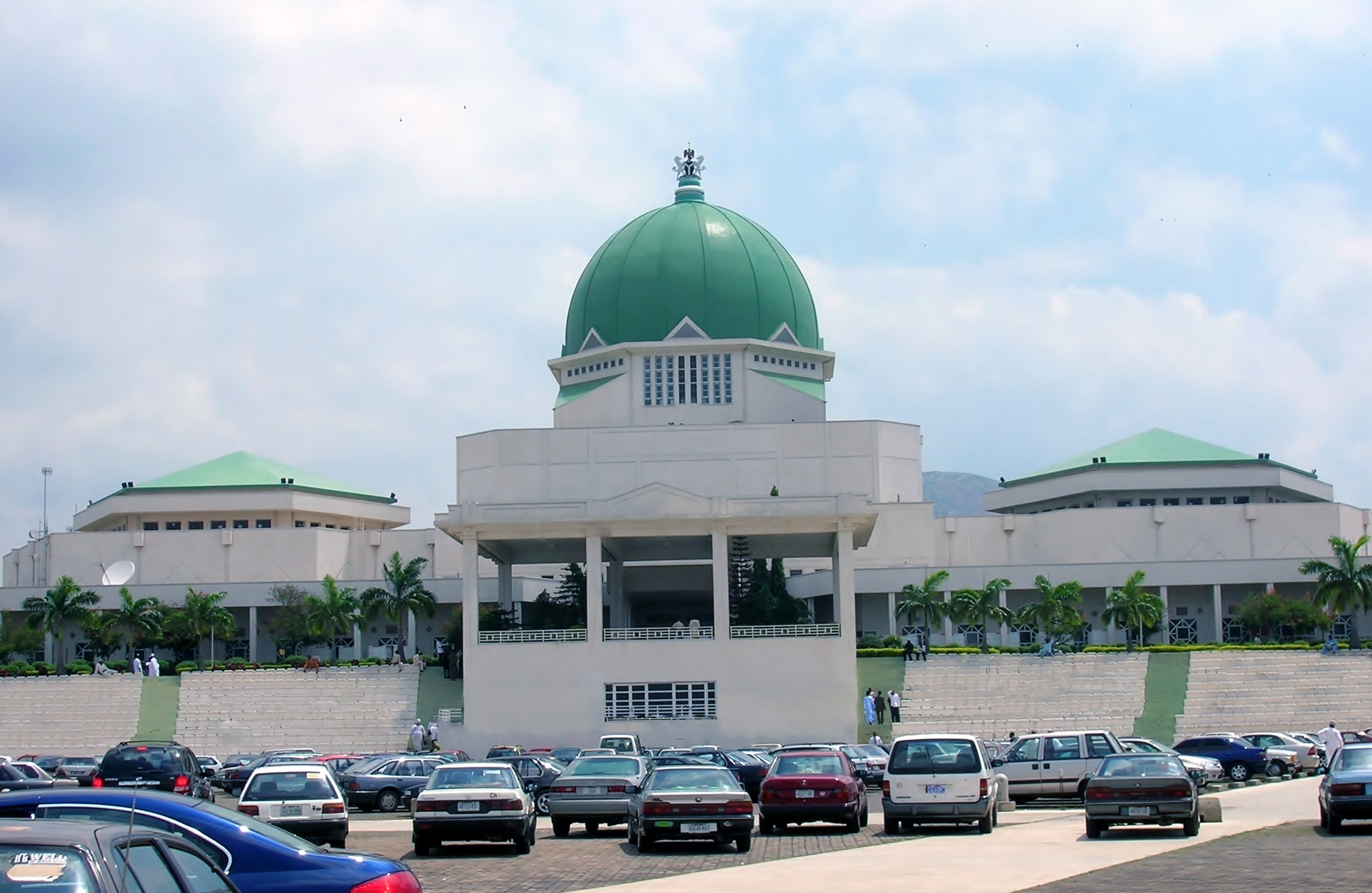
Scores of children and wives of military officers detained over an alleged coup plot yesterday staged a peaceful protest at the National Assembly, demanding a speedy trial and the release of the accused officials.
The protesters who gathered at the entrance of the National Assembly complex, moved in a slow procession while clutching placards with inscriptions such as “Don’t Kill Our Daddies,” “Detention Without Trial is Injustice,” and “Six Months of Torture: Enough Is Enough.”
Amid tears and trembling voices, the children appealed for justice and access to their detained fathers, many of whom they said they had not seen for months.
The appeal was made during a press briefing in Abuja attended by no fewer than 20 wives and several children of the detained officers, including a two-month-old baby.
The families were accompanied by human rights lawyer, Deji Adeyanju and activist Omoyele Sowore.
At the briefing, the families lamented that the officers had been held for over 160 days without trial or contact with their relatives, describing the situation as a violation of their fundamental rights.
Speaking on behalf of the families, Memuna Bashiru said the prolonged detention had thrown their households into uncertainty and emotional distress, noting that while allegations had been widely publicised, families remained in the dark about the fate of their loved ones.
The arrest of the indicted officers was first announced on October 4, 2025, by the then Director of Defense Information, Brigadier General Tukur Gusau, who disclosed that 16 officers were taken into custody for alleged breaches of military regulations and acts of indiscipline.
However, an interim investigation later suggested the existence of a clandestine network of officers, allegedly coordinated by a senior Army officer, which had begun preliminary planning for a coup.
According to the report, the alleged plot involved surveillance of key national assets, including the Presidential Villa, Armed Forces Complex, Niger Barracks in Abuja, and major international airports, with October 25, 2025, cited as the planned date for the operation.
Those reportedly in custody include Brig Gen M. A. Sadiq, Col M. A. Maaji, Lt Col S. Bappah, Lt Col A. A. Hayatu, Lt Col P. Dangnap, Lt Col M. Almakura, Maj A. J. Ibrahim, Maj M. M. Jiddah, Maj M. A. Usman, Maj D. Yusuf, Capt I. Bello, Capt A. A. Yusuf, Lt S. S. Felix, Lt Cdr D. B. Abdullahi, Sqn Ldr S. B. Adamu and Maj I. Dauda.
The alleged plot, according to findings, targeted senior government officials, including President Tinubu and Vice President Kashim Shettima.

In a statement issued yesterday, the party’s National Publicity Secretary, Mr Felix Morka, said the exercise would take place in all wards and designated centres nationwide.
He called on existing members to update their records, while encouraging new entrants to join the party through the digital platform.
“As the electronic membership registration exercise resumes in all wards and designated locations nationwide, we urge existing members to validate their membership while new members are encouraged to register and join the progressive family,” Mr Morka said.
According to him, eligibility for registration is limited to individuals aged 18 and above who possess a valid National Identification Number (NIN).
The party said the initiative is part of efforts to modernise its operations by transitioning to a digital database that would enhance record accuracy and accessibility.
Mr Morka noted that the e-registration would “digitise the party’s membership register, ensure the integrity of records, and enhance efficient access to membership data for planning and management decisions.”
He added that the move is also aimed at promoting internal democracy within the party and strengthening its commitment to democratic innovation.
The APC had previously introduced electronic registration as part of broader reforms to streamline its membership system and improve organisational efficiency.