
Opinion
Time To Stop Winner Takes All Syndrome

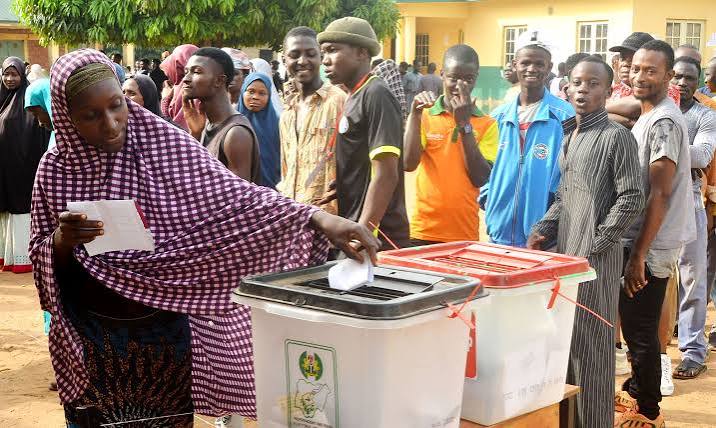
Well meaning Nigerians carefully watched our
politicians as they dramatised their mealy-mouthed skill on various stages all over the country during the electioneering campaign season ostensibly to hoodwink the electorate.
Some made us to believe they are magicians who will turn the country to a Utopian State over-night. But looking at where we came from and where we are today and where we would like to be, it is obvious that there are things that will not change. There are those that actually need time to change and there are others that have developed or in the process of being developed into an agreeable norm or status those efforts are needed to work on and consolidate them. Then there are others that actually need to be changed or transformed altogether.
To tackle these problems, our leaders have a huge assignment in their hands. They must look at all these with critical appreciation and face them squarely. Examples abound where the people are promised heaven on earth by new administration but it proved to be a nightmare. And when it increasingly became difficult to effect the changes they promised they resort to seek the indulgence of previous regime elements to help improve the situation.
As Nigerians the future will hold us accountable for the actions and decisions we are taking at this critical time of political transformation. We need more rationality and less emotion otherwise we risk driving people on each other necks and sometimes on our own necks. At this time leaders are supposed to prepare the people on what they should actually expect and what it takes to achieve them.
Certainly, the two major political parties have national outlook and the appearance of competence, although the outcome of the last election showed some signs of ethnic and tribal politics. This should not be allowed to re- surface in Nigeria because we have over the years endeavoured to stop that nonsense.
At any stage, National or State level team-work of all the other crew is very necessary. Politics in Nigeria should no longer be a winner takes- all game.
In the words of the outgoing President, Dr. Goodluck Ebele Jonathan – “The present system of winner takes all is causing problems. We should come up with, a system that ensures that when a party wins the Governorship or the Presidential at the national levels in forming cabinet the parties that did very well will also by right, by law and not by privilege or discretion of Mr. Governor or Mr. President, be meant to have a share of appointments in that government. If this is done, they will be mindful of their conducts and utterances”. Mr. President said this at the 2015 General Elections Sensitisation Workshop on Non-Violence held in Abuja on Wednesday, January 14, 2015.
A world renowned political economist and son of the soil, Late Professor Claude Ake had this to say some twenty-one years ago on this critical issue – “In Nigeria the struggle for political power is so intense that political competition escalates to a form of warfare. What causes this is the simple fact of political power being so highly valued. The more political power is valued, the more intense the struggle for it. In Nigeria where the capture of state means everything, it is naturally pursued with maniacal zeal. Those who win State power can have all the wealth they want even without working while those who lose the struggle for State power cannot have security in the wealth they have made even by hard work. The capture of State power inevitably becomes a matter of life or death. This is one reason why our politics is so intense, anarchic and violent”.
And a renowned Professor of History, Prof. Philipp Gigantes in his book – Power & Greed, described some human beings thus – “There are people who insist on breakup or circumventing society’s rules. They always want more and more and hence they disturb the social order. They are Manichaean, creators as well as destroyers. They can be compared to the dominant male in a pride of lions. The rest of the pride does all the work to get a kill, the dominant male gets the best share of the meal, all the sex and he does the serious roaring, the dominant lion has the power and he has the greed …Augustus, the first Roman Emperor acquired absolute power which led inevitably to absolute corruption”. It is obvious he was referring to Nigerian leaders.
The need to carry everybody along cannot be over emphasised. Team-work is the greatest source of power and popularity for a leader. There is no better time to start this than now. The first assignment of our new President should be to assume the role of political agent of national unification. He must rule with a truly national face. He must dare to offer the country the truth in the hope that it will have the sense to embrace him. The duty to cast coyness aside in the interest of national unity does not lie upon the President alone. But he as the leader cannot afford to be reluctant to tell the nation of its sickness and to specify his remedies.
There will be people of proven political integrity who may not belong to the same political camp with the President. Mr. President should endeavour to bring such men and women to his fold to help build a healthier and happier nation. It requires great political will to take such a decision. But it is time to set aside old bitterness and rivalries.
Many will say that such unification is impossible and that one excludes the other, but nothing is impossible in politics. The division and animosities of the past should be forgotten. It is time we forget our personal antipathies.
The writer thinks the President and the rest of our leaders must acknowledge this fact with appropriate humility and offer themselves as true nationalists pledged to move the nation forward. This can only be achieved by team-work.
The plain truth is that what is necessary now is the re-establishment of solid moral standard of behavior. As a nation, Nigeria now stands at such an advanced stage of knowledge of all kinds – Medical, Technology, Scientific, Agricultural, and Educational. What a great opportunity. Never before in history, has there been such a colossal potential for achievement or wastage. Let us use our perception, intelligence, sensitivities and nerve ending to avoid disaster and to save something true and fine for the future generation and solidify our position as Big Brother in Africa. This will also in the near future pave way for Nigeria to become a permanent member of UN Security Council.
Let us therefore learn to tolerate one another and live peacefully together like brothers and sisters and let us avoid doing things that will make us perish together as fools.
Sir Ichoku is a retired Director of Public Enlightenment, Ministry of Information, Rivers State.
Anthony Ichoku



Quote: “No oil vessel, commercial contract or operational deadline is worth the loss of innocent lives; where environmental grievances are ignored and dialogue gives way to confrontation, the entire society pays a price that no compensation can adequately erase.”

Quote:”The value of wealth is
Will and gifts are subjects
A Will is an important legal
Where documentation is
This does not mean every
Properly completed lifetime
Property owners must also
My appeal is simple: let us
-

 Education23 hours ago
FCE Yola Graduates 3,555 Teachers , Seeks Upgrade to University
-

 Niger Delta1 day ago
Diri Restates Stance On Lagos-Calabar Coastal Highway
-

 Sports22 hours ago
Nigerian Trio Target Titles At PFL Africa Finals
-

 Niger Delta1 day ago
C’River, NUJ Pay Tribute To Late Guardian Editor
-

 News1 day ago
NDLEA Recovers Tons Of Illicit Drug Consignments In Nine States
-

 Opinion1 day ago
Checking Voter Apathy In Nigeria’s Electoral Process
-

 Politics22 hours ago
2027: DICKSON’S EX-ALLY VOWS TO WORK AGAINST NDC INTEREST IN BAYELSA
-

 Politics22 hours ago
2027: GROUP PLEDGES 40,000 SUPPORTERS FOR COALITION CANDIDATES IN RIVERS