
Sports
Fraud Office Probes World Cup Bid

The Serious Fraud Office has been urged to reconsider its decision not to investigate allegations of Fifa corruption during the 2018 and 2022 World Cup bidding process.
Conservative MP Damian Collins made the call after media claims that former Fifa executive, Chuck Blazer recorded conversations with football officials at the London 2012 Olympics.
Russia would host the 2018 World Cup after England’s unsuccessful bid.
The 2022 World Cup would be in Qatar.
The SFO can investigate “cases which undermine UK commercial/financial PLC in general and the City of London in particular” and has been following bribery claims stemming from the December 2010 decision to award rights for the next two World Cups.
Fifa has already undertaken its own investigation into the corruption allegations, led by independent ethics investigator Michael Garcia.
American Blazer was a member of Fifa’s executive committee from 1996 to 2013.
On Sunday, the media alleged US FBI agents recruited Blazer by threatening him with arrest and prosecution for tax fraud if he failed to cooperate.
The media said Blazer was supplied with a modified keyring that contained a tiny microphone in order to secretly record conversations with leading football officials during a visit to the London 2012 Olympic Games.
“If there is evidence that Chuck Blazer held meetings during the Olympics, that would come under the jurisdiction of the SFO,” Collins told Tidesports source.
“I want to see if they would now be prepared to act.”
Fifa declined to comment about Blazer when contacted.
Tidesports source has seen a letter from the SFO to Collins, sent before the allegations about Blazer were published, which said the crime bureau was watching corruption allegations “with interest”.
The letter added that the SFO did not believe it had the right to launch its own inquiry.
SFO director David Green told Collins: “The allegations that have occurred so far are against non-UK nationals and the alleged conduct took place outside of the UK.”
That could now change if reports of Blazer recording officials in London are accurate.
Green’s letter adds: “I can… assure you that the SFO will continue to keep the jurisdictional position under review.”
Collins wrote to the SFO in September asking it to seek access to the report produced by Michael Garcia.
Garcia spent 18 months interviewing individuals from nations wanting to stage the 2018 and 2022 finals – and wants greater transparency from Fifa.
But Fifa president Sepp Blatter said Garcia’s full report will not be published because of legal issues.
The information that will be eventually be revealed is now in the hands of Hans-Joachim Eckert, a German judge tasked by Fifa with deciding if any individuals breached the organisation’s code of ethics.
He is due to make an interim statement later this month, which may include redacted sections of Garcia’s findings.
Collins is concerned that information relating to claims made by former chairman of the FA Lord Triesman concerning alleged corruption could be contained within Garcia’s files but will not be made public.
Lord Triesman made a series of allegations concerning his time involved with England’s 2018 bid in evidence to a House of Lords committee in 2011.
Furthermore, Collins asked the SFO to consider whether evidence of any additional wrongdoing, which might fall under its jurisdiction, could be revealed by obtaining access to Garcia’s report.
In light of the SFO’s response and Chuck Blazer’s alleged role as an FBI informant, Collins believes Fifa must now publish Garcia’s findings and inform the relevant law enforcement agencies.
“If Fifa is sitting on evidence relating to acts of bribery and corruption, then it is more than just a football matter,” Collins said.
“It is unthinkable they wouldn’t reveal what they have.
“There are people who are stopping evidence being made available. You’ll have to draw your own conclusions as to why that is.”
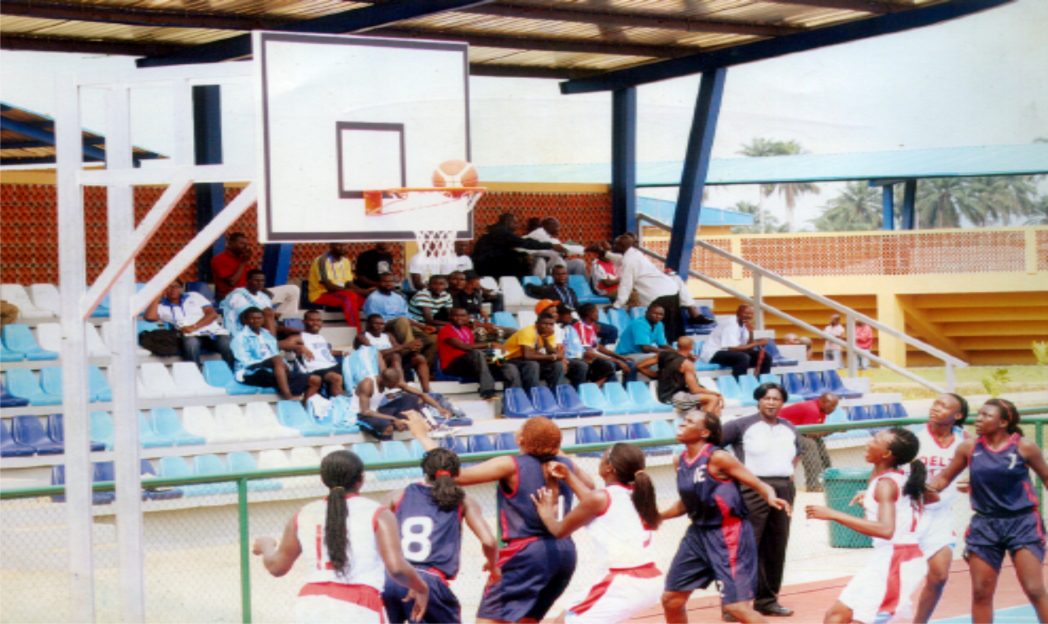
Basket ball players struggling for honour during a sports event in Port Harcourt, Rivers State, recently



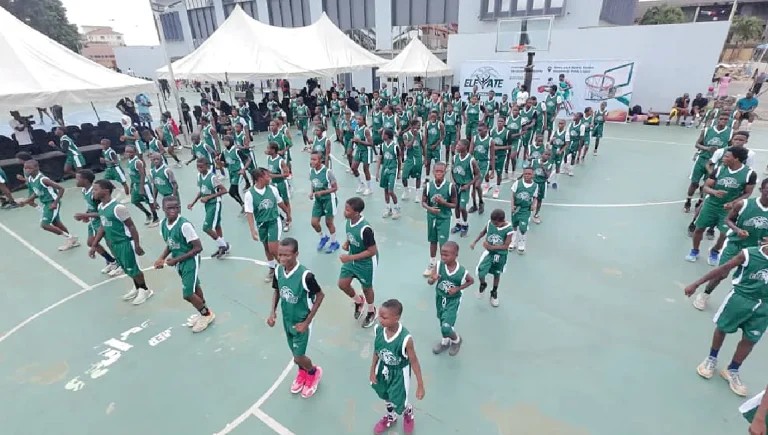
Young basketball players have been urged not to sacrifice their education for sporting ambitions, as stakeholders at the third Elevate Basketball Clinic stressed the need for young athletes to develop both on and off the court.
The call was the thematic preoccupation of the clinic held on Saturday at the Rowe Park Sports Centre, Yaba, Lagos, where hundreds of participants were taken through basic basketball skills and drills.
The third edition of the clinic, organised by Elevate Basketball Academy in partnership with the Lagos State Basketball Association, brought together hundreds of youngsters, mostly under the age of 16.
Founder and sponsor of the clinic, Akinwande Oshodi, said the initiative was designed to use basketball as a vehicle for youth empowerment while helping participants understand the values required to succeed in life.
“The end game is to elevate basketball and it’s about empowering the youth through basketball. It’s not just about the game, it’s about life, helping the students to understand what it takes to be successful,” Oshodi said.
Oshodi, who is Lagos-born but based in the United States, also disclosed plans to establish a foundation focused on basketball and athletics while creating opportunities for educational enrichment.
“This year, we are planning on tracking statistics so we can share with our sponsors what we have been doing over the last three years,” he added.
Oshodi’s mother, Bosede Ode, a sports nurse who worked with the Lagos State Government at Rowe Park, also stressed the importance of combining sporting development with academic pursuits.
“I’m very encouraged that more girls are in sports than what it used to be. I just want to encourage them to focus on not just sports but their education as well,” Ode said.
Ode said her son’s experience had reinforced the importance of education, recalling that an injury prevented him from pursuing basketball professionally but that his education had helped him build a life beyond the sport.
“I always tell my son about the importance of education, he had an injury which prevented him from playing professionally, but with education, that is helping him through life and giving back to the society. When he was small, he played basketball through school and I’ve always encouraged him,” she added.
The message was also reflected in the experience of one of the participants, Abdulkareem Abdulraheem, who attended the clinic for the second consecutive year.
Abdulraheem said the progress he observed among participants compared to last year had motivated him to keep improving, adding that he also makes time for his academics despite training regularly.
“The motivation is high. Last year I saw some people that were learning how to bounce the ball. This year, I’m seeing people play more and that is motivating me to never give up,” he said.
“For me, I train like three times a week and I make enough time for my academics as well, and that is one of the teachings of this clinic.”
Coordinator Gbade Olatona said the initiative was also aimed at using basketball to nurture discipline, leadership and responsible citizenship among young people.
Since its launch in 2024, the initiative has sought to position basketball as more than a competitive sport, using the game as a platform for mentorship, character development and creating opportunities for young people.
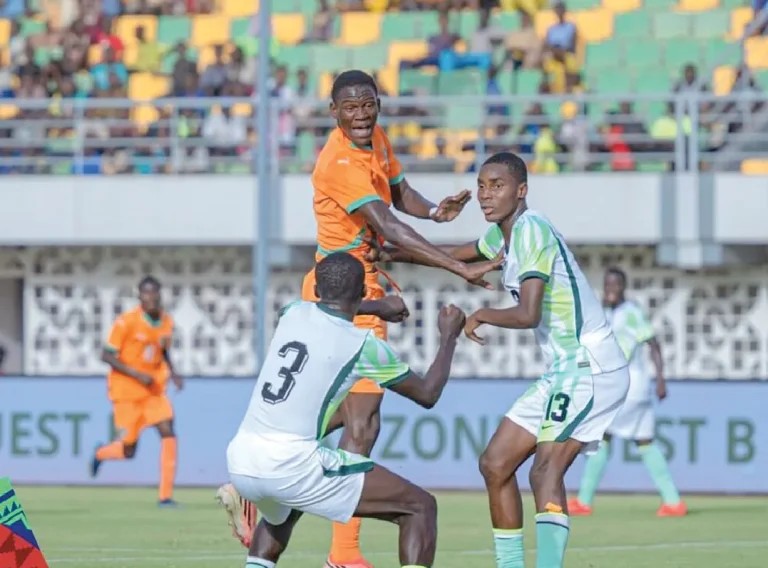
Nigeria’s Golden Eaglets will miss both the 2027 U-17 Africa Cup of Nations and the 2027 FIFA U-17 World Cup after they were eliminated from the 2026 WAFU-B U-17 Championship following a 1-1 draw with Ivory Coast in Ouagadougou on Saturday.
The result in their second Group B match at the Stade du 4 Août left the five-time world champions bottom of the table with a solitary point from two games, ending their hopes of qualification.
The Golden Eaglets needed a victory after losing 2-1 to Niger Republic in their opening match last Wednesday, but they could not find the result required to stay alive in the competition.
Nigeria fell behind in the 16th minute when Alex Fousseni scored for Ivory Coast, leaving head coach Eboboritse Uwejamomere’s side with an uphill task.
The young Nigerians continued to push for an equaliser and were rewarded in the 84th minute, when Abiodun John levelled the scores to set up a tense finish. Despite their late efforts, they could not find a winner.
Niger Republic finished top of Group B with four points, while Ivory Coast took second place with two points.
The failure to progress means Nigeria will miss the U-17 AFCON for the third consecutive edition, having also failed to qualify for the 2025 and 2026 tournaments, both hosted by Morocco. The North African country will also host the 2027 edition.
The disappointment extends to the global stage, as the team will miss the FIFA U-17 World Cup for the fourth consecutive edition. The Golden Eaglets last took part in the tournament in 2019.

Former Ajax defender Frank de Boer has urged supporters to be patient with Super Eagles striker Tolu Arokodare, saying the forward should simply be allowed to play.
De Boer was speaking about the early excitement around the Nigerian at Ajax. He did not compare Arokodare to Marco van Basten or Patrick Kluivert. He used the two former Ajax strikers as an example of how Dutch fans tend to judge every new forward.
“We are used to comparing a striker to Van Basten and Kluivert, but I have also seen a few times that he is technically gifted and that you can make very good use of him. I have seen some great things. So just let him play,” De Boer told Tidesports source, via Ajax Showtime.
Arokodare joined Ajax from Wolverhampton Wanderers in the summer on a season-long loan with an option to buy, after a difficult spell in the Premier League.
He has scored seven goals and provided two assists in 11 appearances across all competitions, despite starting only six of those games.
The 25-year-old played the full 90 minutes of Ajax’s UEFA Conference League game away to Hajduk Split on Thursday but did not score.
De Boer, who played for Ajax and the Netherlands, also said the club could get more from Arokodare by delivering crosses from the flanks, which would suit his game in the penalty area.