
Nation
THE STATES

Adamawa
No fewer than 27 organisations have declared their readiness to campaign for the re-election of Gov. Murtala Nyako of Adamawa on the PDP platform in 2012.
The party’s Chairman in the state, Alhaji Mijinyawa Kugama, made the announcement at the inauguration of the office of the Adamawa Consensus Forum for the Nyako/Ngilari 2012 Support Group.
Kugama said the emergence of the growing number of interest groups clamouring to work for the re-election of Nyako was a welcome development and a testimony of his good performance in transforming Adamawa.
“As far as we are concerned in the PDP, this is a pointer that Nyako’s team is a winning one that is just waiting for 2012 to renew its mandate with ease.”
In his remarks, Nyako lauded all those working to ensure PDP’s victory and gave assurance that his administration would continue to ensure fairness to all parts of the state in terms of development projects in line with the party’s manifesto.
He said the PDP had been good to the Adamawa people at all levels and its re-election would ensure continued provision of democracy dividends.
‘’Some say PDP will lead Nigeria for 60 years. As for the people of Adamawa we won’t mind PDP ruling for 600 years.’’
Bauchi
Bauchi State House of Assembly has approved the request earlier submitted to it by Gov. Isa Yuguda to appoint Directors-General but warned him against incurring additional fund for the exercise.
The approval followed reports of an ad hoc committee earlier set up by the House under Alhaji Hassan Ningi to investigate if the request was in line with the nation’s constitution.
Ningi, in his reports at the House plenary session on Thursday, presided over by Speaker Yahaya Miya, said that Yuguda had the power to appoint personal aides under the 1999 Constitution.
He told the legislators that the committee, in the course of its investigations, discovered that under Section 208 (2) D of the amended 1999 Constitution, the governor has the power to appoint personal staff and ascribe any name to them.
Miya observed that the appointment of directors-general ranked below the special advisers but placed above senior special assistants to the governor.
He, therefore, advised that since they were above special assistants, the nominations must be submitted to the House for confirmation.
FCT
A don, Prof. Saleh Dauda, has called on African leaders to embrace constitutionalism in governance to enhance peace in the continent.
Dauda, who teaches political science and international relations at the University of Abuja, made the call in Gwagwalada, FCT, while reacting to the death of Libyan leader Muammar Gaddafi on Thursday.
Gaddafi, who ruled his country for 42 years, was killed on Thursday in Sirte, his home town, while trying to escape from being captured by rebels, who had been fighting to overthrow his government.
Dauda told newmen that the Libyan people revolted against Gaddafi because he denied them their fundamental human rights.
Dauda, therefore, called on African leaders to ensure that the wishes and desires of their people were given utmost attention because, according to him, the quest for change is a global phenomenon.
He also called on politicians in the continent to see political office as a call to service “within a specific period”.
Gombe
The Independent National Electoral Commission (INEC) in Gombe State is to engage the services of 1,052 ad-hoc staff for the conduct of the Balanga/Billiri Federal Constituency bye-election fixed for October 22.
The INEC Administrative Secretary in Gombe State, Alhaji Mohammed Giro, told newsmen in Gombe that 20 permanent staff would be involved in the election.
Giro said that the training of the ad-hoc staff, most of them NYSC members has, commenced adding that voting would take place in 317 polling units in the two local government areas of Balanga and Billiri.
The administrative secretary said, “We are fully prepared for the conduct of election and had already assigned all ad-hoc staff to all the polling units.
“They are expected to report to their places of assignment as soon as their training is concluded. We are also in possession of non-sensitive election material and the sensitive ones will arrive in Gombe on Thursday.
Kaduna
The National President, Colleges of Education Academic Staff Union (COEASU), Mr Mohammed Auwal-Ibrahim, says colleges of education are critical to the production of quality teachers in the education system.
He spoke with journalists shortly after the opening of an expanded National Executive Council (NEC) meeting of the National Delegate Conference of COEASU held at the Federal College of Education (FCE) Zaria last Thursday.
Auwal-Ibrahim observed that colleges of education were the necessary path toward the production of sound teachers, “while teachers are central to the educational development of any nation’’.
“Growth and development of any sector of the nation’s economy lies on the quality of teachers to produce the basic manpower needed in the sector,” he said.
He appealed to government to accord special attention to teacher-education with a view to graduating quality teachers, who would in turn contribute to national growth and development.
Kano
An economist, Dr Aminu Ahmed, has advised the non-oil producing states in the country to diversify their revenue base and explore the potential of solid mineral resources.
Ahmed told newsmen in Kano that the diversification of Nigeria’s revenue sources would safeguard the nation from plunging into economic crisis.
He noted that there were over 400 sites with various mineral resources in commercial quantities across the country, adding, however, that “the main problem to our economic growth is the lack of political will”.
He stressed that successive governments had failed to explore the enormous potentials and opportunities existing in the solid minerals sector, resulting in the country’s over-dependence on oil.
Ahmed, who identified diamond, gold, gypsum, limestone and glass as some of the country’s solid minerals that were in high demand in the international market, said that the minerals could also be processed locally.
Kwara
Wife of Kwara Governor, Mrs Omolewa Ahmad, has called on political office holders in the state to make use of her Charity Foundation’s free health care to enhance the health care delivery of the people.
Ahmed, the initiator of LEAH Charity Foundation, said this in Ilesha Baruba in Baruteen Local Government Area of Kwara on Wednesday during the inauguration of Clinic-On Wheel Programme.
She said that the clinic-on-wheel programme became necessary due to the increasing rate of malaria, diabetes, blindness and hypertension in the state.
The clinic-on-wheel programme is a mobile clinic that affords the people the opportunity to access health care services from the team of medical experts going round the communities.
The Kwara first lady said, “LEAH Charity Foundation is offering free drugs for newly diagnosed malaria cases, provision of free prescription eye glasses and free cataract operation.”
She pointed out that the medical team would be around for some weeks moving round the three districts of the local government area.
Lagos
The Nigeria Labour Congress (NLC) says it is not against any meeting with the Federal Government, its ministers or agents, but insists that such meeting must have a clear agenda.
Mr Owei Lakemfa, the Acting General Secretary of NLC, said this on Saturday in a statement made available in Lagos.
Lakemfa said he was reacting to the meeting allegedly held between the Minister of Labour and Productivity, Mr Emeka Wogu, and some labour leaders in Abuja on October 20.
He said that the leadership of NLC boycotted the meeting because there was no clear agenda.
“For the avoidance of doubt, we wish to state that labour is not averse to any meeting with the Federal Government, its ministers or agents,’’ he said.
Nasarawa
Nasarawa State Governor Umaru Al-makura, on Wednesday submitted four separate requests to the state House of Assembly, including the one asking for the confirmation of his proposed 18-man cabinet.
The governor also asked the legislature to approve his proposal to appoint 20 special advisers.
The requests were presented to the House by the Majority Leader, Assemblyman Godiya Akwashiki (PDP-Nasarawa Eggon West).
The requests include the legislature’s consideration and approval of the 2011 Supplementary Appropriation Bill, which aims at capturing expenses that are not reflected in the 2011 budget.
Others are a bill seeking the amendment of the Remuneration of Political and Public Office Holders and a bill for the Establishment, Structure, Composition, Finance and Functions of Local Government System (Second Amendment).
After some intense debate, the House resolved to prune down Al-makura’s request for 20 special advisers to 15.
Niger
No fewer than 11 pregnant women from Niger have been barred from performing this year’s Hajj by the State Pilgrims Welfare Commission.
The Chairman of the Commission, Alhaji Mamman Mohammad, announced this in an interview with newsmen in Minna on Wednesday.
He said those disqualified were detected following the thorough screening of female prospective pilgrims.
Mohammad said the commission’s medical team detected the women during the screening preparatory to their departure to Saudi Arabia.
He said the screening was a success as all the pregnant women, who had attempted to beat the exercise, were detected and barred from the Hajj.
Mohammad said barring such women from the pilgrimage was due to the health hazard that could be encountered during the exercise.
He said it was in line with the guidelines of the Saudi Arabian Government and the National Hajj Commission of Nigeria (NAHCON) that forbade them from undertaking the Hajj.
Mohammad said the state lost seven seats as penalty from NAHCON over the inability to detect some pregnant women during the 2010 Hajj operation which resulted in miscarriages.



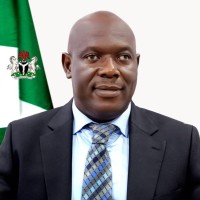
The Hydrocarbon Pollution Remediation Project (HYPREP) has commemorated the 15th anniversary of the release of the United Nations Environment Programme (UNEP) Environmental Assessment Report on Ogoniland, reaffirming its commitment to restoring the environment and improving the livelihoods of affected communities.
In a statement signed by the Project Coordinator, Prof Nenibarini Zabbey, to commemorate the anniversary, HYPREP described the anniversary as a significant milestone in Nigeria’s environmental restoration efforts, noting that the project has made remarkable progress in implementing the recommendations of the landmark UNEP report released on August 4, 2011.
The UNEP report had revealed extensive oil pollution across Ogoniland, severe environmental degradation, and serious public health risks resulting from decades of petroleum operations. It also recommended an initial $1 billion fund to commence the cleanup of the affected communities.
According to HYPREP, the Federal Government formally launched the Ogoni clean-up in 2016, while the Project Coordination Office was established in 2017 to drive the implementation of UNEP’s recommendations.
Zabbey said the current administration has continued to prioritise the project under the Renewed Hope Agenda.
Providing an update on the cleanup, the Project Coordinator disclosed that 30 of the 65 contaminated sites identified by UNEP have been fully remediated, while work is ongoing at several medium- and high-risk locations. It also stated that more than 1.5 million mangrove seedlings have been planted as part of what it described as the world’s largest restoration of oil-degraded mangroves, with over 1,000 hectares of shoreline already rehabilitated.
Zabbey further revealed that 49 Ogoni communities have been connected to potable water schemes through multiple water projects and booster stations aimed at providing safe drinking water across the region.
In the health sector, he said the 100-bed Ogoni Specialist Hospital in Kpite and the 43-bed Cottage Hospital in Buan are nearing completion, adding that several existing health facilities have been upgraded with modern medical equipment, while five ambulances have been donated to improve emergency healthcare services. The Project Coordinator also disclosed that a three-year human health biomonitoring study is being conducted in collaboration with the World Health Organization’s International Agency for Research on Cancer (IARC).
On economic empowerment, Zabbey stated that the Project has created more than 8,000 direct jobs and trained thousands of Ogoni youths and women in various vocational and technical skills, including software development, cybersecurity, aviation, commercial diving, seafaring, mechatronics, and creative arts. The project also reported awarding scholarships to more than 1,000 students, providing grants to small businesses, and supporting persons living with special needs through skills acquisition programmes.
The statement further highlighted ongoing legacy projects, including the Ogoni Power Project and the Centre of Excellence for Environmental Restoration, which it said is about 96 per cent complete. HYPREP also welcomed the recent designation of the Ogoni Wetland as a Ramsar Site of International Importance and pledged to continue promoting biodiversity conservation and sustainable management of the ecosystem.
Marking the anniversary, Zabbey said the progress achieved over the past 15 years demonstrates the collective commitment of government, development partners, stakeholders, and local communities to restoring Ogoniland. He called for renewed collaboration to sustain the cleanup effort, promote environmental sustainability, and support the long-term development of the region. 3
-

 News2 days ago
RSG Targets Nine Million Residents in Mosquito Net Distribution Campaign
-

 Oil & Energy2 days ago
Aiyedatiwa Signs New Electricity Bill
-

 Oil & Energy2 days ago
NLNG Commissions Research And Innovation Centre In RSU
-

 Maritime2 days ago
Marine Minister Commends President Tinubu On NPERA Bill Assent
-

 News2 days ago
KenPoly Holds Eight Convocations, August 29
-

 News2 days ago
RSG Begins Another Phase of Projects Commissioning Today
-

 News2 days ago
RMAFC Completes Revenue Sharing Review, Proposes New Pay
-

 Maritime2 days ago
NAGAFF Petitions IGP Over Alleged Maritime Police Harassment